ÉVALUATION IMDb
7,0/10
19 k
MA NOTE


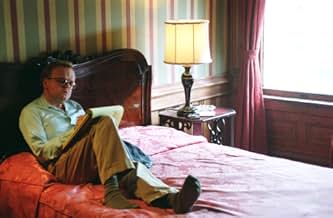
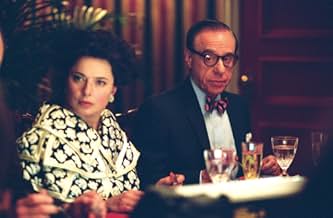
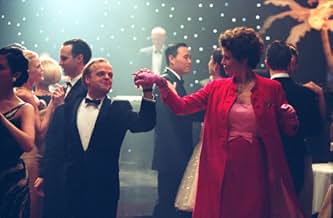
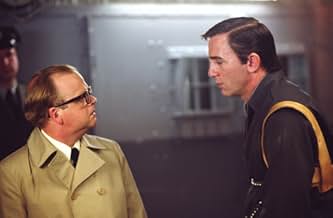
Tout en effectuant des recherches pour son roman « In Cold Blood », Truman Capote développe une relation étroite avec les meurtriers condamnés Dick Hickock et Perry Smith.Tout en effectuant des recherches pour son roman « In Cold Blood », Truman Capote développe une relation étroite avec les meurtriers condamnés Dick Hickock et Perry Smith.Tout en effectuant des recherches pour son roman « In Cold Blood », Truman Capote développe une relation étroite avec les meurtriers condamnés Dick Hickock et Perry Smith.
- Réalisation
- Scénaristes
- Vedettes
- Prix
- 3 victoires et 2 nominations au total




Frank G. Curcio
- William Shawn
- (as Frank Curcio)
Terri Merritt Bennett
- D.A.'s Secretary
- (as Terri Bennett)


7,018.7K
1
2
3
4
5
6
7
8
9
10
Avis en vedette
Better than 'Capote'
Unsatisfied with 'Capote', I turned to 'Infamous', and was pleased with what was given. Jones' performance lets us see a lot more of Truman Capote; the 'wind-up toy', the wit, the manipulation, and the years of suffering were performed expertly and such contrasts and comedic breaks added more dimension than Hoffman's version. Harper Lee's importance was appropriately heightened in this movie, which I applaud.
'Infamous' portrays the entirety of the Clutter murders as I had Imagined from 'In Cold Blood'. We get a good overview, however incomplete, as crucial details about Perry are omitted, and the theme of sexuality takes a more obvious stand. While an interesting thought, I feel it muddies Perry's character a little; his reasoning is not quite clear nor correct. I don't really feel Craig was right for the role; there's a certain immaturity he doesn't quite exude.
Overall, I enjoyed this film and appreciated its varying tone and Toby Jones' Capote. It was refreshing and more satisfying than the flatly sombre atmosphere in 'Capote'.
'Infamous' portrays the entirety of the Clutter murders as I had Imagined from 'In Cold Blood'. We get a good overview, however incomplete, as crucial details about Perry are omitted, and the theme of sexuality takes a more obvious stand. While an interesting thought, I feel it muddies Perry's character a little; his reasoning is not quite clear nor correct. I don't really feel Craig was right for the role; there's a certain immaturity he doesn't quite exude.
Overall, I enjoyed this film and appreciated its varying tone and Toby Jones' Capote. It was refreshing and more satisfying than the flatly sombre atmosphere in 'Capote'.
A different view
Infamous has a difficult comparison with the earlier "Capote." Still it is a different view of the same story and characters and is written with more emphasis on the perspectives of those who knew, or thought they knew, Capote. Toby Jones may not fully match the nuanced performance of Philip Seymour Hoffman but he does, possibly, a better imitation of Capote. Infamous has a better known cast of supporting players and they do a creditable job. Sandra Bullock's Harper Lee isn't the quite same as that portrayed so well by Catherine Keener in "Capote" but her character blends perfectly with the tone of "Infamous." Daniel Craig adds another fine acting turn as the "In Cold Blood" killer who receives the most attention. Even Gwyneth Paltrow makes an excellent impression in a brief opening scene as, apparently, singer Peggy Lee. (In the showing I saw, she was introduced as "Kitty Dean???") I wondered why another version of this story was filmed and it may not do well after the success of "Capote" but I was surprisingly entertained and intrigued by this movie.
"INFAMOUS" ~~ The other better Capote, with a way better actor --
"INFAMOUS" ~~ THE OTHER BETTER CAPOTE ... Directed by Douglas McGrath who also wrote the screenplay for Woody Allen's "Bullets Over Broadway" (1994) and directed Paltrow in Jane Austen's "Emma", 1996. Starring Toby Jones as Truman Capote -- one of those rare cases where the actor did not "play" the role but completely entered the skin of the real life character in question. Incredibly "Infamous" was on last night on Hungarian TV, Dubbed into Hungarian but I watched it anyway, for the body language and Production values. And the general feeling of the movie. I had forgotten what an important role a deglamourised Sandra Bullock had in this picture as Capote's constant companion throughout. But the fact that this major Hollywood star was content to take a supporting role to an unknown British actor is a real mark of her professionalism. Interestingly, she smokes in just about every scene she's in, which I assume was just for the requirements of the picture. Toby Jones is head and shoulders better than Seymour Hoffman was in the role, Besides the fact that he is a dead ringer for minuscule real life Capote whereas Bulky Seymour wasn't even close. If there were anything resembling integrity In the Hollywood film world, Jones should have been a walkaway for best actor in 2007 and Bullock would have been a very worthy candidate for Best Supporting actress, female -- Come to think of it, they oughta have a special slot for "Best supporting role by a star leading actor/actress willing to take a back seat" in a quality picture.
I saw "Infamous" at the 2006 Venice film festival and recognized it then as an unsung masterpiece, far far better than the Hoffman caricature earlier the same year. It opens with an incredible turn by Gwyneth Paltrow in a long white gown as Peggy Lee doing the old standard "This must Be Love" -- but she is so touched by the inherent sadness of the song that she breaks down in the middle and has to stop. What an opener! ~ possibly the best single scene Paltrow has ever done. Which sets the tone for everything to come.
A series of interviews follows with celebrity contemporaries of Capote speaking to the camera and identified by name with on screen titles which gives the picture a documentary feel, but the name celebrities are themselves celebrity actors such as Sigourney Weaver and especially, Peter Bogdanovich as Bennet Cerf. I think this is definitely one of the very best pictures of the Decade, 2000- 2010, and one that I would like to own so I could watch it over and over. And don't forget Daniel Craig (later to be Dubble 007!) as death row killer Perry Smith who Capote falls in love with! The prison interviews are filmed in a kind of chiaro-oscuro and the 1959 Period atmosphere is unobtrusively authentic-- without parading collectors vintage cars across the screen in every outdoor scene.
"Infamous", 2006, is a true gem in every respect but fell between the cracks because it was overshadowed by the hullabaloo over the distinctly inferior Sony Pictures production -- a classic case of the triumph of publicity over Quality.
I saw "Infamous" at the 2006 Venice film festival and recognized it then as an unsung masterpiece, far far better than the Hoffman caricature earlier the same year. It opens with an incredible turn by Gwyneth Paltrow in a long white gown as Peggy Lee doing the old standard "This must Be Love" -- but she is so touched by the inherent sadness of the song that she breaks down in the middle and has to stop. What an opener! ~ possibly the best single scene Paltrow has ever done. Which sets the tone for everything to come.
A series of interviews follows with celebrity contemporaries of Capote speaking to the camera and identified by name with on screen titles which gives the picture a documentary feel, but the name celebrities are themselves celebrity actors such as Sigourney Weaver and especially, Peter Bogdanovich as Bennet Cerf. I think this is definitely one of the very best pictures of the Decade, 2000- 2010, and one that I would like to own so I could watch it over and over. And don't forget Daniel Craig (later to be Dubble 007!) as death row killer Perry Smith who Capote falls in love with! The prison interviews are filmed in a kind of chiaro-oscuro and the 1959 Period atmosphere is unobtrusively authentic-- without parading collectors vintage cars across the screen in every outdoor scene.
"Infamous", 2006, is a true gem in every respect but fell between the cracks because it was overshadowed by the hullabaloo over the distinctly inferior Sony Pictures production -- a classic case of the triumph of publicity over Quality.
Every Word Is 'True'
I haven't seen Bennett Miller's 'Capote' so I cannot make any comparisons between that and 'Infamous'. Douglas McGrath takes a huge risk and I admire that he went on making this film to show his vision and releasing it just a year after the hugely acclaimed 'Capote'. It's sad to see that the film gained only little recognition (which was perhaps because it was released too soon after 'Capote').
The writing is very smooth and I liked the way he infused humour and drama. The first 45 minutes is full of witty humour until the killers are found from which the movie gets more serious and darker, yet it the humour does not disappear. Many of the characters have a small role but they are well developed. The dialogues and monologues are awesome. The story is very engaging. Even though we know what will happen in the end, we want to know the characters's motivations and their next step. McGrath also cleverly displays the relationship between Truman and Perry such that in the end one wonders whether Capote felt guilt (for using Perry) or sadness (for losing him). The background score is effectively underused and the cinematography is superb.
The stellar cast includes a host of talented names. In the opening scene Gwyneth Paltrow is introduced as singer Kitty Dean (a portrayal of the singer Peggy Lee). It's only a role of a couple of minutes where she sings but in those few minutes, she shows some incredible acting and singing. Toby Jones's nuanced portrayal of the vivacious and flamboyant Truman Capote is brilliant. Daniel Craig is wonderful as the sympathetic cold-blooded murderer. Sigourney Weaver (splendid), Isabella Rosselini (effective), Juliet Stevenson (brilliant), Jeff Daniels (great) and Hope Davis (adequate) are among the supporting cast. However, it is Sandra Bullock who stands out as Capote's loyal friend Nelle Harper Lee. This is one of her best performances and she just blew my mind by showing how she's gotten into the character which is so different from anything she's ever done. Her diction is impeccable as her Southern accent sounds so natural.
'Infamous' tackles a very relevant theme and delivers the message very well. When people commit unforgivable acts (like the brutal murders Perry Smith commits), one tends to see them as monsters and overlook the fact that they are human beings. The murder scene makes one shudder but when we see that Smith was a common man who had his own goals to become an artist and someone who wanted to have friends and fall in love, we feel sympathy for him. To me, 'Infamous' is a great piece of cinema from recent times.
The writing is very smooth and I liked the way he infused humour and drama. The first 45 minutes is full of witty humour until the killers are found from which the movie gets more serious and darker, yet it the humour does not disappear. Many of the characters have a small role but they are well developed. The dialogues and monologues are awesome. The story is very engaging. Even though we know what will happen in the end, we want to know the characters's motivations and their next step. McGrath also cleverly displays the relationship between Truman and Perry such that in the end one wonders whether Capote felt guilt (for using Perry) or sadness (for losing him). The background score is effectively underused and the cinematography is superb.
The stellar cast includes a host of talented names. In the opening scene Gwyneth Paltrow is introduced as singer Kitty Dean (a portrayal of the singer Peggy Lee). It's only a role of a couple of minutes where she sings but in those few minutes, she shows some incredible acting and singing. Toby Jones's nuanced portrayal of the vivacious and flamboyant Truman Capote is brilliant. Daniel Craig is wonderful as the sympathetic cold-blooded murderer. Sigourney Weaver (splendid), Isabella Rosselini (effective), Juliet Stevenson (brilliant), Jeff Daniels (great) and Hope Davis (adequate) are among the supporting cast. However, it is Sandra Bullock who stands out as Capote's loyal friend Nelle Harper Lee. This is one of her best performances and she just blew my mind by showing how she's gotten into the character which is so different from anything she's ever done. Her diction is impeccable as her Southern accent sounds so natural.
'Infamous' tackles a very relevant theme and delivers the message very well. When people commit unforgivable acts (like the brutal murders Perry Smith commits), one tends to see them as monsters and overlook the fact that they are human beings. The murder scene makes one shudder but when we see that Smith was a common man who had his own goals to become an artist and someone who wanted to have friends and fall in love, we feel sympathy for him. To me, 'Infamous' is a great piece of cinema from recent times.
Capote in Kansas Redux; A very good film, but not quite up to "Capote"
Writer-director Douglas McGrath's new film about Truman Capote and the creation of his most famous book, "In Cold Blood," is full of contradictions and contrasts when compared with its predecessor, the 2005 film "Capote," that covers the same five-year period. Perhaps this is fitting. There may be some justice in the fact that these two filmic accounts of how Capote researched material for his magnum opus disagree significantly in emphasis and purported events.
After all, Capote used fictional methods to embellish - some might say falsify - his journalistic reportage on the murders of the Clutter family in Holcomb, Kansas, in 1959. If the screenplays for these two films tell differing stories of Capote's experience, does it matter if one is closer to the truth than the other? Or that we can't be sure - indeed, will never know - what actually occurred during many of the encounters between Capote, who was famous for fabricating yarns about his own life, and others out in Holcomb so long ago?
The films are each based on separate biographical accounts. "Capote" was adapted from Gerald Clarke's 1988 biography bearing the same title. "Infamous" is based on George Plimpton's 1997 book, "Truman Capote: In Which Various Friends, Enemies, Acquaintances and Detractors Recall His Turbulent Career," an account presented as a sequence of quotes from interviews Plimpton conducted with more than 150 people who knew Capote.
"Infamous" is far kinder to Capote than the earlier film, portraying him as quite clearly enamored of the killer Perry Smith (an ardor fully requited by Smith) and deeply anguished when Smith is executed. "Capote" depicts the author as more conniving, manipulative and disingenuous, willing to say or do anything to get Smith to spill his story, and withholding of possible interventions he - Capote - might have made to further delay or avert the executions of Smith and his accomplice, Dick Hickock.
In "Capote" the author's erotic attraction to Smith is more muted, hinted at, not acted upon. Indeed, "Infamous" is in general more explicit and direct in its portrayals, often more graphic if you will, than "Capote." Besides kisses and embraces between Capote and Smith, other scenes not covered in "Capote" include moments of violence when Smith virtually attacks Capote in his cell. We also witness the murders of the Clutters and Hickock's execution by hanging, including the protracted interval during which his body remains vertically suspended until he is finally declared dead by the attending physician.
There are other differences, for example, Capote's bid to establish rapport with the local Sheriff, Alvin Dewey, is depicted as much more problematic in "Infamous" than in "Capote." A plus for "Infamous" is its attention to Capote's relationships with a covey of New York society women known as his "swans," their adulation of him, his ability to coax them into sharing their secrets for his later use as gossip fodder. But, again, McGrath employs a graphic style to introduce us to these women, and several others in Capote's social circle, namely, the use of large white name titles as we first meet each, documentary style.
I find it impossible to resist comparing acting performances in the two productions. The more nuanced, oblique style of "Capote" is realized not only through its general avoidance of graphic scenes but in the greater subtlety of the two central actors' performances. In "Infamous," the English character actor Toby Jones physically resembles Capote more than does his counterpart in "Capote," Philip Seymour Hoffman. Both actors offer convincing personifications in voice and style. But I lean toward Hoffman's as the more complex, accomplished turn, characterized by critic Shawn Levy as "note-perfect." Levy goes on, "The wheezy laugh, the pain of work, the prying nature, the cold eye, the self-obsession, the ability to perform and ingratiate and wheedle - it's Capote you're watching up there "
The brilliant English actor Daniel Craig gives a forceful, indeed galvanizing, performance as the killer, Perry Smith. But I think his mercurial, intensely melodramatic interpretation of his character is less convincing than his counterpart in "Capote," Clifton Collins, Jr. Collins's Smith is more introverted, by turns chilling or vulnerable to be sure, but for the most part quietly opaque, subdued, soulfully melancholic. For me this depiction is the more compelling and believable.
Other key performances are well delivered in both films: Catherine Keener ("Capote") and Sandra Bullock ("Infamous") as Harper Lee, though I liked Ms. Bullock's turn better; Chris Cooper ("Capote") and Jeff Daniels ("Infamous") as Sheriff Dewey. Capote's "swans" in "Infamous" are delightfully played by Sigourney Weaver, Juliet Stevenson, Hope Davis and Isabella Rossellini.
So we have two versions of the story of Capote's adventures in Kansas: both strong films, well cast, worthwhile. I think "Capote" is the better film because of its more subtle approach and the performances of the two central actors. As for realism in the interpretation of Truman Capote's character, perhaps the two portrayals taken together triangulate on the "real" Capote, a complex, convoluted personality as worthy of our sympathy as our contempt. My grades: 8/10 (high B+) (Seen on 10/10/06)
After all, Capote used fictional methods to embellish - some might say falsify - his journalistic reportage on the murders of the Clutter family in Holcomb, Kansas, in 1959. If the screenplays for these two films tell differing stories of Capote's experience, does it matter if one is closer to the truth than the other? Or that we can't be sure - indeed, will never know - what actually occurred during many of the encounters between Capote, who was famous for fabricating yarns about his own life, and others out in Holcomb so long ago?
The films are each based on separate biographical accounts. "Capote" was adapted from Gerald Clarke's 1988 biography bearing the same title. "Infamous" is based on George Plimpton's 1997 book, "Truman Capote: In Which Various Friends, Enemies, Acquaintances and Detractors Recall His Turbulent Career," an account presented as a sequence of quotes from interviews Plimpton conducted with more than 150 people who knew Capote.
"Infamous" is far kinder to Capote than the earlier film, portraying him as quite clearly enamored of the killer Perry Smith (an ardor fully requited by Smith) and deeply anguished when Smith is executed. "Capote" depicts the author as more conniving, manipulative and disingenuous, willing to say or do anything to get Smith to spill his story, and withholding of possible interventions he - Capote - might have made to further delay or avert the executions of Smith and his accomplice, Dick Hickock.
In "Capote" the author's erotic attraction to Smith is more muted, hinted at, not acted upon. Indeed, "Infamous" is in general more explicit and direct in its portrayals, often more graphic if you will, than "Capote." Besides kisses and embraces between Capote and Smith, other scenes not covered in "Capote" include moments of violence when Smith virtually attacks Capote in his cell. We also witness the murders of the Clutters and Hickock's execution by hanging, including the protracted interval during which his body remains vertically suspended until he is finally declared dead by the attending physician.
There are other differences, for example, Capote's bid to establish rapport with the local Sheriff, Alvin Dewey, is depicted as much more problematic in "Infamous" than in "Capote." A plus for "Infamous" is its attention to Capote's relationships with a covey of New York society women known as his "swans," their adulation of him, his ability to coax them into sharing their secrets for his later use as gossip fodder. But, again, McGrath employs a graphic style to introduce us to these women, and several others in Capote's social circle, namely, the use of large white name titles as we first meet each, documentary style.
I find it impossible to resist comparing acting performances in the two productions. The more nuanced, oblique style of "Capote" is realized not only through its general avoidance of graphic scenes but in the greater subtlety of the two central actors' performances. In "Infamous," the English character actor Toby Jones physically resembles Capote more than does his counterpart in "Capote," Philip Seymour Hoffman. Both actors offer convincing personifications in voice and style. But I lean toward Hoffman's as the more complex, accomplished turn, characterized by critic Shawn Levy as "note-perfect." Levy goes on, "The wheezy laugh, the pain of work, the prying nature, the cold eye, the self-obsession, the ability to perform and ingratiate and wheedle - it's Capote you're watching up there "
The brilliant English actor Daniel Craig gives a forceful, indeed galvanizing, performance as the killer, Perry Smith. But I think his mercurial, intensely melodramatic interpretation of his character is less convincing than his counterpart in "Capote," Clifton Collins, Jr. Collins's Smith is more introverted, by turns chilling or vulnerable to be sure, but for the most part quietly opaque, subdued, soulfully melancholic. For me this depiction is the more compelling and believable.
Other key performances are well delivered in both films: Catherine Keener ("Capote") and Sandra Bullock ("Infamous") as Harper Lee, though I liked Ms. Bullock's turn better; Chris Cooper ("Capote") and Jeff Daniels ("Infamous") as Sheriff Dewey. Capote's "swans" in "Infamous" are delightfully played by Sigourney Weaver, Juliet Stevenson, Hope Davis and Isabella Rossellini.
So we have two versions of the story of Capote's adventures in Kansas: both strong films, well cast, worthwhile. I think "Capote" is the better film because of its more subtle approach and the performances of the two central actors. As for realism in the interpretation of Truman Capote's character, perhaps the two portrayals taken together triangulate on the "real" Capote, a complex, convoluted personality as worthy of our sympathy as our contempt. My grades: 8/10 (high B+) (Seen on 10/10/06)


Le saviez-vous
- AnecdotesMark Wahlberg was originally attached to play Perry Smith, but dropped out in August of 2004. He was replaced in October of 2004 by Mark Ruffalo, until he dropped out as well, two weeks before filming began in January of 2005. Director Douglas McGrath panicked, thinking they wouldn't be able to find a great actor on such short notice. Someone with the production had mentioned Daniel Craig, an actor McGrath thought was very talented, but hadn't considered since he was English. Craig signed onto the film during shooting, which forced them to save his scenes for last. McGrath loved the idea of an unknown actor playing Smith, but then six weeks after signing onto Infamous, Craig got the role of James Bond, making him a worldwide superstar.
- GaffesEarly in the movie, in a scene set in 1959, Harper Lee and Capote order drinks in a Holcomb, Kansas restaurant. However, in 1959, it was illegal to sell drinks in a Kansas restaurant. Alcohol consumption in the state of Kansas was actually illegal entirely until 1948. Kansas did not legalize the sale of alcohol in restaurants until decades later, in 1987.
- Citations
Truman Capote: Imagine being told your work lacked kindness by a four-time killer!
Meilleurs choix
Connectez-vous pour évaluer et surveiller les recommandations personnalisées
- How long is Infamous?Propulsé par Alexa
Détails
- Date de sortie
- Pays d’origine
- Site officiel
- Langue
- Aussi connu sous le nom de
- Infamous
- Lieux de tournage
- Marlin, Texas, États-Unis(Courthouse exterior and interior scenes)
- sociétés de production
- Consultez plus de crédits d'entreprise sur IMDbPro
Box-office
- Budget
- 13 000 000 $ US (estimation)
- Brut – États-Unis et Canada
- 1 151 330 $ US
- Fin de semaine d'ouverture – États-Unis et Canada
- 452 966 $ US
- 15 oct. 2006
- Brut – à l'échelle mondiale
- 2 689 799 $ US
- Durée
- 1h 50m(110 min)
- Couleur
- Mixage
- Rapport de forme
- 1.85 : 1
Contribuer à cette page
Suggérer une modification ou ajouter du contenu manquant