ÉVALUATION IMDb
7,0/10
19 k
MA NOTE


Tout en effectuant des recherches pour son roman « In Cold Blood », Truman Capote développe une relation étroite avec les meurtriers condamnés Dick Hickock et Perry Smith.Tout en effectuant des recherches pour son roman « In Cold Blood », Truman Capote développe une relation étroite avec les meurtriers condamnés Dick Hickock et Perry Smith.Tout en effectuant des recherches pour son roman « In Cold Blood », Truman Capote développe une relation étroite avec les meurtriers condamnés Dick Hickock et Perry Smith.
- Réalisation
- Scénaristes
- Vedettes
- Prix
- 3 victoires et 2 nominations au total



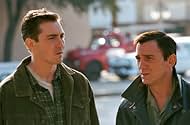


Frank G. Curcio
- William Shawn
- (as Frank Curcio)
Terri Merritt Bennett
- D.A.'s Secretary
- (as Terri Bennett)


7,018.7K
1
2
3
4
5
6
7
8
9
10
Avis en vedette
Far superior to "Capote"
Everyone's seen the 2005 drama Capote, which won Phillip Seymour Hoffman his Best Actor Oscar, but how many people have seen Infamous, the exact same story filmed at the exact same time but was held back a year because the other made earlier festival deadlines? If you've only seen Hoffman's performance, you owe it to Toby Jones and everyone who put their talent into the later film to rent Infamous.
I've seen them both, and there's a remarkable difference. Capote bored me to tears; I actually nodded off to sleep a couple of times. I barely remembered the sequence of scenes, and in fact, when I watched Infamous, some of the events were a surprise to me even though I was supposed to have seen them before. The 2006 film was entertaining, riveting, and many of the scenes will stay in my memory forever. Writer-director Douglas McGrath delivered his specialty: fast-paced, witty, emotional, and complex.
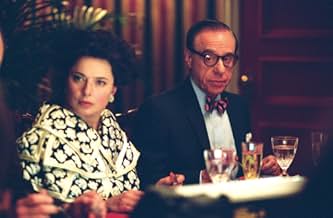
To pay homage to the true crime genre pioneered by Truman Capote's In Cold Blood, McGrath made his film a combination of dramatic fiction and mockumentary. Interview testimony from Capote's friends (Sigourney Weaver, Sandra Bullock, Peter Bogdanovich, Juliet Stevenson, John Benjamin Hickey, Jeff Daniels, and Isabella Rossellini) is intercut with scenes that drive the plot forward. Just as Capote alters the truth to suit his writing, McGrath adds fictional elements to the plot. This is, simply put, the greatest tribute to Truman Capote's writing style.
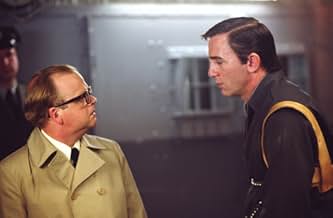
While the plot itself isn't my usual fare, I always love watching movies that feature fantastic performances. I don't like grizzly murder mysteries, and I'll admit to looking away from the television set during the gruesome scenes. In both films, Truman Capote is inspired to write the first true crime novel by a terrible small-town murder. He travels with his writer pal Harper Lee to interview the townsfolk, and he ends up spending a great deal of time talking with the murderers in prison. Does the brooding criminal who guards his words carefully look familiar? Probably not, but wash off the brunette rinse, take out the brown contacts, and replace the American accent with an English one. . . The same year Daniel Craig made a splash in his first James Bond flick, he was also in Infamous - and he was fantastic. Don't feel bad if you don't recognize him and have a, "Where's Fredric March?" moment. A large part of the story is Capote's quest to humanize the murderers, and the scenes between Jones and Craig are multifaceted and extremely well-acted.
If you don't really know who Truman Capote is, you'll love Phillip Seymour Hoffman's portrayal. He's the guy that dresses and talks funny, right? If you actually remember the "eccentric" author, you'll continually pinch yourself as you watch Toby Jones. It was an effort to keep reminding myself that I wasn't actually watching Truman Capote spliced alongside modern actors. In some scenes, he personifies "light in the loafers" and passes gossip amongst his friends for entertainment; in others, he's so emotionally conflicted the audience is free to take their own interpretation. Depending on your point of view, you can see Capote as a selfish manipulator consumed by his novel, or a tormented soul who desperately wants to create a fictional world to improve what really happened. Since both sides can be argued, Toby Jones is remarkable.
In a major chunk of the film, Jones is challenged by Craig's reluctance to share his story. The other murderer, Lee Place, is very open, but Craig maintains he's a human being, not a character in a story. Years ago, I took a directing course that focused on working with actors. Our assignment during each scene was to write out a different motivation behind every line of dialogue, to help our actors give better performances. In Infamous, Jones runs through every conceivable motivation as he tries to figure out what will make Craig trust him enough to open up about his feelings. He offers logic, money, and emotional blackmail; he sends him different types of literature to read in his cell; he makes any number of promises about the tone he'll take with the book and shares his own sad stories. It's both exhausting and interesting to watch.
Jones perfects the art of finding out what each person in his life needs and giving it to them, but is the mere satisfaction of being a chameleon enough? He gives a little smirk at the time, but as the high fades, he needs either more or different to keep him happy. In one scene, he breaks down in exhaustion and confesses to his friends that the years have taken their toll. Just as you think he's going to reveal his true feelings, he offers a comment on his book instead. It's one of his many moments of brilliance that keep you in a constant state of unease.
Rent Infamous. It'll surprise you. Sandra Bullock masters the Alabama accent, which you know is no small feat if you've ever studied different dialects. Daniel Craig is unrecognizable, and Toby Jones is perfect. I could write pages praising Toby Jones's performance, but I couldn't say it any better than Rex Reed did in The New York Observer: "They gave the Oscar to the wrong Truman Capote. ... (Hoffman) was doing an impression. In Infamous ... a diminutive actor with a titanic talent named Toby Jones literally becomes the man himself. This is no lisping impersonation learned from watching old Johnny Carson shows: Mr. Jones moves into Truman's skin, heart, and brains. Infamous shows you the man's soul."
Kiddy Warning: Obviously, you have control over your own children. However, due to violence and adult content, I wouldn't let my kids see it.
I've seen them both, and there's a remarkable difference. Capote bored me to tears; I actually nodded off to sleep a couple of times. I barely remembered the sequence of scenes, and in fact, when I watched Infamous, some of the events were a surprise to me even though I was supposed to have seen them before. The 2006 film was entertaining, riveting, and many of the scenes will stay in my memory forever. Writer-director Douglas McGrath delivered his specialty: fast-paced, witty, emotional, and complex.
To pay homage to the true crime genre pioneered by Truman Capote's In Cold Blood, McGrath made his film a combination of dramatic fiction and mockumentary. Interview testimony from Capote's friends (Sigourney Weaver, Sandra Bullock, Peter Bogdanovich, Juliet Stevenson, John Benjamin Hickey, Jeff Daniels, and Isabella Rossellini) is intercut with scenes that drive the plot forward. Just as Capote alters the truth to suit his writing, McGrath adds fictional elements to the plot. This is, simply put, the greatest tribute to Truman Capote's writing style.
While the plot itself isn't my usual fare, I always love watching movies that feature fantastic performances. I don't like grizzly murder mysteries, and I'll admit to looking away from the television set during the gruesome scenes. In both films, Truman Capote is inspired to write the first true crime novel by a terrible small-town murder. He travels with his writer pal Harper Lee to interview the townsfolk, and he ends up spending a great deal of time talking with the murderers in prison. Does the brooding criminal who guards his words carefully look familiar? Probably not, but wash off the brunette rinse, take out the brown contacts, and replace the American accent with an English one. . . The same year Daniel Craig made a splash in his first James Bond flick, he was also in Infamous - and he was fantastic. Don't feel bad if you don't recognize him and have a, "Where's Fredric March?" moment. A large part of the story is Capote's quest to humanize the murderers, and the scenes between Jones and Craig are multifaceted and extremely well-acted.
If you don't really know who Truman Capote is, you'll love Phillip Seymour Hoffman's portrayal. He's the guy that dresses and talks funny, right? If you actually remember the "eccentric" author, you'll continually pinch yourself as you watch Toby Jones. It was an effort to keep reminding myself that I wasn't actually watching Truman Capote spliced alongside modern actors. In some scenes, he personifies "light in the loafers" and passes gossip amongst his friends for entertainment; in others, he's so emotionally conflicted the audience is free to take their own interpretation. Depending on your point of view, you can see Capote as a selfish manipulator consumed by his novel, or a tormented soul who desperately wants to create a fictional world to improve what really happened. Since both sides can be argued, Toby Jones is remarkable.
In a major chunk of the film, Jones is challenged by Craig's reluctance to share his story. The other murderer, Lee Place, is very open, but Craig maintains he's a human being, not a character in a story. Years ago, I took a directing course that focused on working with actors. Our assignment during each scene was to write out a different motivation behind every line of dialogue, to help our actors give better performances. In Infamous, Jones runs through every conceivable motivation as he tries to figure out what will make Craig trust him enough to open up about his feelings. He offers logic, money, and emotional blackmail; he sends him different types of literature to read in his cell; he makes any number of promises about the tone he'll take with the book and shares his own sad stories. It's both exhausting and interesting to watch.
Jones perfects the art of finding out what each person in his life needs and giving it to them, but is the mere satisfaction of being a chameleon enough? He gives a little smirk at the time, but as the high fades, he needs either more or different to keep him happy. In one scene, he breaks down in exhaustion and confesses to his friends that the years have taken their toll. Just as you think he's going to reveal his true feelings, he offers a comment on his book instead. It's one of his many moments of brilliance that keep you in a constant state of unease.
Rent Infamous. It'll surprise you. Sandra Bullock masters the Alabama accent, which you know is no small feat if you've ever studied different dialects. Daniel Craig is unrecognizable, and Toby Jones is perfect. I could write pages praising Toby Jones's performance, but I couldn't say it any better than Rex Reed did in The New York Observer: "They gave the Oscar to the wrong Truman Capote. ... (Hoffman) was doing an impression. In Infamous ... a diminutive actor with a titanic talent named Toby Jones literally becomes the man himself. This is no lisping impersonation learned from watching old Johnny Carson shows: Mr. Jones moves into Truman's skin, heart, and brains. Infamous shows you the man's soul."
Kiddy Warning: Obviously, you have control over your own children. However, due to violence and adult content, I wouldn't let my kids see it.
Every Word Is 'True'
I haven't seen Bennett Miller's 'Capote' so I cannot make any comparisons between that and 'Infamous'. Douglas McGrath takes a huge risk and I admire that he went on making this film to show his vision and releasing it just a year after the hugely acclaimed 'Capote'. It's sad to see that the film gained only little recognition (which was perhaps because it was released too soon after 'Capote').
The writing is very smooth and I liked the way he infused humour and drama. The first 45 minutes is full of witty humour until the killers are found from which the movie gets more serious and darker, yet it the humour does not disappear. Many of the characters have a small role but they are well developed. The dialogues and monologues are awesome. The story is very engaging. Even though we know what will happen in the end, we want to know the characters's motivations and their next step. McGrath also cleverly displays the relationship between Truman and Perry such that in the end one wonders whether Capote felt guilt (for using Perry) or sadness (for losing him). The background score is effectively underused and the cinematography is superb.
The stellar cast includes a host of talented names. In the opening scene Gwyneth Paltrow is introduced as singer Kitty Dean (a portrayal of the singer Peggy Lee). It's only a role of a couple of minutes where she sings but in those few minutes, she shows some incredible acting and singing. Toby Jones's nuanced portrayal of the vivacious and flamboyant Truman Capote is brilliant. Daniel Craig is wonderful as the sympathetic cold-blooded murderer. Sigourney Weaver (splendid), Isabella Rosselini (effective), Juliet Stevenson (brilliant), Jeff Daniels (great) and Hope Davis (adequate) are among the supporting cast. However, it is Sandra Bullock who stands out as Capote's loyal friend Nelle Harper Lee. This is one of her best performances and she just blew my mind by showing how she's gotten into the character which is so different from anything she's ever done. Her diction is impeccable as her Southern accent sounds so natural.
'Infamous' tackles a very relevant theme and delivers the message very well. When people commit unforgivable acts (like the brutal murders Perry Smith commits), one tends to see them as monsters and overlook the fact that they are human beings. The murder scene makes one shudder but when we see that Smith was a common man who had his own goals to become an artist and someone who wanted to have friends and fall in love, we feel sympathy for him. To me, 'Infamous' is a great piece of cinema from recent times.
The writing is very smooth and I liked the way he infused humour and drama. The first 45 minutes is full of witty humour until the killers are found from which the movie gets more serious and darker, yet it the humour does not disappear. Many of the characters have a small role but they are well developed. The dialogues and monologues are awesome. The story is very engaging. Even though we know what will happen in the end, we want to know the characters's motivations and their next step. McGrath also cleverly displays the relationship between Truman and Perry such that in the end one wonders whether Capote felt guilt (for using Perry) or sadness (for losing him). The background score is effectively underused and the cinematography is superb.
The stellar cast includes a host of talented names. In the opening scene Gwyneth Paltrow is introduced as singer Kitty Dean (a portrayal of the singer Peggy Lee). It's only a role of a couple of minutes where she sings but in those few minutes, she shows some incredible acting and singing. Toby Jones's nuanced portrayal of the vivacious and flamboyant Truman Capote is brilliant. Daniel Craig is wonderful as the sympathetic cold-blooded murderer. Sigourney Weaver (splendid), Isabella Rosselini (effective), Juliet Stevenson (brilliant), Jeff Daniels (great) and Hope Davis (adequate) are among the supporting cast. However, it is Sandra Bullock who stands out as Capote's loyal friend Nelle Harper Lee. This is one of her best performances and she just blew my mind by showing how she's gotten into the character which is so different from anything she's ever done. Her diction is impeccable as her Southern accent sounds so natural.
'Infamous' tackles a very relevant theme and delivers the message very well. When people commit unforgivable acts (like the brutal murders Perry Smith commits), one tends to see them as monsters and overlook the fact that they are human beings. The murder scene makes one shudder but when we see that Smith was a common man who had his own goals to become an artist and someone who wanted to have friends and fall in love, we feel sympathy for him. To me, 'Infamous' is a great piece of cinema from recent times.
I saw Capote and I saw Infamous. Infamous captured my impression of "In Cold Blood" when I read it many, many years ago.
When I saw "Capote" I was really impressed by the presentation of the story and the quality of the acting. When I saw "Infamous" today, I was caught up with the story in a way I had not been before. It was closer to the experience when I read the book many,many years ago. "In Cold Blood" is about killing human beings, and I believe that it is no more right for cold blooded murders to do it than for me do do it as a member of society that authorizes the death penalty. I believe that the film as well as the book makes people think about this issue The cast was superb, and I said the same about the earlier rendition, but this time the characters were fully developed and believable under the circumstances. I had been impressed before, but this film is different from the last--it is more emotional, more detailed in rendition of the characters, and more interested in showing not just the destruction of Truman Capote, but in sharing the ideas that he expressed in "In Cold Blood".
When I was growing up (I am 62 now) I recall that I did not like Capote when I saw him on talk shows repeatedly. I really knew nothing of gay culture or what even that meant at the time, so it had nothing to do with the sexual orientation. It had to do with the ego that was constantly expressed and realted to nothing that I really cared about.
But what was incredibly important to me then and now is that we can lose track of the fact that we are all human beings, a point that was stressed in the film. Killers may be killers, but they are us, in a way, filled with some of the same ambitions, hates, emotions that most of us can control. What separates us from them might not be very much, so why do we need to kill them as they jailed their victims? It is easy to kill, but not so easy to try to understand. This film hits an emotional level that the previous film did not. I am pleased that it ultimately was made. I am also pleased that the quality of the performances, the writing and most especially the direction, were so superb. Watch the scene where the farmer speaks only to Harper Lee and not Capote. It is an incredible monologue, but the circumstances are noted.
When I was growing up (I am 62 now) I recall that I did not like Capote when I saw him on talk shows repeatedly. I really knew nothing of gay culture or what even that meant at the time, so it had nothing to do with the sexual orientation. It had to do with the ego that was constantly expressed and realted to nothing that I really cared about.
But what was incredibly important to me then and now is that we can lose track of the fact that we are all human beings, a point that was stressed in the film. Killers may be killers, but they are us, in a way, filled with some of the same ambitions, hates, emotions that most of us can control. What separates us from them might not be very much, so why do we need to kill them as they jailed their victims? It is easy to kill, but not so easy to try to understand. This film hits an emotional level that the previous film did not. I am pleased that it ultimately was made. I am also pleased that the quality of the performances, the writing and most especially the direction, were so superb. Watch the scene where the farmer speaks only to Harper Lee and not Capote. It is an incredible monologue, but the circumstances are noted.
10dglink
Third Powerful Look at Clutter Family Murder
Truman Capote may be unique among recent celebrities to have two excellent films made about his life. Just a year after Phillip Seymour Hoffman's mesmerizing performance in "Capote," Toby Jones does a fine, if more expected, impersonation of the author of "In Cold Blood" and "Breakfast at Tiffany's." With the razor sharp wit and effete mannerisms more focused than they were in "Capote," Jones, in Douglas McGrath's "Infamous," is a more vulnerable Truman and is unquestionably in love with one of the Clutter family killers, Perry Smith. Although ostensibly a drama, "Infamous" is replete with Capote's celebrated wit, and the one-liners, which are often sexual in nature, are welcome relief from the heavier scenes.
However, "Infamous" is at heart a love story, or rather two, love stories. The first romance is between Truman Capote and his coterie of largely female socialite friends, with whom he gossips and parties and self adulates. The second, much deeper love story, between Capote and Smith, begins as Capote explores Smith's background and family history. Although their relationship, which the film implies was more than platonic, develops within the confines of prison, the two men connect through similar personal tragedies in their childhoods. Smith, well played by Daniel Craig, was at least bisexual or even gay, according to McGrath's screenplay. Although a subliminal connection between the two killers was suggested in both the films "In Cold Blood" and "Capote," in this film Dick Hickock, Smith's partner in the Clutter killings, recognizes Perry's orientation and taunts him with it.
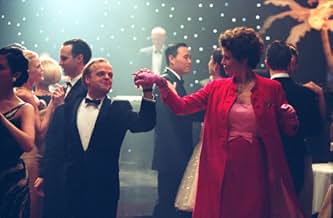
Although a bevy of well-known performers threatens to undercut the realism of the drama with a game of "isn't that so and so?," the acting rises above star cameos and blends seamlessly into the whole. In fact, the familiar faces aid in maintaining recognition of the parade of celebrities, such as Babs Paley, Gore Vidal, and Harper Lee that surrounded Capote in life. Borrowing a technique from Warren Beatty's "Reds," McGrath effectively uses witnesses that talk to the camera about Truman as though being interviewed at some later date. Surprisingly, these interview segments do not interrupt the flow of the drama and enhance rather than detract from the film's power.
And powerful it is. Although the execution scenes have been filmed twice before, Truman's parting from the killers and the actual hangings remain almost unbearable to watch. Although two films have preceded this one and related essentially the same story, "Infamous" stands as a worthy addition to what is now a trilogy on the Clutter family murders (1967's "In Cold Blood," 2005's "Capote," 2006's "Infamous"). Surprisingly, each film is equally engrossing and brings its own viewpoint to the story. Like different facets of a prism or a three-film version of "Rashomon," the tale of Truman Capote's reportage of the murders retains its fascination and the enigma of Capote's relationship with the killers. Rarely have three such powerful, outstanding films been made from the same subject matter.
However, "Infamous" is at heart a love story, or rather two, love stories. The first romance is between Truman Capote and his coterie of largely female socialite friends, with whom he gossips and parties and self adulates. The second, much deeper love story, between Capote and Smith, begins as Capote explores Smith's background and family history. Although their relationship, which the film implies was more than platonic, develops within the confines of prison, the two men connect through similar personal tragedies in their childhoods. Smith, well played by Daniel Craig, was at least bisexual or even gay, according to McGrath's screenplay. Although a subliminal connection between the two killers was suggested in both the films "In Cold Blood" and "Capote," in this film Dick Hickock, Smith's partner in the Clutter killings, recognizes Perry's orientation and taunts him with it.
Although a bevy of well-known performers threatens to undercut the realism of the drama with a game of "isn't that so and so?," the acting rises above star cameos and blends seamlessly into the whole. In fact, the familiar faces aid in maintaining recognition of the parade of celebrities, such as Babs Paley, Gore Vidal, and Harper Lee that surrounded Capote in life. Borrowing a technique from Warren Beatty's "Reds," McGrath effectively uses witnesses that talk to the camera about Truman as though being interviewed at some later date. Surprisingly, these interview segments do not interrupt the flow of the drama and enhance rather than detract from the film's power.
And powerful it is. Although the execution scenes have been filmed twice before, Truman's parting from the killers and the actual hangings remain almost unbearable to watch. Although two films have preceded this one and related essentially the same story, "Infamous" stands as a worthy addition to what is now a trilogy on the Clutter family murders (1967's "In Cold Blood," 2005's "Capote," 2006's "Infamous"). Surprisingly, each film is equally engrossing and brings its own viewpoint to the story. Like different facets of a prism or a three-film version of "Rashomon," the tale of Truman Capote's reportage of the murders retains its fascination and the enigma of Capote's relationship with the killers. Rarely have three such powerful, outstanding films been made from the same subject matter.
Capote in Kansas Redux; A very good film, but not quite up to "Capote"
Writer-director Douglas McGrath's new film about Truman Capote and the creation of his most famous book, "In Cold Blood," is full of contradictions and contrasts when compared with its predecessor, the 2005 film "Capote," that covers the same five-year period. Perhaps this is fitting. There may be some justice in the fact that these two filmic accounts of how Capote researched material for his magnum opus disagree significantly in emphasis and purported events.
After all, Capote used fictional methods to embellish - some might say falsify - his journalistic reportage on the murders of the Clutter family in Holcomb, Kansas, in 1959. If the screenplays for these two films tell differing stories of Capote's experience, does it matter if one is closer to the truth than the other? Or that we can't be sure - indeed, will never know - what actually occurred during many of the encounters between Capote, who was famous for fabricating yarns about his own life, and others out in Holcomb so long ago?
The films are each based on separate biographical accounts. "Capote" was adapted from Gerald Clarke's 1988 biography bearing the same title. "Infamous" is based on George Plimpton's 1997 book, "Truman Capote: In Which Various Friends, Enemies, Acquaintances and Detractors Recall His Turbulent Career," an account presented as a sequence of quotes from interviews Plimpton conducted with more than 150 people who knew Capote.
"Infamous" is far kinder to Capote than the earlier film, portraying him as quite clearly enamored of the killer Perry Smith (an ardor fully requited by Smith) and deeply anguished when Smith is executed. "Capote" depicts the author as more conniving, manipulative and disingenuous, willing to say or do anything to get Smith to spill his story, and withholding of possible interventions he - Capote - might have made to further delay or avert the executions of Smith and his accomplice, Dick Hickock.
In "Capote" the author's erotic attraction to Smith is more muted, hinted at, not acted upon. Indeed, "Infamous" is in general more explicit and direct in its portrayals, often more graphic if you will, than "Capote." Besides kisses and embraces between Capote and Smith, other scenes not covered in "Capote" include moments of violence when Smith virtually attacks Capote in his cell. We also witness the murders of the Clutters and Hickock's execution by hanging, including the protracted interval during which his body remains vertically suspended until he is finally declared dead by the attending physician.
There are other differences, for example, Capote's bid to establish rapport with the local Sheriff, Alvin Dewey, is depicted as much more problematic in "Infamous" than in "Capote." A plus for "Infamous" is its attention to Capote's relationships with a covey of New York society women known as his "swans," their adulation of him, his ability to coax them into sharing their secrets for his later use as gossip fodder. But, again, McGrath employs a graphic style to introduce us to these women, and several others in Capote's social circle, namely, the use of large white name titles as we first meet each, documentary style.
I find it impossible to resist comparing acting performances in the two productions. The more nuanced, oblique style of "Capote" is realized not only through its general avoidance of graphic scenes but in the greater subtlety of the two central actors' performances. In "Infamous," the English character actor Toby Jones physically resembles Capote more than does his counterpart in "Capote," Philip Seymour Hoffman. Both actors offer convincing personifications in voice and style. But I lean toward Hoffman's as the more complex, accomplished turn, characterized by critic Shawn Levy as "note-perfect." Levy goes on, "The wheezy laugh, the pain of work, the prying nature, the cold eye, the self-obsession, the ability to perform and ingratiate and wheedle - it's Capote you're watching up there "
The brilliant English actor Daniel Craig gives a forceful, indeed galvanizing, performance as the killer, Perry Smith. But I think his mercurial, intensely melodramatic interpretation of his character is less convincing than his counterpart in "Capote," Clifton Collins, Jr. Collins's Smith is more introverted, by turns chilling or vulnerable to be sure, but for the most part quietly opaque, subdued, soulfully melancholic. For me this depiction is the more compelling and believable.
Other key performances are well delivered in both films: Catherine Keener ("Capote") and Sandra Bullock ("Infamous") as Harper Lee, though I liked Ms. Bullock's turn better; Chris Cooper ("Capote") and Jeff Daniels ("Infamous") as Sheriff Dewey. Capote's "swans" in "Infamous" are delightfully played by Sigourney Weaver, Juliet Stevenson, Hope Davis and Isabella Rossellini.
So we have two versions of the story of Capote's adventures in Kansas: both strong films, well cast, worthwhile. I think "Capote" is the better film because of its more subtle approach and the performances of the two central actors. As for realism in the interpretation of Truman Capote's character, perhaps the two portrayals taken together triangulate on the "real" Capote, a complex, convoluted personality as worthy of our sympathy as our contempt. My grades: 8/10 (high B+) (Seen on 10/10/06)
After all, Capote used fictional methods to embellish - some might say falsify - his journalistic reportage on the murders of the Clutter family in Holcomb, Kansas, in 1959. If the screenplays for these two films tell differing stories of Capote's experience, does it matter if one is closer to the truth than the other? Or that we can't be sure - indeed, will never know - what actually occurred during many of the encounters between Capote, who was famous for fabricating yarns about his own life, and others out in Holcomb so long ago?
The films are each based on separate biographical accounts. "Capote" was adapted from Gerald Clarke's 1988 biography bearing the same title. "Infamous" is based on George Plimpton's 1997 book, "Truman Capote: In Which Various Friends, Enemies, Acquaintances and Detractors Recall His Turbulent Career," an account presented as a sequence of quotes from interviews Plimpton conducted with more than 150 people who knew Capote.
"Infamous" is far kinder to Capote than the earlier film, portraying him as quite clearly enamored of the killer Perry Smith (an ardor fully requited by Smith) and deeply anguished when Smith is executed. "Capote" depicts the author as more conniving, manipulative and disingenuous, willing to say or do anything to get Smith to spill his story, and withholding of possible interventions he - Capote - might have made to further delay or avert the executions of Smith and his accomplice, Dick Hickock.
In "Capote" the author's erotic attraction to Smith is more muted, hinted at, not acted upon. Indeed, "Infamous" is in general more explicit and direct in its portrayals, often more graphic if you will, than "Capote." Besides kisses and embraces between Capote and Smith, other scenes not covered in "Capote" include moments of violence when Smith virtually attacks Capote in his cell. We also witness the murders of the Clutters and Hickock's execution by hanging, including the protracted interval during which his body remains vertically suspended until he is finally declared dead by the attending physician.
There are other differences, for example, Capote's bid to establish rapport with the local Sheriff, Alvin Dewey, is depicted as much more problematic in "Infamous" than in "Capote." A plus for "Infamous" is its attention to Capote's relationships with a covey of New York society women known as his "swans," their adulation of him, his ability to coax them into sharing their secrets for his later use as gossip fodder. But, again, McGrath employs a graphic style to introduce us to these women, and several others in Capote's social circle, namely, the use of large white name titles as we first meet each, documentary style.
I find it impossible to resist comparing acting performances in the two productions. The more nuanced, oblique style of "Capote" is realized not only through its general avoidance of graphic scenes but in the greater subtlety of the two central actors' performances. In "Infamous," the English character actor Toby Jones physically resembles Capote more than does his counterpart in "Capote," Philip Seymour Hoffman. Both actors offer convincing personifications in voice and style. But I lean toward Hoffman's as the more complex, accomplished turn, characterized by critic Shawn Levy as "note-perfect." Levy goes on, "The wheezy laugh, the pain of work, the prying nature, the cold eye, the self-obsession, the ability to perform and ingratiate and wheedle - it's Capote you're watching up there "
The brilliant English actor Daniel Craig gives a forceful, indeed galvanizing, performance as the killer, Perry Smith. But I think his mercurial, intensely melodramatic interpretation of his character is less convincing than his counterpart in "Capote," Clifton Collins, Jr. Collins's Smith is more introverted, by turns chilling or vulnerable to be sure, but for the most part quietly opaque, subdued, soulfully melancholic. For me this depiction is the more compelling and believable.
Other key performances are well delivered in both films: Catherine Keener ("Capote") and Sandra Bullock ("Infamous") as Harper Lee, though I liked Ms. Bullock's turn better; Chris Cooper ("Capote") and Jeff Daniels ("Infamous") as Sheriff Dewey. Capote's "swans" in "Infamous" are delightfully played by Sigourney Weaver, Juliet Stevenson, Hope Davis and Isabella Rossellini.
So we have two versions of the story of Capote's adventures in Kansas: both strong films, well cast, worthwhile. I think "Capote" is the better film because of its more subtle approach and the performances of the two central actors. As for realism in the interpretation of Truman Capote's character, perhaps the two portrayals taken together triangulate on the "real" Capote, a complex, convoluted personality as worthy of our sympathy as our contempt. My grades: 8/10 (high B+) (Seen on 10/10/06)


Le saviez-vous
- AnecdotesMark Wahlberg was originally attached to play Perry Smith, but dropped out in August of 2004. He was replaced in October of 2004 by Mark Ruffalo, until he dropped out as well, two weeks before filming began in January of 2005. Director Douglas McGrath panicked, thinking they wouldn't be able to find a great actor on such short notice. Someone with the production had mentioned Daniel Craig, an actor McGrath thought was very talented, but hadn't considered since he was English. Craig signed onto the film during shooting, which forced them to save his scenes for last. McGrath loved the idea of an unknown actor playing Smith, but then six weeks after signing onto Infamous, Craig got the role of James Bond, making him a worldwide superstar.
- GaffesEarly in the movie, in a scene set in 1959, Harper Lee and Capote order drinks in a Holcomb, Kansas restaurant. However, in 1959, it was illegal to sell drinks in a Kansas restaurant. Alcohol consumption in the state of Kansas was actually illegal entirely until 1948. Kansas did not legalize the sale of alcohol in restaurants until decades later, in 1987.
- Citations
Truman Capote: Imagine being told your work lacked kindness by a four-time killer!
Meilleurs choix
Connectez-vous pour évaluer et surveiller les recommandations personnalisées
- How long is Infamous?Propulsé par Alexa
Détails
- Date de sortie
- Pays d’origine
- Site officiel
- Langue
- Aussi connu sous le nom de
- Infamous
- Lieux de tournage
- Marlin, Texas, États-Unis(Courthouse exterior and interior scenes)
- sociétés de production
- Consultez plus de crédits d'entreprise sur IMDbPro
Box-office
- Budget
- 13 000 000 $ US (estimation)
- Brut – États-Unis et Canada
- 1 151 330 $ US
- Fin de semaine d'ouverture – États-Unis et Canada
- 452 966 $ US
- 15 oct. 2006
- Brut – à l'échelle mondiale
- 2 689 799 $ US
- Durée
- 1h 50m(110 min)
- Couleur
- Mixage
- Rapport de forme
- 1.85 : 1
Contribuer à cette page
Suggérer une modification ou ajouter du contenu manquant