ÉVALUATION IMDb
6,7/10
14 k
MA NOTE


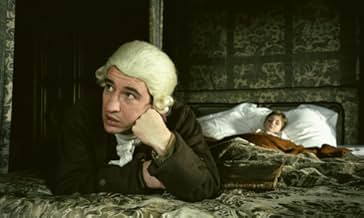
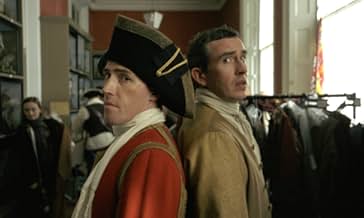
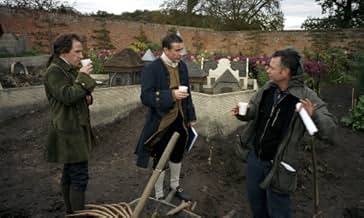
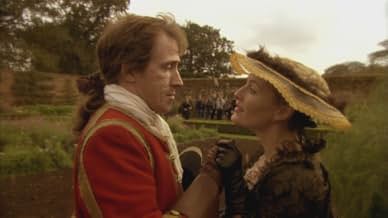
Ajouter une intrigue dans votre langueDirector Michael Winterbottom (Northam) attempts to shoot the adaptation of Laurence Sterne's essentially unfilmable novel, "The Life and Opinions of Tristram Shandy, Gentleman."Director Michael Winterbottom (Northam) attempts to shoot the adaptation of Laurence Sterne's essentially unfilmable novel, "The Life and Opinions of Tristram Shandy, Gentleman."Director Michael Winterbottom (Northam) attempts to shoot the adaptation of Laurence Sterne's essentially unfilmable novel, "The Life and Opinions of Tristram Shandy, Gentleman."
- Réalisation
- Scénaristes
- Vedettes
- Nominé pour le prix 1 BAFTA Award
- 2 victoires et 14 nominations au total


6,713.5K
1
2
3
4
5
6
7
8
9
10
Avis en vedette
Shandy by halves
The Life and Opinions of Tristram Shandy was published in the mid 1750s and can be described as postmodern before the term was invented.
The book is a ramble and regarded as unfilmable.
Enter Frank Cottrell Boyce and Michael Winterbottom. They are assisted by Rob Brydon and Steve Coogan who adapted the book as a film within a film of the book.
Anyone familiar with the BBC series The Trip, also directed by Winterbottom and starring Brydon and Coogan as versions of themselves will be acquainted with the set up.
They both tease, spar, cajole each other and do impressions.
You have scenes relating to the birth of Tristram Shandy and some of it is comical and amusing. You have a battle scene with literally tens of people and suddenly the filmmakers manage to get Gillian Anderson on board as Widow Wadman which leads to an increased budget
As the film goes on, Coogan's personal life comes under scrutiny with a newspaper hack chasing him about a kiss and tell story. Madchester TV stalwart and music mogul Tony Wilson appears as himself giving a testy interview to Coogan. Stephen Fry later drops by as a know it all.
By the latter part of the film it just fizzles out, as if the actual writer and director ran out of gas and this viewer lost interest.
Maybe there was a good reason why the novel was unfilmable.
The book is a ramble and regarded as unfilmable.
Enter Frank Cottrell Boyce and Michael Winterbottom. They are assisted by Rob Brydon and Steve Coogan who adapted the book as a film within a film of the book.
Anyone familiar with the BBC series The Trip, also directed by Winterbottom and starring Brydon and Coogan as versions of themselves will be acquainted with the set up.
They both tease, spar, cajole each other and do impressions.
You have scenes relating to the birth of Tristram Shandy and some of it is comical and amusing. You have a battle scene with literally tens of people and suddenly the filmmakers manage to get Gillian Anderson on board as Widow Wadman which leads to an increased budget
As the film goes on, Coogan's personal life comes under scrutiny with a newspaper hack chasing him about a kiss and tell story. Madchester TV stalwart and music mogul Tony Wilson appears as himself giving a testy interview to Coogan. Stephen Fry later drops by as a know it all.
By the latter part of the film it just fizzles out, as if the actual writer and director ran out of gas and this viewer lost interest.
Maybe there was a good reason why the novel was unfilmable.
could it have been done any better? probably not
In trying to film a movie based on the novel Tristam Shandy, it is explained that this book is utterly unfilmable. modestly rather, they show the actual process of trying to make this movie while discussing the parts of the book that displayed meaning so they can decide what scenes will be added/cut in the movie. Cleverly enough, this entire process serves as a metaphor for the actual book and the digressive nature of it. Maybe not the most interesting topic to watch, but it is done well enough for you to be curious as to how everything is resolved. If you don't get the metaphor, you will not like the movie. If you do, you might be as delighted as ever that something quite unique has just been viewed.
didn't i just sound ridiculous?
didn't i just sound ridiculous?
Wonderful!
One of the funniest and strangest films about the film-making process, this is less an adaptation of the novel, more a focused and hilarious deconstruction on Winterbottom's working methods. Coogan and Brydon are fantastic. The scene with Coogan and a hot chestnut down his trousers is worth the price of admission alone! Although the film may not be to everyone's taste - it darts around and has little respect for narrative logic or continuity (as does the book), it is a freeform little gem that really does cement Winterbottom's reputation as the most exciting British director out there. Any person who can make In This World, Code 46, 9 Songs and then this in a row is worthy of respect.
Messy and a bit too post-modern and smart-arsed for some I'm sure but for me it was just a great deal of fun and a lot of laughs
Before getting on to what I thought of the film, let's just get some of the big problems out in the open. Firstly those looking for an adaptation of the book will be disappointed to find that very little of the content is on the screen because the script uses it more as a frame and a guide for essentially a behind-the-scenes mockumentary about making the film of the book. It does go someway to backing up the claim that the book is "unfilmable" because this film certainly hasn't managed it. Secondly, by being all post-modern and having actors playing a version of themselves the film will alienate viewers who don't get it and feel that it is all too clever for its own good; likewise it may have people feeling that it has all been done before indeed by the very same people in fact.
However, that said, it is hard for me to ignore the fact that it was tremendous fun. Taking its lead from the novel's constant digressions, the film cannot stick on anything long and as we open the film jumping around the events around Tristram's birth, we soon find that we have jumped behind the scenes and into the lives of those involved. It is a brave move and one that doesn't totally work but it is surprisingly easy to go along with. In terms of the treatment of the novel I felt it did well because it made me want to read the book. We are told enough about the novel to develop an interest in it and know what it is about and it may be a very wise decision to have avoided tackling something that everyone says couldn't be done. Some parts of the book are told as they would have been in a "proper" filmed version but some are not one scene is actually Coogan's nightmare and features Brydon playing his big scene with Gillian Anderson with a Roger Moore impression.
In the place of a straight adaptation what we get is a wonderfully funny look at stars, period dramas, British film-making, celebrities and so on. It has very little structure to speak of but what it does have is a natural development, humour and delivery that makes it interesting and constantly fresh. I wasn't laughing every second because it isn't that type of comedy but occasionally it was very funny, producing some great scenes and some great dry wit. The "story" (if there is one) focuses on Coogan his pedantic fame, his exploits and generally the exaggerated version of himself that he has played before. This keeps the film moving forward by providing one central point of reference for everything else to happen around so, although it does feel very fragmented and distracted, really it is more structured than it appears. The most amusing moments do come from the post-modern looks at Coogan's insecurities, the contrast of his family life with the exploits with the stripper etc and generally it makes the film interesting because it does convince as a "reality" of a sort. Having said that though, the film does have some hysterical bits that just hang there by themselves; for example Brydon's Coogan impressions are hilarious, as is the Al Pacino discussion over the end credits.
The cast list reads like a who's who of British film and television some in main roles but many in semi-cameos who do the goods and then move on. Coogan is naturally the star (no matter what Brydon thinks!) and, although he has played a version of himself or addressed the camera in a post-modern way before, it still works well here. He is convincing and natural and it helps the film produce this "reality" that it really does heavily rely on. Brydon perhaps relies a bit too heavily on impressions but generally he is just as good and the scenes he shares with Coogan tend to be some of the funniest. Although she has largely been overlooked as the critics name names and hand out praise, I think that Naomi Harris deserves a lot of credit for her performance here. Left with a more serious thread to carry, she turns in a totally convincing performance to the point where I could easily believe this is who she is. She also produces an engaging thread around her desire for Coogan, despite having little to work with. I'll admit that I have liked her in most things I have seen her do, find her very attractive and did slightly fall for her "chilled, cool dressing film buff" character (ok, a bit more than slightly) but I still thought she was easily the best performance in the whole film.
The rest of the cast work well within the "reality" of the film and generally produce laughs. Faces like Moran, Fry and Walliams provide some comedy but are little more than cameos. Northam and Anderson are good and support is generally very good from people like Macdonald, Hart, Henderson and others. Winterbottom pulls off the seemingly impossible of holding it all together as director and moving well within the novel and reality both in terms of story telling but also visually.
Overall this will please as many people as it p*sses off I think. Taking the manner of telling of the novel (distracted and digressing) the film moves from a straight telling into a spoof of reality. Saying it like this sounds dull and "seen it all before" but it is an impressive piece of film-making that is brave and, even better, works. As brilliant as it is flawed, this is certainly worth a try whether you know the book or not because, simply put, it is tremendous, tumultuous fun.
However, that said, it is hard for me to ignore the fact that it was tremendous fun. Taking its lead from the novel's constant digressions, the film cannot stick on anything long and as we open the film jumping around the events around Tristram's birth, we soon find that we have jumped behind the scenes and into the lives of those involved. It is a brave move and one that doesn't totally work but it is surprisingly easy to go along with. In terms of the treatment of the novel I felt it did well because it made me want to read the book. We are told enough about the novel to develop an interest in it and know what it is about and it may be a very wise decision to have avoided tackling something that everyone says couldn't be done. Some parts of the book are told as they would have been in a "proper" filmed version but some are not one scene is actually Coogan's nightmare and features Brydon playing his big scene with Gillian Anderson with a Roger Moore impression.
In the place of a straight adaptation what we get is a wonderfully funny look at stars, period dramas, British film-making, celebrities and so on. It has very little structure to speak of but what it does have is a natural development, humour and delivery that makes it interesting and constantly fresh. I wasn't laughing every second because it isn't that type of comedy but occasionally it was very funny, producing some great scenes and some great dry wit. The "story" (if there is one) focuses on Coogan his pedantic fame, his exploits and generally the exaggerated version of himself that he has played before. This keeps the film moving forward by providing one central point of reference for everything else to happen around so, although it does feel very fragmented and distracted, really it is more structured than it appears. The most amusing moments do come from the post-modern looks at Coogan's insecurities, the contrast of his family life with the exploits with the stripper etc and generally it makes the film interesting because it does convince as a "reality" of a sort. Having said that though, the film does have some hysterical bits that just hang there by themselves; for example Brydon's Coogan impressions are hilarious, as is the Al Pacino discussion over the end credits.
The cast list reads like a who's who of British film and television some in main roles but many in semi-cameos who do the goods and then move on. Coogan is naturally the star (no matter what Brydon thinks!) and, although he has played a version of himself or addressed the camera in a post-modern way before, it still works well here. He is convincing and natural and it helps the film produce this "reality" that it really does heavily rely on. Brydon perhaps relies a bit too heavily on impressions but generally he is just as good and the scenes he shares with Coogan tend to be some of the funniest. Although she has largely been overlooked as the critics name names and hand out praise, I think that Naomi Harris deserves a lot of credit for her performance here. Left with a more serious thread to carry, she turns in a totally convincing performance to the point where I could easily believe this is who she is. She also produces an engaging thread around her desire for Coogan, despite having little to work with. I'll admit that I have liked her in most things I have seen her do, find her very attractive and did slightly fall for her "chilled, cool dressing film buff" character (ok, a bit more than slightly) but I still thought she was easily the best performance in the whole film.
The rest of the cast work well within the "reality" of the film and generally produce laughs. Faces like Moran, Fry and Walliams provide some comedy but are little more than cameos. Northam and Anderson are good and support is generally very good from people like Macdonald, Hart, Henderson and others. Winterbottom pulls off the seemingly impossible of holding it all together as director and moving well within the novel and reality both in terms of story telling but also visually.
Overall this will please as many people as it p*sses off I think. Taking the manner of telling of the novel (distracted and digressing) the film moves from a straight telling into a spoof of reality. Saying it like this sounds dull and "seen it all before" but it is an impressive piece of film-making that is brave and, even better, works. As brilliant as it is flawed, this is certainly worth a try whether you know the book or not because, simply put, it is tremendous, tumultuous fun.
Lots of Cleverness and some Wit but -- I do fear -- not quite enough Shandy
Michael Winterbottom's movie is an Altmanesque production depicting an English crew shooting Laurence's Sterne's eccentric eighteenth-century literary classic. It begins wittily and appropriately with Steve Coogan exchanging mocking banter with costar Rob Bryden, and then Coogan, with cosmetically enlarged and crooked nose and proper costume, becomes Shandy introducing himself. The essentials of the book are sketched in -- first of all, Tristram's meandering account of his childhood and birth (not in any logical order -- nor should they be -- and intersperced with Coogan's caustic comments on the child actors playing him at earlier stages -- which perfectly fits in with Sterne's tendency to interrupt himself on the slightest pretext); then, Uncle Toby (Rob Briden) and his obsession with his exploits at the Battle of Naumur, which include an injury whose location he studiously avoids explicating. The mishaps surrounding Tristram's birth start with his name and move on to the forceps -- then a new device -- whose clumsy use by Dr. Slop cause the altered nose. A falling window caused even more crucial damage.
The moment of birth is dwelt upon -- then the camera cuts back to the crew and the focus shifts to the Coogan-Bryden rivalry again, Steve's girlfriend and their baby, his own problems in bed, his flirtation with a pale-coffee-colored lady crew member who's a great film buff. Coogan wants his shoes made with higher heels so he's taller than Bryden. The filmmakers hold endless confabs over how to do a battle scene and whether to bring in the romance with Widow Wadham (to be played by Gillian Anderson, who agrees from Los Angeles with comic alacrity). Anderson's presence brings in more money for the battle, and then both the battle and the romance are left out of the final cut. Much hilarity accompanies these details, though the main focus is on Coogan's stardom and inability to have a minute to himself.
Unfortunately once Winterbottom pulls away from the birth scene, the Sterne novel, which pretty much ranks with Fielding's "Tom Jones" for brilliance and humor, somewhat falls by the wayside never to be recovered till just before the end, when it seems tacked back in as a hasty afterthought. And hasty is one thing Sterne never is: impulsive and quirky, but never, never, never -- oh, my Heavens No! -- not rushed. At novel's end, his main character, after all, has still not been born.
Maybe it means something that only one member of the cast is reported to have ever actually read "Tristram Shandy" through to the end. Neither Coogan nor Bryden seems particularly eighteenth-century in their role, and Bryden's isn't a particularly inspired recreation of Uncle Toby. Nobody is amiably eccentric to the right degree.
Winterbottom has made an intermittently quite funny movie that never loses its pace, but he has recreated Robert Altman rather than Laurence Sterne, and when you realize this, if you care at all about the novel, the whole enterprise, despite its frantic energy, becomes, for all its wit and good humor, a little bit of a drag. This is an enormously clever film, but what seems brilliant on paper doesn't always play for keeps.
The moment of birth is dwelt upon -- then the camera cuts back to the crew and the focus shifts to the Coogan-Bryden rivalry again, Steve's girlfriend and their baby, his own problems in bed, his flirtation with a pale-coffee-colored lady crew member who's a great film buff. Coogan wants his shoes made with higher heels so he's taller than Bryden. The filmmakers hold endless confabs over how to do a battle scene and whether to bring in the romance with Widow Wadham (to be played by Gillian Anderson, who agrees from Los Angeles with comic alacrity). Anderson's presence brings in more money for the battle, and then both the battle and the romance are left out of the final cut. Much hilarity accompanies these details, though the main focus is on Coogan's stardom and inability to have a minute to himself.
Unfortunately once Winterbottom pulls away from the birth scene, the Sterne novel, which pretty much ranks with Fielding's "Tom Jones" for brilliance and humor, somewhat falls by the wayside never to be recovered till just before the end, when it seems tacked back in as a hasty afterthought. And hasty is one thing Sterne never is: impulsive and quirky, but never, never, never -- oh, my Heavens No! -- not rushed. At novel's end, his main character, after all, has still not been born.
Maybe it means something that only one member of the cast is reported to have ever actually read "Tristram Shandy" through to the end. Neither Coogan nor Bryden seems particularly eighteenth-century in their role, and Bryden's isn't a particularly inspired recreation of Uncle Toby. Nobody is amiably eccentric to the right degree.
Winterbottom has made an intermittently quite funny movie that never loses its pace, but he has recreated Robert Altman rather than Laurence Sterne, and when you realize this, if you care at all about the novel, the whole enterprise, despite its frantic energy, becomes, for all its wit and good humor, a little bit of a drag. This is an enormously clever film, but what seems brilliant on paper doesn't always play for keeps.


Le saviez-vous
- AnecdotesThe credited writer Martin Hardy is actually a pseudonym for the writer Frank Cottrell Boyce, who had his name taken off the film after a falling-out with longtime collaborator Michael Winterbottom.
- Citations
Rob Brydon: The thing is, I can't act...
Steve Coogan: I know that.
Rob Brydon: ...with Gillian Anderson. I have a sexual thing for Gillian Anderson.
- Générique farfeluOpening credits have (intentional) spacing issues, and mismatched fonts.
- Autres versionsJust as with "In This World," the British DVD features a 1.78:1 transfer of the film. Although the film was shot for release in theaters at 2.35:1, because it was made on DV, the total space of the filmed image was 1.78. The film was masked for theatrical release, as the director intended. However, for DVD release, the film was transferred open matte. Again, like "In This World," only the American DVD respects the theatrical aspect ratio of 2.35:1.
- ConnexionsFeatured in The South Bank Show: Michael Winterbottom (2005)
- Bandes originalesChasing Sheep is Best Left to Shepherds
from The Draughtman's Contract Music
Composed by Michael Nyman
Published by Chester Music Limited
Performed by the Michael Nyman Band
Meilleurs choix
Connectez-vous pour évaluer et surveiller les recommandations personnalisées
- How long is Tristram Shandy?Propulsé par Alexa
Détails
- Date de sortie
- Pays d’origine
- Langue
- Aussi connu sous le nom de
- Tristram Shandy: A Cock and Bull Story
- Lieux de tournage
- sociétés de production
- Consultez plus de crédits d'entreprise sur IMDbPro
Box-office
- Budget
- 2 800 000 £ (estimation)
- Brut – États-Unis et Canada
- 1 253 413 $ US
- Fin de semaine d'ouverture – États-Unis et Canada
- 60 886 $ US
- 29 janv. 2006
- Brut – à l'échelle mondiale
- 3 931 982 $ US
- Durée
- 1h 34m(94 min)
- Couleur
- Mixage
- Rapport de forme
- 2.35 : 1
Contribuer à cette page
Suggérer une modification ou ajouter du contenu manquant