Calendrier de lancementLes 250 meilleurs filmsFilms les plus populairesParcourir les films par genreBx-office supérieurHoraire des présentations et billetsNouvelles cinématographiquesPleins feux sur le cinéma indien
    À l’affiche à la télévision et en diffusion en temps réelLes 250 meilleures séries téléÉmissions de télévision les plus populairesParcourir les séries TV par genreNouvelles télévisées
    À regarderBandes-annonces récentesIMDb OriginalsChoix IMDbIMDb en vedetteGuide du divertissement familialBalados IMDb
    OscarsBest Of 2025Holiday Watch GuideGotham AwardsPrix STARmeterCentre des prixCentre du festivalTous les événements
    Personnes nées aujourd’huiCélébrités les plus populairesNouvelles des célébrités
    Centre d’aideZone des contributeursSondages
Pour les professionnels de l’industrie
  • Langue
  • Entièrement prise en charge
  • English (United States)
    Partiellement prise en charge
  • Français (Canada)
  • Français (France)
  • Deutsch (Deutschland)
  • हिंदी (भारत)
  • Italiano (Italia)
  • Português (Brasil)
  • Español (España)
  • Español (México)
Liste de visionnement
Ouvrir une session
  • Entièrement prise en charge
  • English (United States)
    Partiellement prise en charge
  • Français (Canada)
  • Français (France)
  • Deutsch (Deutschland)
  • हिंदी (भारत)
  • Italiano (Italia)
  • Português (Brasil)
  • Español (España)
  • Español (México)
Utiliser l'application
  • Distribution et équipe technique
  • Commentaires des utilisateurs
  • FAQ
IMDbPro

Johanna

  • 2005
  • 1h 26m
ÉVALUATION IMDb
5,6/10
542
MA NOTE
Johanna (2005)
Comédie musicaleDrame

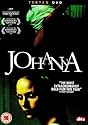
Ajouter une intrigue dans votre langueJohanna, a young drug addict, falls into a deep coma after an accident. Doctors miraculously manage to save her from death's doorstep. Touched by grace, Johanna cures patients by offering he... Tout lireJohanna, a young drug addict, falls into a deep coma after an accident. Doctors miraculously manage to save her from death's doorstep. Touched by grace, Johanna cures patients by offering her body. The head doctor is frustrated by her continued rejection of him and allies himself... Tout lireJohanna, a young drug addict, falls into a deep coma after an accident. Doctors miraculously manage to save her from death's doorstep. Touched by grace, Johanna cures patients by offering her body. The head doctor is frustrated by her continued rejection of him and allies himself with the outraged hospital authorities. They wage war against her but the grateful patien... Tout lire

  • Réalisation
    • Kornél Mundruczó
  • Scénaristes
    • Yvette Bíró
    • Kornél Mundruczó
    • Viktória Petrányi
  • Vedettes
    • Orsolya Tóth
    • Eszter Wierdl
    • Zsolt Trill
  • Voir l’information sur la production à IMDbPro
  • ÉVALUATION IMDb
    5,6/10
    542
    MA NOTE
    • Réalisation
      • Kornél Mundruczó
    • Scénaristes
      • Yvette Bíró
      • Kornél Mundruczó
      • Viktória Petrányi
    • Vedettes
      • Orsolya Tóth
      • Eszter Wierdl
      • Zsolt Trill
    • 11Commentaires d'utilisateurs
    • 7Commentaires de critiques
  • Voir l’information sur la production à IMDbPro
  • Voir l’information sur la production à IMDbPro
    • Prix
      • 8 victoires et 4 nominations au total

    Photos1

    Voir l’affiche

    Distribution principale25

    Modifier
    Orsolya Tóth
    Orsolya Tóth
    • Johanna
    • (as Orsi Tóth)
    Eszter Wierdl
    • Johanna's Voice
    Zsolt Trill
    Zsolt Trill
    • Young Doctor
    Tamás Kóbor
    • Young Doctor's Voice
    Dénes Gulyás
    • Professor
    József Hormai
    • 1st Doctor
    Sándor Kecskés
    • 2nd Doctor
    Viktória Mester
    • 1st Nurse
    Hermina Fátyol
    Hermina Fátyol
    • 2nd Nurse
    Andrea Meláth
    • 3rd Nurse
    Kálmán Somody
    • Cleaning Man
    János Klézli
    • Fireman
    Géza Gábor
    • Patient
    Kolos Kováts
    • Patient
    Sándor Egri
    • Patient
    István Gantner
    • Liver Patient
    István Rácz
    • Patient's Voice
    Mónika Martyin
    • Nurse
    • Réalisation
      • Kornél Mundruczó
    • Scénaristes
      • Yvette Bíró
      • Kornél Mundruczó
      • Viktória Petrányi
    • Tous les acteurs et membres de l'équipe
    • Production, box office et plus encore chez IMDbPro

    Commentaires des utilisateurs11

    5,6542
    1
    2
    3
    4
    5
    6
    7
    8
    9
    10

    Avis en vedette

    1CinematographUS

    "Full of sound and fury,/Signifying nothing."

    Kornel Mundruczo's "Johanna" is a cinematic mess, "full of sound and fury,/Signifying nothing." With its garish (green) colours and flared images, a mediocre score and lame libretto, the film is well below par. It would be generous to say this film looks more like a bloated, experimental undergraduate student film from the 1970's. Set aside films such as Ingmar Bergman's acclaimed "The Magic Flute" (1975), Joseph Losey's version of Mozart's "Don Giovanni" (1979)," Carlos Saura's flamenco "Carmen" (1983), and Francesco Rosi's 1984 production of the same material, lead by a cast of international opera stars, as being too mainstream and conventional. Mundruczo's "Johanna", supposedly a retelling of the story of Joan of Arc, is lurid and dimwitted. It is the sort of film to which the jaded cinematic "cognoscenti" ascribe all manner of praise for its director's brave vision and deep meaning, but don't be fooled. I watched the entire film, but I'd suggest that you don't. You'll be checking your watch after ten minutes, thinking an hour has passed, wondering if your time would be better spent doing something else. It would.
    6johnnyboyz

    Probably the greatest hospital based Hungarian language operatic Christ allegory-ridden musical, that's ever been made.

    It seems the football match some of the elderly patients watch on television whilst based at the Hungarian hospital within which 2005 feature Johanna is set, was in fact real. They observe Romanian striker Marius Niculae's goal in the fifth minute, FIFA.com have it credited after four; the match was against the watching Hungarians and ended two to nothing in favour of the Romanians in their capital city of Bucharest, thus dating that particular scene on the second day of 2001's June. It's a wacky way to begin a written response to a film, but just where DO you start with Kornél Mundruczó's adventurous; dizzying; somewhat nauseating but eye opening musical Johanna? Littered with style; substance (I think); off-the-wall content and sheer madness, there will be few who'll have seen this Cannes nominated 2005 piece and even fewer who'll have forgotten it after having seen it. Quite how the pitch for the film went, I'll never know but it is a mostly unforgettable; avant-gard fuelled trip into a barren and bleak world of all things medical and allegorical.

    The titular Johanna is played by young Hungarian actress Orsolya Tóth, her involvement in a road accident giving her a severe bout of amnesia whilst being treated at a local hospital; her newfound existence following this accident a severely disjointed and disconnected period of living as she occupies a place seemingly cut off from the rest of the real world. Is she alive? Is she dead? Is anyone? Did she transfer to Hell after death? Is it Heaven? Purgatory? Perhaps she died and was reincarnated as the Second Coming, what with all her newfound powers. Is it all a dream? Director Mundruczó has fun toying with us; disorientating the audience with as many low budgeted tricks as he can and providing us with a plethora of scenes and sequences designed to instill confusion and, on occasion, just a sickly sensation.

    Mundruczó shoots the locale of the hospital as if it were underground, with most of the scenes seemingly having been shot in pitch black following the taping of a battery powered torch to the top of the camera's lens and switched on for filming. The result is an odd sense of being in a place no one knows of, a place no one sees unless summoned to and with a real air of bleakness and hopelessness dominating the air. My guess is most of the film's budget is used in the opening sequence, a slow track following a bus crash and explosion in a public Hungarian street as emergency services arrive setting exactly the sort of tone for what the film isn't in any shape or form about. The eerie, pained sense or atmosphere of agony Mundruczó has his film instilled with makes itself known fairly early on, the credits coming up over a static shot of a medical kit as we hear all those bleeps and noises associated with electronic medical machinery. Off screen, dozens off people lie injured but our admittance as to being able to see their aid is denied despite a certain desperate sense of longing to see some kind of help in operation.

    The survivors are taken to a nearby hospital, a doctor by way of a long take breezes down a dimly lit corridor in which the lighting frequently cuts out, perhaps disguising the film's edits. Each victim he encounters is gradually more injured, until he arrives at the final patient whom is obviously the worst for wear out the bunch; the sequence effectively establishing a sense of, by way of a doctor's moving physicality, progression onto things that are more disfigured and nasty as we progress thus echoing how the film itself branches out. The moment the rug is pulled out from under us, as we attempt to identify who's who and where the film might lead us having started out with a road crash aftermath before venturing to a place of aid for recovery, is the moment everyone in the hospital gets up out of their ward beds having finished the "drill" and breaking into song. The rug is pulled; we are flat on our backs and we don't really get back up again until after the film has finished. Johanna seemingly stays injured, though; the tests they administer to her and the time she spends there resulting in nothing bar a new existence as a nurse to go along with a sensational gift of being able to cure elderly men of their illnesses by having sexual intercourse with them.

    It's here most people will point out the film's predominant ingredients are sex and death. Welsh born filmmaker Peter Greenaway is quoted on the IMDb to have said: "There are basically only two subject matters in all Western culture: sex and death. We do have some ability to manipulate sex nowadays. We have no ability, and never will have, to manipulate death." Johanna, whilst a Hungarian film which you'd be within your right to classify as of an Eastern ilk, toys with the prospect of using sex as a means of doing exactly that and manipulating death so as to essentially avoid it. For how long, the film is unspecific; if people are in fine health an hour after the opening bus crash then it might be for eternity. A love plot enters proceedings towards the end, Johanna remaining firm and sleeping with as many ill patients as possible so as to cure them but refusing to bow to a resident doctor's approaches. Mundruczó sees the humour in the whole thing; the line "Let's all rush to the Urology department" sung therein garnering raised eyebrows but smirks. The omnipresent juxtaposition of the characters' orchestral singing with the morgue-like locale of the hospital is probably a little too effective at times, with the overall result a just about watchable musical about enough to make the 86 minute runtime seem longer than it is, and I mean that in the nicest possible way.
    7Chris_Docker

    Remarkable that it works at all: more remarkable that it works rather well

    Is Opera for you? If so, Johanna is rather more than opera transferred to the screen. New opera is incredibly expensive to produce – costs might run close to a million, yet tickets cost more than a trip to the cinema – and many people prefer to see well-known operas rather than new works. So can cinema be an outlet for emerging operatic talent? And does it work as cinema? Johanna is a reworking of the story of Joan of Arc. In this modern 'version', she is a patient in a Budapest hospital and also turns out to be a drug addict. Having saved her from a terrible road accident, the staff realise she has nowhere to go, but a young doctor is attracted to her and persuades the hospital to keep her on as a nurse if he trains her up. Soon she is performing miraculous cures – achieved largely it seems by having sex with the male patients. They recognise her saintly healing gifts but also brand her a whore. She says she does what she does, sacrificing her body, to save others out of pure love. The doctor suitor says he loves her and she should love only him; but she retorts that he does not know what love is.

    From a cinematic point of view, an immediate advantage of opera is that we do not complain about plot holes or lack of realism – that is not unusual in opera – if it makes conceptual or symbolic sense that is usually enough. A downside is that, even in the best of auditoriums, the purity of the sound quality does not quite equal that of an opera house. So how do we justify the transition to the screen? Is the spirit of the opera better conveyed? Polanski's transition from Shakespeare's theatre, for instance, evokes a realism, the sense of mud and filth in a rain-sodden Scottish countryside, that would be impossible on stage. The opening scenes of Johanna look promising: the dark and eerie setting of the old-fashioned hospital, the ghostly pallor of the patients in the dismal setting. But soon it becomes clear that the lack of visual lustre is more about budget than choice. Most filmmakers, for instance, would have given visual emphasis to her first hit of morphine as she embraces the drug, but we are left to imagine her inner exhilaration as we would have to if it were a stage opera. Subtitles are also low quality and not always easy to read. Where the film really comes into its own however is when the revelation of Johanna's divine mission becomes clear, amidst contrasting scenes of light and dark. We recall the large amounts of exposed breasts earlier in the film that lead to the doctor's infatuation – an obsession romanticised into 'love' and full of jealousy and moral self-righteousness. The tragedy of divine goodness hiding within the lowliest form gains momentum and – as in all good operas – proceeds to its inevitable climax.

    By the end of the film, the forces of good and evil have become strongly polarised, the 'good' doctors sing of how they will 'praise' her (once she is out of their way). The rebuffed doctor arms himself with two needles (like the arms of a cross – is he going to drug-rape her? kill her? frighten her?) - he becomes symbolic of the Christian Church that controls the eros within its faithful by worship of abstinence and conjugal rights; just as she becomes symbolic of true love to all mankind, philia, to which her sexuality becomes subservient.

    The remarkable thing about Johanna, a new experimental opera written directly for the screen Zsofia Taller, is that it works at all. As an opera it works brilliantly. As a film, it just about proves its point.
    1viervijftig

    Glad

    I'm so glad to know that I've already seen the worst movie of my life.. This was a ridiculous movie, both story and acting were so bad, that I could only leave the theater with a smile on my face, knowing no movie would ever beat this one! You should know I watch art-house-movies on a regular basis, but this one went way too far in trying to renew the fine art of movie-making.

    I must say I'm not a great fan of opera, so that may have been quite good. For those who do like opera, maybe you should rent this movie, but make sure you turn of your TV-screen and that you don't understand a word of the Hungarian language.. Seriously, those things will ruin your experience.
    8rjmcchesney

    Daring and Unique take on Modern Opera

    People walked out of the theatre..fair enough. It's an Art film and an extremely audacious one to boot. But in my humble opinion, it's not worth throwing the baby out with the bathwater.

    If you can get past the fact that 1) it's an opera, 2) it's sung (very beautifully) in Hungarian, and 3)there's naked old men singing about liver failure..you might actually enjoy this film. If not then perhaps you might find that you can appreciate it as a one off. Whether that is a good or a bad thing, I suppose is up to the viewer.

    The lead actress Orsi Toth is absolutely stunning in this film. Her performance was uncomfortable, emotive, and surprising. I look forward to seeing her in future films.

    Plus de résultats de ce genre

    Szép napok
    5,2
    Szép napok
    Jupiter holdja
    6,1
    Jupiter holdja
    Fehér isten
    6,8
    Fehér isten
    Szelíd teremtés - A Frankenstein-terv
    5,6
    Szelíd teremtés - A Frankenstein-terv
    Evolution
    6,3
    Evolution
    Delta
    6,3
    Delta
    If Not Now, When?
    If Not Now, When?
    Proxy
    Nincsen nekem vágyam semmi
    5,2
    Nincsen nekem vágyam semmi
    Lost and Found
    6,5
    Lost and Found
    Femmes sans hommes
    6,2
    Femmes sans hommes
    De tierra
    6,6
    De tierra

    Intérêts connexes

    Julie Andrews in La mélodie du bonheur (1965)
    Comédie musicale
    Naomie Harris, Mahershala Ali, Janelle Monáe, André Holland, Herman Caheej McGloun, Edson Jean, Alex R. Hibbert, and Tanisha Cidel in Moonlight - L'histoire d'une vie (2016)
    Drame

    Histoire

    Modifier

    Meilleurs choix

    Connectez-vous pour évaluer et surveiller les recommandations personnalisées
    Se connecter

    FAQ14

    • How long is Johanna?Propulsé par Alexa

    Détails

    Modifier
    • Date de sortie
      • 10 novembre 2005 (Hungary)
    • Pays d’origine
      • Hungary
    • Langue
      • Hungarian
    • Aussi connu sous le nom de
      • Johana
    • Lieux de tournage
      • Hongrie
    • sociétés de production
      • Mozgóképforgalmazási Vállalat (MOKÉP)
      • Proton Cinema
      • TT Filmmûhely
    • Consultez plus de crédits d'entreprise sur IMDbPro

    Spécifications techniques

    Modifier
    • Durée
      • 1h 26m(86 min)
    • Couleur
      • Color
    • Rapport de forme
      • 1.85 : 1

    Contribuer à cette page

    Suggérer une modification ou ajouter du contenu manquant
    • En savoir plus sur la façon de contribuer
    Modifier la page

    En découvrir davantage

    Consultés récemment

    Veuillez activer les témoins du navigateur pour utiliser cette fonctionnalité. Apprenez-en plus.
    Télécharger l'application IMDb
    Connectez-vous pour plus d’accèsConnectez-vous pour plus d’accès
    Suivez IMDb sur les réseaux sociaux
    Télécharger l'application IMDb
    Pour Android et iOS
    Télécharger l'application IMDb
    • Aide
    • Index du site
    • IMDbPro
    • Box Office Mojo
    • Données IMDb de licence
    • Salle de presse
    • Publicité
    • Emplois
    • Conditions d'utilisation
    • Politique de confidentialité
    • Your Ads Privacy Choices
    IMDb, une entreprise d’Amazon

    © 1990-2025 by IMDb.com, Inc.