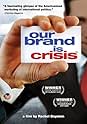
Ajouter une intrigue dans votre langueA documentary on American political campaign marketing tactics and their consequences.A documentary on American political campaign marketing tactics and their consequences.A documentary on American political campaign marketing tactics and their consequences.
- Réalisation
- Scénariste
- Vedettes
- Prix
- 1 victoire et 2 nominations au total
Manuel Rocha
- Self - US Ambassadir to Bolivia
- (archive footage)
Adam Webber
- Self (GCS Associate)
- (as Amy Webber)
6,9661
1
2
3
4
5
6
7
8
9
10
Avis en vedette
Patronizing and clueless
Want a reminder of why so many people around the world think Americans are clueless, ignorant and narrow-minded? Go see "Our Brand is Crisis." Rachel Boynton seems shocked that Bolivians use modern campaign techniques: polls, focus groups, etc. Who would have thought, huh? I have news for Boynton: they also have highways, email, television and movie theaters. Yes, I know it must come as a shock to you.
The whole tone of the film is so patronizing (poor little people being helped by big-shot Americans) I cringed most of the time. At the movie theater where I saw this film there were many South Americans and once the lights went on, I could see them rolling their eyes and hear their comments: shallow, patronizing, clueless. I could not have agreed more.
American-Exported Politics To Bolivia
In the early 2000s, a Bolivian politician tried to return to power and the presidency. Not content to do things the Bolivian way, he hired some American strategists, Jeremy Posner and the legendary James Carville. What followed was a campaign that was orchestrated to win, regardless of the methods necessary.
It's hard to say what the message of "Our Brand Is Crisis" is. My friend Chelsea, whom lent it to me, sees it as a critique of American culture and values pervading other countries. And she is, of course, right. I am not sure how Bolivian elections were run before, but here they were fine-tuned to the point of a science, where the formula wasn't necessarily genuine.
Opponents were smeared in television ads, where a man's military background was exploited to make him look less trustworthy. Demographics were sorted out, and focus groups were asked very specific questions, and results were tabulated before each television ad to change the message and look. Failures (such as low job creation) were turned into promises. This was American-style politics, where style trumps substance, and promises don't mean any guarantee.
And, of course, while the focus was on Bolivia (and the aftermath that lead to a complete collapse of order), the same critiques can be made of America. We have calls for "hope" and "change" and try to portray politicians as someone we would want to have a beer with. Politics in general is a farce, with real ideas being ignored for less important issues. But nowhere do we see this more than during campaigns, where a military record could create or destroy a candidate, not to mention their sexual history. And, of course, neither military service or sex will determine how they vote in most cases.
I found this film to be very powerful, and for the most part unbiased. I think it had a general left lean to it, but there was little commentary. We were given Posner and Carville unfiltered, so we can interpret them as we see fit. I found some of their words insightful and inspiring, but mostly was saddened that Americans could come to Bolivia and change everything in a place they knew little about (though, in Posner's defense, he seemed to have a general knowledge).
It's hard to say what the message of "Our Brand Is Crisis" is. My friend Chelsea, whom lent it to me, sees it as a critique of American culture and values pervading other countries. And she is, of course, right. I am not sure how Bolivian elections were run before, but here they were fine-tuned to the point of a science, where the formula wasn't necessarily genuine.
Opponents were smeared in television ads, where a man's military background was exploited to make him look less trustworthy. Demographics were sorted out, and focus groups were asked very specific questions, and results were tabulated before each television ad to change the message and look. Failures (such as low job creation) were turned into promises. This was American-style politics, where style trumps substance, and promises don't mean any guarantee.
And, of course, while the focus was on Bolivia (and the aftermath that lead to a complete collapse of order), the same critiques can be made of America. We have calls for "hope" and "change" and try to portray politicians as someone we would want to have a beer with. Politics in general is a farce, with real ideas being ignored for less important issues. But nowhere do we see this more than during campaigns, where a military record could create or destroy a candidate, not to mention their sexual history. And, of course, neither military service or sex will determine how they vote in most cases.
I found this film to be very powerful, and for the most part unbiased. I think it had a general left lean to it, but there was little commentary. We were given Posner and Carville unfiltered, so we can interpret them as we see fit. I found some of their words insightful and inspiring, but mostly was saddened that Americans could come to Bolivia and change everything in a place they knew little about (though, in Posner's defense, he seemed to have a general knowledge).
Political campaign in southern American country using U.S. tactics
I'm sometimes asked why I enjoy foreign films, documentaries and independent cinema. The answer is simple, I love learning most things international, and I'm always in search of a different perspective. And you should already know, I have little use for a Hollywood blockbuster.
The documentary "Our Brand of Crisis" is a wonderful example of what gets me excited. It archives the behind-the-scenes strategy of a presidential campaign in the Latin American country of Bolivia. The American consulting firm Greenberg, Carville and Strum (GCS) has been hired to assist a former Bolivian president ('93-'97) in winning the 2003 election. The U.S. raised and educated candidate, Gonzales "Goni" Sanchez de Lozada demonstrates little concern for the people. At first Goni is seen by most voters as being cold and arrogant and one who takes no responsibility for the mistakes made in his earlier term in office. GCS coaches him, monitors the polls, produces negative ads against the front-runner and uses test-groups in their quest to win the election. The polls slowly begin to turn thanks to the skills of GSC. At one point, even the U.S. Ambassador throws a road block in Goni' campaign.
This gritty film swings the door wide open on the honest feelings of people during political strife, even as they hold onto hope for a better tomorrow. As GCS frequently conducts focus groups with average citizens to obtain their feelings about the candidate and the issues, you find yourself becoming part of the election. The documentary goes a step further by returning to Bolivia at different times after the election. The results clearly define the hazards of exporting American-style campaign strategy abroad.
If you enjoyed the Oscar nominated documentary, The War Room, a behind-the-scenes look at a 1993 U.S. political campaign, this film should not be missed.
The documentary "Our Brand of Crisis" is a wonderful example of what gets me excited. It archives the behind-the-scenes strategy of a presidential campaign in the Latin American country of Bolivia. The American consulting firm Greenberg, Carville and Strum (GCS) has been hired to assist a former Bolivian president ('93-'97) in winning the 2003 election. The U.S. raised and educated candidate, Gonzales "Goni" Sanchez de Lozada demonstrates little concern for the people. At first Goni is seen by most voters as being cold and arrogant and one who takes no responsibility for the mistakes made in his earlier term in office. GCS coaches him, monitors the polls, produces negative ads against the front-runner and uses test-groups in their quest to win the election. The polls slowly begin to turn thanks to the skills of GSC. At one point, even the U.S. Ambassador throws a road block in Goni' campaign.
This gritty film swings the door wide open on the honest feelings of people during political strife, even as they hold onto hope for a better tomorrow. As GCS frequently conducts focus groups with average citizens to obtain their feelings about the candidate and the issues, you find yourself becoming part of the election. The documentary goes a step further by returning to Bolivia at different times after the election. The results clearly define the hazards of exporting American-style campaign strategy abroad.
If you enjoyed the Oscar nominated documentary, The War Room, a behind-the-scenes look at a 1993 U.S. political campaign, this film should not be missed.
A must see for anyone befuddled by political campaigns
Essentially this film shows the US liberal war machine honing its skills in the impoverished nation of Bolivia - and offers a chilling preamble to our own presidential campaigns and elections.
James Carville and clan use a media defamation campaign, focus groups, and a corrupt and willing news media to play Bolivia for cash, ensuring the election of an arrogant man clearly out of touch with his people.
The opening shot gives you an idea of the results.
Not for the faint of heart - but a must-see nevertheless. It offers a candid, unfiltered look at politics at its worst and leaves you wondering: Can it happen here? Has it?
James Carville and clan use a media defamation campaign, focus groups, and a corrupt and willing news media to play Bolivia for cash, ensuring the election of an arrogant man clearly out of touch with his people.
The opening shot gives you an idea of the results.
Not for the faint of heart - but a must-see nevertheless. It offers a candid, unfiltered look at politics at its worst and leaves you wondering: Can it happen here? Has it?
Poignant and entertaining
The film maker and movie are NOT patronizing in any way. The only patronizing is done by the GCC (consulting agency which James Carville is a member). For the most part, it is a great inside look into political campaigns and the consultants who run them. Although campaigns are mostly a game to GCC, it shows how who wins or loses can have serious consequences. Even though some of GCC may be sobered by the end of the movie, they state that they would probably not change their practices.
Unfortunately, the film maker does little to challenge GCC and its members which state that they support democratization and globalization - as if one has anything to do with the other. In fact, one of the members of GCC states that maybe Bolivian's didn't want democracy because they reject globalization. The film maker does nothing to challenge this view. As a result, the film maker missed an extremely important part of the story.
Le saviez-vous
- AnecdotesA feature length film with the same title out 2015 featuring Sandra Bullock and Billy Bob Thornton
- ConnexionsFeatured in 2006 Independent Spirit Awards (2006)
Meilleurs choix
Connectez-vous pour évaluer et surveiller les recommandations personnalisées
Détails
Box-office
- Brut – États-Unis et Canada
- 166 750 $ US
- Fin de semaine d'ouverture – États-Unis et Canada
- 7 970 $ US
- 5 mars 2006
- Brut – à l'échelle mondiale
- 166 750 $ US
- Durée
- 1h 27m(87 min)
- Couleur
Contribuer à cette page
Suggérer une modification ou ajouter du contenu manquant