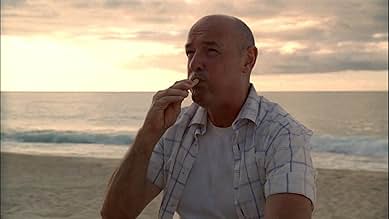
Tabula Rasa
- L'épisode a été diffusé 6 oct. 2004
- TV-14
- 43m
ÉVALUATION IMDb
8,3/10
10 k
MA NOTE
Ajouter une intrigue dans votre langueJack and Hurley discover an alarming secret about Kate, while the marshal's life hangs in the balance.Jack and Hurley discover an alarming secret about Kate, while the marshal's life hangs in the balance.Jack and Hurley discover an alarming secret about Kate, while the marshal's life hangs in the balance.
- Réalisation
- Scénaristes
- Vedettes
Fredric Lehne
- Marshal Edward Mars
- (as Fredric Lane)
Madison
- Vincent the Dog
- (uncredited)
8,310K
1
2
3
4
5
6
7
8
9
10
Avis en vedette
Books have covers
Kate is found out, although her reasons for being a fugitive from the law are not spelled out in this episode. We see a flashback where she stays with a farmer, who eventually betrays her for the reward money. The group who heard the distressing French transmission decides to keep it from the others, for fairly obvious reasons. Michael frets over his son's growing attraction to the weird Mr. Locke. Characters are being developed and better defined in this episode. We also discover the good doctor is not always willing to play the white knight for the survivors. The episode also offers a bit of cheesecake involving Kate that was overdue, in my humble opinion.
"Three days ago we all died"
Kates story is fascinanting and very interesting: storytelling is getting more and more thrilling.
One question though: why on god earth Sawyer and Hurley didn't get even a nominations on emmys?
"Tabula Rasa" delves into the backstory of Kate Austen, shedding light on her mysterious past while exploring the theme of redemption
"Tabula Rasa" delves into the backstory of Kate Austen, shedding light on her mysterious past while exploring the theme of redemption. The episode opens with a focus on the injured marshal and his cryptic references to Kate's criminal background. The direction by Jack Bender effectively balances the present-day tension with the poignant flashbacks, revealing Kate's struggles and her desire for a fresh start.
Evangeline Lilly shines in this episode, delivering a nuanced performance that captures Kate's complexity. Her interactions with Jack and Sawyer reveal different facets of her character, from her resourcefulness to her vulnerability. Matthew Fox continues to anchor the ensemble as Jack, portraying his internal conflict and emerging leadership with subtlety and depth.
The writing in "Tabula Rasa" explores the theme of starting over, both for Kate and for the group as a whole. The title itself, meaning "blank slate," underscores the idea that the island offers a chance for a new beginning. The script skillfully integrates character development with plot progression, maintaining a balance between action and emotional resonance.
The cinematography highlights the contrasting environments of the island, from the dense jungle to the open beach. The use of light and shadow in the flashback scenes effectively conveys Kate's sense of entrapment and her fleeting moments of freedom. The editing smoothly transitions between the different timelines, maintaining the narrative's coherence and emotional impact.
In conclusion, "Tabula Rasa" deepens the character of Kate Austen while exploring broader themes of redemption and identity. The episode is well-crafted, with strong performances, thoughtful writing, and effective direction. It continues to build the series' momentum, offering insights into the characters' pasts while keeping viewers engaged with the unfolding mysteries.
Evangeline Lilly shines in this episode, delivering a nuanced performance that captures Kate's complexity. Her interactions with Jack and Sawyer reveal different facets of her character, from her resourcefulness to her vulnerability. Matthew Fox continues to anchor the ensemble as Jack, portraying his internal conflict and emerging leadership with subtlety and depth.
The writing in "Tabula Rasa" explores the theme of starting over, both for Kate and for the group as a whole. The title itself, meaning "blank slate," underscores the idea that the island offers a chance for a new beginning. The script skillfully integrates character development with plot progression, maintaining a balance between action and emotional resonance.
The cinematography highlights the contrasting environments of the island, from the dense jungle to the open beach. The use of light and shadow in the flashback scenes effectively conveys Kate's sense of entrapment and her fleeting moments of freedom. The editing smoothly transitions between the different timelines, maintaining the narrative's coherence and emotional impact.
In conclusion, "Tabula Rasa" deepens the character of Kate Austen while exploring broader themes of redemption and identity. The episode is well-crafted, with strong performances, thoughtful writing, and effective direction. It continues to build the series' momentum, offering insights into the characters' pasts while keeping viewers engaged with the unfolding mysteries.
Even though nowhere near the brilliance of the pilot, a very good episode all the same
When 'Lost' was in its prime, it was must-watch television. Remember first watching it, found it remarkably easy to get into, was hooked from the start and was on Season 3 by the end of one week. The general consensus is that the final season is a disappointment and cannot disagree.
It would have been a Herculean task to follow on from the brilliant pilot, still one of 'Lost's' best episodes, and one of the best pilots ever produced for television. "Tabula Rasa" is a worthy follow up but somewhat of a let down. It is very important in establishing Kate's back-story and how she came to be in the situation she is now, but when it comes to 'Lost' in general, while Kate's story is still intriguing, there are even more interesting and important stories. In correlation to this episode, the whole stuff with Sawyer fascinated more.
Evangeline Lilly does well with the acting, though to me trying to believe Kate as a fugitive is a bit of a stretch.
"Tabula Rasa" on the other hand is excellently photographed, made with a lot of atmosphere and slickness and with no cheapness at all, while the setting is both beautiful and mysterious.
Even for so early on, the writing is smart and taut as well as provoking a lot of thought. The story is absorbing, it's suspenseful, fun and even has some sweet pathos. Everything with Sawyer is especially well done.
Characters are interesting and one leans towards root for them than getting frustrated. The direction is solid as rocks. Of the across the board strong acting Josh Holloway is especially great.
In short, very good if a let down compared to the pilot, which set such a high standard that it was inevitable that anything that followed would struggle to live up to it. 8/10 Bethany Cox
It would have been a Herculean task to follow on from the brilliant pilot, still one of 'Lost's' best episodes, and one of the best pilots ever produced for television. "Tabula Rasa" is a worthy follow up but somewhat of a let down. It is very important in establishing Kate's back-story and how she came to be in the situation she is now, but when it comes to 'Lost' in general, while Kate's story is still intriguing, there are even more interesting and important stories. In correlation to this episode, the whole stuff with Sawyer fascinated more.
Evangeline Lilly does well with the acting, though to me trying to believe Kate as a fugitive is a bit of a stretch.
"Tabula Rasa" on the other hand is excellently photographed, made with a lot of atmosphere and slickness and with no cheapness at all, while the setting is both beautiful and mysterious.
Even for so early on, the writing is smart and taut as well as provoking a lot of thought. The story is absorbing, it's suspenseful, fun and even has some sweet pathos. Everything with Sawyer is especially well done.
Characters are interesting and one leans towards root for them than getting frustrated. The direction is solid as rocks. Of the across the board strong acting Josh Holloway is especially great.
In short, very good if a let down compared to the pilot, which set such a high standard that it was inevitable that anything that followed would struggle to live up to it. 8/10 Bethany Cox
Le saviez-vous
- AnecdotesSayid is called "Al Jazeera" by Sawyer, a reference to the television network headquartered in Doha, Qatar. It translates to "The Island."
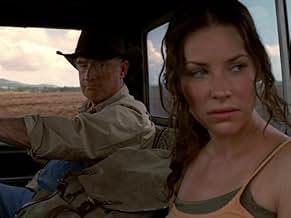
- GaffesWhen Kate is in the car with the Australian farmer, the image was horizontally flipped to appear how Australian cars have right-side drivers and left-lane driving. As the U.S. Marshall's GMC truck pulls alongside, the "C" from the grill logo is visible in the farmer's rear view mirror when its reflection should be horizontally flipped.
- ConnexionsFeatured in Fire + Water: Anatomy of an Episode (2006)
Meilleurs choix
Connectez-vous pour évaluer et surveiller les recommandations personnalisées
Détails
Contribuer à cette page
Suggérer une modification ou ajouter du contenu manquant