Pax Soprana
- L'épisode a été diffusé 14 févr. 1999
- TV-MA
- 50m
ÉVALUATION IMDb
8,4/10
11 k
MA NOTE

Ajouter une intrigue dans votre langueAs a new boss asserts control, Tony tries to broker peace -- mediating a tribute dispute while unexpected desires complicate his therapy and home life.As a new boss asserts control, Tony tries to broker peace -- mediating a tribute dispute while unexpected desires complicate his therapy and home life.As a new boss asserts control, Tony tries to broker peace -- mediating a tribute dispute while unexpected desires complicate his therapy and home life.
- Réalisation
- Scénariste
- Vedettes



Steven Van Zandt
- Silvio Dante
- (credit only)

Tony Sirico
- Paulie 'Walnuts' Gualtieri
- (credit only)

Robert Iler
- A.J. Soprano
- (credit only)

Jamie-Lynn Sigler
- Meadow Soprano
- (credit only)


Oksana Lada
- Irina Peltsin
- (as Oksana Babiy)


8,411.4K
1
2
3
4
5
6
7
8
9
10
Avis en vedette
9.05/10, Amazing
This was definitely one of the best episodes I have watched in this series so far. Not my favorite, but a very good one. Anyways, my favorite characters in this episode were Tony, Uncle Junior, and Dr. Melfi. My favorite things about this episode were the storyline, the acting, and the ending. This is starting to really become close to being a top 10 show for me, because this is absolutely amazing so far. I literally think anyone should watch this, including my future kids and future wife. In conclusion, I am really loving this show so far, even though I watched only about six episodes so far.
The women in his life
Tony has always had two types of women in his life - his wife, Carmella, who he basically grew up with, and his various mistresses who he basically keeps around for sexual recreation. He would never leave his wife for any of his mistresses or for any woman for that matter.
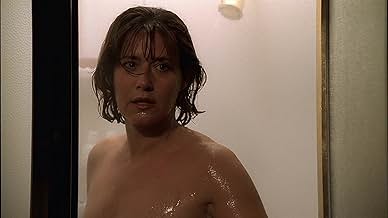
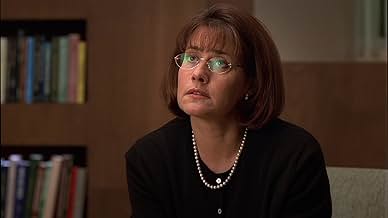
So with his psychiatrist Dr. Melfi, a woman to whom he only talks, who is insightful, and who is helpful and is completely focused on Tony's needs during their one hour a week, Tony is confused. He starts having erotic dreams about Dr. Melfi, and mistakes his growing feelings for love.
Meanwhile, Carmella has discovered that Tony lied when he said that his psychiatrist was a man. Now Tony did lie to her because he correctly thought with his known history of cheating Carmella would be jealous. But when she discovers him in that lie she is right for all the wrong reasons - for the first time she is actually jealous of another woman whom she thinks might supplant her.
On the mob/business side of things Tony is showing supreme shrewdness, playing his uncle like a harp. It really contrasts with how immature and stunted he is romantically and emotionally.
So with his psychiatrist Dr. Melfi, a woman to whom he only talks, who is insightful, and who is helpful and is completely focused on Tony's needs during their one hour a week, Tony is confused. He starts having erotic dreams about Dr. Melfi, and mistakes his growing feelings for love.
Meanwhile, Carmella has discovered that Tony lied when he said that his psychiatrist was a man. Now Tony did lie to her because he correctly thought with his known history of cheating Carmella would be jealous. But when she discovers him in that lie she is right for all the wrong reasons - for the first time she is actually jealous of another woman whom she thinks might supplant her.
On the mob/business side of things Tony is showing supreme shrewdness, playing his uncle like a harp. It really contrasts with how immature and stunted he is romantically and emotionally.
A chapter that both deepens character studies and advances the overarching conflict between Tony and his uncle Junior
"Pax Soprana," the sixth episode of The Sopranos Season 1, directed by Alan Taylor and written by David Chase, is a masterful exploration of the psychological and sociopolitical tensions underpinning Tony Soprano's complex life. Aptly named after the classical term for Roman peace, this episode is a nuanced meditation on the delicate and volatile equilibrium Tony strives to maintain between his roles as a mafia capo, a husband, and a father. It is an intricately crafted chapter that both deepens character studies and advances the overarching conflict between Tony and his uncle Junior, while layered with themes of power, desire, deception, and the quest for harmony amid chaos.
The episode's narrative deftly balances a domestic subplot involving Carmela Soprano and Father Phil with the high-stakes power play within the organized crime family. Carmela, plagued by loneliness and indirect suspicion about Tony's infidelity and secret therapy sessions, finds companionship and temptation in Father Phil, leading to a tense, almost intimate night that underscores the emotional sacrifices and moral ambiguities in their lives. Meanwhile, Tony faces challenges to his leadership and attempts to broker peace with Uncle Junior, whose assertiveness threatens to destabilize the famiglia. This tension unfolds alongside Tony's burgeoning romantic and psychological entanglement with Dr. Melfi, introducing subtle flirtations and dream sequences that expose Tony's vulnerability and confusion around desire and control.
Alan Taylor's direction in "Pax Soprana" is exemplary in its controlled pacing and atmospheric visual style. He employs cinematic techniques-such as shadowed lighting, lingering close-ups, and careful framing-to evoke the duality pervasive throughout the episode: the outward appearance of peace masks simmering conflict and internal discord. The overall mise-en-scène creates a theatrical, almost choreographed feel, particularly in scenes displaying the mafia's social rituals, like the pivotal family dinner scene, which is charged with coded tension and an undercurrent of mistrust. The episode's editing elegantly weaves together multiple storylines, maintaining a rhythm that allows both intimate character moments and broader power dynamics to resonate fully.
Cinematographically, the episode maintains The Sopranos' signature naturalistic aesthetic, using muted palettes to ground its emotional intensity in realism. Taylor's direction is enhanced by meticulously crafted lighting that contrasts the warmth and closeness of domestic scenes with the cold, shadowy atmosphere of Tony's professional confrontations. This visual contrast reinforces thematic tensions between family and crime life, intimacy and violence, peace and aggression. Sound design and the episode's haunting soundtrack complement these visual choices, underscoring moments of tension and emotional complexity without overpowering the narrative.
The performances in "Pax Soprana" are psychologically rich and nuanced. James Gandolfini delivers a layered portrayal of Tony, embodying the protagonist's mix of charm, menace, insecurity, and tenderness. His interactions with Lorraine Bracco's Dr. Melfi reveal a fascinating power dynamic-one where therapeutic vulnerability is tinged with erotic charge-while his exchanges with Nancy Marchand's Livia and Dominic Chianese's Junior expose the generational and familial fault lines undermining Tony's authority. Edie Falco's Carmela is given vital fleshing out here, as her loneliness, suspicion, and suppressed desires reflect the broader sacrifices made by women in this patriarchal criminal world.
Central to the thematic architecture of "Pax Soprana" is the exploration of power and control within both criminal and domestic architectures. The episode artfully displays the performative nature of mafia social structures, where every gesture, word, and silence is loaded with meaning, exemplified most vividly in the closing dinner scene. Here, the intricate choreography of loyalty, subservience, and hidden schemes plays out in a manner akin to classic stage drama, invoking theater as a metaphor for the entire series' conception of the mafia world as a carefully maintained illusion. This metaphor resonates beyond the narrative, inviting reflection on the roles people perform in their social lives and the costs of these performances.
The episode also stands out for its psychological depth and symbolic richness. Tony's recurring dreams of Melfi-themselves a narrative device blending desire, fear, and repression-embody his conflicted psyche, caught between the yearning for connection and the drive to dominate. The dynamics between Tony, Carmela, and Father Phil extend these explorations into themes of infidelity, faith, and guilt, revealing the complexities of emotional survival within repressive social codes. The tension between public identity and private truth informs the episode's broader sociocultural critique on masculinity and familial obligation in the Italian-American milieu.
"Pax Soprana" situates itself within the continuum of gangster media while transcending traditional genre confines by merging crime narrative with psychological realism and domestic drama. It dialogues with cinematic precedents such as The Godfather and Goodfellas but forges new territory by centering interiority and interpersonal complexity over spectacle and violence. The episode's theatrical and symbolic flourishes contribute to this evolution, positioning The Sopranos as a transformative agent in television's ongoing redefinition as a platform for sophisticated storytelling blending art and commerce.
While the episode lacks the explosive action of earlier installments, its slower, more contemplative pace is a deliberate stylistic choice that favors character development and thematic exploration. Some viewers accustomed to more plot-driven narratives might find the episode reflective, yet this pace is essential for deepening understanding of Tony's fractured psychology and the fragile social order within the mafia family. The subtlety with which power struggles and emotional conflicts are depicted rewards attentive and patient viewership, solidifying the episode's place as a cornerstone of prestige television.
"Pax Soprana" is a significant chapter in The Sopranos' first season, combining meticulous direction by Alan Taylor with David Chase's incisive writing to illuminate the complex interplay of power, desire, and deception in Tony Soprano's life. Through rich performances, evocative cinematography, and thematic sophistication, the episode reveals the precarious balance between peace and chaos that defines both the mafia world and Tony's personal sphere.
The episode's narrative deftly balances a domestic subplot involving Carmela Soprano and Father Phil with the high-stakes power play within the organized crime family. Carmela, plagued by loneliness and indirect suspicion about Tony's infidelity and secret therapy sessions, finds companionship and temptation in Father Phil, leading to a tense, almost intimate night that underscores the emotional sacrifices and moral ambiguities in their lives. Meanwhile, Tony faces challenges to his leadership and attempts to broker peace with Uncle Junior, whose assertiveness threatens to destabilize the famiglia. This tension unfolds alongside Tony's burgeoning romantic and psychological entanglement with Dr. Melfi, introducing subtle flirtations and dream sequences that expose Tony's vulnerability and confusion around desire and control.
Alan Taylor's direction in "Pax Soprana" is exemplary in its controlled pacing and atmospheric visual style. He employs cinematic techniques-such as shadowed lighting, lingering close-ups, and careful framing-to evoke the duality pervasive throughout the episode: the outward appearance of peace masks simmering conflict and internal discord. The overall mise-en-scène creates a theatrical, almost choreographed feel, particularly in scenes displaying the mafia's social rituals, like the pivotal family dinner scene, which is charged with coded tension and an undercurrent of mistrust. The episode's editing elegantly weaves together multiple storylines, maintaining a rhythm that allows both intimate character moments and broader power dynamics to resonate fully.
Cinematographically, the episode maintains The Sopranos' signature naturalistic aesthetic, using muted palettes to ground its emotional intensity in realism. Taylor's direction is enhanced by meticulously crafted lighting that contrasts the warmth and closeness of domestic scenes with the cold, shadowy atmosphere of Tony's professional confrontations. This visual contrast reinforces thematic tensions between family and crime life, intimacy and violence, peace and aggression. Sound design and the episode's haunting soundtrack complement these visual choices, underscoring moments of tension and emotional complexity without overpowering the narrative.
The performances in "Pax Soprana" are psychologically rich and nuanced. James Gandolfini delivers a layered portrayal of Tony, embodying the protagonist's mix of charm, menace, insecurity, and tenderness. His interactions with Lorraine Bracco's Dr. Melfi reveal a fascinating power dynamic-one where therapeutic vulnerability is tinged with erotic charge-while his exchanges with Nancy Marchand's Livia and Dominic Chianese's Junior expose the generational and familial fault lines undermining Tony's authority. Edie Falco's Carmela is given vital fleshing out here, as her loneliness, suspicion, and suppressed desires reflect the broader sacrifices made by women in this patriarchal criminal world.
Central to the thematic architecture of "Pax Soprana" is the exploration of power and control within both criminal and domestic architectures. The episode artfully displays the performative nature of mafia social structures, where every gesture, word, and silence is loaded with meaning, exemplified most vividly in the closing dinner scene. Here, the intricate choreography of loyalty, subservience, and hidden schemes plays out in a manner akin to classic stage drama, invoking theater as a metaphor for the entire series' conception of the mafia world as a carefully maintained illusion. This metaphor resonates beyond the narrative, inviting reflection on the roles people perform in their social lives and the costs of these performances.
The episode also stands out for its psychological depth and symbolic richness. Tony's recurring dreams of Melfi-themselves a narrative device blending desire, fear, and repression-embody his conflicted psyche, caught between the yearning for connection and the drive to dominate. The dynamics between Tony, Carmela, and Father Phil extend these explorations into themes of infidelity, faith, and guilt, revealing the complexities of emotional survival within repressive social codes. The tension between public identity and private truth informs the episode's broader sociocultural critique on masculinity and familial obligation in the Italian-American milieu.
"Pax Soprana" situates itself within the continuum of gangster media while transcending traditional genre confines by merging crime narrative with psychological realism and domestic drama. It dialogues with cinematic precedents such as The Godfather and Goodfellas but forges new territory by centering interiority and interpersonal complexity over spectacle and violence. The episode's theatrical and symbolic flourishes contribute to this evolution, positioning The Sopranos as a transformative agent in television's ongoing redefinition as a platform for sophisticated storytelling blending art and commerce.
While the episode lacks the explosive action of earlier installments, its slower, more contemplative pace is a deliberate stylistic choice that favors character development and thematic exploration. Some viewers accustomed to more plot-driven narratives might find the episode reflective, yet this pace is essential for deepening understanding of Tony's fractured psychology and the fragile social order within the mafia family. The subtlety with which power struggles and emotional conflicts are depicted rewards attentive and patient viewership, solidifying the episode's place as a cornerstone of prestige television.
"Pax Soprana" is a significant chapter in The Sopranos' first season, combining meticulous direction by Alan Taylor with David Chase's incisive writing to illuminate the complex interplay of power, desire, and deception in Tony Soprano's life. Through rich performances, evocative cinematography, and thematic sophistication, the episode reveals the precarious balance between peace and chaos that defines both the mafia world and Tony's personal sphere.
Junior!
This episode was the one where Junior solidefies himself as the boss and already putting things in motion! He makes himself clear, to those he works for, who he is! The stuff at the waterfall was very memorable and shows how sometimes.. there is no such thing as negotiation!
Tony spends this episode, struggling with the women in his life, and getting used to Junior as the boss! Some great psychological elements as he seems confused about his feelings!
A great use of historical references as Tony talks with Junior about Augustus and Julius! Almost as a subtle warning to him and some subtle foreshadowing of where things could be heading in the future!
The end makes me even more excited for the next!
Tony spends this episode, struggling with the women in his life, and getting used to Junior as the boss! Some great psychological elements as he seems confused about his feelings!
A great use of historical references as Tony talks with Junior about Augustus and Julius! Almost as a subtle warning to him and some subtle foreshadowing of where things could be heading in the future!
The end makes me even more excited for the next!
S1E6 Pax Soprana
Pax Soprana is a damn fine episode, and makes for an entertaining and intriguing 50 minutes or so. Its title is derived from Pax Romana, a political but peaceful move made by the Emperor Augustus that managed to hold the Roman Empire together for over a hundred years. Comparatively, Tony must plot and move in order to keep Junior, who's not really fit to be the Boss, from disrupting the family. Now that Junior has finally gotten what he wanted the most, the man thinks he can start taxing and bumping off anyone who he sees fit (and that drug dealer getting thrown off a bridge was pretty disturbing). So naturally, the mob comes to an already stressed out Tony who previously named Uncle Junior as the Boss of New Jersey to keep head off of himself whilst secretly running things. It seemed for a while that plan backfired, until Tony manages to get his points across to Junior over a duo of conversations to ease down the activities. Things aren't faring much better on the domestic side either as Carmela, in addition to discovering Dr Melfi is a woman, now has to deal with Tony being temporary impotent, apparently due to his Prozac medication. She's quite funny in this episodes, coming out with witty remarks to offend Tony at their anniversary dinner and waking up in the night to Tony quipping "You want sex?" excitedly. After an insightful talk with the priest, Carmela wants to do her best to be THE woman in Tony's life, something that she makes very clear to him as they relax in the garden. It's a touching moment, only to be made ironic by the fact that Tony is trying (and failing) to get it on with his Russian lover and is now having sexual fantasies in his dreams about Dr Melfi. Poor guy. I could see this coming, but I didn't anticipate Tony telling Melfi straight up that he loves her and makes an advance towards her. Professionally, she keeps her cool and upsets Tony by telling him this feeling is a by- product of the success they are having as psychiatrist and patient. It'll be interesting to see their relationship develop now that Tony's got his feelings for her out in the open. Amid his envy of horses and personal problems, it's the business that matters in Pax Soprana. Gandolfini is unusually calm calculating, choosing his words carefully so that he can get sympathy whilst Uncle J side-lines the violent ex-thug we've seen in previous episodes. He almost looks the part as the boss but is clearly gonna mess things up. Junior finally gets his big moment in the end of the episode, which happens to be my favourite scene of the series so far. An FBI agent is present as Junior gets crowned amongst the salutes
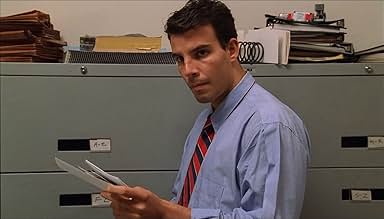
as is a killer beat. We are then taken to the FBI headquarters, where an agent is sorting out the order of the mob on a wall. We see all of the six big hitters. As Junior's photo is pinned above the rest and word 'Capo' is crossed out from his name and replaced with 'Boss', thus proving Tony's plan has worked, the camera focuses on Tony before panning upwards at the new head of the New Jersey family, before fading out with the beat intact. What a great ending. It really makes me wonder what more is to come from the due of Tony and Junior.


Le saviez-vous
- AnecdotesThe title is a reference to Pax Romana, the long period of relative peace in the Roman Empire from the beginning of Augustus Caesar's reign in 27 B.C. to the end of Marcus Aurelius' in 180 A.D. (And Livia Soprano, fittingly or ironically, shares the same first name as Emperor Augusta's wife and trusted advisor, Livia.)
- Gaffes(at around 11 mins) A female extra walking behind Tony trips, almost falls and starts laughing, but finishes the scene.
- Citations
Dr. Jennifer Melfi: When's the last time you had a prostate exam?
Anthony 'Tony' Soprano Sr.: Hey, I don't even let anyone wag their finger in my FACE.
[Dr. Melfi laughs]
- ConnexionsReferenced in Les Simpsons: The Real Housewives of Fat Tony (2011)
Meilleurs choix
Connectez-vous pour évaluer et surveiller les recommandations personnalisées
Détails
- Durée
- 50m
- Couleur
- Mixage
- Rapport de forme
- 1.33 : 1
- 1.78 : 1
Contribuer à cette page
Suggérer une modification ou ajouter du contenu manquant