ÉVALUATION IMDb
7,2/10
7,1 k
MA NOTE

Ajouter une intrigue dans votre langueIn a Mennonite community in Mexico, a father's faith is tested when he falls in love with a new woman.In a Mennonite community in Mexico, a father's faith is tested when he falls in love with a new woman.In a Mennonite community in Mexico, a father's faith is tested when he falls in love with a new woman.
- Réalisation
- Scénariste
- Vedettes
- Prix
- 30 victoires et 12 nominations au total



7,27.1K
1
2
3
4
5
6
7
8
9
10
Avis en vedette
Stillness speaks (but not to everybody)
This is certainly not a film for everybody and I will be careful in who I recommend this movie to. It is challenging because it is very unsatisfying to the 5 senses we are used to (over)feed. This movie is like meditating, you need to surrender to it, ignore what your mind is telling you about what a movie should be, surrender to the slowness first and then to the lack of almost everything we are normally used to in a movie. There is so little you can chew on, no acting, inhibited emotions, no laughter, even the acclaimed picture is unsatisfying (don't see this movie for that reason). Everything is internal, barely reaching the surface. If you can tune in though, like in a meditation, you will become ultra sensitive, sense the subtle and begin to enjoy. Some scenes may even totally fill your spirit. One word of caution though, if you intend to see this movie in a theatre: it is very likely that some people will become uncomfortable and leave, keep talking, protest etc... which makes it even more difficult to watch it with serenity so renting it as a DVD may be a more suitable option. If you are the kind of person enjoying a walk in the countryside contemplating nature without talking you'll probably enjoy this movie. If you prefer talking or being entertained then chances are that you will not.
Excellent film, a touching work of art
It is a very good film. This is contemplation cinema, with beautiful landscapes and really touching scenes. Although the argument isn't an innovative one, the context and the way the director captures its work empowers the story and succeeds in maintaining viewers attention despite the long shots that often makes the spectator to run out of patience, to get distracted or bored. Innovative context. The first movie about Mexican mennonites (40 000)in their own language (plautietsch)played by real mennonites that aren't real actors. It shows in an honest way their life style in the northern Mexican state of Chihuahua, how they live almost without interacting with Spanish speaking mexicans. Up to now, definitely Carlos Reygadas best film. I'm not saying that everybody would enjoy this film, but to me it is an excellent movie and I broadly recommend it. Its awards are richly deserved. "Stellet Licht" is a work of art.
Visually and aurally breathtaking cinema
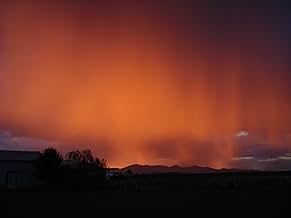
Can light have sound? So what is silent light? Something surreal, somehow related to the hymn "Silent night"? The intriguing answers are provided in the film to the patient, thoughtful viewer. This is not a film for the impatient viewer. "Starlight" (accessible cosmic wonders) begins and ends the filmsilence dominates the soundtrack, except for sounds of crickets, lowing of cattle, and an occasional bird cry.
This opening shot sets the tone for a film made with non-professional actors. The film won the Jury's Grand Prize at Cannes 2007. It is a spectacular film experience for any viewer who loves cinema. This is my first Reygadas film and I have become an admirer of this young man.
Mexican filmmaker Carlos Reygadas writes his own scripts. He is one of the few filmmakers of importance today who does that-alongside Spain's Pedro Almodovar and Japan's Naomi Kawase.
Reygadas' stunning movie "Silent Light" is centered on a collapsing marriage within a religious Mennonite community in Mexico, speaking not Spanish (the language of Mexico) but a rare European language (Plautdietsch) that mixes German and Dutch words, leading up to the eventual renewal and strengthening of this fragile family. Reygadas begins the film with a 6-minute long time-lapse photography of dawn breaking to the sounds of nature and ends the film with twilight merging into the night.
The opening shot was lost on many viewers; a noisy viewer kept talking three minutes into the film, unaware that the film was running, until I had to reveal this surprising fact to him at the 12th International Film festival of Kerala. The film's opening shot was so stunning that after the 6th minute the audience who grasped what was happening began clapping, having savored the effect. The last time I recall a similar involuntary reaction from an audience was when Godfrey Reggio's "Koyaanisqatsi" was screened decades ago in Mumbai at another International Film Festival.
There is something magical, supernatural in nature if we care to reflect on a daily occurrence. There is a touch of director Andrei Tarkovsky in Reygadas' "Silent Light" as he captures the magical, fleeting moments in life that all of us encounter but do not register as such. There is a touch of director Terrence Mallick's cinema as he connects human actions with nature (a heartbroken wife runs into a glen and collapses trying to clutch a tree trunk). And there is a touch of director Ermanno Olmi in the endearing rustic pace of the film. Whether he was influenced by these giants of cinema I do not knowbut many sequences recall the works of those directors.
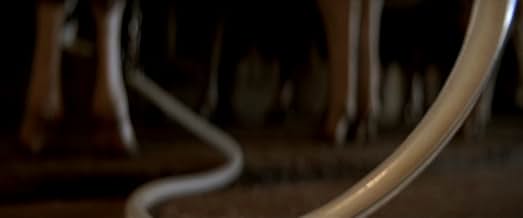
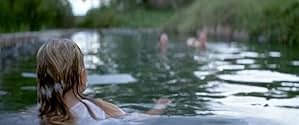
That the film recalls Carl Dreyer's "Ordet" (1955) is an indisputable fact. "Ordet" was based on a play by a Danish playwright Kaj Munk. Reygadas film is based on his own script that almost resembles a silent film because of the sparse dialog. Both films are on religious themes, on falling in love outside marriage, and leading up to an eventual miracle. Reygadas uses these basic religious and abstract ingredients to weave a modern story that is as powerful as Dreyer's classic work by adding the realistic and accessible components of natureautomated milking of milch cows (without milking, the cows would be in distress) and a family bathing scenedo seem to be included as daily occurrences that have a cyclical similarity to the main plotthe collapse and rebuilding of a marriage. Reygadas' cinema invites the viewer to look at nature captured by the film and discover parallels to the story-line. This film is one of the richest examples of cinema today that combines intelligently a structured screenplay, creative sound management, and marvelous photography that soothes your eyes, ears and mind.
Early in the film, the "family" is introduced sitting around a table in silent prayer before partaking a meal. The silence is broken by the tick-tock of the clock. The children are obviously unaware of the tension in the room, except that they would like to eat the food in front of them. The adults are under tension. When the head of the family remains alone on the table (symbolic statement) he breaks into uncontrollable sobs. He gets up to stop the loud clock (symbolic) that evidently disturbed the silent prayer. This action becomes important if we realize that the clock never bothered the family silent prayers before. All is not well. Time has to stand still.
Composition of scenes of scenes in the film remind you of Terrence Mallickthe balancing visuals of men and children sitting on bales of hay on traileragain recalling a cosmic balancing force in life Both "Silent Light" and "Ordet" revolve around a miracle, where a woman's love for a male lover and tears for his dead wife leads to calming a turbulent marriage. The film is not religious but the Mennonite world is religious. Religion remains in the background, In the foreground is love between individuals, lovers, husbands, wives, sons, parents, et al. What the film does is nudge the viewer to perceive a mystical, cosmic world, a world beyond the earth we live in, which is enveloped in love. There is a cosmic orbit that the director wants his viewers to notesimilar to the erring husband driving his truck in circles as though he was in a trance on the farm, while listening to music. Mennonite children who are not exposed to TVs seem to enjoy the comedy of Belgian actor and singer Jacques Brel in a closed van. While Reygadas seems to be concentrating on the peculiarities of a fringe religious group, the universal truths about children's behavior and adult behavior captured in the film zoom out beyond the world of Mennonites. They are universal.
The film begins in silence and ends in silence against a backdrop of stars in the night. The indirect reference to the "Silent night" hymn is unmistakable. For the patient viewer here is a film to enjoy long after the film ends.
This opening shot sets the tone for a film made with non-professional actors. The film won the Jury's Grand Prize at Cannes 2007. It is a spectacular film experience for any viewer who loves cinema. This is my first Reygadas film and I have become an admirer of this young man.
Mexican filmmaker Carlos Reygadas writes his own scripts. He is one of the few filmmakers of importance today who does that-alongside Spain's Pedro Almodovar and Japan's Naomi Kawase.
Reygadas' stunning movie "Silent Light" is centered on a collapsing marriage within a religious Mennonite community in Mexico, speaking not Spanish (the language of Mexico) but a rare European language (Plautdietsch) that mixes German and Dutch words, leading up to the eventual renewal and strengthening of this fragile family. Reygadas begins the film with a 6-minute long time-lapse photography of dawn breaking to the sounds of nature and ends the film with twilight merging into the night.
The opening shot was lost on many viewers; a noisy viewer kept talking three minutes into the film, unaware that the film was running, until I had to reveal this surprising fact to him at the 12th International Film festival of Kerala. The film's opening shot was so stunning that after the 6th minute the audience who grasped what was happening began clapping, having savored the effect. The last time I recall a similar involuntary reaction from an audience was when Godfrey Reggio's "Koyaanisqatsi" was screened decades ago in Mumbai at another International Film Festival.
There is something magical, supernatural in nature if we care to reflect on a daily occurrence. There is a touch of director Andrei Tarkovsky in Reygadas' "Silent Light" as he captures the magical, fleeting moments in life that all of us encounter but do not register as such. There is a touch of director Terrence Mallick's cinema as he connects human actions with nature (a heartbroken wife runs into a glen and collapses trying to clutch a tree trunk). And there is a touch of director Ermanno Olmi in the endearing rustic pace of the film. Whether he was influenced by these giants of cinema I do not knowbut many sequences recall the works of those directors.
That the film recalls Carl Dreyer's "Ordet" (1955) is an indisputable fact. "Ordet" was based on a play by a Danish playwright Kaj Munk. Reygadas film is based on his own script that almost resembles a silent film because of the sparse dialog. Both films are on religious themes, on falling in love outside marriage, and leading up to an eventual miracle. Reygadas uses these basic religious and abstract ingredients to weave a modern story that is as powerful as Dreyer's classic work by adding the realistic and accessible components of natureautomated milking of milch cows (without milking, the cows would be in distress) and a family bathing scenedo seem to be included as daily occurrences that have a cyclical similarity to the main plotthe collapse and rebuilding of a marriage. Reygadas' cinema invites the viewer to look at nature captured by the film and discover parallels to the story-line. This film is one of the richest examples of cinema today that combines intelligently a structured screenplay, creative sound management, and marvelous photography that soothes your eyes, ears and mind.
Early in the film, the "family" is introduced sitting around a table in silent prayer before partaking a meal. The silence is broken by the tick-tock of the clock. The children are obviously unaware of the tension in the room, except that they would like to eat the food in front of them. The adults are under tension. When the head of the family remains alone on the table (symbolic statement) he breaks into uncontrollable sobs. He gets up to stop the loud clock (symbolic) that evidently disturbed the silent prayer. This action becomes important if we realize that the clock never bothered the family silent prayers before. All is not well. Time has to stand still.
Composition of scenes of scenes in the film remind you of Terrence Mallickthe balancing visuals of men and children sitting on bales of hay on traileragain recalling a cosmic balancing force in life Both "Silent Light" and "Ordet" revolve around a miracle, where a woman's love for a male lover and tears for his dead wife leads to calming a turbulent marriage. The film is not religious but the Mennonite world is religious. Religion remains in the background, In the foreground is love between individuals, lovers, husbands, wives, sons, parents, et al. What the film does is nudge the viewer to perceive a mystical, cosmic world, a world beyond the earth we live in, which is enveloped in love. There is a cosmic orbit that the director wants his viewers to notesimilar to the erring husband driving his truck in circles as though he was in a trance on the farm, while listening to music. Mennonite children who are not exposed to TVs seem to enjoy the comedy of Belgian actor and singer Jacques Brel in a closed van. While Reygadas seems to be concentrating on the peculiarities of a fringe religious group, the universal truths about children's behavior and adult behavior captured in the film zoom out beyond the world of Mennonites. They are universal.
The film begins in silence and ends in silence against a backdrop of stars in the night. The indirect reference to the "Silent night" hymn is unmistakable. For the patient viewer here is a film to enjoy long after the film ends.
Concealed Unconcealment
I urge readers to watch this.
The story is touching and human. A family man who is seized by a new inexplicable love that tells him the old love, what he used to think as love, was merely peace and habit, and yet he can't be sure. Is the new one merely passion? Does he have a right to betray the trust? Deny himself happiness? It is the most profoundly troubling question that I imagine can arise in a lifetime.
The film is merely one possible outcome, how making a choice can upset the whole universe, the question itself is much more difficult and deep. If you're 18 the gravity of it might not register, you still have second and third chances ahead of you. But after a certain age, I imagine it becomes entirely cosmic, entirely about choosing the last person you're going to know and love.
My only quibble about this is the stifled Germanic presence all through the film. I'm talking about the deliberately inexpressive faces, pauses and careful poses, people arranged in symmetries around objects, none of which is artful in my world. Well art can be anything so it is not that so much as choosing the world you're going to live in and I'll have none of that stylized pouting in my home, suffering can never be an aesthetic.
Yet in this hard shell there is a softly pounding heart of beauty.
One is how this harsh German presence is softened by the afterglow of a sweeter sun and rolling Mexican landscape, which is where the film takes place. Mellowed in this way it brings to the fore a quality I admire in Protestants: simple lives, joy in austerity and nonattachment. Though it came from historical necessity, it's still the closest thing to Zen we've known in Europe.
The other thing is even simpler yet that much more beautiful. The film is shot in long quiet sweeps of ordinary nothing, those who keep in touch know I am frequently vexed by this technique because it so often becomes merely about style instead of sculpted insight, a garment worn a certain way.
Transcendent vision in film, which is at its most powerful, is about unconcealing a fuller sense of world, broader horizons. It cannot be a proclamation of love but a gesture that embodies what it means to; words are just too easy and cheap, whereas the visible action is itself the commitment.
Here we have something that is elegant and simple in just the right measure.
In the story we have new love that extends from the old, a new feeling, new beginnings one after the other, not always the one desired or anticipated.
All through the film we have a dozen or so subtle metaphors about just this feeling of unconcealing a new world, of reaching an end which is only the start of the next landscape.
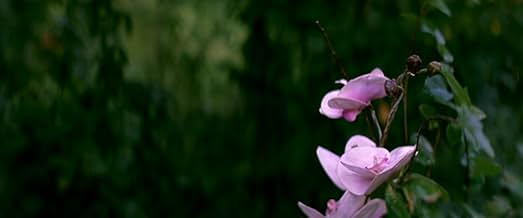
My favorite are the following two. A combine threshes a wheatfield, a violent, clustered image of uprooting, only to arrive at the end of the field at an open horizon of fields. And even greater, during the river scene, the man and soon-to-be betrayed wife embrace as their children wash below, still close, their bodies leave the frame and we're left for several lingering moments in the hazy unfocused space of their absence, only for the camera to slowly find and focus on a blossoming flower.
Breathtaking!
So when she departs in the end and miraculously comes to again, it the same inner blossom from nothing, call it a sense of the mother still being in the world. The world does not end so long as we keep this anticipation of presence, fields to see after this one, new people to love, never bogged down by loss. The hazy landscape of seeming nothingness already contains the flower, in that scene it is neither there as we don't see it nor not there as it is there to be found, and this all has its meditative sense.
I'm glad for this film. From now on, whenever it happens that I have to try and illustrate the Buddhist notion of emptiness, or shunyata, I will reach for this one scene.
Something to meditate upon.
The story is touching and human. A family man who is seized by a new inexplicable love that tells him the old love, what he used to think as love, was merely peace and habit, and yet he can't be sure. Is the new one merely passion? Does he have a right to betray the trust? Deny himself happiness? It is the most profoundly troubling question that I imagine can arise in a lifetime.
The film is merely one possible outcome, how making a choice can upset the whole universe, the question itself is much more difficult and deep. If you're 18 the gravity of it might not register, you still have second and third chances ahead of you. But after a certain age, I imagine it becomes entirely cosmic, entirely about choosing the last person you're going to know and love.
My only quibble about this is the stifled Germanic presence all through the film. I'm talking about the deliberately inexpressive faces, pauses and careful poses, people arranged in symmetries around objects, none of which is artful in my world. Well art can be anything so it is not that so much as choosing the world you're going to live in and I'll have none of that stylized pouting in my home, suffering can never be an aesthetic.
Yet in this hard shell there is a softly pounding heart of beauty.
One is how this harsh German presence is softened by the afterglow of a sweeter sun and rolling Mexican landscape, which is where the film takes place. Mellowed in this way it brings to the fore a quality I admire in Protestants: simple lives, joy in austerity and nonattachment. Though it came from historical necessity, it's still the closest thing to Zen we've known in Europe.
The other thing is even simpler yet that much more beautiful. The film is shot in long quiet sweeps of ordinary nothing, those who keep in touch know I am frequently vexed by this technique because it so often becomes merely about style instead of sculpted insight, a garment worn a certain way.
Transcendent vision in film, which is at its most powerful, is about unconcealing a fuller sense of world, broader horizons. It cannot be a proclamation of love but a gesture that embodies what it means to; words are just too easy and cheap, whereas the visible action is itself the commitment.
Here we have something that is elegant and simple in just the right measure.
In the story we have new love that extends from the old, a new feeling, new beginnings one after the other, not always the one desired or anticipated.
All through the film we have a dozen or so subtle metaphors about just this feeling of unconcealing a new world, of reaching an end which is only the start of the next landscape.
My favorite are the following two. A combine threshes a wheatfield, a violent, clustered image of uprooting, only to arrive at the end of the field at an open horizon of fields. And even greater, during the river scene, the man and soon-to-be betrayed wife embrace as their children wash below, still close, their bodies leave the frame and we're left for several lingering moments in the hazy unfocused space of their absence, only for the camera to slowly find and focus on a blossoming flower.
Breathtaking!
So when she departs in the end and miraculously comes to again, it the same inner blossom from nothing, call it a sense of the mother still being in the world. The world does not end so long as we keep this anticipation of presence, fields to see after this one, new people to love, never bogged down by loss. The hazy landscape of seeming nothingness already contains the flower, in that scene it is neither there as we don't see it nor not there as it is there to be found, and this all has its meditative sense.
I'm glad for this film. From now on, whenever it happens that I have to try and illustrate the Buddhist notion of emptiness, or shunyata, I will reach for this one scene.
Something to meditate upon.
Art confuses itself with life, if only you open your arms to it.
There are two ways of making a movie genius. One way is you make it an exciting storytelling, with lots of twists, surprises and well placed moments of tension turned to gold by great acting and tasteful camera angles and lighting.
The other way is this.
People will say this movie is boring. It is. They will say it drags itself. It does.
But while it does, it becomes painstakingly realistic. An average Joe doesn't spend his life fighting terrorists and being tossed around by the explosions he can't avoid, and while an average Joe can have a war land on his head or a ship sink under his feet, the really unlucky Joe will spend his life trying to make a living with no real chances of a worldwide tragedy turning him into a martyr or a hero.
"Stellet Licht" doesn't feed you the story. The key to deciphering this movie is that you must notice most shots are in a sort of "point of view" mode that keeps telling you "this could be you. What would you think right now? What would you do?".
And while it doesn't feed you everything, actions and dialogues, no matter how simple they sound at first are deeply meaningful and provide amazing food for thought. Marshall MacLuhan once described movies as "hot" media, demanding attention to find the meaning while leaving little space for your own participation as most is fed to you. A movie like "The Preadator" is hot; it doesn't immerse you as much as it attacks your senses of hearing and seeing.
In "Stellet Licht" while visuals and sound are of crucial importance in the beauty of the shots, the movie keeps a constant dialogue with the viewer and it's this viewer who ends up making a great part of the movie. This would be the definition of a "cool" media. In the end, everybody will have seen this movie differently and it will be a very intimate experience if only you lay the popcorn's aside and think about what is being shown to you.
Watch it with your significant other and you will realize there is so much to talk about, unlike with many other movies that leave you with trivialities and little more. So "Stellet Licht" is more than amazing story telling, it's what a dear friend of mine calls art: something that intertwines and confuses itself with real life.
If not for everybody, certainly not for those who expect a movie to spoon feed them and are not willing to incorporate and reinterpret the experience, but for those who are willing to think and discuss some of the strong subjects of this movie, "Stellet Licht" is a not just a movie, but an enlightening experience.
The other way is this.
People will say this movie is boring. It is. They will say it drags itself. It does.
But while it does, it becomes painstakingly realistic. An average Joe doesn't spend his life fighting terrorists and being tossed around by the explosions he can't avoid, and while an average Joe can have a war land on his head or a ship sink under his feet, the really unlucky Joe will spend his life trying to make a living with no real chances of a worldwide tragedy turning him into a martyr or a hero.
"Stellet Licht" doesn't feed you the story. The key to deciphering this movie is that you must notice most shots are in a sort of "point of view" mode that keeps telling you "this could be you. What would you think right now? What would you do?".
And while it doesn't feed you everything, actions and dialogues, no matter how simple they sound at first are deeply meaningful and provide amazing food for thought. Marshall MacLuhan once described movies as "hot" media, demanding attention to find the meaning while leaving little space for your own participation as most is fed to you. A movie like "The Preadator" is hot; it doesn't immerse you as much as it attacks your senses of hearing and seeing.
In "Stellet Licht" while visuals and sound are of crucial importance in the beauty of the shots, the movie keeps a constant dialogue with the viewer and it's this viewer who ends up making a great part of the movie. This would be the definition of a "cool" media. In the end, everybody will have seen this movie differently and it will be a very intimate experience if only you lay the popcorn's aside and think about what is being shown to you.
Watch it with your significant other and you will realize there is so much to talk about, unlike with many other movies that leave you with trivialities and little more. So "Stellet Licht" is more than amazing story telling, it's what a dear friend of mine calls art: something that intertwines and confuses itself with real life.
If not for everybody, certainly not for those who expect a movie to spoon feed them and are not willing to incorporate and reinterpret the experience, but for those who are willing to think and discuss some of the strong subjects of this movie, "Stellet Licht" is a not just a movie, but an enlightening experience.


Le saviez-vous
- AnecdotesMexico's official submission for the 80th Academy Awards, and the first film from that country that is not in Spanish. Under AMPAS's new rules for Best Foreign-Language Film, it is eligible for a nomination.
- GaffesThe English subtitles translate one line as "The man on the phone wants a plutonium exhaust." This would be expensive, not to mention environmentally hazardous! Presumably the line actually refers to platinum, not plutonium.
- Bandes originalesLes Bonbons
Written and performed by Jacques Brel
Meilleurs choix
Connectez-vous pour évaluer et surveiller les recommandations personnalisées
- How long is Silent Light?Propulsé par Alexa
Détails
- Date de sortie
- Pays d’origine
- Site officiel
- Langues
- Aussi connu sous le nom de
- Silent Light
- Lieux de tournage
- sociétés de production
- Consultez plus de crédits d'entreprise sur IMDbPro
Box-office
- Budget
- 980 000 € (estimation)
- Brut – États-Unis et Canada
- 60 200 $ US
- Fin de semaine d'ouverture – États-Unis et Canada
- 11 967 $ US
- 11 janv. 2009
- Brut – à l'échelle mondiale
- 877 577 $ US
- Durée
- 2h 25m(145 min)
- Couleur
- Mixage
- Rapport de forme
- 2.35 : 1
Contribuer à cette page
Suggérer une modification ou ajouter du contenu manquant