ÉVALUATION IMDb
6,1/10
12 k
MA NOTE


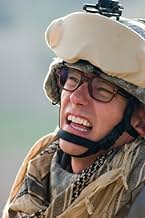
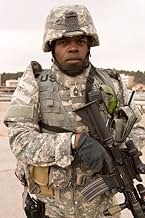
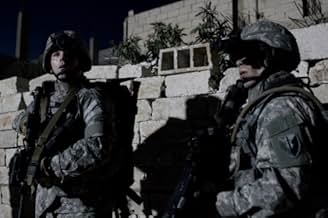
La reconstitution dévastatrice du viol et du meurtre d'une jeune irakienne de 15 ans par des soldats américains à Samarra en 2006.La reconstitution dévastatrice du viol et du meurtre d'une jeune irakienne de 15 ans par des soldats américains à Samarra en 2006.La reconstitution dévastatrice du viol et du meurtre d'une jeune irakienne de 15 ans par des soldats américains à Samarra en 2006.
- Réalisation
- Scénariste
- Vedettes
- Prix
- 6 victoires et 2 nominations au total
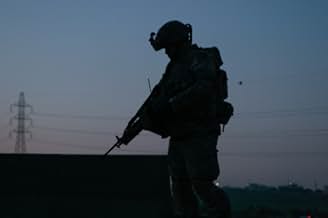
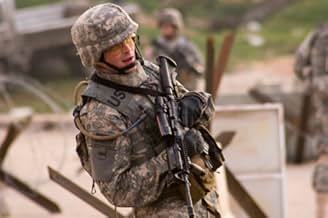
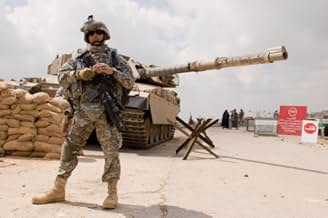


Anas Wellman
- Soldier
- (as Anas 'Tipsy' Wellman)


Happy Anderson
- Battalion Commander
- (as Eric 'Happy' Anderson)
- …
6,111.6K
1
2
3
4
5
6
7
8
9
10
Avis en vedette
Excessive, unfinished, manipulative - but not nearly as bad as others say
Despite the many criticisms by others on this site, Redacted is a compelling film based on an actual incident that occurred in Baghdad in 2006. Yes, the acting leaves something to be desired, the 'mixed-media' approach is distracting, and there are some manipulative moments (the beheading, the final still); But this is still an eye-opening film on the state of events in Iraq and the trials that *both* Iraqis and Americans have to deal with daily. The scenes at the checkpoint are particularly well done. Some of the dialog between the soldiers in the unit is compelling in its own way; Similarly so the scenes with the Iraqi reporters and 'embeds.'
I've seen all the recent films about Iraq ('Valley of Elah', 'Lions for Lambs', 'Rendition' ) and think that 'Redacted' provides insights none of the others do. In particular, it does an excellent job illustrating the clash between the respective cultures of Iraq and America. (50% of Iraqis can't read the signs at US checkpoints!)
Is this film a bit of an unholy mess? Yes, but see it anyway and make your own mind up. I think this one deserves at least a 6 out of 10.
I've seen all the recent films about Iraq ('Valley of Elah', 'Lions for Lambs', 'Rendition' ) and think that 'Redacted' provides insights none of the others do. In particular, it does an excellent job illustrating the clash between the respective cultures of Iraq and America. (50% of Iraqis can't read the signs at US checkpoints!)
Is this film a bit of an unholy mess? Yes, but see it anyway and make your own mind up. I think this one deserves at least a 6 out of 10.
A Powerful, Noble and Brave Film
"Redacted" is a shattering, powerful experience. It has been criticized by some as painful to watch...but I think that is the point entirely.
For too long, Americans have been spoon-fed a steady diet of lies about the Iraq War (not least about why we invaded that nation in the first place).
De Palma aims to shows us another side to this terrible conflict; one that we won't get on Fox News (or any of the other corporate propaganda networks). It's about time Americans got another point of view on Iraq, because we're hopelessly misinformed about what's going on there (an astonishing number of Americans including a majority of Fox News viewers STILL believe to this day that Saddam was behind 9/11). My friends in Europe don't believe me when I tell them this.
Incidentally, I don't think a film has to be pleasant to watch to be a memorable cinema experience. For example, Fassbinder never made a "entertaining" film, and yet his movies are among the most powerful in all of cinema.
The Iraq War is a horror story of untold magnitude. This film aims to capture the nightmare of the ever-shifting, chaotic Iraq battlefield. It's a film that will be hated, in knee-jerk fashion, by the Bush worshiping nut-case right-wing fringe. But for the rest of us, it's a must-see, powerful and brave film.
For too long, Americans have been spoon-fed a steady diet of lies about the Iraq War (not least about why we invaded that nation in the first place).
De Palma aims to shows us another side to this terrible conflict; one that we won't get on Fox News (or any of the other corporate propaganda networks). It's about time Americans got another point of view on Iraq, because we're hopelessly misinformed about what's going on there (an astonishing number of Americans including a majority of Fox News viewers STILL believe to this day that Saddam was behind 9/11). My friends in Europe don't believe me when I tell them this.
Incidentally, I don't think a film has to be pleasant to watch to be a memorable cinema experience. For example, Fassbinder never made a "entertaining" film, and yet his movies are among the most powerful in all of cinema.
The Iraq War is a horror story of untold magnitude. This film aims to capture the nightmare of the ever-shifting, chaotic Iraq battlefield. It's a film that will be hated, in knee-jerk fashion, by the Bush worshiping nut-case right-wing fringe. But for the rest of us, it's a must-see, powerful and brave film.
won't be for everyone- it's an experimental drama-documentary by Brian De Palma- but it has an effectiveness in a 'lack' of style
The legendary words of Marshall MacLoughan, "The media IS the message", couldn't be further seen played out as in Redacted, Brian De Palma's latest film which ventures the director back into his experimental early days as a filmmaker in New York city. In his film, the media is the message, but only in part- it's about how media is used, or how subjective perceptions are taken into account, for coverage of a conflict which ironically enough has not had the kind of coverage seen in America as in the local Iraq and European media. But what stays true to De Palma as an auteur is the idea of voyeurism, or the watchers and the audience as the ones who continue to watch, and like Godard with his video experiments, Redacted is about its subject but it's also about process.
Like Blair Witch Project, we're seeing things "as-they-happen" by the view-point of a camera that a soldier, Angel, is carrying and using as an in to get into film school someday. This might be enough for a film covering a horrible tragic turn of events like depicted in Redacted, where two soldiers rape a teenager and kill and burn her and her baby sister. But De Palma's story, based on real events which were "fictionalized" up to a point only for legal reasons, indicts the whole process of viewing things through the filter of the lens. Of course there are moments when the characters realize that they're on video, and suddenly they either get irate and continue acting as themselves, or they start to posture for the camera. Instead of the carefully plotted and directed shots of films like Dressed to Kill or Carlito's Way (or, for that matter, the similar-in-premise Casualties of War) we get the messiness of raw camera-work from the soldier, the embedded journalists, the news media covering the story, web-casts obviously out of you-tube, and as the one "official" kind of film-making a French documentary crew doing a film on the group of soldiers covering the checkpoint.
It's suffice to say that this technique is almost a comment on itself, and it's one of the curious ideas behind the experiment of Redacted that makes it interesting. We know that when a security camera or when Angel's camera put on a seat meant to be shut off captures objectively what's going on- like the "what happens in Vegas stays in Vegas" scene or the plot to go after the family. But there's an inverse to this as well since De Palma is filming this with a script and with actors (who arguably are good at being naturalistic two-dimensional soldiers), since there is a stylization, yet without calling attention to the self-consciousness the audience feels during this. And meanwhile, De Palma makes his anti-war film gripping in the unexpected places; a hard-ass sergeant who gets blown up without any warning at all; the death of one of the soldiers as revenge from a terrorist group; the scene with Flake and Rush where they take the camera themselves and (as proof beyond a doubt that war and repeated tours of duty have made them bat-s***) defend themselves while attempting to praise a fallen brother while one wears a duck hat.
One almost hopes the experiment would work even better as one of the director's best, which ultimately it isn't. Certain tactics, like making evident the pretentiousness of the French documentary by having Barry Lyndon orchestrations playing over, or the girl on the fake you-tube site blasting the soldiers, just don't work at all. And a few of the performances could use some tweaking. But Redacted, I think, has some bad rap attached to it. It's not simply about the obvious, which is that war is hell and brings out the absolute worst out of human beings who have no control over themselves once pushed beyond reason. It's also about the means of viewing something of the ultimate routine nightmare like a checkpoint, or the rape of the girl (so much that Angel can't even watch as the "fly on the wall"), or a questioning, that makes it a significant effort. De Palma distinguishes his film, for better or worse, by adding the connotation of what it means to watch, or what it means to get on record, or what it does to break the 'fourth wall' while questioning it during it. It has the same free-form ambition of De Palma's best experimental work- Hi, Mom!- if not much a great film in the end.
One thing's for sure- it's in a rightful place playing only in one theater in New York city; it's the kind of work that is hard to market beyond playing as an experimental piece. Ironically, as of late, it's been attacked by Bill O'Reilly WHILE it's being advertised during the show! Talk about counter-programming for an audience that, for the most part, until it's out on DVD, won't have a lick of what the picture really entails. Message?
Like Blair Witch Project, we're seeing things "as-they-happen" by the view-point of a camera that a soldier, Angel, is carrying and using as an in to get into film school someday. This might be enough for a film covering a horrible tragic turn of events like depicted in Redacted, where two soldiers rape a teenager and kill and burn her and her baby sister. But De Palma's story, based on real events which were "fictionalized" up to a point only for legal reasons, indicts the whole process of viewing things through the filter of the lens. Of course there are moments when the characters realize that they're on video, and suddenly they either get irate and continue acting as themselves, or they start to posture for the camera. Instead of the carefully plotted and directed shots of films like Dressed to Kill or Carlito's Way (or, for that matter, the similar-in-premise Casualties of War) we get the messiness of raw camera-work from the soldier, the embedded journalists, the news media covering the story, web-casts obviously out of you-tube, and as the one "official" kind of film-making a French documentary crew doing a film on the group of soldiers covering the checkpoint.
It's suffice to say that this technique is almost a comment on itself, and it's one of the curious ideas behind the experiment of Redacted that makes it interesting. We know that when a security camera or when Angel's camera put on a seat meant to be shut off captures objectively what's going on- like the "what happens in Vegas stays in Vegas" scene or the plot to go after the family. But there's an inverse to this as well since De Palma is filming this with a script and with actors (who arguably are good at being naturalistic two-dimensional soldiers), since there is a stylization, yet without calling attention to the self-consciousness the audience feels during this. And meanwhile, De Palma makes his anti-war film gripping in the unexpected places; a hard-ass sergeant who gets blown up without any warning at all; the death of one of the soldiers as revenge from a terrorist group; the scene with Flake and Rush where they take the camera themselves and (as proof beyond a doubt that war and repeated tours of duty have made them bat-s***) defend themselves while attempting to praise a fallen brother while one wears a duck hat.
One almost hopes the experiment would work even better as one of the director's best, which ultimately it isn't. Certain tactics, like making evident the pretentiousness of the French documentary by having Barry Lyndon orchestrations playing over, or the girl on the fake you-tube site blasting the soldiers, just don't work at all. And a few of the performances could use some tweaking. But Redacted, I think, has some bad rap attached to it. It's not simply about the obvious, which is that war is hell and brings out the absolute worst out of human beings who have no control over themselves once pushed beyond reason. It's also about the means of viewing something of the ultimate routine nightmare like a checkpoint, or the rape of the girl (so much that Angel can't even watch as the "fly on the wall"), or a questioning, that makes it a significant effort. De Palma distinguishes his film, for better or worse, by adding the connotation of what it means to watch, or what it means to get on record, or what it does to break the 'fourth wall' while questioning it during it. It has the same free-form ambition of De Palma's best experimental work- Hi, Mom!- if not much a great film in the end.
One thing's for sure- it's in a rightful place playing only in one theater in New York city; it's the kind of work that is hard to market beyond playing as an experimental piece. Ironically, as of late, it's been attacked by Bill O'Reilly WHILE it's being advertised during the show! Talk about counter-programming for an audience that, for the most part, until it's out on DVD, won't have a lick of what the picture really entails. Message?
A Dark Film about the Dark Side of a Dark War
Redacted (2007) **1/2
Redacted is an interesting and well intentioned, but nevertheless heavy handed picture. It's often a tough and unpleasant film to watch. Its style is unique and works quite well at times, while at others bogs the movie down to a halt.
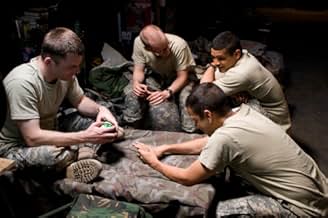
Redacted is shot from different points of view, mostly through the video camera of private Angel Salizar, who was denied entrance into film school so he joined the army. He is obviously one of the central characters, but he's rarely seen on film; he's the one operating his camera and we hear him often speaking from behind it. This is his ticket into film school, a combat veteran with a video diary: who's going to deny him now? He tapes his buddies as they patrol Sumatra, play cards, and talk. When we're not watching his camera, we're watching either security cams, a documentary by a French crew on the soldiers, a news crew, or what appear to be videos posted on YouTube. It creates an interesting - if not totally successful - approach to narrative, and at times creates the sense that you are actually watching a documentary - which I'm sure was DePalma's intention.
I'm sure that everyone by now, given the massive controversy surrounding the film, knows what will happen. US soldiers go on a revenge raid after one of their comrades is killed by an IED. Drunk with rage, sexual deprivation, and sadism they storm a house they raided - for no apparent reason then either - days before and found nothing, but arrested the male head of the house anyway. They go back to rape the man's 15 year old daughter, and one of them kills her and her entire family. Salizar is one of the soldiers who goes, rigging his camera up to his helmet so as to be the fly on the wall, documenting what happens. Another soldier goes as well to make sure nothing happens, but is forced at gunpoint to not interfere.
I don't' think that redacted is an anti-soldier movie at all in reality. Most of the soldiers are disenchanted with the war, just want to go home and want nothing to do with the rape and want nothing more than to see justice done, but are forced to stay quiet. We get to see some scenes where one soldier is being persuaded by his father, an army man, to keep quiet, and an attack on his story by military superiors when he attempts to tell them. These scenes, especially the latter, I would have liked to see more of. After all the film is supposed to be about the way stories are suppressed and diverted when they are deemed unsavory to the credibility of the USA. The film gets bogged down in showing us how it's being made, when it should be showing us more of the "redaction," if you will.
The use of non-actors, or inexperienced ones, occasionally works to the advantage of the attempts to create a documentary like feel. When people know they are on camera, they get uncomfortable and the way the actors are not able to give movie star performances works to this end. However there are other times, particularly moments of big speeches that it works against it. It doesn't help that these speeches are almost always over the top and heavy handed. Moments of the film are nearly laughable, and those moments make this a hard film to review. On the one hand I want to call it a mess; on the other hand I would like to compliment its messiness. In the end though, Redacted simply is a bit too much of a mess to overcome its heavy handed and sluggish execution.
There are no actual problems with the message of the movie and it does not vilify the troops as a whole. I would even go so far as to say that it is quite even-handed when you consider the facts surrounding reality. If you are out of tune with reality, and still adhere to the false reality that the USA can do no wrong, then I'm sure you'll find it offensive.
There are a couple of shocking moments in the film. One includes an IED explosion, the killing of a pregnant Iraqi thanks to a misunderstanding at a checkpoint, and another scene involving a kidnapped soldier. The ending however is probably the most powerful, and gruesome portion of the film.
The final moments, under the heading "Collateral Damage," show the bloodied, dismembered, and dead bodies of Iraqi men, women and children - the only doctoring done, is the digital covering of their faces. On that note, I will take the same course as the film, and end this review.
Redacted is an interesting and well intentioned, but nevertheless heavy handed picture. It's often a tough and unpleasant film to watch. Its style is unique and works quite well at times, while at others bogs the movie down to a halt.
Redacted is shot from different points of view, mostly through the video camera of private Angel Salizar, who was denied entrance into film school so he joined the army. He is obviously one of the central characters, but he's rarely seen on film; he's the one operating his camera and we hear him often speaking from behind it. This is his ticket into film school, a combat veteran with a video diary: who's going to deny him now? He tapes his buddies as they patrol Sumatra, play cards, and talk. When we're not watching his camera, we're watching either security cams, a documentary by a French crew on the soldiers, a news crew, or what appear to be videos posted on YouTube. It creates an interesting - if not totally successful - approach to narrative, and at times creates the sense that you are actually watching a documentary - which I'm sure was DePalma's intention.
I'm sure that everyone by now, given the massive controversy surrounding the film, knows what will happen. US soldiers go on a revenge raid after one of their comrades is killed by an IED. Drunk with rage, sexual deprivation, and sadism they storm a house they raided - for no apparent reason then either - days before and found nothing, but arrested the male head of the house anyway. They go back to rape the man's 15 year old daughter, and one of them kills her and her entire family. Salizar is one of the soldiers who goes, rigging his camera up to his helmet so as to be the fly on the wall, documenting what happens. Another soldier goes as well to make sure nothing happens, but is forced at gunpoint to not interfere.
I don't' think that redacted is an anti-soldier movie at all in reality. Most of the soldiers are disenchanted with the war, just want to go home and want nothing to do with the rape and want nothing more than to see justice done, but are forced to stay quiet. We get to see some scenes where one soldier is being persuaded by his father, an army man, to keep quiet, and an attack on his story by military superiors when he attempts to tell them. These scenes, especially the latter, I would have liked to see more of. After all the film is supposed to be about the way stories are suppressed and diverted when they are deemed unsavory to the credibility of the USA. The film gets bogged down in showing us how it's being made, when it should be showing us more of the "redaction," if you will.
The use of non-actors, or inexperienced ones, occasionally works to the advantage of the attempts to create a documentary like feel. When people know they are on camera, they get uncomfortable and the way the actors are not able to give movie star performances works to this end. However there are other times, particularly moments of big speeches that it works against it. It doesn't help that these speeches are almost always over the top and heavy handed. Moments of the film are nearly laughable, and those moments make this a hard film to review. On the one hand I want to call it a mess; on the other hand I would like to compliment its messiness. In the end though, Redacted simply is a bit too much of a mess to overcome its heavy handed and sluggish execution.
There are no actual problems with the message of the movie and it does not vilify the troops as a whole. I would even go so far as to say that it is quite even-handed when you consider the facts surrounding reality. If you are out of tune with reality, and still adhere to the false reality that the USA can do no wrong, then I'm sure you'll find it offensive.
There are a couple of shocking moments in the film. One includes an IED explosion, the killing of a pregnant Iraqi thanks to a misunderstanding at a checkpoint, and another scene involving a kidnapped soldier. The ending however is probably the most powerful, and gruesome portion of the film.
The final moments, under the heading "Collateral Damage," show the bloodied, dismembered, and dead bodies of Iraqi men, women and children - the only doctoring done, is the digital covering of their faces. On that note, I will take the same course as the film, and end this review.
Make a Good Movie Before Changing the World
Redacted (2007)
* 1/2 (out of 4)
U.S. soldiers working at a checkpoint in Iraq see a 15-year-old girl, which gets them hard so they eventually rape her, murder her and her family and then set them on fire. It's really hard to judge this movie because on one hand it's pretty well made but that's no excuse for the propaganda coming at you every single second of the film. There's no question this is an anti-Iraq movie made by anti-Iraq people and that's why we see the things we do. Every negative heard about American troops is on display here, which is why this film is so one sided and why I couldn't enjoy the movie. I don't give a rats butt what ones opinion on the war is but a movie needs to be open and look at all sides of an issue but this is just like a Michael Moore film as we see one side and that's the side of the director and not necessarily a side with all facts. The American soldiers are all show as crazy, raping idiots who would probably be too stupid to have a job if they weren't in the Army. Is this a good way to show troops? The Iraqi people are shown as innocent victims yet we never see the ones going around blowing innocent people up. Wait a minute, we actually do in the film when one soldier has his head cut off but the film shows this as the right thing to do to the soldier. I could go on and on about this political propaganda in this film but the actually rape case is something DePalma did before with his Vietnam film Casualties of War. The film taking one incident and trying to show it as everyday stuff is just as crazy as The Birth of a Nation. I think it would be fair to say that De Palma has lost a lot of his talent over the past few decades and it's getting harder and harder to get a good film from him. I'll end my review on this last opinion. I find it funny that celebs in Hollywood think they can bring peace to the world, end hunger, magically make dueling sides like one another and rebuild a community yet they can't even make a good movie. Perhaps it's just me but if they can't even make good films or pick a good screenplay then how in the hell are they going to have the brains to do something bigger?
* 1/2 (out of 4)
U.S. soldiers working at a checkpoint in Iraq see a 15-year-old girl, which gets them hard so they eventually rape her, murder her and her family and then set them on fire. It's really hard to judge this movie because on one hand it's pretty well made but that's no excuse for the propaganda coming at you every single second of the film. There's no question this is an anti-Iraq movie made by anti-Iraq people and that's why we see the things we do. Every negative heard about American troops is on display here, which is why this film is so one sided and why I couldn't enjoy the movie. I don't give a rats butt what ones opinion on the war is but a movie needs to be open and look at all sides of an issue but this is just like a Michael Moore film as we see one side and that's the side of the director and not necessarily a side with all facts. The American soldiers are all show as crazy, raping idiots who would probably be too stupid to have a job if they weren't in the Army. Is this a good way to show troops? The Iraqi people are shown as innocent victims yet we never see the ones going around blowing innocent people up. Wait a minute, we actually do in the film when one soldier has his head cut off but the film shows this as the right thing to do to the soldier. I could go on and on about this political propaganda in this film but the actually rape case is something DePalma did before with his Vietnam film Casualties of War. The film taking one incident and trying to show it as everyday stuff is just as crazy as The Birth of a Nation. I think it would be fair to say that De Palma has lost a lot of his talent over the past few decades and it's getting harder and harder to get a good film from him. I'll end my review on this last opinion. I find it funny that celebs in Hollywood think they can bring peace to the world, end hunger, magically make dueling sides like one another and rebuild a community yet they can't even make a good movie. Perhaps it's just me but if they can't even make good films or pick a good screenplay then how in the hell are they going to have the brains to do something bigger?


Le saviez-vous
- AnecdotesThe scene where Salazar is smiling as he films a scorpion being devoured by ants is an homage to the beginning of Sam Peckinpah's The Wild Bunch (1969) where a group of children gleefully watch scorpions being eaten by ants .
- GaffesIn one scene, PFC Reno Flake refers to SPC Lawyer McCoy as a "Corporal" when in fact his rank is that of Specialist.
Meilleurs choix
Connectez-vous pour évaluer et surveiller les recommandations personnalisées
- How long is Redacted?Propulsé par Alexa
Détails
- Date de sortie
- Pays d’origine
- Sites officiels
- Langues
- Aussi connu sous le nom de
- Redacted
- Lieux de tournage
- sociétés de production
- Consultez plus de crédits d'entreprise sur IMDbPro
Box-office
- Budget
- 5 000 000 $ US (estimation)
- Brut – États-Unis et Canada
- 65 388 $ US
- Fin de semaine d'ouverture – États-Unis et Canada
- 25 628 $ US
- 18 nov. 2007
- Brut – à l'échelle mondiale
- 784 604 $ US
- Durée
- 1h 30m(90 min)
- Couleur
- Mixage
- Rapport de forme
- 1.85 : 1
Contribuer à cette page
Suggérer une modification ou ajouter du contenu manquant