
Ajouter une intrigue dans votre langueBiopic of American artist Georgia O'Keeffe and her husband, photographer Alfred Stieglitz.Biopic of American artist Georgia O'Keeffe and her husband, photographer Alfred Stieglitz.Biopic of American artist Georgia O'Keeffe and her husband, photographer Alfred Stieglitz.
- Réalisation
- Scénariste
- Vedettes
- Nommé pour 9 prix Primetime Emmy
- 1 victoire et 28 nominations au total


6,5994
1
2
3
4
5
6
7
8
9
10
Avis en vedette
Not the work of art it could have been
Have a high appreciation for art, despite never being particularly good at it myself. Of which Georgia O'Keeffe was one of the twentieth century's best and most important female artists. Regardless of any historical liberties, also really like to love a lot of biographical films. And then there is Joan Allen and Jeremy Irons in the lead roles of O'Keeffe and Alfred Stieglitz, regard them highly as actors (especially Irons, who is one of my favourites). So there was a good deal that made me want to see 'Georgia O'Keeffe'.
'Georgia O'Keeffe' was a decent film and does intrigue, with the two leads and their chemistry being the main reason really to see it. At the same time it was a little disappointing and somewhat superficial and under-explored. As far as biographical dramas about artists go, it's not one of the best or most illuminating, enough to recommend it but what could have been a work of art in the right hands doesn't have enough of a flourish and was a slight missed opportunity.
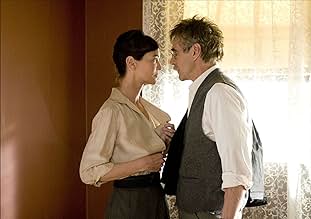
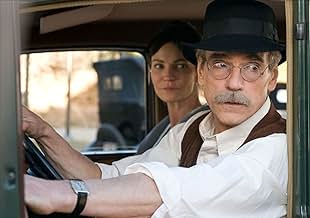
There are good things that are done well in 'Georgia O'Keeffe'. Allen makes a big impression as O'Keeffe, very nuanced with a lot of bold honesty. Irons gives his absolute all as Stieglitz, not as subtle as Allen (the way Stieglitz is written plays a part in this) but the charisma and intensity are there. A very good effort is made making both look like O'Keeffe and Stieglitz and it's a successful one, with some very well-crafted prosthetics/make-up, while Allen and Irons' chemistry is quite magnetic. O'Keeffe and Stieglitz's relationship features prominently here and it is actually very interesting, it's tempestuous but the film allows some more intimate moments to stop it from being over-the-top.
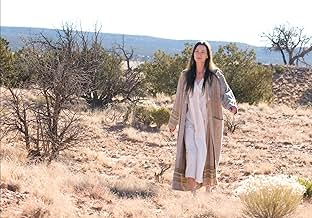
Alongside the depiction of their relationship, what also stands out in the story is the conclusion which is really quite moving, it is in the conclusion too where we most see the too fleeting moments of how O'Keeffe saw human nature. The scenery is stunning and complemented by some nice photography. Tyne Daly and Ed Begley Jr are particularly admirable of the competent if not always remarkable supporting cast in somewhat under-explored roles.
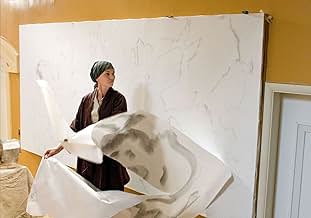
Do think though that despite the central relationship being done very well it could have featured less and there could have much more of how O'Keeffe saw human nature, her as an artist and how she worked. We never properly get to know her properly as a person and there is not enough illuminating about her work, art itself or her as an artist. 'Georgia O'Keeffe' too would have benefitted more from more show and less tell, would loved to have seen more of her work and creative talents shown and less of the film telling us about it.
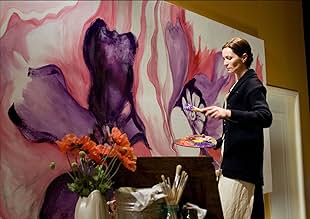
Especially, like primarily in the voice over, when it doesn't always add much and has too much glossing over. The voice over over-explains, is rather superficial cliff-notes-like and wasn't really necessary when what is said could easily have been shown. O'Keeffe's art is beautiful and so vivid, and should have featured more.
Summing up, decent but could have been better. 6/10
'Georgia O'Keeffe' was a decent film and does intrigue, with the two leads and their chemistry being the main reason really to see it. At the same time it was a little disappointing and somewhat superficial and under-explored. As far as biographical dramas about artists go, it's not one of the best or most illuminating, enough to recommend it but what could have been a work of art in the right hands doesn't have enough of a flourish and was a slight missed opportunity.
There are good things that are done well in 'Georgia O'Keeffe'. Allen makes a big impression as O'Keeffe, very nuanced with a lot of bold honesty. Irons gives his absolute all as Stieglitz, not as subtle as Allen (the way Stieglitz is written plays a part in this) but the charisma and intensity are there. A very good effort is made making both look like O'Keeffe and Stieglitz and it's a successful one, with some very well-crafted prosthetics/make-up, while Allen and Irons' chemistry is quite magnetic. O'Keeffe and Stieglitz's relationship features prominently here and it is actually very interesting, it's tempestuous but the film allows some more intimate moments to stop it from being over-the-top.
Alongside the depiction of their relationship, what also stands out in the story is the conclusion which is really quite moving, it is in the conclusion too where we most see the too fleeting moments of how O'Keeffe saw human nature. The scenery is stunning and complemented by some nice photography. Tyne Daly and Ed Begley Jr are particularly admirable of the competent if not always remarkable supporting cast in somewhat under-explored roles.
Do think though that despite the central relationship being done very well it could have featured less and there could have much more of how O'Keeffe saw human nature, her as an artist and how she worked. We never properly get to know her properly as a person and there is not enough illuminating about her work, art itself or her as an artist. 'Georgia O'Keeffe' too would have benefitted more from more show and less tell, would loved to have seen more of her work and creative talents shown and less of the film telling us about it.
Especially, like primarily in the voice over, when it doesn't always add much and has too much glossing over. The voice over over-explains, is rather superficial cliff-notes-like and wasn't really necessary when what is said could easily have been shown. O'Keeffe's art is beautiful and so vivid, and should have featured more.
Summing up, decent but could have been better. 6/10
What happened to Jean Toomer?
About a year ago, when the cast was announced for this film, much flurry was made about Henry Simmons playing the role of writer Jean Toomer, the third point in the crucial triangle that really led Georgia O'Keeffe to decide to stay away from Stieglitz.
Imagine the unexpected disappointment when in the broadcast film, Simmons as Toomer was stifled to not a single honest line of dialog! He is reduced to mention in an insane and inaccurate tirade by Stieglitz as "the Black Prince of Harlem" many decades before Malcolm X (to whom the epithet rightly belongs) was born. And these lines sound quite unworthy of a writer the caliber of Cristofer.
Not only was Toomer, a man of mixed race, hardly in Harlem, but he spent most of his life fighting against being classified as a "Negro writer." Then, even more surprisingly, scenes between O'Keeffe and Toomer show up on the Lifetime website and comprise the great majority of what was omitted from the final presentation -- scenes that could shed quite a different light on her choices about remaining in New Mexico.
Obviously, some effort was made to make Joan Allen and Jeremy Irons look like their historical subjects. Simmons does not look like Toomer at all. At least in the old American Playhouse version of the story Vernal Bagneris makes a credible representative.
Moreover, the finished quality of the omitted scenes belies a late cut. It would certainly be interesting to learn something more for the production record, even if not to abate the unanimous canning by the critics. Toomer's disappearing act is one of the major reasons the film failed.
Imagine the unexpected disappointment when in the broadcast film, Simmons as Toomer was stifled to not a single honest line of dialog! He is reduced to mention in an insane and inaccurate tirade by Stieglitz as "the Black Prince of Harlem" many decades before Malcolm X (to whom the epithet rightly belongs) was born. And these lines sound quite unworthy of a writer the caliber of Cristofer.
Not only was Toomer, a man of mixed race, hardly in Harlem, but he spent most of his life fighting against being classified as a "Negro writer." Then, even more surprisingly, scenes between O'Keeffe and Toomer show up on the Lifetime website and comprise the great majority of what was omitted from the final presentation -- scenes that could shed quite a different light on her choices about remaining in New Mexico.
Obviously, some effort was made to make Joan Allen and Jeremy Irons look like their historical subjects. Simmons does not look like Toomer at all. At least in the old American Playhouse version of the story Vernal Bagneris makes a credible representative.
Moreover, the finished quality of the omitted scenes belies a late cut. It would certainly be interesting to learn something more for the production record, even if not to abate the unanimous canning by the critics. Toomer's disappearing act is one of the major reasons the film failed.
Joan Allen superb!!!
I loved this film, mainly because of Joan Allen's brilliance. Jeremy Irons, on the other hand, was overwrought and made the Stieglitz character more of a caricature than the mercurial, talented artist that Stieglitz was in his own right.All of the other characters were incidental, although Ed Begley Jr. acquitted himself admirably.
The New Mexico landscape was wonderful and anything that gave us a glimpse of O'Keefe's talent added to the virtues of the film. Ultimately, though, it was Allen's luminosity that made the film successful; she brought the character alive in a way that no other actress could. She seems to have an uncanny ability, not unlike Meryl Streep, to BECOME any character rather than simply playing a part and following a script. Don't know if she received any awards for the role, but should have.
The New Mexico landscape was wonderful and anything that gave us a glimpse of O'Keefe's talent added to the virtues of the film. Ultimately, though, it was Allen's luminosity that made the film successful; she brought the character alive in a way that no other actress could. She seems to have an uncanny ability, not unlike Meryl Streep, to BECOME any character rather than simply playing a part and following a script. Don't know if she received any awards for the role, but should have.
A touch disappointing
Don't get me wrong, Allen and Irons are quite good in the film. (Irons seems to be channeling Daniel Plainview) Im just a little disappointed...
I personally would have liked to see her actually painting a bit more...or at least some insight to her thought process. The plot is really about her seemingly symbiotic relationship with Alfred Stiglitz.
There also seems to be a lot of gray areas in her later life that the film just sums up in a monologue, but Its a made for T.V movie...I guess we cant have everything. Something tells me it should (was it meant to be?) have been made into a feature. Its not bad, just could have been better.
I personally would have liked to see her actually painting a bit more...or at least some insight to her thought process. The plot is really about her seemingly symbiotic relationship with Alfred Stiglitz.
There also seems to be a lot of gray areas in her later life that the film just sums up in a monologue, but Its a made for T.V movie...I guess we cant have everything. Something tells me it should (was it meant to be?) have been made into a feature. Its not bad, just could have been better.
Life of Georgia O'Keefe, an introduction
Before seeing this movie, whenever I thought of Georgia O'Keefe I pictured this older woman in a studio in Santa Fe painting flowers and stunning landscapes. This movie finally got to my stereotypical image but it filled in details of O'Keefe's rich, varied, long life along the way.
O'Keefe's work had attracted the attention of famed photographer and art dealer Alfred Stieglitz who exhibited some of her work in New York in 1916. A couple of years later O'Keefe moved to New York and the professional relationship with Stieglitz, who was over twenty years older than her, ultimately turned into a personal one resulting in marriage in 1924.
I always have some reservations about how truthful a biographical picture is, particularly in a case like this where, at the time the screenplay was written, O'Keefe had been dead for over twenty years and most of the people in her life had been dead for upward of fifty years. For example, what are we to take away from the scene about the argument that O'Keefe had with Stieglitz regarding her wanting a child and his blunt refusal? Is that pure speculation? Giving it the benefit of the doubt, I assume the general sweep of her life as presented is accurate, and indeed reading the Wikipedia entry for O'Keefe seems to bear this out. For movies based on a true story I often ask myself why not just read the appropriate Wikipedia entry and skip the movie. But, if properly done, it is easier to get involved in a movie and come away with more lasting impressions. It is often the case that a good movie based on a true story, as this one, will prompt me to do some independent research. There is no lack of O'Keefe biographies, video, and art books out there.
In looking at some of the images of O'Keefe, Stieglitz, and Mabel Dodge, the actors playing those parts (Joan Allen, Jeremy Irons, and Tyne Daly) are well cast as to physical appearance and all do good work.
I wish more of O'Keefe's paintings had been tightly woven into the story.
O'Keefe's work had attracted the attention of famed photographer and art dealer Alfred Stieglitz who exhibited some of her work in New York in 1916. A couple of years later O'Keefe moved to New York and the professional relationship with Stieglitz, who was over twenty years older than her, ultimately turned into a personal one resulting in marriage in 1924.
I always have some reservations about how truthful a biographical picture is, particularly in a case like this where, at the time the screenplay was written, O'Keefe had been dead for over twenty years and most of the people in her life had been dead for upward of fifty years. For example, what are we to take away from the scene about the argument that O'Keefe had with Stieglitz regarding her wanting a child and his blunt refusal? Is that pure speculation? Giving it the benefit of the doubt, I assume the general sweep of her life as presented is accurate, and indeed reading the Wikipedia entry for O'Keefe seems to bear this out. For movies based on a true story I often ask myself why not just read the appropriate Wikipedia entry and skip the movie. But, if properly done, it is easier to get involved in a movie and come away with more lasting impressions. It is often the case that a good movie based on a true story, as this one, will prompt me to do some independent research. There is no lack of O'Keefe biographies, video, and art books out there.
In looking at some of the images of O'Keefe, Stieglitz, and Mabel Dodge, the actors playing those parts (Joan Allen, Jeremy Irons, and Tyne Daly) are well cast as to physical appearance and all do good work.
I wish more of O'Keefe's paintings had been tightly woven into the story.


Le saviez-vous
- AnecdotesThe real inspiration behind this film was the result of producers Joshua D. Maurer and Alixandre Witlin's first visit to the Georgia O'Keeffe Museum in Santa Fe, New Mexico in March, 2006 when they took their eldest daughter Sofia (then almost two years old) to see the collection. Maurer and WiltIn were visiting Sofia's grandparents in Santa Fe and it was her grandmother who made the suggestion that her first museum should be that of famed artists Georgia O'Keeffe. Sofia was so enthralled by the images and so captivated by what she saw, that it gave Maurer and Witlin the idea that to try to portray O'Keeffe's life as a film. As they were leaving the museum, Maurer pitched the idea to Witlin, who is also his producing partner and she agreed but felt the casting of Georgia had to be perfect otherwise it would not work. She asked Josh who he felt would be the ideal casting and Maurer immediately said - "Joan Allen" - and Alix agreed it was a perfect choice. Next Witlin asked him who would buy for development such a film and Maurer immediately responded back - HBO. Witlin agreed. As the Maurer, Witlin and Sofia were leaving the museum, right outside the front door... Maurer immediately called Joan Allen and pitched her the story as Josh and Joan had previously worked closely together on another film project for HBO that unfortunately did not go forward and were looking for another vehicle to collaborate. Joan listened carefully and reported back she loved the idea. Josh told her to hold a beat. He then immediately called Kerri Putnam at HBO and pitched her the idea with Joan attached to star and produce and HBO said yes on the spot. They informed Maurer that this story had been previously pitched over two dozen times but it never felt right to them both in terms of the creative approach by the producers and the casting - but this time it felt perfect. Maurer and Witlin, holding Sofia in their arms, then called Joan back and told her the positive news. Thus began an intensive and passionate development process with HBO and writer Michael Cristofer that resulted in a brilliant screenplay. Maurer, Witlin and Allen visited Santa Fe a few times to do extensive research and took Sofia with them. HBO then had had the project greenlit but when HBO president Colin Callender left the company the project was unfortunately put in turnaround. Disappointed but not defeated, 45 minutes later, Maurer reached out directly to Lifetime Television and sold the project to them in turnaround and then brought on Sony Pictures Television as their deficit financing partner. When the film was officially screened in Santa Fe... Joan Allen spoke and asked Sofia (now aged 4) to stand up and take a bow and the entire audience gave her a standing ovation.
- GaffesPart of this movie was filmed at Ghost Ranch in New Mexico. When Georgia walks out of the house in the morning she is barefoot. This would never happen in real life due to scorpions, fire ants, Cholla cactus thorns, tumbleweed thorns, and a plant called goat's-head weed. This plant has woody thorns that give the plant its nickname of puncturevine.
- ConnexionsFeatured in The 62nd Primetime Emmy Awards (2010)
Meilleurs choix
Connectez-vous pour évaluer et surveiller les recommandations personnalisées
Détails
- Date de sortie
- Pays d’origine
- Site officiel
- Langue
- Aussi connu sous le nom de
- Джорджия О'Кифф
- Lieux de tournage
- sociétés de production
- Consultez plus de crédits d'entreprise sur IMDbPro
- Durée
- 1h 29m(89 min)
- Couleur
- Mixage
- Rapport de forme
- 1.78 : 1
Contribuer à cette page
Suggérer une modification ou ajouter du contenu manquant