ÉVALUATION IMDb
6,6/10
38 k
MA NOTE


L'histoire du maître d'arts martiaux Ip Man, le maître qui a entraîné Bruce Lee.L'histoire du maître d'arts martiaux Ip Man, le maître qui a entraîné Bruce Lee.L'histoire du maître d'arts martiaux Ip Man, le maître qui a entraîné Bruce Lee.
- Réalisation
- Scénaristes
- Vedettes
- Nommé pour 2 oscars
- 68 victoires et 72 nominations au total





Tony Leung Chiu-wai
- Ip Man
- (as Tony Leung)


Elvis Tsui
- Mr. Hung
- (as Jinjiang Xu)


Kar-Yung Lau
- Master Yong
- (as Chia Yung Liu)


Berg Ting-Yip Ng
- Brother Sau
- (as Ting Yip Ng)

Chi Wah Ling
- Foshan Martial Artist
- (as Tony Ling)
Kai-Shui Hung
- Brother Shui
- (as Kai Sui Hung)
6,638.2K
1
2
3
4
5
6
7
8
9
10
Avis en vedette
Extremely beautiful to look at but also also a tad too hard to follow and uninvolving.
'THE GRANDMASTER': Three and a Half Stars (Out of Five)
Critically acclaimed Kung Fu epic about legendary Chinese martial-arts master Ip Man. Ip Man was the Wing Chun grandmaster and his most famous student was Bruce Lee. This film chronicles the years leading up to his success as a martial arts teacher. It stars Tony Leung Chiu-Wai as Ip Man and Zhang Ziyi as Gong Er, his main love interest. Kar Wai Wong directed and co-wrote the movie (with Jingzhi Zou and Haofeng Xu). Wong is famous for directing and writing other popular Hong Kong period piece dramas like '2046' and 'IN THE MOOD FOR LOVE'. I'd rate this flick about the same as Wong's others; I thought it was extremely beautiful to look at but it's also a tad too hard to follow and uninvolving.
The story focuses as much on Gong Er (Ziyi) as it does Ip Man and follows a love story between the two as they keep in contact for many years following a fight for Gong's family's honor. Ip Man had defeated her father, Gong Yutian (Wang Qingxiang) in a battle that was as much about philosophical ideas as combat. The film follows Ip Man's years during the Second Sino-Japanese War, in 1938, struggling through poverty with his family. It also focuses on Gong Er's attempt at vengeance against the man who murdered her father, Ma San (Zhang Jin).
The story is told in a very disjointed way and it was really hard for me to keep up with what was going on in it. I often find these epic Hong Kong Kung Fu flicks to be dull anyway and wasn't too interested in seeing this one. It did get mostly good reviews from critics though and it's nominated for two 2014 Oscars (in Cinematography and Costume Design). It definitely deserves those award nominations and is very breathtaking to look at. I also think Zhang Ziyi is one of the more beautiful and sexy women in cinema today and she gives a great performance here. I'm not sure how I feel about Leung Chiu-Wai as an actor, he's not bad in this movie but I didn't really learn to care for his character much at all. The martial-arts scenes are grand and epic though and I'm sure fans of the genre will be more than pleased.
Watch our movie review show 'MOVIE TALK' at: https://www.youtube.com/watch?v=jTUUB4nMD6M
Critically acclaimed Kung Fu epic about legendary Chinese martial-arts master Ip Man. Ip Man was the Wing Chun grandmaster and his most famous student was Bruce Lee. This film chronicles the years leading up to his success as a martial arts teacher. It stars Tony Leung Chiu-Wai as Ip Man and Zhang Ziyi as Gong Er, his main love interest. Kar Wai Wong directed and co-wrote the movie (with Jingzhi Zou and Haofeng Xu). Wong is famous for directing and writing other popular Hong Kong period piece dramas like '2046' and 'IN THE MOOD FOR LOVE'. I'd rate this flick about the same as Wong's others; I thought it was extremely beautiful to look at but it's also a tad too hard to follow and uninvolving.
The story focuses as much on Gong Er (Ziyi) as it does Ip Man and follows a love story between the two as they keep in contact for many years following a fight for Gong's family's honor. Ip Man had defeated her father, Gong Yutian (Wang Qingxiang) in a battle that was as much about philosophical ideas as combat. The film follows Ip Man's years during the Second Sino-Japanese War, in 1938, struggling through poverty with his family. It also focuses on Gong Er's attempt at vengeance against the man who murdered her father, Ma San (Zhang Jin).
The story is told in a very disjointed way and it was really hard for me to keep up with what was going on in it. I often find these epic Hong Kong Kung Fu flicks to be dull anyway and wasn't too interested in seeing this one. It did get mostly good reviews from critics though and it's nominated for two 2014 Oscars (in Cinematography and Costume Design). It definitely deserves those award nominations and is very breathtaking to look at. I also think Zhang Ziyi is one of the more beautiful and sexy women in cinema today and she gives a great performance here. I'm not sure how I feel about Leung Chiu-Wai as an actor, he's not bad in this movie but I didn't really learn to care for his character much at all. The martial-arts scenes are grand and epic though and I'm sure fans of the genre will be more than pleased.
Watch our movie review show 'MOVIE TALK' at: https://www.youtube.com/watch?v=jTUUB4nMD6M
Great visuals but cumbersome plot
This film tells the biography of a martial arts master, whose life is interrupted by love and war.
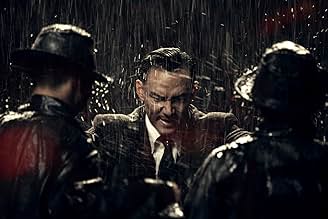
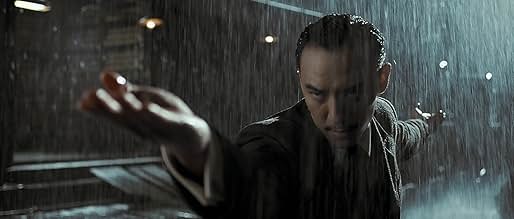
"The Grandmaster" starts off very visually stunning, as Tony Leung and the adversaries fight in the rain in an epic style. The water movement is so stylish that the expectation I have for "The Grandmaster" is immediately lifted up. Throughout the film, the sets are lavish and the visuals are consistently captivating. However, I find the plot a bit confusing and the pace far too slow. The romantic subplot feels cumbersome and too restrained, even though I understand that is the intention to parallel Gong's unspoken feelings. I find the story boring as a matter of fact. Tighter editing, and maybe the last half an hour cut would make the story less cumbersome.
"The Grandmaster" starts off very visually stunning, as Tony Leung and the adversaries fight in the rain in an epic style. The water movement is so stylish that the expectation I have for "The Grandmaster" is immediately lifted up. Throughout the film, the sets are lavish and the visuals are consistently captivating. However, I find the plot a bit confusing and the pace far too slow. The romantic subplot feels cumbersome and too restrained, even though I understand that is the intention to parallel Gong's unspoken feelings. I find the story boring as a matter of fact. Tighter editing, and maybe the last half an hour cut would make the story less cumbersome.
Cool but nothing special
It was fun watching Wong doing action but this didn't do much for me. I enjoyed it but it hardly kept my attention. I prefer Ip Man but if you are fan of martial arts and Wong then you should check this one too.
Magnificent in its Original International Cut Version
THIS IS A REVIEW OF THE INTERNATIONAL CUT, NOT THE 'HARVEY WEINSTEIN' American VERSION:
It was finally time for the great iconoclastic Hong Kong director to turn to martial arts in his intense and atmospheric telling of the great grandmaster teacher, Ip man, and he doesn't disappoint.
Wong Kar-wai brings the poetic beauty of his "In the Mood for Love" to this Chinese action genre and executes it with a precise rhythmic heightening reminiscent of Sam Peckinpah at his best, while bringing out the experience of living through the Japanese invasion of China during WWII.
The cast is magnificent, especially Tony Leung as the Ip man and Ziyi Zhang as Gong Er who perfectly embodies a kung-fu mistress trying to avenge her father.
A Wong masterpiece to put on a level with his finest work!
PS: One particular reviewer earlier criticized the editing of this film which, to me, smacks of putting down the film for not being more conventional. Sometimes it is difficult to put aside expectations of what one wants a film to be in favor of what the actual film on the screen is. "The Grandmaster" is, in fact, brilliantly edited. Wong is, if nothing else, a perfectionist in taking years to mold his assembled footage into his own personal rhythmic poem, idiosyncratically emphasizing downbeats and rests as precise as a great composer. What you see here is Wong Kar-wai's personal vision, take it or leave it. I wouldn't change a frame, or a single edit. It strikes me as a perfect diamond by this exceptional, if eccentric, cinema artist.
It was finally time for the great iconoclastic Hong Kong director to turn to martial arts in his intense and atmospheric telling of the great grandmaster teacher, Ip man, and he doesn't disappoint.
Wong Kar-wai brings the poetic beauty of his "In the Mood for Love" to this Chinese action genre and executes it with a precise rhythmic heightening reminiscent of Sam Peckinpah at his best, while bringing out the experience of living through the Japanese invasion of China during WWII.
The cast is magnificent, especially Tony Leung as the Ip man and Ziyi Zhang as Gong Er who perfectly embodies a kung-fu mistress trying to avenge her father.
A Wong masterpiece to put on a level with his finest work!
PS: One particular reviewer earlier criticized the editing of this film which, to me, smacks of putting down the film for not being more conventional. Sometimes it is difficult to put aside expectations of what one wants a film to be in favor of what the actual film on the screen is. "The Grandmaster" is, in fact, brilliantly edited. Wong is, if nothing else, a perfectionist in taking years to mold his assembled footage into his own personal rhythmic poem, idiosyncratically emphasizing downbeats and rests as precise as a great composer. What you see here is Wong Kar-wai's personal vision, take it or leave it. I wouldn't change a frame, or a single edit. It strikes me as a perfect diamond by this exceptional, if eccentric, cinema artist.
Wong's signature themes and artistic flourishes are still very much alive, but 'The Grandmaster' lacks a focused narrative for a compelling exploration of Ip Man's life
"Don't tell me how good your skills are, how brilliant your master is and how profound your school is. Kung fu - two words - one horizontal, one vertical. If you're wrong, you'll be left lying down. If you're right, you're left standing. And only the ones who are standing have the right to talk."
For all intents and purposes, the film began as a biopic of one man – to be more specific, Ip Man, the influential kung-fu master who was instrumental in spreading the Wing Chun style around the world and who was perhaps better known for being Bruce Lee's master. But in the midst of exploring Ip Man's life, Wong must have been suddenly struck by the thought - What exactly makes Ip Man so special? Or even better, why should a movie set in the golden age of martial arts be solely about one grandmaster?
And so, despite Leung's omniscient voice-over, 'The Grandmaster' is in fact not about Ip Man alone. Be warned therefore, if you are expecting a movie focused on Ip Man, because you're likely to be sorely disappointed – as Tony Leung reportedly is – that you're likely to know more about the Man from the Donnie Yen films.
Indeed, the narrative is the film's biggest handicap, though to be fair, it only becomes apparent later on. The first half-hour begins strongly with a rightful focus on Ip, and key highlights include his initiation into martial arts by his master Chen Heshun (Yuen Woo-Ping) and his loving marriage to Zhang Yongcheng (Song Hye-kyo). Ip's first challenge would come with the arrival of Gong Yutian (Wang Qingxiang), a venerable kung fu master from northeastern China looking to consolidate his power in the southeast even as he retires.
After Ip goes on to win the battle of minds with Gong, the latter's daughter Gong Er (Zhang Ziyi) stands up to challenge Ip yet again in a bid to restore her family's reputation. That duel also marks a turning point for the movie, which shifts away from Ip and explores the vendetta that ensues between Gong Er and her father's power-hungry protégé Ma San (Zhang Jin) against the backdrop of the Japanese occupation of China.
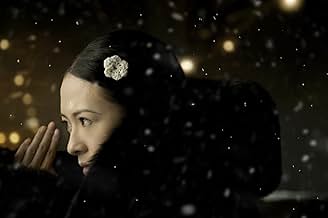
Against the better advice of her elders, she forsakes her betrothal to avenge the death of her father at Ma San's hands, which culminates in a thrilling battle set at an old railway station in Hong Kong one New Year's Eve. Where is Ip Man's involvement in all this? Admittedly there is little.
Though Wong does bring Ip back into the picture towards the end of the film, his audience is likely to have grown too emotionally detached from the character. A scene towards the end that portrays supposedly the last time Ip met Gong Er is infused with the director's signature sense of longing and regret as the latter reveals her feelings for the former, but how that bears relevance to what Wong is trying to say about Ip or Gong Er's tumultuous lives is too obscure.
In fact, throughout the film, Wong offers little insight into the person of Ip Man. What might have been a meaningful portrait of his relationship with Yongcheng is lost when the latter is practically forgotten in the second half of the movie. We learn little too of Ip's relocation to Hong Kong, and how he built up his reputable school for Wing Chun. All things considered, a more coherent portrait of Gong Er actually emerges from the movie.
Rather than regard it as a Ip Man biopic therefore you'll be better off seeing it as Wong's philosophical musings on martial artists. Fans of the auteur will recognise these familiar themes from his previous works, but Wong's treatment is still unparalleled in conveying regret, longing, and unspoken desires – whether is it Ip Man and Gong Er's mutual affection for each other, or Gong Er's lament for a life less fully lived.
Le Sourd's visuals are also particularly ravishing in the action sequences, designed with much imagination and flair by veteran choreographer Yuen Woo-Ping. The opening sequence that sees Ip Man take on a whole gang of men along a rain-soaked street is filmed with utmost clarity on the beauty and precision of the moves, with the subsequent duels between Ip Man and Gong Yutian as well as Gong Er equally breathtaking to behold.
Keenly aware of the actors' limitations, Yuen goes for elegance over spectacle. Nonetheless, both Tony Leung and Zhang Ziyi also perform impressively given their lack of a martial arts background, the months of training to get them prepared physically for their respective roles paying off in the grace and confidence by which they execute their moves.
Nonetheless, Zhang easily trounces Leung in the film's dramatic scenes, the former's combination of grit and vulnerability making Gong Er a more compelling figure than Ip Man. The fault of course isn't Leung's alone, as his usual penchant for nuance and understatement unfortunately working against his portrayal in a narrative that pretty much relegates his character's account as a marker of the passage of time.
Of course, narrative was never a strong suite in Wong's films, which typically were mood pieces boosted by his signature artistic flourishes. These trademarks are still very much alive in 'The Grandmaster', which is easily one of the most beautiful kung fu movies ever made. But plot plays a much more important role here than in Wong's other films, since it is ultimately through Ip Man's experiences in life that we come to understand his deeper introspections. This is where Wong's film stumbles, relegating Ip Man to a sideshow instead of placing him front and centre – and given all that hype and expectation of Wong's Ip Man biopic, the cut we see here can only be regarded as a disappointment.
For all intents and purposes, the film began as a biopic of one man – to be more specific, Ip Man, the influential kung-fu master who was instrumental in spreading the Wing Chun style around the world and who was perhaps better known for being Bruce Lee's master. But in the midst of exploring Ip Man's life, Wong must have been suddenly struck by the thought - What exactly makes Ip Man so special? Or even better, why should a movie set in the golden age of martial arts be solely about one grandmaster?
And so, despite Leung's omniscient voice-over, 'The Grandmaster' is in fact not about Ip Man alone. Be warned therefore, if you are expecting a movie focused on Ip Man, because you're likely to be sorely disappointed – as Tony Leung reportedly is – that you're likely to know more about the Man from the Donnie Yen films.
Indeed, the narrative is the film's biggest handicap, though to be fair, it only becomes apparent later on. The first half-hour begins strongly with a rightful focus on Ip, and key highlights include his initiation into martial arts by his master Chen Heshun (Yuen Woo-Ping) and his loving marriage to Zhang Yongcheng (Song Hye-kyo). Ip's first challenge would come with the arrival of Gong Yutian (Wang Qingxiang), a venerable kung fu master from northeastern China looking to consolidate his power in the southeast even as he retires.
After Ip goes on to win the battle of minds with Gong, the latter's daughter Gong Er (Zhang Ziyi) stands up to challenge Ip yet again in a bid to restore her family's reputation. That duel also marks a turning point for the movie, which shifts away from Ip and explores the vendetta that ensues between Gong Er and her father's power-hungry protégé Ma San (Zhang Jin) against the backdrop of the Japanese occupation of China.
Against the better advice of her elders, she forsakes her betrothal to avenge the death of her father at Ma San's hands, which culminates in a thrilling battle set at an old railway station in Hong Kong one New Year's Eve. Where is Ip Man's involvement in all this? Admittedly there is little.
Though Wong does bring Ip back into the picture towards the end of the film, his audience is likely to have grown too emotionally detached from the character. A scene towards the end that portrays supposedly the last time Ip met Gong Er is infused with the director's signature sense of longing and regret as the latter reveals her feelings for the former, but how that bears relevance to what Wong is trying to say about Ip or Gong Er's tumultuous lives is too obscure.
In fact, throughout the film, Wong offers little insight into the person of Ip Man. What might have been a meaningful portrait of his relationship with Yongcheng is lost when the latter is practically forgotten in the second half of the movie. We learn little too of Ip's relocation to Hong Kong, and how he built up his reputable school for Wing Chun. All things considered, a more coherent portrait of Gong Er actually emerges from the movie.
Rather than regard it as a Ip Man biopic therefore you'll be better off seeing it as Wong's philosophical musings on martial artists. Fans of the auteur will recognise these familiar themes from his previous works, but Wong's treatment is still unparalleled in conveying regret, longing, and unspoken desires – whether is it Ip Man and Gong Er's mutual affection for each other, or Gong Er's lament for a life less fully lived.
Le Sourd's visuals are also particularly ravishing in the action sequences, designed with much imagination and flair by veteran choreographer Yuen Woo-Ping. The opening sequence that sees Ip Man take on a whole gang of men along a rain-soaked street is filmed with utmost clarity on the beauty and precision of the moves, with the subsequent duels between Ip Man and Gong Yutian as well as Gong Er equally breathtaking to behold.
Keenly aware of the actors' limitations, Yuen goes for elegance over spectacle. Nonetheless, both Tony Leung and Zhang Ziyi also perform impressively given their lack of a martial arts background, the months of training to get them prepared physically for their respective roles paying off in the grace and confidence by which they execute their moves.
Nonetheless, Zhang easily trounces Leung in the film's dramatic scenes, the former's combination of grit and vulnerability making Gong Er a more compelling figure than Ip Man. The fault of course isn't Leung's alone, as his usual penchant for nuance and understatement unfortunately working against his portrayal in a narrative that pretty much relegates his character's account as a marker of the passage of time.
Of course, narrative was never a strong suite in Wong's films, which typically were mood pieces boosted by his signature artistic flourishes. These trademarks are still very much alive in 'The Grandmaster', which is easily one of the most beautiful kung fu movies ever made. But plot plays a much more important role here than in Wong's other films, since it is ultimately through Ip Man's experiences in life that we come to understand his deeper introspections. This is where Wong's film stumbles, relegating Ip Man to a sideshow instead of placing him front and centre – and given all that hype and expectation of Wong's Ip Man biopic, the cut we see here can only be regarded as a disappointment.


Le saviez-vous
- AnecdotesThe project was announced almost 10 years before its final release, due to director Wong Kar-Wai's endless perfectionism. Several other motion pictures about the Ip Man that were conceived after this announcement (most famously Yip Man (2008) and Yip Man 2 (2010)) were all released in the meantime.
- Autres versionsThe original version released in Asia removes a portion of Yi Xintian's subplot. The rain fight sequence between Xintian and Ip Man shown in the trailer, for example, was removed. However, Wong Karwai then recut the movie for a special Berlin Film Festival screening by incorporating the missing scenes back, but editing out several scenes from the original version including a fight sequence between Ip Man and a Hong Kong challenger. Both versions are missing crucial segments that made all three main characters' journey feel incomplete. The actual finished movie was rumored to be 4 hours long. Wong Karwai mentioned he had no intention of releasing the 4 hour version.
- ConnexionsFeatured in The Oscars (2014)
Meilleurs choix
Connectez-vous pour évaluer et surveiller les recommandations personnalisées
- How long is The Grandmaster?Propulsé par Alexa
Détails
- Date de sortie
- Pays d’origine
- Sites officiels
- Langues
- Aussi connu sous le nom de
- The Grandmaster
- Lieux de tournage
- sociétés de production
- Consultez plus de crédits d'entreprise sur IMDbPro
Box-office
- Budget
- 38 600 000 $ US (estimation)
- Brut – États-Unis et Canada
- 6 594 959 $ US
- Fin de semaine d'ouverture – États-Unis et Canada
- 132 617 $ US
- 25 août 2013
- Brut – à l'échelle mondiale
- 73 933 255 $ US
- Durée
- 2h 10m(130 min)
- Couleur
- Mixage
- Rapport de forme
- 2.35 : 1
Contribuer à cette page
Suggérer une modification ou ajouter du contenu manquant