ÉVALUATION IMDb
7,1/10
9,3 k
MA NOTE
Ajouter une intrigue dans votre langueAt the end of the 19th century, a young Danish priest is sent to a remote part of Iceland. The deeper he travels into the Icelandic landscape, the more he loses a sense of his own reality, h... Tout lireAt the end of the 19th century, a young Danish priest is sent to a remote part of Iceland. The deeper he travels into the Icelandic landscape, the more he loses a sense of his own reality, his mission and his sense of duty.At the end of the 19th century, a young Danish priest is sent to a remote part of Iceland. The deeper he travels into the Icelandic landscape, the more he loses a sense of his own reality, his mission and his sense of duty.
- Réalisation
- Scénariste
- Vedettes
- Prix
- 18 victoires et 44 nominations au total
Ingvar Sigurdsson
- Ragnar
- (as Ingvar Sigurðsson)
Jacob Lohmann
- Carl
- (as Jacob Hauberg Lohmann)
Friðrik Friðriksson
- Friðrik
- (as Friðrik Snær Friðriksson)
7,19.3K
1
2
3
4
5
6
7
8
9
10
Avis en vedette
Beautifully filmed tribute to the Icelandic landscape and the people that used to live there
The film has some amazing imagery, it is intriguing, it has drama, mistery and above all, it shows the dominant force of nature, that is depicted as far more powerful than the ephemeral characters that try to make a living on earth.
I found it as an odd to nature, to specifically the Icelandic harsh but majestic natural landscape and to the way people used to respect this. It is a great movie in many ways.
However, it's plot is slow-moving, the scenes are extremely long, do not expect to be entertained as it is the complete opposite of a fast-action, Hollywood-style movie. It is often rather boring and there is the real danger that the 2 hours and 23 minutes to pass rather slow to you as it did to me. I has the impression that the movie could have been just as deep and beautiful lasting only say 1 hours and 45 minutes.
I found it as an odd to nature, to specifically the Icelandic harsh but majestic natural landscape and to the way people used to respect this. It is a great movie in many ways.
However, it's plot is slow-moving, the scenes are extremely long, do not expect to be entertained as it is the complete opposite of a fast-action, Hollywood-style movie. It is often rather boring and there is the real danger that the 2 hours and 23 minutes to pass rather slow to you as it did to me. I has the impression that the movie could have been just as deep and beautiful lasting only say 1 hours and 45 minutes.
Very slow, very beautiful
At least twice during this film, the director uses a bold and spectacular cinematographic gimmick. In the shots, lasting several minutes, the camera turns very slowly around in a 360-degree movement. These shots are almost mini-films within the film. In the second one, the camera captures a village wedding party, with musicians, dancers and children playing. Wonderful to look at.
There are more beautiful shots in the film. One shows a dead horse, slowly decaying in a series of identical shots, but filmed in different seasons. Has the director filmed the entire process during a full year? It's possible, there is enough space in the immense expanse of Iceland's remote wilderness.
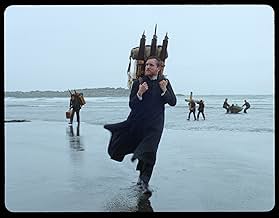
Apart from the 19th century Danish priest who is the story's protagonist, the Icelandic landscape is really the most important element in the film. In the first part, there really isn't much else. After having arrived by ship, the priest travels on horseback through the barren landscape, accompanied by some taciturn Icelanders. When he arrives at a village in order to build a new church, the story concentrates on the tension between the Icelanders and the priest, who is not only seen as a representative of an oppressive country, but also seems ill-prepared for the physical challenges of the primitive Icelandic lifestyle.
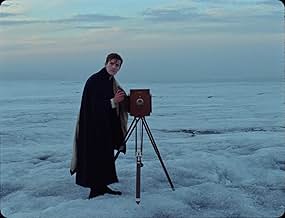
In order to give this simple story an extra dimension, the priest is also a photographer, making portraits of the people he meets. In the 19th century, this was an elaborate process involving eggwhite and silver. The director wants us to believe it is the recent discovery of those photo's, which survived the centuries, that made him reconstruct the priest's journey.
For me, the film ticked several boxes. I have hiked through the Icelandic interior, and yes, the landscape really is amazing. I also like slow cinema, and this is very slow cinema. Thirdly, this film also contains some food for thought about religion. Officially, the Danish priest and the Icelandic villagers share the same religion, but the way they experience it couldn't be more different.
There are more beautiful shots in the film. One shows a dead horse, slowly decaying in a series of identical shots, but filmed in different seasons. Has the director filmed the entire process during a full year? It's possible, there is enough space in the immense expanse of Iceland's remote wilderness.
Apart from the 19th century Danish priest who is the story's protagonist, the Icelandic landscape is really the most important element in the film. In the first part, there really isn't much else. After having arrived by ship, the priest travels on horseback through the barren landscape, accompanied by some taciturn Icelanders. When he arrives at a village in order to build a new church, the story concentrates on the tension between the Icelanders and the priest, who is not only seen as a representative of an oppressive country, but also seems ill-prepared for the physical challenges of the primitive Icelandic lifestyle.
In order to give this simple story an extra dimension, the priest is also a photographer, making portraits of the people he meets. In the 19th century, this was an elaborate process involving eggwhite and silver. The director wants us to believe it is the recent discovery of those photo's, which survived the centuries, that made him reconstruct the priest's journey.
For me, the film ticked several boxes. I have hiked through the Icelandic interior, and yes, the landscape really is amazing. I also like slow cinema, and this is very slow cinema. Thirdly, this film also contains some food for thought about religion. Officially, the Danish priest and the Icelandic villagers share the same religion, but the way they experience it couldn't be more different.
Stunning film worth watching
This movie is a feast for your eyes. The colors, sounds and scenery are lusciously incredible and pull you into this terribly, beautiful world that is Iceland. The story moves in a continuous slow beat that makes you feel every moment of the journey. The story unravels slowly but keeps your interest throughout. Some parts were shocking, a few funny in a dark way and some even puzzling. The attention to detail is striking, in every scene the contrast and saturation of color is near perfect. There isn't anything I disliked about this movie. I thought it was a true piece of art. I recommend seeing this movie and being patient throughout.
Godland
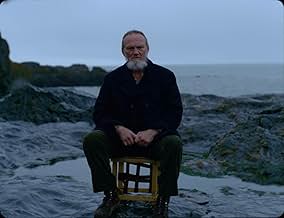
Fr. Lucas (Elliott Crosset Hove) is despatched by his bishop to a remote settlement in Iceland where he is charged with building a church and establishing a parish. Upon arrival, he is met by "Ragnar" (Ingvar Sigurdsson) - a rather unwelcoming man, who is tasked with guiding him to the hamlet many days trek away. Their journey tests the mettle of the young priest. The hostility of the environment, the indifference of his travelling companions, the cold, the wind, the rain - all of these make him consider seriously what he is doing and whether he actually has the faith. His exhaustion causes him to finally fall from his horse and upon wakening we discover that he has luckily arrived at his destination and is being nursed by "Anna" (Vic Carmen Sonne). He is broadly welcomed and the construction of his church proceeds but he is not a man at ease with his surroundings, his new-found parishioners and but for an increasingly close relationship with "Anna" would be an inch from despair. Is this a place where he can settle and live? The cinematography is gorgeous - make sure you take a jumper when you watch it. The sheer inhospitableness of this island. It was hardly a place for the indigenous ponies, it is certainly not a place for a clergyman used to home comforts now reduced to sleeping in a thin canvas tent! He was a photographer - and the film is inspired by a small collection of his photographs that were found. It was possibly this photography that he felt gave him a purpose as the man we see at the end bears little resemblance to the one we meet in Denmark at the beginning. This features a very strong performance from Hove. He manages the transformation of his character well and that encourages us to feel invested in him and his conflict. I did not enjoy, nor really understand, the last fifteen minutes. The story takes a turn for the brutal and the tragic in a way that seemed to me unnecessary and somewhat inexplicable. Cause and effect - but why? Perhaps I missed something? Anyway, this is well worth watching and though a bit long, is quite thought-provoking at times.
A photographic achievement
Visuals: 10/10. Sound design: 10/10. Storyline: 10/10. Where this film loses me is primarily the storytelling and dialogue. Some things happened in this movie that just felt odd and out of place. Some characters said/did things that made me feel like i had missed a huge part of the movie. The dialogue was a huge reason that the storytelling was inadequate. All the characters feel, though seemingly on purpose, extremely stiff and nothing they say flows at all. However, like I said, that was probably Hlynur Palmason's intention for the movie is an adaption of simple photographs which is evident in the cinematography. This film is not really a movie so much as a slideshow, which, although it makes for stunning photography and a unique shtick, makes the characters less relatable. However, I must say there were moments near the end where a felt a strong bond with the protagonist that I hadn't expected throughout the first hour and a half.
Le saviez-vous
- AnecdotesThe title of the film in Danish (Vanskabte Land) Icelandic translates to something more like "wretched land" or perhaps "godforsaken land" rather than "Godland" in the English title.
- GaffesIn one scene a character is seen playing a Scandalli accordion. This is an anachronism: the story takes place at the end of the 19th century while the Scandalli brothers began producing accordions in the early 20th century and the Scandalli company was founded in 1916.
- Générique farfeluSeventeen horses and two dogs are credited as cast or extras. Three horses have 'in memory of' credits.
- ConnexionsReferenced in Radio Dolin: Oscars 2024: The Best Films from around the World (2023)
- Bandes originalesDet er hvidt herude
Performed by Vic Carmen Sonne
Lyrics by Steen Steensen Blicher
Composed by Thomas Laub
Meilleurs choix
Connectez-vous pour évaluer et surveiller les recommandations personnalisées
- How long is Godland?Propulsé par Alexa
Détails
Box-office
- Budget
- 5 000 000 € (estimation)
- Brut – États-Unis et Canada
- 60 735 $ US
- Brut – à l'échelle mondiale
- 1 560 518 $ US
- Durée
- 2h 23m(143 min)
- Couleur
- Mixage
- Rapport de forme
- 1.33 : 1
Contribuer à cette page
Suggérer une modification ou ajouter du contenu manquant