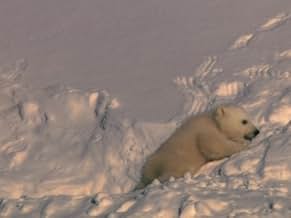
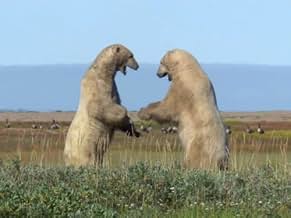
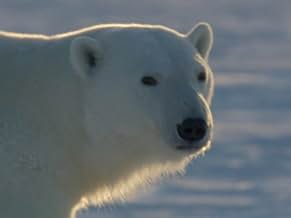
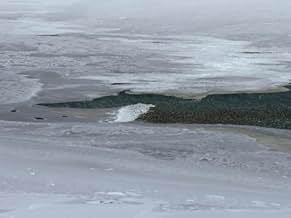
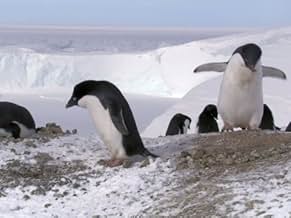
Se focalise sur la vie et l'environnement dans l'Arctique et l'Antarctique.Se focalise sur la vie et l'environnement dans l'Arctique et l'Antarctique.Se focalise sur la vie et l'environnement dans l'Arctique et l'Antarctique.
- A remporté 4 prix Primetime Emmy
- 13 victoires et 9 nominations au total
Parcourir les épisodes
9,039.1K
1
2
3
4
5
6
7
8
9
10
Sommaire
Reviewers say 'Frozen Planet' is acclaimed for its breathtaking cinematography and David Attenborough's engaging narration. The series excels in detailing animal behavior and adaptation, offering both educational and emotional value. Behind-the-scenes segments enhance appreciation for the production team's efforts in extreme environments. However, some note repetitive content and a slight focus on human impact, though these are minor compared to the series' overall quality.
Avis en vedette
A bit repetitive but amazing nevertheless.
If you decide to watch "Frozen Planet", you might want to think twice if you are squeamish or if you're watching with small children. This is because it depicts nature in the raw...and that sometimes means footage of animals killing each other or dying from exposure. I personally prefer this over an overly sanitized program...but it's best you know and understand this so you can make the appropriate choice.
The film is about both the Arctic and Antarctica and most of the episodes consist of showing the same season in each region. So, for example, the summer in the Arctic would be June-September but in Antarctica you are seeing its summer from December-March. During the course of the episodes you see the usual amazing footage you see in the other recent "Earth" documentaries with David Attenborough...and you often marvel at the people who went to such lengths to get such perfect film. Pretty amazing...and marvelous on a large television.
I think this is a nearly perfect show. My only complaint, and it's a minor one, is that some of the material is repetitive and really noticable if you are binging on the show. I honestly feel they could have edited out an episode or two to make it much more compact.
The film is about both the Arctic and Antarctica and most of the episodes consist of showing the same season in each region. So, for example, the summer in the Arctic would be June-September but in Antarctica you are seeing its summer from December-March. During the course of the episodes you see the usual amazing footage you see in the other recent "Earth" documentaries with David Attenborough...and you often marvel at the people who went to such lengths to get such perfect film. Pretty amazing...and marvelous on a large television.
I think this is a nearly perfect show. My only complaint, and it's a minor one, is that some of the material is repetitive and really noticable if you are binging on the show. I honestly feel they could have edited out an episode or two to make it much more compact.
Wonderful, beautiful, informative, captivating
This is a wonderful documentary covering the Arctic and Antarctica sections of our planet. You see these two regions through 4 seasons, through the eyes of it's inhabitants (mammals, birds, fish and humans). It captures the beauty, harsh weather and life in all of its glory and challenges. We get to see a thorough glimpse in life of all key animals. The 4 season covers, love, birth, growth, survival, death. We also get to see the life of human beings who live around Arctic circle. It is a tough and simple life.
The show is very informative and very entertaining. Highly recommended. If you love nature or want to know more about this planet, check this out. I am now sifting through IMDb to find more such shows.
Amazing production!
I was fortunate enough to get the opportunity to work on the promotional campaign as an editor at Discovery Channel in 2011-2012, and is still one of my favorite projects to date. The only challenge I faced was trying to choose which visuals to use in the 60/30 second commercials, because they were all breath taking.
From start to finish, the production value, imagery and breathtaking landscapes are captured with perfection in this documentary series. I thoroughly enjoyed watching this series when I had to (work), and then watched it again when I wanted to (at home)!
Over all, well done!
Do You Want To Build a Snowman?
Though I don't particularly enjoy animal documentaries, the second run of the BBC's "Frozen Planet" was on the Guardians list of top TV of last year, so I needed to give it a try. Despite the fact it's not a narrative-based show I still decided to watch the initial run from 2011 first. The effort involved is admirable, but as a documentary I found it to be a little repetitive.
The poles at either side of our planet are among the most inhospitable areas to exist. There are, however, various ecosystems that do survive there, with the changing seasons providing them with enough respite to either feed, breed or migrate as required. Polar Bears, Seals, Penguins and Orcas are amongst those species' films by the documentary, that uses underwater filming and time lapse photography to get unbelievably close to the animals.
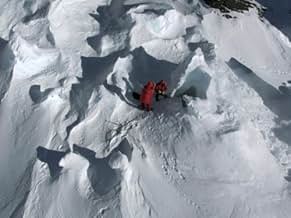
This is probably the BBC at it's finest. An altruistic environmental documentary, beautifully shot in high definition and with a David Attenborough voiceover that can only be described as Iconic. The amount of personal sacrifice that goes into making a series like this is truly inspiring, with the "Freeze Frame" sections at the end of each episode giving us an insight into the conditions endured, and perils risked in order to get the footage. The footage is worth it though and even without the educational aspect just looking at what they captured would be enough. The final episode of the series is a change of pace, and focuses on human interaction in the polar regions, with both native people who live and hunt there, exploration bases and mining operations.
This might be a drawback caused by watching all the episodes in just a few days, rather than spacing them out one a week, as it would have originally been released, but there is quite a bit of repetition in the series. Some of this is endemic, Animals essentially eat, procreate, and die so if it's not doing one of these things, it's doing the other. More than that though, some specific bits of the series, I'm thinking specifically of the Orca's iceberg destruction technique and various bits of the penguin walks are shown more than once.
It doesn't derail the series which, like all of them, is a unique and fascinating insight into these ecosystems.
The poles at either side of our planet are among the most inhospitable areas to exist. There are, however, various ecosystems that do survive there, with the changing seasons providing them with enough respite to either feed, breed or migrate as required. Polar Bears, Seals, Penguins and Orcas are amongst those species' films by the documentary, that uses underwater filming and time lapse photography to get unbelievably close to the animals.
This is probably the BBC at it's finest. An altruistic environmental documentary, beautifully shot in high definition and with a David Attenborough voiceover that can only be described as Iconic. The amount of personal sacrifice that goes into making a series like this is truly inspiring, with the "Freeze Frame" sections at the end of each episode giving us an insight into the conditions endured, and perils risked in order to get the footage. The footage is worth it though and even without the educational aspect just looking at what they captured would be enough. The final episode of the series is a change of pace, and focuses on human interaction in the polar regions, with both native people who live and hunt there, exploration bases and mining operations.
This might be a drawback caused by watching all the episodes in just a few days, rather than spacing them out one a week, as it would have originally been released, but there is quite a bit of repetition in the series. Some of this is endemic, Animals essentially eat, procreate, and die so if it's not doing one of these things, it's doing the other. More than that though, some specific bits of the series, I'm thinking specifically of the Orca's iceberg destruction technique and various bits of the penguin walks are shown more than once.
It doesn't derail the series which, like all of them, is a unique and fascinating insight into these ecosystems.
10Bert45
Absolutely brilliant work
I was looking forward to this BBC series and I was not in any way disappointed. The work that went in to bringing us these wonderful visions of the polar regions is amazing. Thankfully, in New Zealand, we saw the David Attenborough-narrated version as it was meant to be. No disrespect to Alec Baldwin, who narrated the US version, but Sir David has been there and done that in wildlife film-making for the best part of 60 years. He KNOWS what he's talking about. I'm very aware of the "controversy" that surrounds the seventh episode titled On Thin Ice, and the apparent reluctance of US TV to show it because it deals with climate change. My advice is: don't let anyone tell you that this is a piece of climate change propaganda. It's not. It simply lays out the facts in a non-judgmental way and backs them up with historical photography and clear satellite imagery. Watch it and make up your own mind.
Le saviez-vous
- Anecdotes44 cinematographers to shoot the whole documentary.
- ConnexionsEdited into Universum: Eisige Welten - Das Reich der Kälte im Bann des Klimas (2017)
Meilleurs choix
Connectez-vous pour évaluer et surveiller les recommandations personnalisées
- How many seasons does Frozen Planet have?Propulsé par Alexa
Détails
- Date de sortie
- Pays d’origine
- Site officiel
- Langues
- Aussi connu sous le nom de
- David Attenborough's Frozen Planet
- Lieux de tournage
- sociétés de production
- Consultez plus de crédits d'entreprise sur IMDbPro
- Durée
- 1h(60 min)
- Couleur
- Mixage
- Rapport de forme
- 16:9 HD
Contribuer à cette page
Suggérer une modification ou ajouter du contenu manquant