ÉVALUATION IMDb
6,7/10
4,1 k
MA NOTE


Ajouter une intrigue dans votre langueWhen the older sister of Shira, an 18-year-old Hasidic Israeli, dies suddenly in childbirth, Shira must decide if she can and should marry her widowed brother-in-law, which also generates te... Tout lireWhen the older sister of Shira, an 18-year-old Hasidic Israeli, dies suddenly in childbirth, Shira must decide if she can and should marry her widowed brother-in-law, which also generates tensions within her extended family.When the older sister of Shira, an 18-year-old Hasidic Israeli, dies suddenly in childbirth, Shira must decide if she can and should marry her widowed brother-in-law, which also generates tensions within her extended family.
- Réalisation
- Scénariste
- Vedettes
- Prix
- 14 victoires et 16 nominations au total





6,74K
1
2
3
4
5
6
7
8
9
10
Avis en vedette
Black and White
Israel's official entry to the Oscars this year is probably too minimalistic and low-key to make it to the final five, but it's a film well worth watching and is in fact one of the best films I've seen so far emerge from the growing Israeli cinema. Fill the Void is of particular interest to Israeli viewers because it's a rare window into the very closed-community lifestyle of the Orthodox Jews, giving very rare insight as the film was made by an Orthodox director but with a secular audience in mind, which is something never seen before. For foreign viewers too, it may be a fascinating glimpse into an anachronistic, static religious community that hardly ever opens itself up like this to the general public.
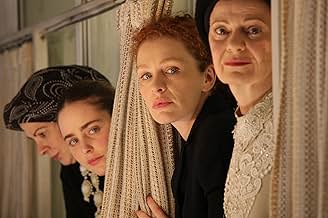
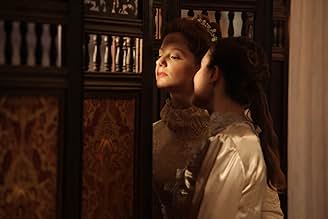
Cinematically, Fill the Void is startlingly minimalistic; the story is a very brief glimpse into a very simple lifestyle. The gorgeous cinematography compliments that, constantly focusing on the contrast between Hadas Yaron's white face, the black clothing and the gray-brown backgrounds, but with a soft focus that makes it very easy to get lost inside. The cinematography itself is so aesthetic that it often conceals just how simple the story and the characters are - the film revolves around one moral question without giving too much insight into the thought processes of any of the characters. Its real achievement however is in enabling the viewer to be immersed in the environment and the lifestyle of a culture so different from what we're used to, and in that sense it's a triumph.
Cinematically, Fill the Void is startlingly minimalistic; the story is a very brief glimpse into a very simple lifestyle. The gorgeous cinematography compliments that, constantly focusing on the contrast between Hadas Yaron's white face, the black clothing and the gray-brown backgrounds, but with a soft focus that makes it very easy to get lost inside. The cinematography itself is so aesthetic that it often conceals just how simple the story and the characters are - the film revolves around one moral question without giving too much insight into the thought processes of any of the characters. Its real achievement however is in enabling the viewer to be immersed in the environment and the lifestyle of a culture so different from what we're used to, and in that sense it's a triumph.
A heartfelt and intimate look inside a world we never see
Israeli director Rama Burshtein's powerfully moving Fill the Void, Israel's submission to the 2012 Oscars, is about love and marriage but, in the Orthodox Hasidic community in Tel Aviv, they do not necessarily go together like a horse and carriage. Hadas Yaron, winner of the Best Actress Award at the Venice Film Festival in her first film role, is eighteen year-old Shira who is very close to being matched and promised to a local young man. When her older sister Esther (Renana Raz) dies in childbirth, however, her husband, the striking-looking Yochay (Yiftak Klein), is left to raise his young son Mordecai by himself and, according to tradition, has a duty to remarry once the formal mourning period is over.
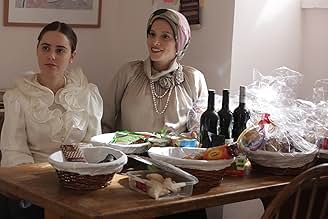
This is where the film's central dilemma comes in and Shira's choice to "do the right thing" is severely tested by conflicting loyalties. After her family celebrates the Jewish holiday Purim, Shira and her mother, Rivka (Irit Sheleg) in a scene with Woody Allen overtones, are sent by the matchmaker to "shop" in the supermarket to find a suitable husband. When the right man is found, arrangements are made, even though Shira does not actually meet the young man until later in the film. When her mother learns that Yochay has a marriage offer from a widow living in Belgium, however, and cannot face the idea of the baby being taken away, she asks the matchmaker Mr. Shtreicher (Michael David Weigl) to arrange for Shira to marry Yochai, who is ten years older.
Fill the Void is a heartfelt and intimate look inside a world few of us ever have contact with. Sensitive to the orthodox community's rituals and traditions, however anachronistic they may seem to us, there is a feeling behind the rituals that binds people together and produces a feeling of closeness in the community, underscored by the rhythmic chants and joyous celebrations of special occasions. Though the purpose of every girl is to be married may seem offensive, in the culture in which it takes place, it is not demeaning, and the film does not stand in judgment of its characters or of the community.
As director Rama Buhrstein, a member of the Orthodox community herself, describes the film, "It's not about being an anthropologist or about religion or secularism. Rather, it's about the heart." Shira is asked to choose between her sense of duty to her family and community and her desire to fulfill her own dreams. Throughout the process, however, she is not alone and is always surrounded by love and support from mothers, fathers, aunts, rabbis, even though their advice may be conflicting. Her affectionate Aunt Hanna (Razia Israeli), who never married because of a disability, encourages Shira to do what is right for herself, putting her at odds with her mother.
Shira's older unwed cousin Frieda (Hila Feldman) tells her that it was Esther's wish that she marry Yochay if anything should happen to her, a proposition Yochay rebels at. Sensing Shira's confusion and uncertainty about marrying Yochay, however, the chief Rabbi (Melech Thal) refuses to bless the marriage. Even as many emotions seem to be happening all at the same time, the resolution of the conflict is poignant and even beautiful and it all comes together in a memorable final shot.
This is where the film's central dilemma comes in and Shira's choice to "do the right thing" is severely tested by conflicting loyalties. After her family celebrates the Jewish holiday Purim, Shira and her mother, Rivka (Irit Sheleg) in a scene with Woody Allen overtones, are sent by the matchmaker to "shop" in the supermarket to find a suitable husband. When the right man is found, arrangements are made, even though Shira does not actually meet the young man until later in the film. When her mother learns that Yochay has a marriage offer from a widow living in Belgium, however, and cannot face the idea of the baby being taken away, she asks the matchmaker Mr. Shtreicher (Michael David Weigl) to arrange for Shira to marry Yochai, who is ten years older.
Fill the Void is a heartfelt and intimate look inside a world few of us ever have contact with. Sensitive to the orthodox community's rituals and traditions, however anachronistic they may seem to us, there is a feeling behind the rituals that binds people together and produces a feeling of closeness in the community, underscored by the rhythmic chants and joyous celebrations of special occasions. Though the purpose of every girl is to be married may seem offensive, in the culture in which it takes place, it is not demeaning, and the film does not stand in judgment of its characters or of the community.
As director Rama Buhrstein, a member of the Orthodox community herself, describes the film, "It's not about being an anthropologist or about religion or secularism. Rather, it's about the heart." Shira is asked to choose between her sense of duty to her family and community and her desire to fulfill her own dreams. Throughout the process, however, she is not alone and is always surrounded by love and support from mothers, fathers, aunts, rabbis, even though their advice may be conflicting. Her affectionate Aunt Hanna (Razia Israeli), who never married because of a disability, encourages Shira to do what is right for herself, putting her at odds with her mother.
Shira's older unwed cousin Frieda (Hila Feldman) tells her that it was Esther's wish that she marry Yochay if anything should happen to her, a proposition Yochay rebels at. Sensing Shira's confusion and uncertainty about marrying Yochay, however, the chief Rabbi (Melech Thal) refuses to bless the marriage. Even as many emotions seem to be happening all at the same time, the resolution of the conflict is poignant and even beautiful and it all comes together in a memorable final shot.
'Tradition!'
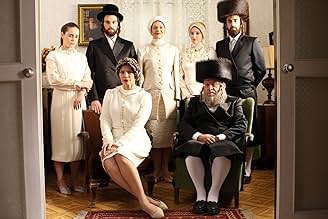
One reason to view FILL THE VOID, written and directed by Rama Burshtein, is the opportunity to view the clothing, the mannerisms, the singing (endless), and the other unique characteristics of Israel's ultra-Orthodox Hasidic community. For those who have never witness this spectrum of Judaism it is an eye-opening experience: religious law, tradition and the rabbi's word are absolute. Marriages are arranged and a woman's outside options are limited, as marriage is a central and crucial moment in their lives. Matches are arranged, decisions about whom to marry are critically important, but apparently the woman always has the right to turn down a prospective suitor. Of importance to note, Rama Burshtein comes form this community and her understanding of all the permutations is obvious.
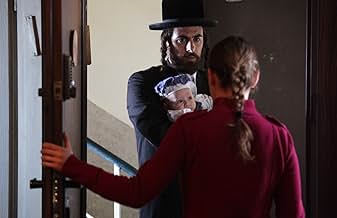
Shira (Hadas Yaron), a devout 18-year-old Israeli, has come of age and is considering marriage, having met her first serious suitor Yossi (Ido Samuel). Shira's eldest sister Esther (Renana Raz) suddenly dies in childbirth leaving her grieving husband Yochay (the very handsome and talented Yiftach Klein) with a son and no mother to care for the infant. Despite his grief (and the grief of Shira's parents - Irit Sheleg and Chayim Sharir) Yochay decides he must marry. Shira's other sister Frieda (Hila Feldman) declares that Esther had informed her that should anything happen to Esther, Frieda should marry Yochay. Shira's mother, afraid that Yochay will take the offer from a Belgium woman to marry and thus move away with her grandson from Tel Aviv, encourages Shira to marry Yochay. Shira is conflicted, gains support from her armless unmarried aunt Hanna (Razia Israeli) who knows that in this community a woman MUST be married, and after much discussion among the Rabbi (Melech Thal) and the family and Yochay and Shira, a conversation between the couple seals their fate.
The acting is excellent, the cinematography often times seems flooded with light and slightly out of focus as if taken through layers of wedding veils (!), the costumes are amazing even they are the usual dress mode of this Hassidic community, and the attention to detail of such moments as Purim and Shabbat are immaculate. The seemingly endless amount of singing by the men does grow a bit wearisome and covers dialogue at times, but this is a fresh and fascinating view of love, traditions, and laws and the still viable personal choices in this colorful community. In Hebrew with English subtitles.
Grady Harp
Shira (Hadas Yaron), a devout 18-year-old Israeli, has come of age and is considering marriage, having met her first serious suitor Yossi (Ido Samuel). Shira's eldest sister Esther (Renana Raz) suddenly dies in childbirth leaving her grieving husband Yochay (the very handsome and talented Yiftach Klein) with a son and no mother to care for the infant. Despite his grief (and the grief of Shira's parents - Irit Sheleg and Chayim Sharir) Yochay decides he must marry. Shira's other sister Frieda (Hila Feldman) declares that Esther had informed her that should anything happen to Esther, Frieda should marry Yochay. Shira's mother, afraid that Yochay will take the offer from a Belgium woman to marry and thus move away with her grandson from Tel Aviv, encourages Shira to marry Yochay. Shira is conflicted, gains support from her armless unmarried aunt Hanna (Razia Israeli) who knows that in this community a woman MUST be married, and after much discussion among the Rabbi (Melech Thal) and the family and Yochay and Shira, a conversation between the couple seals their fate.
The acting is excellent, the cinematography often times seems flooded with light and slightly out of focus as if taken through layers of wedding veils (!), the costumes are amazing even they are the usual dress mode of this Hassidic community, and the attention to detail of such moments as Purim and Shabbat are immaculate. The seemingly endless amount of singing by the men does grow a bit wearisome and covers dialogue at times, but this is a fresh and fascinating view of love, traditions, and laws and the still viable personal choices in this colorful community. In Hebrew with English subtitles.
Grady Harp
10clg238
Profound and Moving
This is a gorgeous film. The cinematography, largely revealing closeups of the characters, is stunning, bringing us close in to an unfamiliar world, an insular, deeply religious culture. The acting is flawless. But what brings me to give this film a top rating is the story, one of moral complexity--life, after all, is complicated, a truism that Hollywood films fail miserably in addressing, the rare times they attempt to do so (perhaps "The Master" and "Doubt" are exceptions). A young, innocent woman desires to make a marriage match that is in accordance with her Jewish Orthodox tradition and yet in some ineffable way is personally to her taste. At first this seems possible, but unforeseen circumstances make her choice of marriage partner difficult. She is not just choosing for herself and potential partner but her choice is central to the happiness or unhappiness of relatives and friends—a situation of which she is acutely aware. How can she make the right choice for everyone, herself included? In a culture seeped in moral values, the moral answer to her dilemma is not an easy one. It has been a long time since I've been so deeply moved by a film.
Does the Heroine Have Any Choice in the Matter?
Set in an orthodox Hasidic Jewish community in Tel Aviv, FILL THE VOID centers around eighteen-year-old Shira's (Haldas Yaron), decision about whether to marry widower Yochay (Yiftach Klein) or not. Yochay was already married to her sister Esther (Renana Raz), but sadly Esther passed away during childbirth. The title sums up the film's principal theme: by following her family's fishes, Shira will fill the void created by Esther's passing, and hence become a good mother to Esther and Yochay's newly-born son Mordecai. Morally speaking, she believes she is doing the right thing by accepting Yochay's offer, but director Rama Burshtein asks us to reflect on whether the decision will fill the void in Shira's life, or simply deepen it. Issues of love never seem to enter Shira's mind; she believes she is obliged to marry, and hence works hard to persuade the rabbi (Melech Thal) to sanction her decision. The film is tightly constructed as a series of close-ups and two-shots: the camera gives us a unique insight into Shira's turbulent state of mind, as she sits opposite Yochay, her head bowed, her lip quivering as she tries her best to maintain a facade of calm. Her family offer her a limited amount of support, but it's clear that they are forcing her into marriage. The only way she can obtain succor is to pray to God: in one sequence she is photographed from above, her eyes staring into the camera, as she tries to listen to His word. The ending is quite achingly poignant; in her wedding dress, Shira looks stunningly beautiful, but she cannot sit still. Her body repeatedly rocks from left to right, almost as if she is trying to lull herself into a trance- like state to cope with her forthcoming ordeal. Burshtein cuts to the wedding ceremony, where her head is covered with a white sheet; she is quite literally blinded to what follows, while the families celebrate. The film ends with the now-married couple alone after the ceremony has concluded. They stand at either end of the room and Shira stares blankly into space, underlining the irony inherent in the film's title. A low-key film, but totally compelling nonetheless.


Le saviez-vous
- AnecdotesHadas Yaron had to lie to get out of her military duty to audition for the film.
- ConnexionsFeatured in At the Movies: Venice Film Festival 2012 (2012)
- Bandes originalesIm Eshkachech Yerushalayim
(uncredited)
Meilleurs choix
Connectez-vous pour évaluer et surveiller les recommandations personnalisées
- How long is Fill the Void?Propulsé par Alexa
Détails
Box-office
- Brut – États-Unis et Canada
- 1 775 316 $ US
- Fin de semaine d'ouverture – États-Unis et Canada
- 59 164 $ US
- 26 mai 2013
- Brut – à l'échelle mondiale
- 3 197 615 $ US
- Durée
- 1h 30m(90 min)
- Couleur
- Mixage
- Rapport de forme
- 2.35 : 1
Contribuer à cette page
Suggérer une modification ou ajouter du contenu manquant