ÉVALUATION IMDb
6,7/10
32 k
MA NOTE


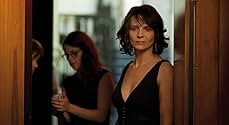
Une vedette de cinéma se retrouve face à face avec une image perturbante d'elle-même dans une reprise de la pièce qui a lancé sa carrière.Une vedette de cinéma se retrouve face à face avec une image perturbante d'elle-même dans une reprise de la pièce qui a lancé sa carrière.Une vedette de cinéma se retrouve face à face avec une image perturbante d'elle-même dans une reprise de la pièce qui a lancé sa carrière.
- Réalisation
- Scénariste
- Vedettes
- Prix
- 18 victoires et 46 nominations au total




Nora Waldstätten
- Actress in Sci-fi Movie
- (as Nora von Waldstätten)


6,732.3K
1
2
3
4
5
6
7
8
9
10
Avis en vedette
For me, better than "Birdman"
The enigmatic title refers to both a climatic phenomenon called the "Maloja snake", which occurs in the Engadinean alpine pass in Switzerland, and to a village at one end of a local lake. The village is the home of an elderly playwright who much earlier wrote a work called "The Maloja Snake" about the complicated relationship between a young woman in her late teens (Sigrid) and her middle-aged female employer (Helena). The film is all about the re staging of this play in which actress Maria who originally took the younger role to great acclaim has now been invited to portray the older woman in the new interpretation.
It is unusual, but a pleasing change, for a film to have all its leading roles taken by women. Superb French actress Juliette Binoche, whom I have admired since her early English-language work ("Damage" and "The English Patient"), is Maria, struggling to come to terms with her different role in the play. American actress Kristen Stewart is excellent in the secondary role as Maria's personal assistant Valentine and so different from her "Twilight" movies. The third role is taken by another young American, Chloë Grace Moretz, who is the actress taking over as Sigrid in the play - again a very different persona from the one we have seen before in the "Kick-Ass" movies.
This is a wordy work but the words matter. At times, we are not sure if the interaction between the two main personages is between Helena and Sigrid or between Maria and Valentine and even between Binoche and Stewart. In truth, there are elements of all three which is how subtle and nuanced is this German-French-Swiss co-production written and directed by the French Olivier Assayas. Ultimately this is a film, like near contemporary "Birdman", about acting but, however much the American Academy may have feted "Birdman", I found "Clouds Of Sils Maria" much more intelligible and engaging.
It is unusual, but a pleasing change, for a film to have all its leading roles taken by women. Superb French actress Juliette Binoche, whom I have admired since her early English-language work ("Damage" and "The English Patient"), is Maria, struggling to come to terms with her different role in the play. American actress Kristen Stewart is excellent in the secondary role as Maria's personal assistant Valentine and so different from her "Twilight" movies. The third role is taken by another young American, Chloë Grace Moretz, who is the actress taking over as Sigrid in the play - again a very different persona from the one we have seen before in the "Kick-Ass" movies.
This is a wordy work but the words matter. At times, we are not sure if the interaction between the two main personages is between Helena and Sigrid or between Maria and Valentine and even between Binoche and Stewart. In truth, there are elements of all three which is how subtle and nuanced is this German-French-Swiss co-production written and directed by the French Olivier Assayas. Ultimately this is a film, like near contemporary "Birdman", about acting but, however much the American Academy may have feted "Birdman", I found "Clouds Of Sils Maria" much more intelligible and engaging.
Ambiguity
Ambiguity is the key world of this film. You are the major actor in the sense that your interpretation makes the film. Each scene is so ambiguous that you can always interpret it in various manners so in the end _you_ are the director. When Maria and Val work on the text, rehearse the play, the feelings are so mingled that you are the one who decide if they are those of Helena- Sigrid or rather Maria-Val. Reality is entangled. I loved the Alps hiking shots and overall the mysterious Maloja snake. I would have rated it a 9 to the Writer-Director Olivier Assayas but reduced it to a 8 because I was disappointed in Juliette Binoche's performance. She is usually better than in this film, it is as if she didn't feel like acting this character, a bit like what happens in the film itself. At several occasions her laugh is artificial and fake. She is obviously ill at ease in this character, which proves what I wrote before about entangled reality between the film itself and the play prepared in the film. I'm not sure I am very clear but those who have seen and felt/perceived the movie as I, will understand.
Fantastic lead performances
Fantastic work from both Juliette Binoche and Kristen Stewart. The latter showed some more naturality in Still Alice and here she has a lot more screen time and is pretty great throughout. It's not an incredibly showy performance, though, not like Binoche's, but I could get behind it for awards love. Chloe Moretz's empty, superficial acting style actually works perfectly for her character here. I doubt it was really much work for her, but it works and she's not a distraction like she usually is. Juliette Binoche is amazing, as always. I could've seen her actually gaining traction for this film (had it been released near the end of the year). The film as a whole is... really weird. It's very entertaining throughout, never once dull, but it feels sort of aimless the more it goes on and while I get what points it was trying to make, it just felt a little too scattered to truly be great.
One of the most intelligent films of recent years
This is a seriously clever film, with an almost watertight screenplay that keeps you completely engrossed from start to finish and some mesmerising central performances. It is a bit harder to unlock than more mainstream movies, but it provides a hugely satisfying and intriguing discussion when it comes to the end.
Unlike most Hollywood takes on the state of show business and celebrities in the modern world, which is more often than not pretty depressing (take recent films like Birdman and Maps To The Stars), this European film has a much more elegant atmosphere to it whilst it delves into the world of this ageing actress struggling to keep her cool under a lot of pressure.
The film has some absolutely fascinating insights into the world of show business. It looks at jealousy and media pressure on older actresses, whilst also putting across an ironic, satirical poke at the pretentiousness that so many of us have been guilty of with regards to art. There's a lot of talk in this film about reading into films perhaps more than they need to be, but also how more mainstream movies sometimes don't get the deeper recognition they deserve from elitist viewers because of their reputation, which I found absolutely enthralling to watch unfold.
Also, there are some very clever parallels between the relationship between the two main characters, this actress (Juliette Binoche) and her personal assistant (Kristen Stewart), and the characters in the play that they are rehearsing for. It seemed to me that the parallels were pretty deliberate, given that it was almost impossible to tell whether the two were rehearsing or talking to each other for real during the practice scenes, which I thought was a brilliant little touch that really helped to emphasise the confusion and deeper trouble that the characters were facing in the story.
Beyond that, there's so much more to think about in the plot, and I'm sure it requires multiple viewings to fully understand, but it's still a hugely captivating drama first time off anyway, which is absolutely brilliant to see.
Away from the story, the performances here are pretty fantastic too. Juliette Binoche perfectly captures her character's sense of confusion and loss as she goes through this time in her life, whilst also making her a recognisably snooty and diva-ish person that you can understand much clearer. Meanwhile, Kristen Stewart is excellent as the personal assistant, who tries hard to get to her employer, but often ends up feeling frustrated, and makes her character just as interesting, even if she is a side-player in the grand scheme of things.
Another point on the performances is that everyone, not only Binoche and Stewart, deliver their lines so brilliantly. It seems a pretty trivial thing to say, but in this film, I noticed what proper dialogue delivery sounds like so much more than anything else I've seen; every word was so clear and crisp, with fantastic emotion behind it, and that was just wonderfully impressive to witness for me.
Unlike most Hollywood takes on the state of show business and celebrities in the modern world, which is more often than not pretty depressing (take recent films like Birdman and Maps To The Stars), this European film has a much more elegant atmosphere to it whilst it delves into the world of this ageing actress struggling to keep her cool under a lot of pressure.
The film has some absolutely fascinating insights into the world of show business. It looks at jealousy and media pressure on older actresses, whilst also putting across an ironic, satirical poke at the pretentiousness that so many of us have been guilty of with regards to art. There's a lot of talk in this film about reading into films perhaps more than they need to be, but also how more mainstream movies sometimes don't get the deeper recognition they deserve from elitist viewers because of their reputation, which I found absolutely enthralling to watch unfold.
Also, there are some very clever parallels between the relationship between the two main characters, this actress (Juliette Binoche) and her personal assistant (Kristen Stewart), and the characters in the play that they are rehearsing for. It seemed to me that the parallels were pretty deliberate, given that it was almost impossible to tell whether the two were rehearsing or talking to each other for real during the practice scenes, which I thought was a brilliant little touch that really helped to emphasise the confusion and deeper trouble that the characters were facing in the story.
Beyond that, there's so much more to think about in the plot, and I'm sure it requires multiple viewings to fully understand, but it's still a hugely captivating drama first time off anyway, which is absolutely brilliant to see.
Away from the story, the performances here are pretty fantastic too. Juliette Binoche perfectly captures her character's sense of confusion and loss as she goes through this time in her life, whilst also making her a recognisably snooty and diva-ish person that you can understand much clearer. Meanwhile, Kristen Stewart is excellent as the personal assistant, who tries hard to get to her employer, but often ends up feeling frustrated, and makes her character just as interesting, even if she is a side-player in the grand scheme of things.
Another point on the performances is that everyone, not only Binoche and Stewart, deliver their lines so brilliantly. It seems a pretty trivial thing to say, but in this film, I noticed what proper dialogue delivery sounds like so much more than anything else I've seen; every word was so clear and crisp, with fantastic emotion behind it, and that was just wonderfully impressive to witness for me.
Meta-cinema
Former film critic Olivier Assayas is probably one of those few people who inspire me on a creative level. Not that strange if you consider one of Assayas' own influences: anarchist and situationist Guy Debord. French intellectuals in the 1960s were, in my opinion, too often needlessly complex theoretically and parlor socialists or would-be revolutionaries politically. In contrast, Debord's refreshing anarchist views were typical for the radicality of the 1968-generation and were more about individual freedom, artistic aspirations and fighting against a new form of determinism: consumption. In that respect, Assayas' Après mai was one of the best films I've seen in years. In Clouds of Sils Maria he puts on his meta-shoes and tells the story about an older actress who'll perform in the same play she did when she was young: Juliette Binoche plays Maria Enders who plays Helena. In the meanwhile Valentine (a brilliant Kristen Stewart, who would've expected?!), the personal assistant of Maria, resembles a version of Maria when she was young. Joanne Ellis (Chloë Grace Moretz), an up-and-coming actress with the reputation of a troublemaker, is Maria's co-star in the theater play. But when the play (about a young girl (Sigrid) who seduces an older woman (Helena)) starts to reflect reality (especially because Maria used to play Sigrid herself), the film begins to get an extra - metaphorical - layer. In the end we are confronted with thoughts about time, change, fame, getting older and conflict between generations. Clouds of Sils Maria is a beautiful film with some very good acting, especially by Stewart. It also raises interesting questions about contemporary stardom and transience. Nevertheless, this movie is (feels?) less personal than Assayas' previous one and therefor misses a bit of the uppercut I was hoping for.


Le saviez-vous
- AnecdotesThe French fashion house Chanel supplied the actresses with clothes, jewelry, accessories and makeup, while also providing some of the budget to allow Olivier Assayas to fulfill his dream of shooting the movie on 35mm film instead of digitally.
- GaffesIn part two, during Maria's discussion with her assistant, Juliette Binoche will be seen picking up her glass of wine with the right hand (front shot), then seen using her left hand (shot from the back)
- Générique farfeluDuring the closing credits, four of the actors are shown under the heading "guest appearance by".
- Bandes originalesKowalski
Written by Bobby Gillespie, Andrew Innes, Robert Young, Martin Duffy, and Mani (as Gary Mounfield)
Performed by Primal Scream.
Meilleurs choix
Connectez-vous pour évaluer et surveiller les recommandations personnalisées
- How long is Clouds of Sils Maria?Propulsé par Alexa
Détails
- Date de sortie
- Pays d’origine
- Sites officiels
- Langues
- Aussi connu sous le nom de
- Clouds of Sils Maria
- Lieux de tournage
- sociétés de production
- Consultez plus de crédits d'entreprise sur IMDbPro
Box-office
- Brut – États-Unis et Canada
- 1 851 517 $ US
- Fin de semaine d'ouverture – États-Unis et Canada
- 61 810 $ US
- 12 avr. 2015
- Brut – à l'échelle mondiale
- 4 728 401 $ US
- Durée
- 2h 4m(124 min)
- Couleur
- Mixage
- Rapport de forme
- 2.40 : 1
Contribuer à cette page
Suggérer une modification ou ajouter du contenu manquant