ÉVALUATION IMDb
6,6/10
6,5 k
MA NOTE


Ajouter une intrigue dans votre langueDuring China's Cultural Revolution, a young urban student is sent to live with Mongolian herders, where he adopts a wolf cub.During China's Cultural Revolution, a young urban student is sent to live with Mongolian herders, where he adopts a wolf cub.During China's Cultural Revolution, a young urban student is sent to live with Mongolian herders, where he adopts a wolf cub.
- Réalisation
- Scénaristes
- Vedettes
- Prix
- 20 victoires et 16 nominations au total




Ankhnyam Ragchaa
- Gasma
- (as Ankhnyam Rachaa)

Baasanjav Mijid
- Bilig
- (as Basen Zhabu)
Gexige Baoyin
- Batu
- (as Baoyingexige)
6,66.4K
1
2
3
4
5
6
7
8
9
10
Avis en vedette
I found this movie very disturbing
This movie is based on a semi-autobiographical novel and I think they did a pretty good job in turning a literary piece of art into a cinematic experience. This is one of the reasons I gave this movie 7 stars. Other reasons included great performances (extremely natural and believable), beautiful scenery and the amount of empathy the creatures from this movie were able to develop in me from beginning to end. Of course, all of the creatures except...humans. Ok, you can try to understand them, but if you are a sensitive person you can't help but hate every single character here except the Chinese student who adopted the little wolf. The main character is the only character with a sensitive heart and a pure soul. Yes, there is a little kid from the village, I'm sorry. I studied Chinese language and literature and I spent some time in China while I was a college student, I think this is is a very accurate portrayal of Chinese people, no matter if we are talking about people from big cities or countryside. Unfortunately, it is very difficult to find a highly sensitive Chinese person. They can be wise and smart, but they are practical and cruel. And I couldn't enjoy the movie. Being a huge animal lover, my heart was shaking all of the time. The scenes are highly graphic, brutal and disturbing. I agree that these types of movies are necessary for us to raise our awareness about many things that happen between men and animals and to try to change and improve the relationship somehow. I liked the ending scene because in a certain way it blended sensitivity with "coldness", wild warrior spirit of the wolf was compared with still naive and culturally embedded spirit of the young Chinese student and they did that in a strong and emotional way. (I am not a native English speaker, so please don't laugh if something sounds strange in this review ;) ). All in all, I think that people who really love animals will have a really hard time while watching this movie.
Destined for obscurity, but it deserves better
It saddens me that this film will not receive a wider audience. With an English title of "Wolf Totem" very few outside of France or China will be tempted to see it, but it is their loss.
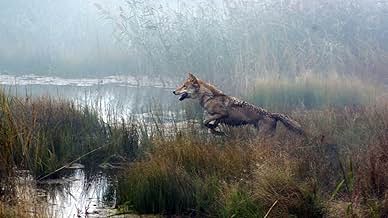
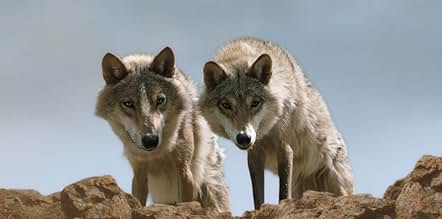
Wolf Totem manages to bring to the big screen the majesty and mystery of wolves. But it is much more than a National Geographic or Animal Planet documentary. (Although those in themselves would be a great success.) It also invites us into the world of Inner Mongolia and tells a compelling tale of human love and loss. This is not Le Renard et L'infant (The Fox and the Child). It succeeds in telling a much grander tale. The acting is all very believable and unlike the usual over-the-top soap opera-esque fare available in most Chinese cinema.
But come for the wolves. I could howl their praises all night long.
Wolf Totem manages to bring to the big screen the majesty and mystery of wolves. But it is much more than a National Geographic or Animal Planet documentary. (Although those in themselves would be a great success.) It also invites us into the world of Inner Mongolia and tells a compelling tale of human love and loss. This is not Le Renard et L'infant (The Fox and the Child). It succeeds in telling a much grander tale. The acting is all very believable and unlike the usual over-the-top soap opera-esque fare available in most Chinese cinema.
But come for the wolves. I could howl their praises all night long.
Partly good, partly bad, partly pretentious
This film, in general, is not bad, but the original novel's author is obviously strongly influenced by the Chinese Communism. He glorified the heartless Culture Revolution in last century, and never touched the sensitive taboos of those absolute-NO-NOs indoctrinated by the reigning Chinese Party. What we got in this film is a wonderful Inner Mongolian prairies life. Two displaced young Mandarin men were forced to leave their hometown and exiled to the far and remote Inner Mongolia province, trying to survive for the stipulated 2 years expatriation.
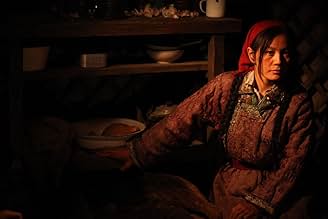
The production team of this movie had hired some specialists to train a bunch of wolves to play the main and critical roles of this film. I have also read some of the scandals related to the rehabilitation of those wolves after the film was completed. what I found the most pretentious flaw in this film is the female actors to play the Mongolian tribal women (like the females in "Spare Parts 2015). They are extremely eye-appealing and cosmetically pretty, yet the truth about the Mongolian females(like the females in "Spare Parts 2015), most of them are not as pretty as what the movie showed us. The other unrealistic part of the film is the kind faces and the gentle way of talk from the local Chinese Communist Party officials. They looked too civilized and too reasonably kind when treating the Mongolian nomad tribes.
The good part of this film is the camera work, the cinematography, it did an amazing job to show us the beauty of the Mongolian wildness, through the lens, it pretentiously beautified the tough livelihood of the local tribes, showed us the wonderful free spirit of those people. But in truth, is it true that the Chinese Communist Party would be that kind? When I watched this film, I have to remind myself that this film was not a documentary film, I had to watch carefully for those phony and false parts of it.
When the Chinese Communist Party censors every book, every movie, every TV program, every blog on line, many real things would be carefully omitted and avoided, otherwise, nothing could be released or past the censorship. So it also means that anything that have been approved must not demonize the Party but praise, otherwise jail time and long term imprisonment would be implemented.
So don't be fooled by this already heavily cosmetically beautified film, by its beautiful cinematography achievement, by those absolutely unreal Mongolian young beauties.
The production team of this movie had hired some specialists to train a bunch of wolves to play the main and critical roles of this film. I have also read some of the scandals related to the rehabilitation of those wolves after the film was completed. what I found the most pretentious flaw in this film is the female actors to play the Mongolian tribal women (like the females in "Spare Parts 2015). They are extremely eye-appealing and cosmetically pretty, yet the truth about the Mongolian females(like the females in "Spare Parts 2015), most of them are not as pretty as what the movie showed us. The other unrealistic part of the film is the kind faces and the gentle way of talk from the local Chinese Communist Party officials. They looked too civilized and too reasonably kind when treating the Mongolian nomad tribes.
The good part of this film is the camera work, the cinematography, it did an amazing job to show us the beauty of the Mongolian wildness, through the lens, it pretentiously beautified the tough livelihood of the local tribes, showed us the wonderful free spirit of those people. But in truth, is it true that the Chinese Communist Party would be that kind? When I watched this film, I have to remind myself that this film was not a documentary film, I had to watch carefully for those phony and false parts of it.
When the Chinese Communist Party censors every book, every movie, every TV program, every blog on line, many real things would be carefully omitted and avoided, otherwise, nothing could be released or past the censorship. So it also means that anything that have been approved must not demonize the Party but praise, otherwise jail time and long term imprisonment would be implemented.
So don't be fooled by this already heavily cosmetically beautified film, by its beautiful cinematography achievement, by those absolutely unreal Mongolian young beauties.
Wolves are like humans
Deists, sad though during the Chinese cultural revolution, on the side of the province of Inner Mongolia, they were only men, males and their female wives, all animals who think melancholy for depression overwhelmed by dark ideas of ending it all...
Life, live and obey the laws of nature as well as those of the dictates, it is wolf god, shaman takes care; dances, sings, enchants, invokes and casts spells on the wood fire of yogurts, in front of an impressive nomadic population, survives after the silent political storm has calmed down to speak of it towards forgiveness.
Life, live and obey the laws of nature as well as those of the dictates, it is wolf god, shaman takes care; dances, sings, enchants, invokes and casts spells on the wood fire of yogurts, in front of an impressive nomadic population, survives after the silent political storm has calmed down to speak of it towards forgiveness.
human vs. nature, simply within ecological parameters
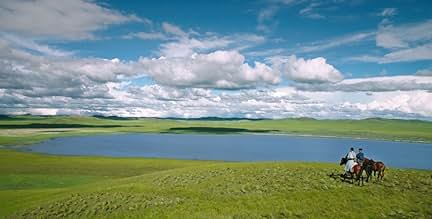
French filmmaker Jean-Jacques Annaud's China-France co-production is his third enterprise tackling with human-animal equilibrium, after THE BEAR (1988) and TWO BROTHERS (2004), WOLF TOTEM is adapted from a popular semi-autobiographical Chinese novel of the same title and is shot in the majestic Inner Mongolian steppe.
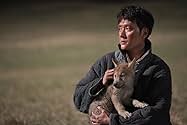
During China's Cultural Revolution, in 1969, two students from Beijing, Chen Zhen (Feng) and Yang Ke (Dou) are assigned to the steppe to teach local Mongolian nomads Mandarin and smooth the process of cultural integration. They are under the aegis of Bilig (Mijid), the head of the nomads, a sage mind who inculcates them the precept of the balanced co-existence between mankind and indigenous wolves. But, a pervading human force of greed and self-seeking would soon disrupt the well-maintained balance, wolves are deprived of their sustenance and during one blizzard night, driven by hunger, they attack a horde of horses and result in great casualty, including Bilig's son (although it is an accident). Retaliation is conducted under the command of an apparatchik (Yin), many wolf cubs are perished for the sake of their skins, but Chen saves one cub, secretly raises it like a pet and attachment grows. As often, one considers him or herself doing a good deed would only realise later in the stage it is a mistake, domesticating a feral wolf isn't something worth commending, and it is noteworthy that Annaud doesn't vindicate Chen's behavior by stating that the cub is bereft or in somewhat danger, Chen's behavior is solely out of his own soft spot, with no regard of the consequence for the cub itself, only after Bilig's sensible advice, Chen would right his wrongs to prepare and train the young wolf for its return to its natural territory, and one should remember, it is always a rookie mistake trying to extract a trickle of humanity out of the wild creatures, mutual connection might be able to achieved, but don't belabor yourself with any illusions of any reciprocal gestures.
The stand-off between humans and wolves will reach its heroic climax after the ravenous wolf pack assails a sheep corral during one night and this time, the entire pack is almost being extirpated by bullets and unrelieved vehicle chase, witnessed powerlessly for Chen, if anything, powerless is the omnipresent feeling, wherever humans tread, there are black sheep undermining the natural grandeur and harmony, disasters are bound to ensue, a central message cannot be dissipated by the film's lugubriously concocted positive vibe in the end. It is a big relief Annaud doesn't settle for facile wishful-thinking or radical aggression in its tonality, so that the film manage to retain an organic slant which conforms with his previous similar oeuvres.
The striking animal stunts orchestrated by dexterous trainer Andrew Simpson greatly hone up the set pieces, especially against its ferocious surroundings (the scenes of frozen animal corpses are manifestations of the primordial power of nature), and it goes without saying the film is a continuous landscape-porn (plus two emphatic examples of cloudscape), although sometimes its immaculateness unfittingly instigates the suspicion of an overachieved CGI-preening during the post-production.
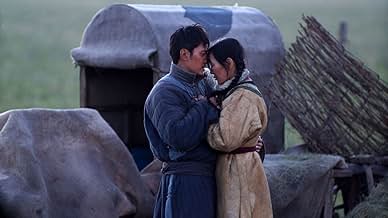
The human cast understandably takes a back seat from its awe-inspiring canine counterpart, but the dialogues sound clunky to a Chinese ear, and the character development barely exists, since when Chen and Gasma (Ragchaa), the widow and daughter-in-law of Bilig, become an item? The emphasis is so top-heavy on Chen and his wolf cub, which makes the romantic subplot comes off as abrupt and fluffy. In the main, WOLF TOTEM doesn't shortchange its forte: the spectacular vista and pulsating action sequences, and it also circumspectly bypasses the sensitive political agenda (the film was a mammoth box-office player two years ago during the golden spell of Chinese Spring Festival) and allows the story itself to stimulate reflections on a broader picture: human vs. nature, simply within ecological parameters.
During China's Cultural Revolution, in 1969, two students from Beijing, Chen Zhen (Feng) and Yang Ke (Dou) are assigned to the steppe to teach local Mongolian nomads Mandarin and smooth the process of cultural integration. They are under the aegis of Bilig (Mijid), the head of the nomads, a sage mind who inculcates them the precept of the balanced co-existence between mankind and indigenous wolves. But, a pervading human force of greed and self-seeking would soon disrupt the well-maintained balance, wolves are deprived of their sustenance and during one blizzard night, driven by hunger, they attack a horde of horses and result in great casualty, including Bilig's son (although it is an accident). Retaliation is conducted under the command of an apparatchik (Yin), many wolf cubs are perished for the sake of their skins, but Chen saves one cub, secretly raises it like a pet and attachment grows. As often, one considers him or herself doing a good deed would only realise later in the stage it is a mistake, domesticating a feral wolf isn't something worth commending, and it is noteworthy that Annaud doesn't vindicate Chen's behavior by stating that the cub is bereft or in somewhat danger, Chen's behavior is solely out of his own soft spot, with no regard of the consequence for the cub itself, only after Bilig's sensible advice, Chen would right his wrongs to prepare and train the young wolf for its return to its natural territory, and one should remember, it is always a rookie mistake trying to extract a trickle of humanity out of the wild creatures, mutual connection might be able to achieved, but don't belabor yourself with any illusions of any reciprocal gestures.
The stand-off between humans and wolves will reach its heroic climax after the ravenous wolf pack assails a sheep corral during one night and this time, the entire pack is almost being extirpated by bullets and unrelieved vehicle chase, witnessed powerlessly for Chen, if anything, powerless is the omnipresent feeling, wherever humans tread, there are black sheep undermining the natural grandeur and harmony, disasters are bound to ensue, a central message cannot be dissipated by the film's lugubriously concocted positive vibe in the end. It is a big relief Annaud doesn't settle for facile wishful-thinking or radical aggression in its tonality, so that the film manage to retain an organic slant which conforms with his previous similar oeuvres.
The striking animal stunts orchestrated by dexterous trainer Andrew Simpson greatly hone up the set pieces, especially against its ferocious surroundings (the scenes of frozen animal corpses are manifestations of the primordial power of nature), and it goes without saying the film is a continuous landscape-porn (plus two emphatic examples of cloudscape), although sometimes its immaculateness unfittingly instigates the suspicion of an overachieved CGI-preening during the post-production.
The human cast understandably takes a back seat from its awe-inspiring canine counterpart, but the dialogues sound clunky to a Chinese ear, and the character development barely exists, since when Chen and Gasma (Ragchaa), the widow and daughter-in-law of Bilig, become an item? The emphasis is so top-heavy on Chen and his wolf cub, which makes the romantic subplot comes off as abrupt and fluffy. In the main, WOLF TOTEM doesn't shortchange its forte: the spectacular vista and pulsating action sequences, and it also circumspectly bypasses the sensitive political agenda (the film was a mammoth box-office player two years ago during the golden spell of Chinese Spring Festival) and allows the story itself to stimulate reflections on a broader picture: human vs. nature, simply within ecological parameters.


Le saviez-vous
- ConnexionsReferenced in At the Movies: Cannes Film Festival 2013 (2013)
Meilleurs choix
Connectez-vous pour évaluer et surveiller les recommandations personnalisées
- How long is Wolf Totem?Propulsé par Alexa
Détails
- Date de sortie
- Pays d’origine
- Site officiel
- Langues
- Aussi connu sous le nom de
- Wolf Totem
- Lieux de tournage
- Xilingol Grassland, Inner Mongolia, Chine(major location)
- sociétés de production
- Consultez plus de crédits d'entreprise sur IMDbPro
Box-office
- Budget
- 38 000 000 $ US (estimation)
- Brut – États-Unis et Canada
- 210 591 $ US
- Brut – à l'échelle mondiale
- 125 837 070 $ US
- Durée
- 2h 1m(121 min)
- Couleur
- Mixage
- Rapport de forme
- 2.35 : 1
Contribuer à cette page
Suggérer une modification ou ajouter du contenu manquant