

Ajouter une intrigue dans votre langueA stone-broke gay actor and a privileged bonehead with a failing business cross paths on a winter night and join forces in a quest around London to find a meaning to their miserable lives.A stone-broke gay actor and a privileged bonehead with a failing business cross paths on a winter night and join forces in a quest around London to find a meaning to their miserable lives.A stone-broke gay actor and a privileged bonehead with a failing business cross paths on a winter night and join forces in a quest around London to find a meaning to their miserable lives.
- Réalisation
- Scénariste
- Vedettes
- Prix
- 2 victoires au total







5,9186
1
2
3
4
5
6
7
8
9
10
Avis en vedette
A Night Bus to Nowhere
A Night Like This desperately wants to duplicate the charm, romance, whimsy and glamorous travelogue overtones of Richard Linklater's "Before" series of films, but neither the writer nor the director have the first idea how to go about it. It doesn't help that their fated lovers, Oliver and Lukas, are a couple of losers, both at low points in their lives. Oliver is particularly obnoxious, despite a performance by Andrew Lincoln that is clearly supposed to imbue him with enough charisma to make us overlook all his worst qualities. Lincoln gives it his all, but it's a losing battle. Jack Brett Anderson is slightly more successful in the less demanding role of Lukas, but there's not much to warm to there either. Their "meet cute" at the beginning of the story is not remotely cute, much less believable. And the few oddball characters they encounter on their journey to dawn only tend to detract from any sense of a budding romance, or even a bond of friendship being forged. About the most you can say for director Liam Calvert, is that he manages to make London by Night look way more enchanting than it actually is. Though he also allows everyone to forget that London at Christmas is always bitterly cold - and Lincoln spending much of the night in a flimsy T-shirt without shivering half to death is nothing short of preposterous. In the end, what little chemistry there is between Lincoln and Anderson isn't enough to make the endless pretentious philosophising seem like romance. Maybe next time they should consider the hint of a plot and enough narrative drive to make "will they or won't they" a question worth answering.
Light and Shadows of a Night
Liam Calvert's A Night Like This, written and produced by Diego Scerrati, is an intimate exploration of human connection, set against the restless backdrop of London at night. It is a film that thrives on the strength of its words and images, even when the direction doesn't always match their potential.
Scerrati's screenplay is the film's beating heart. The writing is sharp yet tender, layering vulnerability and emotional complexity into characters who feel disarmingly real. The dialogue avoids cliché, instead building tension and intimacy through pauses, hesitations, and unspoken truths. Few contemporary scripts manage to balance authenticity with lyricism as well as this one does.
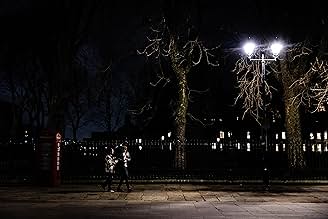
Visually, the film is equally striking. The cinematography transforms London's nocturnal streets into a canvas of reflection and melancholy. Golden pub lights, rain-slick pavements, and quiet interiors all contribute to an atmosphere that is as poetic as it is immersive. Every frame feels carefully considered, heightening the intimacy of the story and making the city an essential character in itself.
The chemistry between Alexander Lincoln and Jack Brett Anderson further elevates the film. Their performances resonate with subtle tension and tenderness, grounding the narrative and giving it emotional weight. Their dynamic feels authentic and unforced, a delicate balance of charm, restraint, and vulnerability.
If there is a weakness, it lies in the direction. While Calvert succeeds in creating moments of stillness and atmosphere, the pacing occasionally falters and some transitions feel less assured than the material deserves. At times, the visual poetry of the cinematography and the precision of the screenplay outshine the structural choices of the director.
Yet, despite these imperfections, A Night Like This remains a deeply engaging film. It is a story that lingers because of its words, its images, and the fragile humanity of its characters. Scerrati's writing and the film's visual language make it an achievement worth celebrating, even if the directorial hand does not always rise to the same level.
Scerrati's screenplay is the film's beating heart. The writing is sharp yet tender, layering vulnerability and emotional complexity into characters who feel disarmingly real. The dialogue avoids cliché, instead building tension and intimacy through pauses, hesitations, and unspoken truths. Few contemporary scripts manage to balance authenticity with lyricism as well as this one does.
Visually, the film is equally striking. The cinematography transforms London's nocturnal streets into a canvas of reflection and melancholy. Golden pub lights, rain-slick pavements, and quiet interiors all contribute to an atmosphere that is as poetic as it is immersive. Every frame feels carefully considered, heightening the intimacy of the story and making the city an essential character in itself.
The chemistry between Alexander Lincoln and Jack Brett Anderson further elevates the film. Their performances resonate with subtle tension and tenderness, grounding the narrative and giving it emotional weight. Their dynamic feels authentic and unforced, a delicate balance of charm, restraint, and vulnerability.
If there is a weakness, it lies in the direction. While Calvert succeeds in creating moments of stillness and atmosphere, the pacing occasionally falters and some transitions feel less assured than the material deserves. At times, the visual poetry of the cinematography and the precision of the screenplay outshine the structural choices of the director.
Yet, despite these imperfections, A Night Like This remains a deeply engaging film. It is a story that lingers because of its words, its images, and the fragile humanity of its characters. Scerrati's writing and the film's visual language make it an achievement worth celebrating, even if the directorial hand does not always rise to the same level.
Useless Slop
I really wanted to enjoy A Night Like This, but the acting, writing, and direction were dreadful. The only somewhat good performance was by Jimmy Ericson. Honestly, I thought it was written by AI. It's pandering and extremely frustrating in the worst way. I suspect the positive reviews were penned by the director himself.
Familiar Tropes at Work in an Intentionally Chaotic Two-Hander
Any similarity to Richard Linklater's "Before..." trilogy appears purely intentional. As part of the Frameline49 festival, this moody 2025 two-hander emulates the circular talkfest of those films as the story here focuses primarily on the enveloping relationship between the two young leads over the gratefully fleet 97-minute running time. Making their feature film debuts, director Liam Calvert and screenwriter Diego Scerrati use London's gritty nightlife as a backdrop for the chaos and sparks that occur between Oliver, a guitar-strumming extrovert, and Lukas, a contemplative aspiring actor. There was little in the film that struck me as all that original, much less life-changing with some scenes coming across as rather contrived. As the boisterous Oliver, Alexander Lincoln conveys his character's bravado with gusto, while Jack Brett Anderson captures Lukas' angst with economic precision. Their lack of chemistry, however, doesn't help reinforce the film's intention.
A Night Like This
It's Christmas time and "Lukas" (Jack Brett Anderson) is having a quiet pint on his own when a guitar-wielding gent approaches the bar and tries to blag a drink. He's given short shrift by the barman so he just pinches his own pint and disappears. This just sends the already dejected "Lukas" onto the bus home where he, again, encounters his wandering minstrel. He's called "Oliver" (Alexander Lincoln) and isn't anywhere near as broke as he'd pretended. Keen to make amends, he suggests they go for an an an apology beer. "Lukas", forewarning that he is gay, reluctantly agrees and this sets in train a night in London that exposes both men to each other and to us. Along the way, they meet the charismatic and homeless "Dan" (Jimmy Ericson) and play some music at the struggling jazz club of "John" (David Bradley) - which, coupled with their brief stop in a headphone disco, did pass salient comment on the paucity of communal interaction from amongst the stay at home social media classes - but essentially this is just a two-handler between the two men with Lincoln proving quite impressive. The plot is a bit all over the place, but there are some keen observations contained within the plentiful dialogue and Anderson's understated contribution foils well with the more exuberant one from a Lincoln delivering a character with more depth and flaws to him that his initial bravado might suggest. Is it a love story, verbal diarrhoea or just some catharsis - or maybe all? It's not perfect and at times completely loses it's way, but I did quite enjoy it and it's worth a watch if you're patient.


Meilleurs choix
Connectez-vous pour évaluer et surveiller les recommandations personnalisées
Détails
Box-office
- Brut – à l'échelle mondiale
- 8 959 $ US
- Durée
- 1h 41m(101 min)
- Couleur
Contribuer à cette page
Suggérer une modification ou ajouter du contenu manquant