ÉVALUATION IMDb
5,7/10
3,4 k
MA NOTE


Ajouter une intrigue dans votre langueEn route to meet his estranged daughter and attempting to revive his dwindling career, a broken, middle-aged comedian plays a string of dead-end shows in the Mojave desert.En route to meet his estranged daughter and attempting to revive his dwindling career, a broken, middle-aged comedian plays a string of dead-end shows in the Mojave desert.En route to meet his estranged daughter and attempting to revive his dwindling career, a broken, middle-aged comedian plays a string of dead-end shows in the Mojave desert.
- Réalisation
- Scénaristes
- Vedettes
- Prix
- 1 victoire et 3 nominations au total

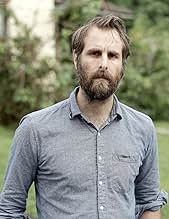
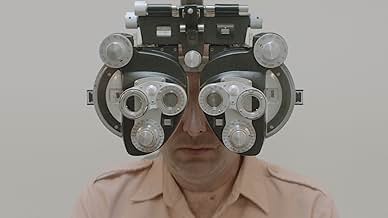



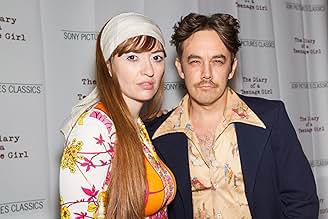



Fabian Euresti
- Orange Grove Worker
- (as Fabian Euresti Sr)


5,73.4K
1
2
3
4
5
6
7
8
9
10
Avis en vedette
Lots of great elements but a total misfire in the end.
What's annoying about this kind of movie is that if you don't like it, it's assumed you just have no tolerance for dark and depraved realism or difficult films. I've liked many movies resembling this on the surface. I even wrote and shot one of my own before deciding this sub-genre was played out by European films in the 90s and Sophia Coppola ever since. This one is just a total misfire in tone. I'm a huge fan of a lot of the elements individually. I love the 'straight' character Turkington, his on stage character Hamburger, beautiful realist cinematography, and occasionally esoteric, stylized dialogue. They make zero sense when put together in this film.
I'd love to see a film about how it would really be for a character like Tarkington to interact with the world, or somewhat less so a character like Hamburger. But not this stylized dialogue where everyone is a silent foil in a world that looks and feels real but has no relationship to the reality we all inhabit. Just so confused by about 90% of the choices.
I'd love to see a film about how it would really be for a character like Tarkington to interact with the world, or somewhat less so a character like Hamburger. But not this stylized dialogue where everyone is a silent foil in a world that looks and feels real but has no relationship to the reality we all inhabit. Just so confused by about 90% of the choices.
Not for everyone for sure
Roy anderson characters if they revealed them selves in a clearer way, arther fleck/joker if he was a real person these are what you'll get from Entertainment in addition to the melancholic and depressing sceneries.
But best of it is the intense, surreal and haunting soundtrack.
But as I think it's one of those movies that you'll either love it or hate it no grey area here.
Anti-entertainment. Brace yourself.
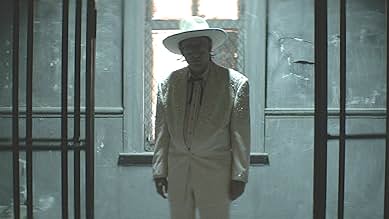
Audiences not braced for what Rick Alverson's Entertainment has to offer will be doomed for an unpleasant and gruelling experience. This is anti-entertainment if anything, not in the sense that it uses anti-jokes but the comedian protagonist is on the lowest rung of humour. Using cheap sight gags, resorting to insulting the audience, taking uncalled-for hits at celebrities and using not-so-funny voices, the laughs the characters do get are cheap. This comedian is a 19 year routine from lead actor Gregg Turkington, otherwise known as Neil Hamburger, but that backstory has no relevance to the film's narrative as he's otherwise unnamed. It's performance art, but also satirical as it's not far from the truth of what some comedians actually resort to in their acts. In that sense, it's a study on what's considered entertainment, why people are drawn to it and what it means to people.
The film chronicles a cycle of repetitive sequences that grow darker in despair. The comedian attends novelty tours on his journey, browsing at eye-sore mechanical marvels in the middle of the desert, often away from the main group and guide. Then he performs at third-rate gigs such as dingy bars, often saying how he's travelled from miles away but never where from exactly, and gets upset when the audience don't laugh at his jokes. That's all part of his act, however, but it doesn't get them more comfortable. His warm-up act is an amateur mime artist played by Tye Sheridan, though how they're travelling together remains a mystery. He calls his estranged daughter before bed in hopes that she'll pick up and reconnect, but it's ostensibly in vain. Some other characters take him aside, such as detours from his wealthy cousin played by John C. Reilly, an example of success, and Michael Cera in a four minute cameo as a hustler who wants company.
It feels like the films of Roy Andersson by way of David Lynch as a surrealistic nightmare. From constant stumbles, the comedian is on a broken American dream, both as a father and as a budding entrepreneur with his comedy act – which it must be noted, is far from his stoic self. He seems willingly isolated offstage, but abrasive when he's onstage. If comedy is an escape for some, is that necessarily a good thing? It can be cryptic in these scenes that don't tie in together, but they're all expressing his anxieties and failure in his career and fatherhood. Almost every gig he does is greeted by an apathetic 'good show' from the manager while he looks dead inside. The tragedy is off-screen and internal but it's palpable, highlighted by the washed-out and carefully composed photography. Entertainment is a very unsettling film, and at one point near its middle I found myself tested by it, but it's thoroughly profound for those who want something challenging and hauntingly beautiful.
8/10
Read more @ The Awards Circuit (http://www.awardscircuit.com/)
The film chronicles a cycle of repetitive sequences that grow darker in despair. The comedian attends novelty tours on his journey, browsing at eye-sore mechanical marvels in the middle of the desert, often away from the main group and guide. Then he performs at third-rate gigs such as dingy bars, often saying how he's travelled from miles away but never where from exactly, and gets upset when the audience don't laugh at his jokes. That's all part of his act, however, but it doesn't get them more comfortable. His warm-up act is an amateur mime artist played by Tye Sheridan, though how they're travelling together remains a mystery. He calls his estranged daughter before bed in hopes that she'll pick up and reconnect, but it's ostensibly in vain. Some other characters take him aside, such as detours from his wealthy cousin played by John C. Reilly, an example of success, and Michael Cera in a four minute cameo as a hustler who wants company.
It feels like the films of Roy Andersson by way of David Lynch as a surrealistic nightmare. From constant stumbles, the comedian is on a broken American dream, both as a father and as a budding entrepreneur with his comedy act – which it must be noted, is far from his stoic self. He seems willingly isolated offstage, but abrasive when he's onstage. If comedy is an escape for some, is that necessarily a good thing? It can be cryptic in these scenes that don't tie in together, but they're all expressing his anxieties and failure in his career and fatherhood. Almost every gig he does is greeted by an apathetic 'good show' from the manager while he looks dead inside. The tragedy is off-screen and internal but it's palpable, highlighted by the washed-out and carefully composed photography. Entertainment is a very unsettling film, and at one point near its middle I found myself tested by it, but it's thoroughly profound for those who want something challenging and hauntingly beautiful.
8/10
Read more @ The Awards Circuit (http://www.awardscircuit.com/)
Defense Begets Isolation
The Comedian sprays his unwieldy hair like a pacifist disciplines their dog. Brushstrokes of hair pulse across his forehead concealing a barren head. He is a performer and a disgrace. Vulgarity and apathy are The Comedian's punch lies, and they land like a dirty southpaw. Some entertainers wish to gather admirers. The Comedian, however, knows that folks remember their enemies most vividly.
Economy motels and gas station bathrooms provide refuge from drunken halls and Mexican diners. One stop fails to secure The Comedian a hotel room, and houses him at a relative's casa. Lying on an abbreviated couch and crotchet pillow, he is tempted by lustful dreams. He has no gall to grasp them, and is reduced to a pathetic puddle.
At every stop, The Comedian reminds the audience that he stands before them as an escape. He is a salesman of forgetting. People ought to sit down and laugh, laying their real life worries on the bar counter. The Comedian hurls blazing rebukes at anyone who dares to remind the room that his character is fabricated. And he character is indeed fabricated poorly.
Eddie opens the show each night, once an admirer of The Comedian, but his face broadcasts news of a dying star. Pantomiming is the character Eddie hops into, and the contrast to The Comedian's three drinks and one microphone routine is staggering. A kid delighting common people with a clown nose and a bell hat. Cheap laughs pour out for the phenom, but they do not sand the psyches of the audience.
It would be easy to call The Comedian's work higher art, but fishing for sympathy is just as cheap as the mime's prop work. No, entertainment is an alchemy of exorcism. The Comedian meets a connoisseur of the chromatic scale, a witch of color. He dives into her art for in hopes of self-reflection. Possibly to understand why he only hears his daughter's voicemail.
The Comedian's set lists are packed with tumors. His mission is to milk laughter from an festering breast, to walk into the grime and smile. This journey will take him exactly where he envisions on the bulky televisions, yet he will not be able to stomach his destination. He will deliver a child, but will never be able communicate with the stranger.
Economy motels and gas station bathrooms provide refuge from drunken halls and Mexican diners. One stop fails to secure The Comedian a hotel room, and houses him at a relative's casa. Lying on an abbreviated couch and crotchet pillow, he is tempted by lustful dreams. He has no gall to grasp them, and is reduced to a pathetic puddle.
At every stop, The Comedian reminds the audience that he stands before them as an escape. He is a salesman of forgetting. People ought to sit down and laugh, laying their real life worries on the bar counter. The Comedian hurls blazing rebukes at anyone who dares to remind the room that his character is fabricated. And he character is indeed fabricated poorly.
Eddie opens the show each night, once an admirer of The Comedian, but his face broadcasts news of a dying star. Pantomiming is the character Eddie hops into, and the contrast to The Comedian's three drinks and one microphone routine is staggering. A kid delighting common people with a clown nose and a bell hat. Cheap laughs pour out for the phenom, but they do not sand the psyches of the audience.
It would be easy to call The Comedian's work higher art, but fishing for sympathy is just as cheap as the mime's prop work. No, entertainment is an alchemy of exorcism. The Comedian meets a connoisseur of the chromatic scale, a witch of color. He dives into her art for in hopes of self-reflection. Possibly to understand why he only hears his daughter's voicemail.
The Comedian's set lists are packed with tumors. His mission is to milk laughter from an festering breast, to walk into the grime and smile. This journey will take him exactly where he envisions on the bulky televisions, yet he will not be able to stomach his destination. He will deliver a child, but will never be able communicate with the stranger.
Move along folks, no comedy to see here
I really hated "The Comedy," so I'm a little baffled to have rather liked the director's followup, which is basically more of the same hilarity-and/or-torture-of-the-brutally-unfunny stuff. But while his prior film just seemed annoying and smug in its contrariness, this time it felt like he'd actually located the 9th circle of Hell or something like. The movie is like an unending nightmare in which you can't escape the hopelessness, negativity and humiliation of a universe in which you (or rather the stand-up "comic" protagonist here) are on the perpetual receiving end of a joke you're not even in on. Our "hero" is some sort of victim, yet we can't even feel for him--in fact, we kind of wish more of his unhappy patrons would throw things or beat him up.
It's hard to imagine who to recommend this movie to, but it's sort of like a Beckett play: Uniquely, repetitiously desolate, with occasional content that suggests humor, but which perversely and very deliberately refuses to prompt any actual laughter. It is an expression--or analysis, or both--of pure self-loathing and existential despair. If you are in the mood for something grotesque, minimalist and defiantly unpleasant, "Entertainment" will fill that need. If you need a punchline, you can always dwell on choice of title.
I'm not sure where this director can go from here--few movies have so vividly defined their own dead end in terms of artistic intent and "message." I'll almost be disappointed if he picks himself up off the floor and makes another movie. The next logical step would seem to be suicide. The bleakest statements by folks such as Lars von Trier or Gaspar Noe still have more filmic energy than this rather elegantly crafted movie that dares you not to kick it to see if it's still breathing. Yet I can't say it was boring--there's something compelling in its sheer masochism.
It's hard to imagine who to recommend this movie to, but it's sort of like a Beckett play: Uniquely, repetitiously desolate, with occasional content that suggests humor, but which perversely and very deliberately refuses to prompt any actual laughter. It is an expression--or analysis, or both--of pure self-loathing and existential despair. If you are in the mood for something grotesque, minimalist and defiantly unpleasant, "Entertainment" will fill that need. If you need a punchline, you can always dwell on choice of title.
I'm not sure where this director can go from here--few movies have so vividly defined their own dead end in terms of artistic intent and "message." I'll almost be disappointed if he picks himself up off the floor and makes another movie. The next logical step would seem to be suicide. The bleakest statements by folks such as Lars von Trier or Gaspar Noe still have more filmic energy than this rather elegantly crafted movie that dares you not to kick it to see if it's still breathing. Yet I can't say it was boring--there's something compelling in its sheer masochism.


Le saviez-vous
- AnecdotesGregg Turkington plays a version of his stage persona, Neil Hamburger.
- Citations
The Comedian: Why don't rapists eat at T.G.I. Friday's? Well, it's hard to rape with a stomachache.
- ConnexionsReferenced in Film Junk Podcast: Episode 540: Entertainment (2015)
Meilleurs choix
Connectez-vous pour évaluer et surveiller les recommandations personnalisées
- How long is Entertainment?Propulsé par Alexa
Détails
- Date de sortie
- Pays d’origine
- Langues
- Aussi connu sous le nom de
- Развлечения
- Lieux de tournage
- Ridgecrest, Californie, États-Unis(bar scene)
- sociétés de production
- Consultez plus de crédits d'entreprise sur IMDbPro
Box-office
- Brut – États-Unis et Canada
- 55 506 $ US
- Fin de semaine d'ouverture – États-Unis et Canada
- 5 132 $ US
- 15 nov. 2015
- Brut – à l'échelle mondiale
- 55 506 $ US
- Durée
- 1h 43m(103 min)
- Couleur
- Rapport de forme
- 2.66 : 1
Contribuer à cette page
Suggérer une modification ou ajouter du contenu manquant