ÉVALUATION IMDb
6,7/10
1,7 k
MA NOTE


Dans Félix et Meira, une idylle insolite naît entre deux âmes perdues qui vivent dans le même quartier mais dans des mondes très différents.Dans Félix et Meira, une idylle insolite naît entre deux âmes perdues qui vivent dans le même quartier mais dans des mondes très différents.Dans Félix et Meira, une idylle insolite naît entre deux âmes perdues qui vivent dans le même quartier mais dans des mondes très différents.
- Réalisation
- Scénaristes
- Vedettes
- Prix
- 15 victoires et 14 nominations au total







6,71.6K
1
2
3
4
5
6
7
8
9
10
Avis en vedette
"Who says I'm not dead already?"
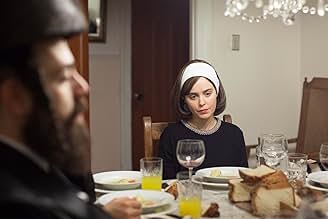
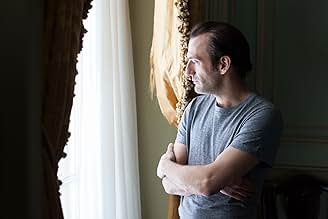
"Felix and Meira" (2014 release from Canada; 195 min.) brings the story of the two title characters. As the movie opens, we see Meira serving dinner to a group of Hasadic Jewish couples. Not a word is said during dinner, and you can immediately sense a sadness within Meira. It's only later that we understand she is bored and frustrated and suffocating under the tight-knit rules of the Hasadic Jewish community. Then we get to know Felix, a secular Jew whose father is dying. The two were not close but it still affects Felix significantly. One day, Felix runs into Meira and her 3 yr. old baby girl at the local coffee shop. He tries to strike up a conversation but she rejects him. Later on, though, it becomes clear that something is brewing between Felix and Meira. At this point we're at most 15-20 min. into the movie but to tell you more would spoil your viewing experience. You'll just have to see for yourself how it all plays out.
Couple of comments: this is the third full-length feature from Canadian writer-director Maxime Giroux. This time he tackles a story line that plays out on the closed community that is the Hasadic Jewish Community. The 2012 "Fill The Voice" film explored similar themes as to the isolated Hasadic Jewish community, but here Giroux decides to make it even more personal by focusing on Meira and her conflicted feelings as to her overall life. In the beginning of the movie, Meira 'plays dead' to tease her husband. Much later on, when her husband asks why she doesn't do that anymore, Meira wistfully replies "Who says I'm not dead already?", wow. (And her husband's response to that? "When will you finally understand that this is our life? Pull yourself together!") It should be noted that, even though the closeness/isolationism of the Hasadic Jewish community can be an easy target for criticism, the movie treats them at all times with a great amount of respect. The acting performances are top-notch all the way, in fact I was wondering whether the Hasadic Jews were portrayed by actors or by real Hasadic Jews. Hadas Yaron as Meira is outstanding (she also played the role of a Hasadic Jewish wife in "Fill the Void" by the way.) Compared to that, Martin Dubreuil as Felix has a harder time staying in the lime light. Last but not least, there is an outstanding clarinet-heavy musical score (composed to Olivier Alary), and even fellow Canadian Leonard Cohen contributes a tune ("Famous Blue Raincoat"). Bottom line: this is a slow-moving (in the best possible way) family drama set within the Hasadic Jewish community that caught my attention from start to finish.
"Felix and Meira" opened without any pre-release fanfare or advertising at my local art-house theater here in Cincinnati this Memorial Day weekend. The matinée screening where I saw this at was very nicely attended, somewhat to my surprise to be honest (the audience was heavy on the seniors, I might add). If you are in the mood for a top-notch quality foreign movie that is GALAXIES away from the latest Mad Max or Pitch Perfect, do yourself a favor and check this out, be it in the theater, or eventually on VDV/Blu-ray. "Felix and Meira" is HIGHLY RECOMMENDED!
Couple of comments: this is the third full-length feature from Canadian writer-director Maxime Giroux. This time he tackles a story line that plays out on the closed community that is the Hasadic Jewish Community. The 2012 "Fill The Voice" film explored similar themes as to the isolated Hasadic Jewish community, but here Giroux decides to make it even more personal by focusing on Meira and her conflicted feelings as to her overall life. In the beginning of the movie, Meira 'plays dead' to tease her husband. Much later on, when her husband asks why she doesn't do that anymore, Meira wistfully replies "Who says I'm not dead already?", wow. (And her husband's response to that? "When will you finally understand that this is our life? Pull yourself together!") It should be noted that, even though the closeness/isolationism of the Hasadic Jewish community can be an easy target for criticism, the movie treats them at all times with a great amount of respect. The acting performances are top-notch all the way, in fact I was wondering whether the Hasadic Jews were portrayed by actors or by real Hasadic Jews. Hadas Yaron as Meira is outstanding (she also played the role of a Hasadic Jewish wife in "Fill the Void" by the way.) Compared to that, Martin Dubreuil as Felix has a harder time staying in the lime light. Last but not least, there is an outstanding clarinet-heavy musical score (composed to Olivier Alary), and even fellow Canadian Leonard Cohen contributes a tune ("Famous Blue Raincoat"). Bottom line: this is a slow-moving (in the best possible way) family drama set within the Hasadic Jewish community that caught my attention from start to finish.
"Felix and Meira" opened without any pre-release fanfare or advertising at my local art-house theater here in Cincinnati this Memorial Day weekend. The matinée screening where I saw this at was very nicely attended, somewhat to my surprise to be honest (the audience was heavy on the seniors, I might add). If you are in the mood for a top-notch quality foreign movie that is GALAXIES away from the latest Mad Max or Pitch Perfect, do yourself a favor and check this out, be it in the theater, or eventually on VDV/Blu-ray. "Felix and Meira" is HIGHLY RECOMMENDED!
The stillness of romance, religion, grief and loneliness
Greetings again from the darkness. This movie is filled with quiet and stillness. Maybe moreso than any movie I can recall. With a backdrop of Montreal, New York and Venice, and a theme of forbidden love and self-discovery, the quiet of the actors belie the undercurrent of emotion driving the three leads.
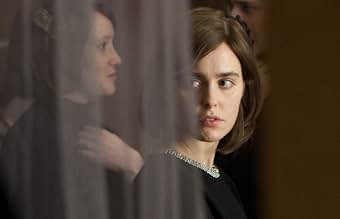
Meira (Hadas Yaron) is a Hasidic Jew living with her husband Shulem (Luzer Twersky) and their toddler daughter within an Orthodox community where women are forbidden from listening to "outside" music, creating art, or even looking men directly in the eye. Their mission in life is to serve their husband, have lots of babies, and respect the religion. While many women in the community seem fine with their lot, Meira hides records under the sofa, draws pictures in a pocket-sized notebook, and longs for the excitement and color of the real world.
One day, by happenstance, the paths of Meira and Felix (Martin Dubreuil) cross in a neighborhood corner store. He compliments her on her drawing, as she tries to ignore him. By the time they next meet, we have witnessed the painful bedside farewell of Felix to his dying father. It's difficult to tell which is the stronger emotion here – guilt or grief.
Soon enough Felix and Meira are finding ways to meet, but there is no crazed display of passion between the two. There is a devastating scene as Felix patiently waits while Meira musters the courage to actually look into his eyes. It's like 50 Shades of Restraint. It turns out, for different reasons, these two lost souls share a common bond of loneliness. Meira's individuality and creativity are stifled by religious oppression, while Felix is coming to grips as the black sheep of a family that no longer exists. When Felix says of his father, "He hated me to death. And then he died.", we understand it's the missed opportunity that weighs on him more than the passing of a long-lost parent.
Music plays a vital role in how director Maxine Giroux presents the characters and the story. Wendy Rene's "After Laughter Comes the Tears" is used beautifully, as is Leonard Cohen's "Famous Blue Raincoat". Heck, even a mousetrap becomes music to the desperate ears of Meira. As stated before, the film is incredibly quiet, and I challenge any movie lover to come up with a more painful argument than the one featuring Meira and Shulem whispering at each other from separate beds, or a more powerful scene with fewer spoken words than Shulem and Felix at the kitchen table. On the bright side, watching her walk around in her first ever pair of jeans is a freeing sight to behold.
Mr. Giroux presents something very real, yet outside the bounds of what cinema usually brings when forbidden love, religion, loneliness and grief are involved. Ms. Yaron delivers an astounding performance, and it's little wonder this has been such a hit on the festival circuit.
Meira (Hadas Yaron) is a Hasidic Jew living with her husband Shulem (Luzer Twersky) and their toddler daughter within an Orthodox community where women are forbidden from listening to "outside" music, creating art, or even looking men directly in the eye. Their mission in life is to serve their husband, have lots of babies, and respect the religion. While many women in the community seem fine with their lot, Meira hides records under the sofa, draws pictures in a pocket-sized notebook, and longs for the excitement and color of the real world.
One day, by happenstance, the paths of Meira and Felix (Martin Dubreuil) cross in a neighborhood corner store. He compliments her on her drawing, as she tries to ignore him. By the time they next meet, we have witnessed the painful bedside farewell of Felix to his dying father. It's difficult to tell which is the stronger emotion here – guilt or grief.
Soon enough Felix and Meira are finding ways to meet, but there is no crazed display of passion between the two. There is a devastating scene as Felix patiently waits while Meira musters the courage to actually look into his eyes. It's like 50 Shades of Restraint. It turns out, for different reasons, these two lost souls share a common bond of loneliness. Meira's individuality and creativity are stifled by religious oppression, while Felix is coming to grips as the black sheep of a family that no longer exists. When Felix says of his father, "He hated me to death. And then he died.", we understand it's the missed opportunity that weighs on him more than the passing of a long-lost parent.
Music plays a vital role in how director Maxine Giroux presents the characters and the story. Wendy Rene's "After Laughter Comes the Tears" is used beautifully, as is Leonard Cohen's "Famous Blue Raincoat". Heck, even a mousetrap becomes music to the desperate ears of Meira. As stated before, the film is incredibly quiet, and I challenge any movie lover to come up with a more painful argument than the one featuring Meira and Shulem whispering at each other from separate beds, or a more powerful scene with fewer spoken words than Shulem and Felix at the kitchen table. On the bright side, watching her walk around in her first ever pair of jeans is a freeing sight to behold.
Mr. Giroux presents something very real, yet outside the bounds of what cinema usually brings when forbidden love, religion, loneliness and grief are involved. Ms. Yaron delivers an astounding performance, and it's little wonder this has been such a hit on the festival circuit.
10ageyagey
Traditions as weakness and self-determination as strength
It is always good to be able to define yourself. Even if traditions contradict your mind. In this film I saw the case when traditions are evil that rules over weak people. ....and love is not a tradition, it is a decision, not possible without knowing yourself. I like enormously the film, three main actors played excellent. What impressed me a lot were two sequences: the first one - the conversation between а "tradition man" Luzer Twersky and а "non tradition man" Martin Dubreuil; and the second one - when a "tradition man" broke his tradition listening to the song "After Laughter "after his wife left him.
Slow, small budget
The story makes sense and is slowly unraveling in a way for us to gather the feelings. A bit like real life can be slow. Real life slow feels less slow than films though. But the films goes its way and we finally arrive somewhere slow and boring but a notch more free. Praise the lord!
A beautiful, layered, subtle love story
I was completely blown away by this unique film. It is a gentle, nuanced look at two people from very different communities who connect and fall in love. The young woman is from the Hassidic community in Montreal. She is questioning her life and the limitations imposed on her by her community. The man she meets is not from her community and at a crossroads in his life. While this premise might seem implausible, it is explored with subtlety and respect. I cannot forget to praise the terrific performances of the three main actors. Israeli actress Hadas Yaron is simply amazing as Meria, the young Hassidic woman who is stifling in her marriage and community. Martin Dubreuil is also very good as Felix who is in search of something but is not quite sure what. All he knows is that he is instantly attracted to the shy, reluctant young woman and he must try to connect with her in any way he can. The chemistry between the two is simply electric. The character of Meira's husband could have easily been portrayed as the clichéd overbearing, uncaring spouse. Instead, actor Luzer Twersky makes him a sympathetic character trapped by his own failings. He simply does not know how to deal with his wife's angst. There are some incredible moments of tenderness in this film (The first time Felix and Meira hold hands is understated but very powerful). Overall this is a beautiful layered love story that is full of hope and happiness. Love will always find a way. Not to be missed. Bravo Maxime Giroux for giving us such a beautiful film.


Le saviez-vous
- AnecdotesLuzer Twersky and Melissa Weisz, who play Shulem, the husband, and Ruth, the friend Meira confides in about not wanting to have more children, both are former Hasidic Jews who left the community as young adults. Twersky assisted in translating the script into Yiddish and served as a technical adviser regarding pronunciation, costumes, meals, and the Jewish rituals depicted in the movie.
- GaffesWhen Shulem hits Félix, you can see Meira in the background trying not to giggle. Considering the tensity of the scene and the nature of Meira's character, it's very likely this was unintentional and a break in character.
- ConnexionsFeatured in 2016 Canadian Screen Awards (2016)
Meilleurs choix
Connectez-vous pour évaluer et surveiller les recommandations personnalisées
Détails
Box-office
- Brut – États-Unis et Canada
- 447 353 $ US
- Fin de semaine d'ouverture – États-Unis et Canada
- 15 000 $ US
- 19 avr. 2015
- Brut – à l'échelle mondiale
- 496 714 $ US
- Durée
- 1h 45m(105 min)
- Couleur
- Mixage
- Rapport de forme
- 2.35 : 1
Contribuer à cette page
Suggérer une modification ou ajouter du contenu manquant