NOTE IMDb
6,6/10
7,3 k
MA NOTE


L'histoire de la défection de Rudolf Noureev à l'Ouest.L'histoire de la défection de Rudolf Noureev à l'Ouest.L'histoire de la défection de Rudolf Noureev à l'Ouest.
- Réalisation
- Scénaristes
- Stars
- Récompenses
- 1 victoire et 4 nominations au total




6,67.3K
1
2
3
4
5
6
7
8
9
10
Avis à la une
dancing and defecting
Greetings again from the darkness. Nijinsky. Nureyev. Bruhn. Baryshnikov. The legends of male ballet dancers starts with that list, and possibly include a handful of others. Ralph Fiennes directs a screenplay from David Hare that brings us the story of how one of these, Rudolph Nureyev, defected from Russia to the west in 1961.
Opening with Nureyev's teacher Alexander Pushkin being interrogated ("Why did he defect?") by a Russian official immediately after the defection, the film ping pongs between 3 time frames in an attempt to better explain Nureyev's reasons ... or at least the background that created such a headstrong and talented young man. We flashback to 1938 where his mother famously gave birth to him in the confines of a moving train (traveling and trains remained important to him). We then flash forward to 1961 when Nureyev arrives in Paris with the Kirov Ballet, and then back to 1955 as he arrives at the Vaganova Academy of Russian Ballet (established 1738) - a prestigious dance school.
It's actually this hopping from one time frame to another that is the film's weakness. The script is ambitious but ultimately flawed, as it attempts to tackle too much rather than concentrating on what's most important and interesting. We didn't need so many childhood flashbacks to grasp that Nureyev was a different kind of kid who grew up in poverty in Siberia, raised with his sisters by a mother whose husband was away at war. Julie Kavanagh's book "Rudolph Nureyev: The Life" inspired Mr. Hare's screenplay, but the multiple timelines can be more fully explored in book form.
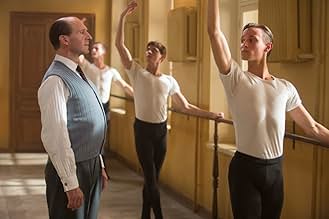
Ralph Fiennes plays the aforementioned Pushkin, a soft-spoken man who was a father figure to Nureyev, as well as a technical instructor. He also shared his philosophy of dance (and his wife - maybe he knew, maybe he didn't) with his star pupil, and it's easy to see how this elevated Nureyev's ability. Combining that with his interest in classic art, a theme of turning ugliness into beauty was something Nureyev latched on to.
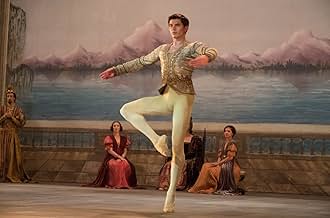
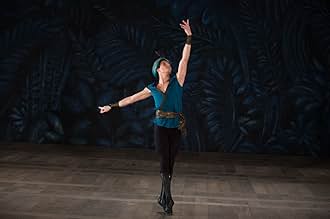
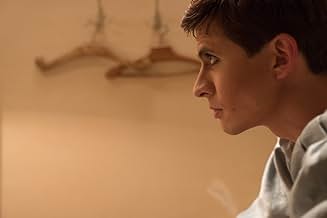
Oleg Ivenko stars as Rudolph Nureyev. Ivenko is a marvelous dancer and bears enough resemblance to the legend that we are quickly taken in. Ivenko is not a trained film actor, but as a dancer, he is accustomed to the spotlight and never wavers in his portrayal of a dancer he likely admired. He captures the emotional turmoil of a man enticed by the artistic and social freedoms of the west, while also remaining loyal to his homeland - loyal at least until he felt threatened (both physically and artistically). A tortured genius typically struggles with those in positions of authority and that's on full display here.
This is the third directorial outing for 2-time Oscar nominee (for acting) Ralph Fiennes. His previous projects were THE INVISIBLE WOMAN in 2013 which no one saw, and CORIOLANUS in 2011 which almost no one saw. It's likely his latest won't draw a huge audience either, but Ivenko's dancing is quite something to behold, and the climax at Le Bourget Airport in France is a suspenseful highlight. Nureyev was 23 at the time, and the defection decision is made almost spontaneously with a little help from his socialite friend Clara Saint (Adele Exarchapoulos, BLUE IS THE WARMEST COLOR) and French dancer Pierre Lacotte (Raphael Personnaz). Rudolph Nureyev died of complications from AIDS in 1993, but he truly was a "white crow" - something extraordinary, and one who stands out.
Opening with Nureyev's teacher Alexander Pushkin being interrogated ("Why did he defect?") by a Russian official immediately after the defection, the film ping pongs between 3 time frames in an attempt to better explain Nureyev's reasons ... or at least the background that created such a headstrong and talented young man. We flashback to 1938 where his mother famously gave birth to him in the confines of a moving train (traveling and trains remained important to him). We then flash forward to 1961 when Nureyev arrives in Paris with the Kirov Ballet, and then back to 1955 as he arrives at the Vaganova Academy of Russian Ballet (established 1738) - a prestigious dance school.
It's actually this hopping from one time frame to another that is the film's weakness. The script is ambitious but ultimately flawed, as it attempts to tackle too much rather than concentrating on what's most important and interesting. We didn't need so many childhood flashbacks to grasp that Nureyev was a different kind of kid who grew up in poverty in Siberia, raised with his sisters by a mother whose husband was away at war. Julie Kavanagh's book "Rudolph Nureyev: The Life" inspired Mr. Hare's screenplay, but the multiple timelines can be more fully explored in book form.
Ralph Fiennes plays the aforementioned Pushkin, a soft-spoken man who was a father figure to Nureyev, as well as a technical instructor. He also shared his philosophy of dance (and his wife - maybe he knew, maybe he didn't) with his star pupil, and it's easy to see how this elevated Nureyev's ability. Combining that with his interest in classic art, a theme of turning ugliness into beauty was something Nureyev latched on to.
Oleg Ivenko stars as Rudolph Nureyev. Ivenko is a marvelous dancer and bears enough resemblance to the legend that we are quickly taken in. Ivenko is not a trained film actor, but as a dancer, he is accustomed to the spotlight and never wavers in his portrayal of a dancer he likely admired. He captures the emotional turmoil of a man enticed by the artistic and social freedoms of the west, while also remaining loyal to his homeland - loyal at least until he felt threatened (both physically and artistically). A tortured genius typically struggles with those in positions of authority and that's on full display here.
This is the third directorial outing for 2-time Oscar nominee (for acting) Ralph Fiennes. His previous projects were THE INVISIBLE WOMAN in 2013 which no one saw, and CORIOLANUS in 2011 which almost no one saw. It's likely his latest won't draw a huge audience either, but Ivenko's dancing is quite something to behold, and the climax at Le Bourget Airport in France is a suspenseful highlight. Nureyev was 23 at the time, and the defection decision is made almost spontaneously with a little help from his socialite friend Clara Saint (Adele Exarchapoulos, BLUE IS THE WARMEST COLOR) and French dancer Pierre Lacotte (Raphael Personnaz). Rudolph Nureyev died of complications from AIDS in 1993, but he truly was a "white crow" - something extraordinary, and one who stands out.
Not quite a swan, not a dead duck either
Have always absolutely loved ballet, such fantastic music and the dancing when well choreographed and danced really entrances me. Rudolf Nureyev in this field was one of the all-time greats, so charismatic, athletic and with leaps and jumps that would be, and are, the envy of many. Also respect Ralph Fiennes very highly as an actor, particularly as tortured characters, and he had shown a lot of confidence in his previous directorial efforts.
'The White Crow' is Fiennes' third film as director, while also featuring in a not large but important role, and stands up as a very interesting and well done film when seeing it with close family friends at the cimema two days ago. All three of us really enjoyed and admired 'The White Crow', being both film and ballet fans (my love of ballet came actually through them, when watching a production of 'Swan Lake' at six years old). We later wasted no time in talking about the things the film did well, while also discussing what could have been done better.
Did feel that the back and forth between the three different timelines could have been done with more clarity and didn't feel as rushed, especially in the early stages of the film. While the childhood scenes are well made and bleakly powerful, despite showing how deprived Nureyev's childhood was and how he came to be the way he was there could have been less of them.
It would have been an even better film too if there were not as many close ups and slow shots, the former of which got slightly self-indulgent and the latter at times nauseated, and also clearer motivations as to why characters behaved the way they did. Although Nureyev's life was a volatile one and he was not easy to work with, anyone who is not familiar with him will be shocked at how his behaviour at a few points during the film is so abrupt and seemingly over the top for reasons not really gone into detail (especially the restaurant scene) that it is a wonder that he still had friends or a job. Also, and this is more an observation than a flaw really, was there anyone else who was slightly distracted by how orange Fiennes looked?
On the other hand, on the most part, 'The White Crow' looks great. The period detail in all three time periods, particularly when in Paris, is handsome and evocative and a vast majority of the film is beautifully filmed. Especially loved the intimacy of it during the dancing, whether it was when the dancers were rehearsing or were performing, and despite being initially put off by the queesiness of it during the scenes involving the defection and the lead up to it that added to the intense claustrophobia and suspense of that portion and fitted perfectly with Nureyev's state of mind. As to be expected the music is wonderful and performed musically with a lot of energy and nuance.
Similarly the dancing leaves one in awe, it is hard not to be envious of the athleticism and grace of it and of Nureyev's technique or not to admire Nureyev's dilligence. The script packs in a lot, maybe too much at times, and is thought-probing and is paced fluidly. Found the mix of English, Russian and French an interesting choice and it added to the authenticity and it does flow naturally, with the subtitles comprehension shouldn't be a problem. The story is not perfect but it to me was never dull and doesn't downplay what it was about Nureyev that attracted so many, the story highlight being easily the defection climax, the intense suspense of which made me bite my nails. Nureyev is still interesting. Did hear on a side note after the screening two ladies behind me whisper "why no Margot Fonteyn?", the answer being that the film covered what came before and during Nureyev's defection, she came later.
Fiennes directs with confidence and keen eye for detail, and the acting is as committed as the dancing. A dancer in real life, Oleg Ivenko's film debut is a wholly credible one and often excellent, he captures Nureyev's athleticism perfectly and while it is hard to match Nureyev's unique charisma Ivenko does very well there too. The supporting performances are equally fine, with the most notable being a quietly sympathetic Fiennes bravely speaking in Russian, a beautiful language and a difficult one and Fiennes masters it. Just to say, do think that the criticism 'The White Crow' has garnered on here is just strange and over-the-top, actually didn't find anything to be offended by here.
Overall, a good well done film. 7/10
'The White Crow' is Fiennes' third film as director, while also featuring in a not large but important role, and stands up as a very interesting and well done film when seeing it with close family friends at the cimema two days ago. All three of us really enjoyed and admired 'The White Crow', being both film and ballet fans (my love of ballet came actually through them, when watching a production of 'Swan Lake' at six years old). We later wasted no time in talking about the things the film did well, while also discussing what could have been done better.
Did feel that the back and forth between the three different timelines could have been done with more clarity and didn't feel as rushed, especially in the early stages of the film. While the childhood scenes are well made and bleakly powerful, despite showing how deprived Nureyev's childhood was and how he came to be the way he was there could have been less of them.
It would have been an even better film too if there were not as many close ups and slow shots, the former of which got slightly self-indulgent and the latter at times nauseated, and also clearer motivations as to why characters behaved the way they did. Although Nureyev's life was a volatile one and he was not easy to work with, anyone who is not familiar with him will be shocked at how his behaviour at a few points during the film is so abrupt and seemingly over the top for reasons not really gone into detail (especially the restaurant scene) that it is a wonder that he still had friends or a job. Also, and this is more an observation than a flaw really, was there anyone else who was slightly distracted by how orange Fiennes looked?
On the other hand, on the most part, 'The White Crow' looks great. The period detail in all three time periods, particularly when in Paris, is handsome and evocative and a vast majority of the film is beautifully filmed. Especially loved the intimacy of it during the dancing, whether it was when the dancers were rehearsing or were performing, and despite being initially put off by the queesiness of it during the scenes involving the defection and the lead up to it that added to the intense claustrophobia and suspense of that portion and fitted perfectly with Nureyev's state of mind. As to be expected the music is wonderful and performed musically with a lot of energy and nuance.
Similarly the dancing leaves one in awe, it is hard not to be envious of the athleticism and grace of it and of Nureyev's technique or not to admire Nureyev's dilligence. The script packs in a lot, maybe too much at times, and is thought-probing and is paced fluidly. Found the mix of English, Russian and French an interesting choice and it added to the authenticity and it does flow naturally, with the subtitles comprehension shouldn't be a problem. The story is not perfect but it to me was never dull and doesn't downplay what it was about Nureyev that attracted so many, the story highlight being easily the defection climax, the intense suspense of which made me bite my nails. Nureyev is still interesting. Did hear on a side note after the screening two ladies behind me whisper "why no Margot Fonteyn?", the answer being that the film covered what came before and during Nureyev's defection, she came later.
Fiennes directs with confidence and keen eye for detail, and the acting is as committed as the dancing. A dancer in real life, Oleg Ivenko's film debut is a wholly credible one and often excellent, he captures Nureyev's athleticism perfectly and while it is hard to match Nureyev's unique charisma Ivenko does very well there too. The supporting performances are equally fine, with the most notable being a quietly sympathetic Fiennes bravely speaking in Russian, a beautiful language and a difficult one and Fiennes masters it. Just to say, do think that the criticism 'The White Crow' has garnered on here is just strange and over-the-top, actually didn't find anything to be offended by here.
Overall, a good well done film. 7/10
beautiful
A beautiful film. But not so convincing. Correct but easy to reduce it to the last part tension. Interesting portrait of the period, expression of admiration for Nureev art, seductive ballet scenes and the hard try to convince. But, in too many parts, the film remains only a sketch. The good points - hard effort of Oleg Ivanko to create his role and to convince the viewer, the passion of Ralph Fiennes to the project, the presence of Sergei Polunin and the performance of Adele Exarchopoulos. The result is, obvious, a beautiful one . But convince it ? In few points, with indulgence in other.
Belaya Vorona
The film's title derives from the Russian phrase "belaya vorona", or "white crow", meaning an outsider or nonconformist, a person who stands out from his or her contemporaries in the way that a white crow would stand out from its black fellows. The "white crow" of this film is the Russian ballet dancer Rudolf Nureyev, a man who had difficulty conforming to the official Soviet system, either in his artistic life or in his personal life. (He was gay at a time when this was neither lawful nor acceptable in Soviet society).
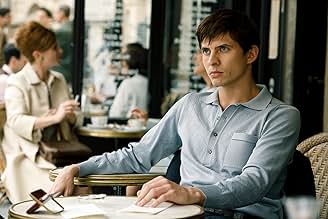
Nureyev shocked the world of ballet when he defected to the West at Le Bourget airport, Paris, in 1961, and the film is built around this incident. His decision to defect was, apparently, a spontaneous one, taken when the Communist authorities, irritated by the fact that he had spent much of his time in Paris in the company of Western intellectuals and concerned by rumours that he had been seen in a gay bar, decided to send him back to Russia rather than allowing him to travel with the Kirov ballet to London, the next leg of their tour. Scenes of Nureyev's stay in Paris are intercut with flashbacks to his poverty-stricken wartime childhood in the provincial city of Ufa and to his time as a ballet student in Leningrad, as St Petersburg was then known.
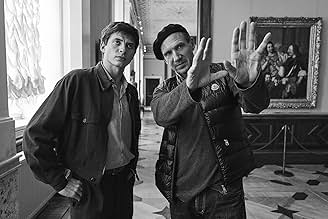
The film was directed by the well-known British actor Ralph Fiennes, clearly a ballet enthusiast. Fiennes also takes an acting role as Alexander Pushkin- not, of course, the classic Russian author but Nureyev's tutor at the Kirov Ballet. This was, I felt, one of two outstanding performances in the film. Pushkin emerges not only as a visionary who spotted Nureyev's talent when many did not but also as a sympathetic father-figure who provided the young dancer with a kindness and understanding that was otherwise lacking in the rigid, inflexible Soviet system. The other great performance, of course, comes from the young Oleg Ivenko as the conflicted Nureyev himself. On the one hand he is held by a love of his Russian homeland, the land which contains all he knows and all that he has held dear- his family, his friends and his mentor Pushkin. On the other hand, he is drawn towards the West, not only because of the greater intellectual freedom which it offers but also because of a feeling that it is only there that he can fully realise himself as a dancer.
I must admit that I am not a great balletomane myself; I have been to the ballet on only a handful of occasions in my life, and never saw Nureyev dance except on television. Yet there are some films which have been good enough able to hold my attention even though they are centred upon activities in which I would normally take little interest. Like most Britons, I know little about baseball, yet I was enthralled by "Eight Men Out" and "Field of Dreams". I probably know even less about wrestling, but that did not prevent me from admiring the more recent "Foxcatcher". "White Crow" comes into the same category. Those who love ballet will doubtless be enthralled by it. Even those of us who do not will be able to see enough in this movie to understand the enthusiasm of those who do. And both groups will join together in their appreciation of the human drama which lies at the heart of Rudolf Nureyev's story. 8/10
Nureyev shocked the world of ballet when he defected to the West at Le Bourget airport, Paris, in 1961, and the film is built around this incident. His decision to defect was, apparently, a spontaneous one, taken when the Communist authorities, irritated by the fact that he had spent much of his time in Paris in the company of Western intellectuals and concerned by rumours that he had been seen in a gay bar, decided to send him back to Russia rather than allowing him to travel with the Kirov ballet to London, the next leg of their tour. Scenes of Nureyev's stay in Paris are intercut with flashbacks to his poverty-stricken wartime childhood in the provincial city of Ufa and to his time as a ballet student in Leningrad, as St Petersburg was then known.
The film was directed by the well-known British actor Ralph Fiennes, clearly a ballet enthusiast. Fiennes also takes an acting role as Alexander Pushkin- not, of course, the classic Russian author but Nureyev's tutor at the Kirov Ballet. This was, I felt, one of two outstanding performances in the film. Pushkin emerges not only as a visionary who spotted Nureyev's talent when many did not but also as a sympathetic father-figure who provided the young dancer with a kindness and understanding that was otherwise lacking in the rigid, inflexible Soviet system. The other great performance, of course, comes from the young Oleg Ivenko as the conflicted Nureyev himself. On the one hand he is held by a love of his Russian homeland, the land which contains all he knows and all that he has held dear- his family, his friends and his mentor Pushkin. On the other hand, he is drawn towards the West, not only because of the greater intellectual freedom which it offers but also because of a feeling that it is only there that he can fully realise himself as a dancer.
I must admit that I am not a great balletomane myself; I have been to the ballet on only a handful of occasions in my life, and never saw Nureyev dance except on television. Yet there are some films which have been good enough able to hold my attention even though they are centred upon activities in which I would normally take little interest. Like most Britons, I know little about baseball, yet I was enthralled by "Eight Men Out" and "Field of Dreams". I probably know even less about wrestling, but that did not prevent me from admiring the more recent "Foxcatcher". "White Crow" comes into the same category. Those who love ballet will doubtless be enthralled by it. Even those of us who do not will be able to see enough in this movie to understand the enthusiasm of those who do. And both groups will join together in their appreciation of the human drama which lies at the heart of Rudolf Nureyev's story. 8/10
What a captivating and intense film
This film tells the story of a Russian ballet dancer who defected in France during the cold war.
I can't quite believe how good this film is. The story is intense and captivating, even if you don't know about Rudi or about ballet. The dances portrayed are beautiful, the leading actors are great to look at too. The airport scene is so intense that I watched it several times. I also particularly like the fact that Clara Sant helped Rudi so much, without expecting anything in return. I enjoyed every bit of this film, and I strongly recommend it.
I can't quite believe how good this film is. The story is intense and captivating, even if you don't know about Rudi or about ballet. The dances portrayed are beautiful, the leading actors are great to look at too. The airport scene is so intense that I watched it several times. I also particularly like the fact that Clara Sant helped Rudi so much, without expecting anything in return. I enjoyed every bit of this film, and I strongly recommend it.


Le saviez-vous
- AnecdotesHayden Christensen, who trained extensively in ballet as a child, was first choice to star; however a persistent ankle injury prevented him from being able to perform to the standards demanded by Ralph Fiennes.
- GaffesIn a scene showing a close up of Nureyev's foot performing a tendu, the shoe he is wearing is a white split sole ballet slipper, a shoe that did not exist in the 1960s. Split sole ballet technique shoes have only been on the dance scene since the mid 1990s.
- Citations
Claire Motte: You are with the company? Did you dance tonight?
Rudolf Nureyev: If I had danced, you would remember.
- ConnexionsFeatured in Ralph Fiennes & Oleg Ivenko in Conversation (2019)
- Bandes originalesLa Bayadère 3rd Shade Variation
Composed by Ludwig Minkus
Arranged by Matthias Gohl
Performed by Ilan Eshkeri and The London Metropolitan Orchestra
Meilleurs choix
Connectez-vous pour évaluer et suivre la liste de favoris afin de recevoir des recommandations personnalisées
Détails
- Date de sortie
- Pays d’origine
- Sites officiels
- Langues
- Aussi connu sous le nom de
- The White Crow
- Lieux de tournage
- Sociétés de production
- Voir plus de crédits d'entreprise sur IMDbPro
Box-office
- Montant brut aux États-Unis et au Canada
- 1 828 784 $US
- Week-end de sortie aux États-Unis et au Canada
- 78 782 $US
- 28 avr. 2019
- Montant brut mondial
- 7 622 595 $US
- Durée
- 2h 7min(127 min)
- Couleur
- Rapport de forme
- 1.85 : 1
Contribuer à cette page
Suggérer une modification ou ajouter du contenu manquant