NOTE IMDb
6,6/10
7,3 k
MA NOTE


L'histoire de la défection de Rudolf Noureev à l'Ouest.L'histoire de la défection de Rudolf Noureev à l'Ouest.L'histoire de la défection de Rudolf Noureev à l'Ouest.
- Réalisation
- Scénaristes
- Stars
- Récompenses
- 1 victoire et 4 nominations au total




6,67.3K
1
2
3
4
5
6
7
8
9
10
Avis à la une
What a captivating and intense film
This film tells the story of a Russian ballet dancer who defected in France during the cold war.
I can't quite believe how good this film is. The story is intense and captivating, even if you don't know about Rudi or about ballet. The dances portrayed are beautiful, the leading actors are great to look at too. The airport scene is so intense that I watched it several times. I also particularly like the fact that Clara Sant helped Rudi so much, without expecting anything in return. I enjoyed every bit of this film, and I strongly recommend it.
I can't quite believe how good this film is. The story is intense and captivating, even if you don't know about Rudi or about ballet. The dances portrayed are beautiful, the leading actors are great to look at too. The airport scene is so intense that I watched it several times. I also particularly like the fact that Clara Sant helped Rudi so much, without expecting anything in return. I enjoyed every bit of this film, and I strongly recommend it.
beautiful
A beautiful film. But not so convincing. Correct but easy to reduce it to the last part tension. Interesting portrait of the period, expression of admiration for Nureev art, seductive ballet scenes and the hard try to convince. But, in too many parts, the film remains only a sketch. The good points - hard effort of Oleg Ivanko to create his role and to convince the viewer, the passion of Ralph Fiennes to the project, the presence of Sergei Polunin and the performance of Adele Exarchopoulos. The result is, obvious, a beautiful one . But convince it ? In few points, with indulgence in other.
dancing and defecting
Greetings again from the darkness. Nijinsky. Nureyev. Bruhn. Baryshnikov. The legends of male ballet dancers starts with that list, and possibly include a handful of others. Ralph Fiennes directs a screenplay from David Hare that brings us the story of how one of these, Rudolph Nureyev, defected from Russia to the west in 1961.
Opening with Nureyev's teacher Alexander Pushkin being interrogated ("Why did he defect?") by a Russian official immediately after the defection, the film ping pongs between 3 time frames in an attempt to better explain Nureyev's reasons ... or at least the background that created such a headstrong and talented young man. We flashback to 1938 where his mother famously gave birth to him in the confines of a moving train (traveling and trains remained important to him). We then flash forward to 1961 when Nureyev arrives in Paris with the Kirov Ballet, and then back to 1955 as he arrives at the Vaganova Academy of Russian Ballet (established 1738) - a prestigious dance school.
It's actually this hopping from one time frame to another that is the film's weakness. The script is ambitious but ultimately flawed, as it attempts to tackle too much rather than concentrating on what's most important and interesting. We didn't need so many childhood flashbacks to grasp that Nureyev was a different kind of kid who grew up in poverty in Siberia, raised with his sisters by a mother whose husband was away at war. Julie Kavanagh's book "Rudolph Nureyev: The Life" inspired Mr. Hare's screenplay, but the multiple timelines can be more fully explored in book form.
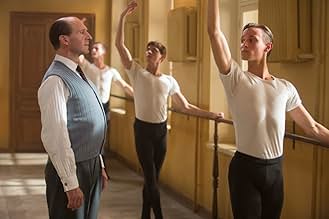
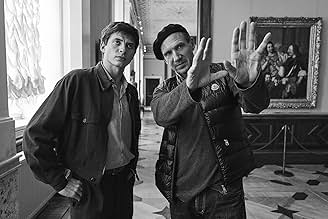
Ralph Fiennes plays the aforementioned Pushkin, a soft-spoken man who was a father figure to Nureyev, as well as a technical instructor. He also shared his philosophy of dance (and his wife - maybe he knew, maybe he didn't) with his star pupil, and it's easy to see how this elevated Nureyev's ability. Combining that with his interest in classic art, a theme of turning ugliness into beauty was something Nureyev latched on to.
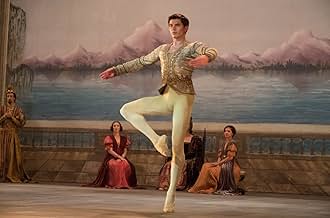
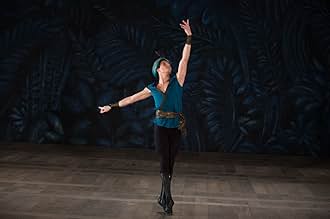
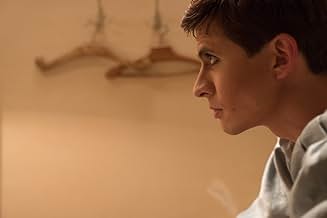
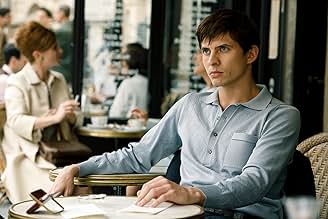
Oleg Ivenko stars as Rudolph Nureyev. Ivenko is a marvelous dancer and bears enough resemblance to the legend that we are quickly taken in. Ivenko is not a trained film actor, but as a dancer, he is accustomed to the spotlight and never wavers in his portrayal of a dancer he likely admired. He captures the emotional turmoil of a man enticed by the artistic and social freedoms of the west, while also remaining loyal to his homeland - loyal at least until he felt threatened (both physically and artistically). A tortured genius typically struggles with those in positions of authority and that's on full display here.
This is the third directorial outing for 2-time Oscar nominee (for acting) Ralph Fiennes. His previous projects were THE INVISIBLE WOMAN in 2013 which no one saw, and CORIOLANUS in 2011 which almost no one saw. It's likely his latest won't draw a huge audience either, but Ivenko's dancing is quite something to behold, and the climax at Le Bourget Airport in France is a suspenseful highlight. Nureyev was 23 at the time, and the defection decision is made almost spontaneously with a little help from his socialite friend Clara Saint (Adele Exarchapoulos, BLUE IS THE WARMEST COLOR) and French dancer Pierre Lacotte (Raphael Personnaz). Rudolph Nureyev died of complications from AIDS in 1993, but he truly was a "white crow" - something extraordinary, and one who stands out.
Opening with Nureyev's teacher Alexander Pushkin being interrogated ("Why did he defect?") by a Russian official immediately after the defection, the film ping pongs between 3 time frames in an attempt to better explain Nureyev's reasons ... or at least the background that created such a headstrong and talented young man. We flashback to 1938 where his mother famously gave birth to him in the confines of a moving train (traveling and trains remained important to him). We then flash forward to 1961 when Nureyev arrives in Paris with the Kirov Ballet, and then back to 1955 as he arrives at the Vaganova Academy of Russian Ballet (established 1738) - a prestigious dance school.
It's actually this hopping from one time frame to another that is the film's weakness. The script is ambitious but ultimately flawed, as it attempts to tackle too much rather than concentrating on what's most important and interesting. We didn't need so many childhood flashbacks to grasp that Nureyev was a different kind of kid who grew up in poverty in Siberia, raised with his sisters by a mother whose husband was away at war. Julie Kavanagh's book "Rudolph Nureyev: The Life" inspired Mr. Hare's screenplay, but the multiple timelines can be more fully explored in book form.
Ralph Fiennes plays the aforementioned Pushkin, a soft-spoken man who was a father figure to Nureyev, as well as a technical instructor. He also shared his philosophy of dance (and his wife - maybe he knew, maybe he didn't) with his star pupil, and it's easy to see how this elevated Nureyev's ability. Combining that with his interest in classic art, a theme of turning ugliness into beauty was something Nureyev latched on to.
Oleg Ivenko stars as Rudolph Nureyev. Ivenko is a marvelous dancer and bears enough resemblance to the legend that we are quickly taken in. Ivenko is not a trained film actor, but as a dancer, he is accustomed to the spotlight and never wavers in his portrayal of a dancer he likely admired. He captures the emotional turmoil of a man enticed by the artistic and social freedoms of the west, while also remaining loyal to his homeland - loyal at least until he felt threatened (both physically and artistically). A tortured genius typically struggles with those in positions of authority and that's on full display here.
This is the third directorial outing for 2-time Oscar nominee (for acting) Ralph Fiennes. His previous projects were THE INVISIBLE WOMAN in 2013 which no one saw, and CORIOLANUS in 2011 which almost no one saw. It's likely his latest won't draw a huge audience either, but Ivenko's dancing is quite something to behold, and the climax at Le Bourget Airport in France is a suspenseful highlight. Nureyev was 23 at the time, and the defection decision is made almost spontaneously with a little help from his socialite friend Clara Saint (Adele Exarchapoulos, BLUE IS THE WARMEST COLOR) and French dancer Pierre Lacotte (Raphael Personnaz). Rudolph Nureyev died of complications from AIDS in 1993, but he truly was a "white crow" - something extraordinary, and one who stands out.
What a legend!
A biopic about Rudolf Nureyev: gifted with an exemplary technique, he is considered as the greatest classical dancer and as one of the greatest choreographers.
The actors Oleg Ivenko and Chulpan Khamatova are excellent whereas Ralph Fiennes is magnificent with a masterful interpretation of Alexander Pushkin, with restraint and sensitivity. He literally impressed me! Nevertheless, as a director, Ralph Fiennes is less convincing. He excessively insists on the haughty and unpleasant character of Rudolf Nureyev, to such a point that we almost want to slap him. In addition, the manifold alternations between the trip to Paris in 1961 (the present time) and the flashbacks (his childhood in a poor family and his debut as a dancer) are almost disturbing. I would have appreciated that Ralph Fiennes develops these different points: 1) An evocation of the trip to Vienna in 1959, formerly Western Europe, followed by a formal ban on all abroad travel formulated by the Russian Minister of Culture, which could have explained, without justifying, the oppressive and stifling behavior of the KGB members, in Paris in 1961. 2) A less dark presentation of the Soviet Union reduced to KGB members as obtuse as omnipotent. Indeed, at the beginning of the 60s, the Soviet aura was supreme: culture, science, geopolitical influence, ... For instance, the dramatic Nureyev's defection at the Paris Le Bourget Airport happened just two months after the Bay of Pigs invasion which was a significant failure for Kennedy's US foreign policy and a strong reinforcement of the relations between Cuba and the Soviet Union.
As a synthesis, the movie is excellently interpreted but the realization is slightly muddleheaded. 6/7 of 10.
The actors Oleg Ivenko and Chulpan Khamatova are excellent whereas Ralph Fiennes is magnificent with a masterful interpretation of Alexander Pushkin, with restraint and sensitivity. He literally impressed me! Nevertheless, as a director, Ralph Fiennes is less convincing. He excessively insists on the haughty and unpleasant character of Rudolf Nureyev, to such a point that we almost want to slap him. In addition, the manifold alternations between the trip to Paris in 1961 (the present time) and the flashbacks (his childhood in a poor family and his debut as a dancer) are almost disturbing. I would have appreciated that Ralph Fiennes develops these different points: 1) An evocation of the trip to Vienna in 1959, formerly Western Europe, followed by a formal ban on all abroad travel formulated by the Russian Minister of Culture, which could have explained, without justifying, the oppressive and stifling behavior of the KGB members, in Paris in 1961. 2) A less dark presentation of the Soviet Union reduced to KGB members as obtuse as omnipotent. Indeed, at the beginning of the 60s, the Soviet aura was supreme: culture, science, geopolitical influence, ... For instance, the dramatic Nureyev's defection at the Paris Le Bourget Airport happened just two months after the Bay of Pigs invasion which was a significant failure for Kennedy's US foreign policy and a strong reinforcement of the relations between Cuba and the Soviet Union.
As a synthesis, the movie is excellently interpreted but the realization is slightly muddleheaded. 6/7 of 10.
The 1960s defection of Soviet dancer Nureyev.
My wife and I watched this at home on DVD from our public library.
While the focus of this movie is the 1961 defection of ballet dancer Nureyev you can't really tell that part of his life without understanding his beginnings, from being born on a train in 1938 to studying under the demanding Soviet system. Most of that takes up the first half of the movie.
I remember Nureyev well, he was such an inventive dancer and became popular world-wide in the 1960s and 1970s but I never knew his story. When the company of dancers would tour outside the USSR they were not supposed to exchange ideas or even talk to people from other countries but Nureyev never really followed the rules. When it looked like going back home might be bad for him, in France he defected, asking for political asylum. The scenes that retell and dramatize the incident are some of the best in this movie.
For the role Oleg Ivenko, a Ukranian who really is a ballet dancer in Russia and a first-time actor, plays Rudolf Nureyev and he plays him very well.
A really well made movie and a well told story, we enjoyed it.
While the focus of this movie is the 1961 defection of ballet dancer Nureyev you can't really tell that part of his life without understanding his beginnings, from being born on a train in 1938 to studying under the demanding Soviet system. Most of that takes up the first half of the movie.
I remember Nureyev well, he was such an inventive dancer and became popular world-wide in the 1960s and 1970s but I never knew his story. When the company of dancers would tour outside the USSR they were not supposed to exchange ideas or even talk to people from other countries but Nureyev never really followed the rules. When it looked like going back home might be bad for him, in France he defected, asking for political asylum. The scenes that retell and dramatize the incident are some of the best in this movie.
For the role Oleg Ivenko, a Ukranian who really is a ballet dancer in Russia and a first-time actor, plays Rudolf Nureyev and he plays him very well.
A really well made movie and a well told story, we enjoyed it.


Le saviez-vous
- AnecdotesHayden Christensen, who trained extensively in ballet as a child, was first choice to star; however a persistent ankle injury prevented him from being able to perform to the standards demanded by Ralph Fiennes.
- GaffesIn a scene showing a close up of Nureyev's foot performing a tendu, the shoe he is wearing is a white split sole ballet slipper, a shoe that did not exist in the 1960s. Split sole ballet technique shoes have only been on the dance scene since the mid 1990s.
- Citations
Claire Motte: You are with the company? Did you dance tonight?
Rudolf Nureyev: If I had danced, you would remember.
- ConnexionsFeatured in Ralph Fiennes & Oleg Ivenko in Conversation (2019)
- Bandes originalesLa Bayadère 3rd Shade Variation
Composed by Ludwig Minkus
Arranged by Matthias Gohl
Performed by Ilan Eshkeri and The London Metropolitan Orchestra
Meilleurs choix
Connectez-vous pour évaluer et suivre la liste de favoris afin de recevoir des recommandations personnalisées
Détails
- Date de sortie
- Pays d’origine
- Sites officiels
- Langues
- Aussi connu sous le nom de
- The White Crow
- Lieux de tournage
- Sociétés de production
- Voir plus de crédits d'entreprise sur IMDbPro
Box-office
- Montant brut aux États-Unis et au Canada
- 1 828 784 $US
- Week-end de sortie aux États-Unis et au Canada
- 78 782 $US
- 28 avr. 2019
- Montant brut mondial
- 7 622 595 $US
- Durée
- 2h 7min(127 min)
- Couleur
- Rapport de forme
- 1.85 : 1
Contribuer à cette page
Suggérer une modification ou ajouter du contenu manquant