Dracula
- 1931
- Tous publics
- 1h 15min
NOTE IMDb
7,3/10
64 k
MA NOTE


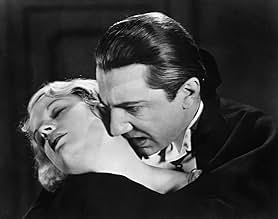
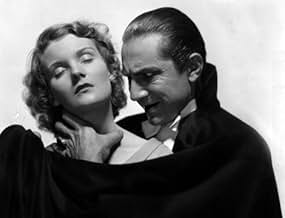
Le vampire ancien et comte Dracula arrive en Angleterre et commence à s'en prendre à la jeune et vertueuse Mina.Le vampire ancien et comte Dracula arrive en Angleterre et commence à s'en prendre à la jeune et vertueuse Mina.Le vampire ancien et comte Dracula arrive en Angleterre et commence à s'en prendre à la jeune et vertueuse Mina.
- Réalisation
- Scénaristes
- Stars
- Récompenses
- 5 victoires et 3 nominations au total


Charles K. Gerrard
- Martin
- (as Charles Gerrard)
Anna Bakacs
- Innkeeper's Daughter
- (non crédité)
Bunny Beatty
- Flower Girl
- (non crédité)
Nicholas Bela
- Coach Passenger
- (non crédité)

Daisy Belmore
- Coach Passenger
- (non crédité)

William A. Boardway
- Concertgoer Outside Theatre
- (non crédité)
Barbara Bozoky
- Innkeeper's Wife
- (non crédité)

Tod Browning
- Harbormaster
- (voix)
- (non crédité)
Moon Carroll
- Maid
- (non crédité)

Geraldine Dvorak
- Dracula's Wife
- (non crédité)
7,363.8K
1
2
3
4
5
6
7
8
9
10
Avis à la une
Stilted, Stagey, and yet still Superb.....
"I bid you welcome," "I never drink wine," "Children of the night...what music they make," and of course "I am Dracula" are memorable lines that resonate throughout horror films, literature, art, etc... throughout the 20th century because of a landmark film made in 1931 starring Bela Lugosi and directed by Tom Browning. This film was the birth of the horror film as we know it. Its importance can not be underestimated. Dracula is a wonderful film for so many reasons, but first let's look at its many faults.
The film is by today standards very antiquated. It has almost no soundtrack, stage acting for the most part, limited special effects, and a slow pacing. It has long parts of little action and lots of chat. It shows little while leaving much to one's imagination(a plus for those like myself that are good at envisioning what is not shown). With all this not going for it, why is Dracula such a classic? Why is it considered to be such a great film and a great horror film?
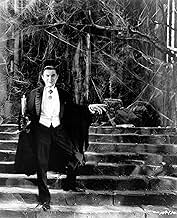
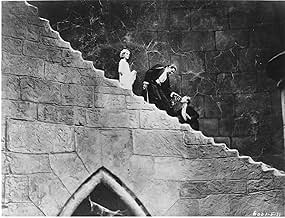
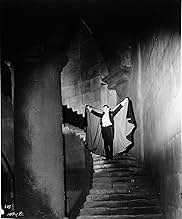
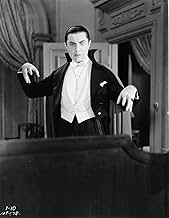
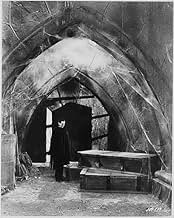
The answer is that even with all these flaws (and bear in mind some of these flaws are not flaws for all) the film offers a rich story in an eerie, atmospheric way. Bela Lugosi was Dracula. He was the model for oh so many vampires to come. His gesturing, his deliberation in speech, his facial movements all created a vampire never to be forgotten. Despite Lugosi, however, is the real genius of the film....Tod Browning. Browning created a movie and a setting hitherto imagined and conjured on a screen. Browning was the man behind the camera that created the cob-webbed stairs of the Dracula castle and the squalid emptiness of the crypt. He created the ghoulish female vampires thirsting for blood. Dracula is not just a film to see, it is film history and should be viewed with that in mind and not put under a microscope of today's languishing tastes.
The film is by today standards very antiquated. It has almost no soundtrack, stage acting for the most part, limited special effects, and a slow pacing. It has long parts of little action and lots of chat. It shows little while leaving much to one's imagination(a plus for those like myself that are good at envisioning what is not shown). With all this not going for it, why is Dracula such a classic? Why is it considered to be such a great film and a great horror film?
The answer is that even with all these flaws (and bear in mind some of these flaws are not flaws for all) the film offers a rich story in an eerie, atmospheric way. Bela Lugosi was Dracula. He was the model for oh so many vampires to come. His gesturing, his deliberation in speech, his facial movements all created a vampire never to be forgotten. Despite Lugosi, however, is the real genius of the film....Tod Browning. Browning created a movie and a setting hitherto imagined and conjured on a screen. Browning was the man behind the camera that created the cob-webbed stairs of the Dracula castle and the squalid emptiness of the crypt. He created the ghoulish female vampires thirsting for blood. Dracula is not just a film to see, it is film history and should be viewed with that in mind and not put under a microscope of today's languishing tastes.
Based on the Broadway play rather than the novel...
... and that explains all of the differences, such as Renfield being the person to visit Dracula in Transylvania to seal a real estate deal rather than Jonathan Harker.
I imagine this was quite the spectacle in 1931. Visually it still is - sweeping staircases, ruined old castles covered in dust, moonlight illuminating giant spiderwebs, coffins with limbs hanging out of them, rats scurrying about. And Bela Lugosi, who starred in the Broadway play, was dying to play the lead. But director Tod Browning was set on Lon Chaney, a frequent collaborator, playing both Dracula and Van Helsiing.
It's not true that everybody is replaceable, but it IS true that eventually an irreplaceable person will no longer be around and a perhaps less than ideal work-around must be found. This was the situation with Chaney - a unique actor who could convince you he was anybody. He died before Dracula was filmed. Lugosi successfully lobbied for the part, although he did so at a cut rate. Today his old world hypnotic presence is synonymous with the role.
But I have to admit I have an unpopular opinion. To me Dracula seems very slow and very much "early talkie" in personality when compared to the film Frankenstein of just a year later. Also, like many early talking films that were not musicals, there is no score.
And I have to wonder about director Tod Browning. Although this was Browning's biggest hit, his other enduring works all starred Lon Chaney. He only directed a few more films and disappeared from the industry for a quarter of a century until his death. He had a disappearing act worthy of Universal Horror.
Things to watch for - Armadillos in Transylvania? Probably far too cold for them there. David Manners and Helen Chandler as young lovers Jonathan Harker and Mina - They have all of the chemistry of two cardboard boxes. Why did they keep pairing these two in films? Dwight Frye as Renfield - did Frye EVER get to play a normal person? And why would he want to be sent away? He gets to wander in and out of the lush living quarters of the superintendent f the mental facility. He wouldn't get that freedom anywhere else. And last but not least, Carla Laemmle, unrecognizable as a tourist, reading from a Transylvania tour guide.
I imagine this was quite the spectacle in 1931. Visually it still is - sweeping staircases, ruined old castles covered in dust, moonlight illuminating giant spiderwebs, coffins with limbs hanging out of them, rats scurrying about. And Bela Lugosi, who starred in the Broadway play, was dying to play the lead. But director Tod Browning was set on Lon Chaney, a frequent collaborator, playing both Dracula and Van Helsiing.
It's not true that everybody is replaceable, but it IS true that eventually an irreplaceable person will no longer be around and a perhaps less than ideal work-around must be found. This was the situation with Chaney - a unique actor who could convince you he was anybody. He died before Dracula was filmed. Lugosi successfully lobbied for the part, although he did so at a cut rate. Today his old world hypnotic presence is synonymous with the role.
But I have to admit I have an unpopular opinion. To me Dracula seems very slow and very much "early talkie" in personality when compared to the film Frankenstein of just a year later. Also, like many early talking films that were not musicals, there is no score.
And I have to wonder about director Tod Browning. Although this was Browning's biggest hit, his other enduring works all starred Lon Chaney. He only directed a few more films and disappeared from the industry for a quarter of a century until his death. He had a disappearing act worthy of Universal Horror.
Things to watch for - Armadillos in Transylvania? Probably far too cold for them there. David Manners and Helen Chandler as young lovers Jonathan Harker and Mina - They have all of the chemistry of two cardboard boxes. Why did they keep pairing these two in films? Dwight Frye as Renfield - did Frye EVER get to play a normal person? And why would he want to be sent away? He gets to wander in and out of the lush living quarters of the superintendent f the mental facility. He wouldn't get that freedom anywhere else. And last but not least, Carla Laemmle, unrecognizable as a tourist, reading from a Transylvania tour guide.
Bela Lugosi in the role he was born to play!
While Tod Browning's Dracula is not the definitive take on the most famous vampire of all time, it is possibly the most memorable one. This is not due to Browning's technical achievements or directorial wizardry, by ANY means. It is due to Bela Lugosi's career-defining portrayal of the title character. Born in what is now Lugoj, Romania, Lugosi brings to the part the flavor of his homeland, making him more believable as Dracula. This other-worldly aesthetic helped to make his performance what many consider the ultimate incarnation of Stoker's Dracula. Having played the Count in Hamilton Deane's Broadway version of Dracula, which started in 1927, Bela Lugosi was more than prepared for the role when it was time to commit it to film. Still struggling with the English language, however, he had to learn his lines phonetically. European accent in tact, he was able to deliver such memorable lines as, "I bid you welcome," "Listen to them. Children of the night. What music they make," and, of course, "I am Dracula." His performance alone is reason enough to watch this monster movie classic. If only the rest of the film was as spectacular as Lugosi. Dwight Frye's Renfield, while perhaps a little too over-the-top, is still another highlight to the film, and even Edward Van Sloan's Van Helsing is enough to challenge the might of Count Dracula. The rest of the film is rather flat to me. Now, I know it was made in 1931, and that, at the time, it horrified audiences, but I still stand by my opinion that the overall movie pales in comparison to Bela Lugosi's performance. Everyone else just seemed to be going through the motions, and it seems especially evident while Helen Chandler and David Manners are on screen. They just aren't convincing. I'm not saying that their performances ruin the film. It is still a classic, and certainly worth a viewing, but if you are in the mood for a vampire movie that is worthy of Bram Stoker's name, look no further than F. W. Murnau's Nosferatu. It is much more convincing and even scarier than Tod Browning's Dracula, despite being nine years older and silent. All in all, though, one cannot overlook the stellar performance of Bela Lugosi in the role he was born to play!
It may be dusty, but it's still a classic
(62%) It is without doubt a classic owing to the fact that it is so well made, and so memorable. The sets are some of the greatest ever to appear on any film, and Lugosi is great as the awful head vamp. It's more than a little dated of course, so there's no blood/biting or on-screen death or murder, plus the acting is very theatrical at times, and there's quite a few long drawn-out sections of total silence that highlight exactly how old and pioneering it is.With that said, all horror fans should watch this at least once, as it does make a great late-night Halloween movie that will live on - just like the old count himself - forever.
Still the champ
Bela Lugosi forever captures the role of a certain undead Transylvanian count who takes a trip to London in the first legitimate version of the classic Bram Stoker novel. Despite many attempts by many talented film makers, I believe this version, directed by Tod Browning, remains the definitive take on the often-filmed novel. But why? Is it simply nostalgia? Granted, I do fondly remember staying up late as a child watching this film on Ghost Host theater and finding myself suitably frightened. However, if I were the same age today, would I find the film as effective? Would a steady diet of more modern and explicit horror films made me too jaded to enjoy the more subtle charms of this film? I hope not, but I could see how it might. The film is slow, and its slowness is further emphasized by the absence of an under score. It is stagey - being as it was more influenced by the stage play than the novel itself. Also, the story plays itself out too quickly. Van Helsing manages to figure everything out and dispatch the count in about two seconds. There simply isn't much suspense - and even less gore or violence. Yet it remains the champ. Why? The main reason is Lugosi himself. He gives the performance of a lifetime. He truly inhabits the role and is genuinely creepy. The rest of the cast, particularly Edward Van Sloan as Van Helsing and Dwight Frye as Renfield, support him admirably. However, when I watch the old Universal horror films nowadays, I find myself really enjoying the atmospheric sets and lighting. Yes, there is still much to love about Dracula today. (As long as you avoid the optional Philip Glass score on the DVD!)


Le saviez-vous
- AnecdotesGenerally regarded as the film that kickstarted the horror genre in Hollywood.
- GaffesWhen Van Helsing is attempting to catch Dracula's lack of reflection in a mirror, there are visible chalk marks on the floor showing Bela Lugosi where to stand for the shot.
- Citations
Count Dracula: This is very old wine. I hope you will like it.
Renfield: Aren't you drinking?
Count Dracula: I never drink... wine.
- Crédits fousThe original title card has producer Carl Laemmle, Jr. identified as Presient (sic).
- Versions alternativesA version of the film played on the 10/24/15 airing of Svengoolie (1995) featured a soundtrack taken from the French language audio track on the Dracula Blu-ray.
- ConnexionsAlternate-language version of Dracula (1931)
- Bandes originalesSwan Lake, Op.20
(1877) (uncredited)
Music by Pyotr Ilyich Tchaikovsky
Excerpt Played during the opening credits
Meilleurs choix
Connectez-vous pour évaluer et suivre la liste de favoris afin de recevoir des recommandations personnalisées
Détails
- Date de sortie
- Pays d’origine
- Site officiel
- Langues
- Aussi connu sous le nom de
- Drácula
- Lieux de tournage
- Stage 12, Universal Studios - 100 Universal City Plaza, Universal City, Californie, États-Unis(Grand Staircase; interior of Dracula's castle; interior of Carfax Abbey, demolished in 2020)
- Société de production
- Voir plus de crédits d'entreprise sur IMDbPro
Box-office
- Budget
- 355 000 $US (estimé)
- Montant brut mondial
- 89 201 $US
- Durée
- 1h 15min(75 min)
- Rapport de forme
- 1.20 : 1(original release)
Contribuer à cette page
Suggérer une modification ou ajouter du contenu manquant