NOTE IMDb
7,8/10
54 k
MA NOTE


La belle trapéziste d'un cirque accepte d'épouser un des artistes du spectacle, mais ses amis difformes l'avertisse qu'elle n'est intéressée que par son héritage.La belle trapéziste d'un cirque accepte d'épouser un des artistes du spectacle, mais ses amis difformes l'avertisse qu'elle n'est intéressée que par son héritage.La belle trapéziste d'un cirque accepte d'épouser un des artistes du spectacle, mais ses amis difformes l'avertisse qu'elle n'est intéressée que par son héritage.
- Réalisation
- Scénaristes
- Stars
- Récompenses
- 2 victoires et 1 nomination au total

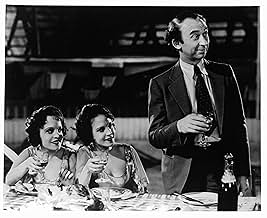

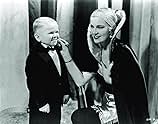


Roscoe Ates
- Roscoe
- (as Rosco Ates)


Prince Randian
- The Living Torso
- (as Rardion)
7,854K
1
2
3
4
5
6
7
8
9
10
Avis à la une
Very good relatively avant-garde film
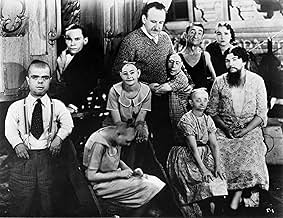
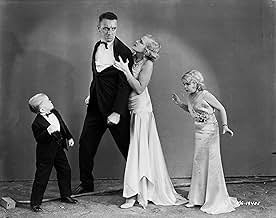
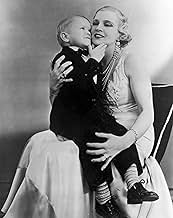
Part fictional portrait of a group of circus sideshow performers and part tragic soap opera about their various and complicated relationships, the main story has a midget, Hans (Harry Earles), falling in love with the Amazonian trapeze artist, Cleopatra (Olga Baclanova), who feigns affection for him--at first to taunt him and later to use him.
Freaks isn't really a horror film, although the horror boom that began in 1931 precipitated Freaks entering production. The script developed out of an earlier one named "Spurs" that had been in MGM's possession since the late 1920s. The success of Universal's horror films of 1931 (Dracula and Frankenstein) had studios scrambling to cash in on the trend. Horror films weren't new, of course, but repeated commercial success of horror films released in quick succession was. A number of factors contributed to the phenomenon, including the Great Depression, the lingering cultural impact from World War I, and the advent of sound films. So even though Freaks wasn't exactly horror, and the protagonists weren't exactly monsters, it was close enough. In the early 1930s, the public had not yet been overexposed to media-sensationalized differences in human appearances and behavior. The effect of the film then, in conjunction with memories of real life horrors, including those of war-mangled veterans, offered the emotional reaction that producers and studios are often seeking from horror films.
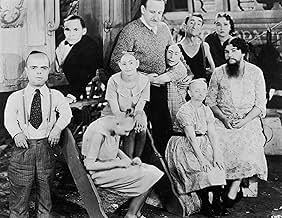
But Freaks is really part tragic drama, part character study, and in many ways it is almost a documentary. The modern attraction to the film comes from a few sources. One, the "gawking effect", or the simple fact of watching the freaks in action. Sideshows are an unfortunately dying phenomenon, if they're not already dead (many would say they are), largely because of a combination of medical advances, which often "cure" the physical differences that would have made "victims" sideshow candidates, and political correctness, which mistakenly sees sideshows as negatively exploitative. It's fascinating watching the different kinds of people in the film and their behavior, including not only their social interactions, but how some of them manage to just get around and perform everyday activities such as eating, lighting a cigarette, and so on. This kind of material takes up at least half of the film's short running time (64 minutes; initially it ran closer to 90 minutes, but 26 minutes of cuts were made (and are now apparently lost) to appease the New York State censor board).
Two, this was a lost film, figuratively and almost literally, for quite some time. MGM wanted nothing to do with it. For a while, it had been playing the "roadshow" circuit in different cuts, under different titles, such as "Nature's Mistakes". The film had been banned in many areas, and at least technically is still banned in some. It eventually appeared on VHS in the 1980s, but until the recent DVD release, it has never been very easy to find in most rental or retail outlets.
Three, the most common modern reading of the film--and this was also part of director Tod Browning's intention in making Freaks, even if the average audience member didn't see it this way at first, has it as a Nightbreed (1990)-like turning of the dramatic tables, where the extremely alienated "monsters" are the sympathetic protagonists and the ostensibly "normal" humans turn out to be the real monsters. For those who like films best where they can identify in some emotional way with the characters, Freaks is particularly attractive to anyone who feels alienated or strongly different, even looked down upon, by "normal" society. At various times, and by various people, Freaks has been read as everything from purely exploitative schlock to a socialist parable to a film imbued with odd commentary, metaphors and subtexts about male-female couplings and Oedipal complexes.
Freaks isn't a great film in terms of the usual criteria, such as storytelling, exquisite performances, and so on, but it's appropriate that it wouldn't be a masterpiece per the normal criteria--it's not about normal people. The film is certainly valuable as a creative, almost experimental artwork, not to mention as a more or less permanent record of the decayed and almost abandoned artform of sideshows. It's not surprising that not every cast member is an incredible actor--for many roles, there was only one person available who could have fulfilled the character in a particular way, making the stilted delivery of dialogue more excusable. In any event, this is an important film historically, and a joy to watch.
Freaks isn't really a horror film, although the horror boom that began in 1931 precipitated Freaks entering production. The script developed out of an earlier one named "Spurs" that had been in MGM's possession since the late 1920s. The success of Universal's horror films of 1931 (Dracula and Frankenstein) had studios scrambling to cash in on the trend. Horror films weren't new, of course, but repeated commercial success of horror films released in quick succession was. A number of factors contributed to the phenomenon, including the Great Depression, the lingering cultural impact from World War I, and the advent of sound films. So even though Freaks wasn't exactly horror, and the protagonists weren't exactly monsters, it was close enough. In the early 1930s, the public had not yet been overexposed to media-sensationalized differences in human appearances and behavior. The effect of the film then, in conjunction with memories of real life horrors, including those of war-mangled veterans, offered the emotional reaction that producers and studios are often seeking from horror films.
But Freaks is really part tragic drama, part character study, and in many ways it is almost a documentary. The modern attraction to the film comes from a few sources. One, the "gawking effect", or the simple fact of watching the freaks in action. Sideshows are an unfortunately dying phenomenon, if they're not already dead (many would say they are), largely because of a combination of medical advances, which often "cure" the physical differences that would have made "victims" sideshow candidates, and political correctness, which mistakenly sees sideshows as negatively exploitative. It's fascinating watching the different kinds of people in the film and their behavior, including not only their social interactions, but how some of them manage to just get around and perform everyday activities such as eating, lighting a cigarette, and so on. This kind of material takes up at least half of the film's short running time (64 minutes; initially it ran closer to 90 minutes, but 26 minutes of cuts were made (and are now apparently lost) to appease the New York State censor board).
Two, this was a lost film, figuratively and almost literally, for quite some time. MGM wanted nothing to do with it. For a while, it had been playing the "roadshow" circuit in different cuts, under different titles, such as "Nature's Mistakes". The film had been banned in many areas, and at least technically is still banned in some. It eventually appeared on VHS in the 1980s, but until the recent DVD release, it has never been very easy to find in most rental or retail outlets.
Three, the most common modern reading of the film--and this was also part of director Tod Browning's intention in making Freaks, even if the average audience member didn't see it this way at first, has it as a Nightbreed (1990)-like turning of the dramatic tables, where the extremely alienated "monsters" are the sympathetic protagonists and the ostensibly "normal" humans turn out to be the real monsters. For those who like films best where they can identify in some emotional way with the characters, Freaks is particularly attractive to anyone who feels alienated or strongly different, even looked down upon, by "normal" society. At various times, and by various people, Freaks has been read as everything from purely exploitative schlock to a socialist parable to a film imbued with odd commentary, metaphors and subtexts about male-female couplings and Oedipal complexes.
Freaks isn't a great film in terms of the usual criteria, such as storytelling, exquisite performances, and so on, but it's appropriate that it wouldn't be a masterpiece per the normal criteria--it's not about normal people. The film is certainly valuable as a creative, almost experimental artwork, not to mention as a more or less permanent record of the decayed and almost abandoned artform of sideshows. It's not surprising that not every cast member is an incredible actor--for many roles, there was only one person available who could have fulfilled the character in a particular way, making the stilted delivery of dialogue more excusable. In any event, this is an important film historically, and a joy to watch.
Great horror classic from early 30's.
"Freaks" is one of the most controversial horror films from the 30's,mainly because director Tod Browning hired as the actors real sideshow freaks.It does have a rather unsettling effect,but I think that really does work for the film.Browning builds up a great amount of suspense with the good use of locations,story and lots of atmosphere.The ending,where we see freaks crawling in the mud,is pretty creepy.Anyway check this one out-it's worth watching.
I finally found out where Joey got his inspiration...
D-U-M-B! Everyone's accusin' me!
I've been listening to The Ramones' music off and on for almost 30 years now, and despite reading and viewing tons of stuff about the band and its origins, I'd never run across how they came up with the whole "pinhead" theme.
Well, I've finally seen FREAKS, often listed as one of the great cult flicks of all time. And wouldn't you know it, the "pinheads", including "Schlitze", the inspiration for The Ramones' mascot who always came out to join the band during their live shows at the end of the Pinhead song, were in FREAKS.
The Ramones also slightly modified the "freak chant" from the wedding scene, changing "Gooble-Gobble" to "Gabba-Gabba". I guess Jeffrey Hyman (Joey Ramone) must have viewed himself as somewhat "freakish" (he did have an incredible look), and really related to the group of circus curiosities assembled for this film.
After being shelved for about three decades, FREAKS started playing again at art-house theaters in the mid-60's, and that's where Joey had to have come across it.
As far as my film review, this movie needs to be viewed. Look past the stilted acting, and soak up the message. It will stay with you for a long, long time.
I've been listening to The Ramones' music off and on for almost 30 years now, and despite reading and viewing tons of stuff about the band and its origins, I'd never run across how they came up with the whole "pinhead" theme.
Well, I've finally seen FREAKS, often listed as one of the great cult flicks of all time. And wouldn't you know it, the "pinheads", including "Schlitze", the inspiration for The Ramones' mascot who always came out to join the band during their live shows at the end of the Pinhead song, were in FREAKS.
The Ramones also slightly modified the "freak chant" from the wedding scene, changing "Gooble-Gobble" to "Gabba-Gabba". I guess Jeffrey Hyman (Joey Ramone) must have viewed himself as somewhat "freakish" (he did have an incredible look), and really related to the group of circus curiosities assembled for this film.
After being shelved for about three decades, FREAKS started playing again at art-house theaters in the mid-60's, and that's where Joey had to have come across it.
As far as my film review, this movie needs to be viewed. Look past the stilted acting, and soak up the message. It will stay with you for a long, long time.
The studio got it so wrong...
In the first place, this movie was originally made to compete with the Universal Horror films, as though these human beings who are the titular "freaks" are not human. Director Tod Browning was still reeling from the loss of his big star, Lon Chaney, to cancer, and thought this would be a good follow up to his previous horror films without Chaney. And after all, he had just finished directing Dracula.
Actually, it paints a very sympathetic picture of the disabled and deformed circus performers, who, at this time of limited medical knowledge and abounding prejudice, were very limited in what they could do in life. They have a very deep camaraderie that is shown through such events as the birth of a child to the bearded lady and the engagement of one of the conjoined twins. Since the other twin is already married, there is much arguing over what the logistics are going to be in these two marriages.
The actual "monsters" in this film are the acrobat "Cleopatra" (Olga Baclanova), and strong man Hercules (Henry Victor), who are having an affair. Two physical specimens with monstrous morality. When the dwarf Hans is captivated by Cleopatra's beauty, she at first teases him by leading him on. But then he starts giving her expensive jewelry and she decides to keep up the ruse. When Freida, Hans' dwarf girlfriend, comes to Cleopatra and asks her to stop teasing him, she accidentally tips off Cleo to the fact that Hans has inherited a great fortune. Hercules and Cleo then plan to get Hans to marry Cleo and then poison him so she can inherit his money. But the two don't realize the close strong bond that the circus performers have with one another and that they are literally each others eyes and ears. Complications ensue.
The film was originally set to run at 90 minutes, but test audiences were so revolted that 30 minutes were cut out so that the remaining film only runs at an hour. Then a scene was tacked on at the end to show Hans' grief over what has ultimately happened. MGM would often add an end scene that really didn't fit the mood of the rest the film during Irving Thalberg's reign there to wrap things up.
This film pretty much finished the career of director Browning as afterwards he only directed a farcical sound remake of a silent film he had made at MGM and one other film and then retired. This was a good late role for Olga Baclanova. She had a very thick Russian accent and had some great late silent roles at Paramount, but talking film had not been kind to her career. This really gave her one last great role where her accent really fit into the plot, plus this was not a film where lots of dialogue was called for, and she was very good at using gestures and expressions to convey emotion.
In the 1960s this film got a fresh look, and today is widely celebrated as having been ahead of its time. The horror is implied and left up to your imagination as to just HOW it happened, and the empathy shown the circus performers is profound. It even got a separate DVD release with commentary.
Actually, it paints a very sympathetic picture of the disabled and deformed circus performers, who, at this time of limited medical knowledge and abounding prejudice, were very limited in what they could do in life. They have a very deep camaraderie that is shown through such events as the birth of a child to the bearded lady and the engagement of one of the conjoined twins. Since the other twin is already married, there is much arguing over what the logistics are going to be in these two marriages.
The actual "monsters" in this film are the acrobat "Cleopatra" (Olga Baclanova), and strong man Hercules (Henry Victor), who are having an affair. Two physical specimens with monstrous morality. When the dwarf Hans is captivated by Cleopatra's beauty, she at first teases him by leading him on. But then he starts giving her expensive jewelry and she decides to keep up the ruse. When Freida, Hans' dwarf girlfriend, comes to Cleopatra and asks her to stop teasing him, she accidentally tips off Cleo to the fact that Hans has inherited a great fortune. Hercules and Cleo then plan to get Hans to marry Cleo and then poison him so she can inherit his money. But the two don't realize the close strong bond that the circus performers have with one another and that they are literally each others eyes and ears. Complications ensue.
The film was originally set to run at 90 minutes, but test audiences were so revolted that 30 minutes were cut out so that the remaining film only runs at an hour. Then a scene was tacked on at the end to show Hans' grief over what has ultimately happened. MGM would often add an end scene that really didn't fit the mood of the rest the film during Irving Thalberg's reign there to wrap things up.
This film pretty much finished the career of director Browning as afterwards he only directed a farcical sound remake of a silent film he had made at MGM and one other film and then retired. This was a good late role for Olga Baclanova. She had a very thick Russian accent and had some great late silent roles at Paramount, but talking film had not been kind to her career. This really gave her one last great role where her accent really fit into the plot, plus this was not a film where lots of dialogue was called for, and she was very good at using gestures and expressions to convey emotion.
In the 1960s this film got a fresh look, and today is widely celebrated as having been ahead of its time. The horror is implied and left up to your imagination as to just HOW it happened, and the empathy shown the circus performers is profound. It even got a separate DVD release with commentary.
Disturbing & Thought Provoking
The subject of human disability is still a taboo subject in Cinema, even over 70 years since this film's release.
It's difficult to imagine what impact this film would have had in the 1930's, but as it still has the ability to shock ( through the images of bodily deformity ) I can understand why many shunned and disowned this work, and why it totally ruined Todd Browning's film career.
The basic premise - that beauty is more than skin deep - can appear to be wielded with a sledgehammer, but perhaps the contemporary audience needed to be hit harder in order to make them understand the point.
The film is short ( due to enforced cuts ), and at times can move rather slowly and can appear rather 'stagey' which is a trait of many films from the 20's / 30's.
But don't let that put you off. The plot is simple, but it's the telling of the story rather than the story itself that is important. And you really do need to remind yourself that these are real people - not actors - and this was the live they led.
I rate it 9 outa 10 because they really don't make them like this any more.
It's difficult to imagine what impact this film would have had in the 1930's, but as it still has the ability to shock ( through the images of bodily deformity ) I can understand why many shunned and disowned this work, and why it totally ruined Todd Browning's film career.
The basic premise - that beauty is more than skin deep - can appear to be wielded with a sledgehammer, but perhaps the contemporary audience needed to be hit harder in order to make them understand the point.
The film is short ( due to enforced cuts ), and at times can move rather slowly and can appear rather 'stagey' which is a trait of many films from the 20's / 30's.
But don't let that put you off. The plot is simple, but it's the telling of the story rather than the story itself that is important. And you really do need to remind yourself that these are real people - not actors - and this was the live they led.
I rate it 9 outa 10 because they really don't make them like this any more.


Le saviez-vous
- AnecdotesThe on-screen romance between Hans and Frieda was very subdued because the roles were being played by real life brother and sister Harry Earles and Daisy Earles.
- GaffesAt 43:40 when Cleo tosses the wine at Angeleno, she is standing in front of him, but the wine she throws comes from the far right side of the frame.
- Citations
Freaks: We accept you, one of us! Gooble Gobble!
- Versions alternativesReissue prints included a two-and-a-half minute written prologue about historical interpretations and contemporary studies of "misshapen misfits." These same prints remove the MGM Lion (the studio having disowned the film for many years).
- ConnexionsEdited into Histoire(s) du cinéma: Le contrôle de l'univers (1999)
Meilleurs choix
Connectez-vous pour évaluer et suivre la liste de favoris afin de recevoir des recommandations personnalisées
Détails
Box-office
- Budget
- 310 607 $US (estimé)
- Montant brut mondial
- 4 693 $US
- Durée
- 1h 4min(64 min)
- Couleur
- Rapport de forme
- 1.37 : 1
Contribuer à cette page
Suggérer une modification ou ajouter du contenu manquant