Calendrier de sortiesLes 250 meilleurs filmsLes films les plus populairesRechercher des films par genreMeilleur box officeHoraires et billetsActualités du cinémaPleins feux sur le cinéma indien
    Ce qui est diffusé à la télévision et en streamingLes 250 meilleures sériesÉmissions de télévision les plus populairesParcourir les séries TV par genreActualités télévisées
    Que regarderLes dernières bandes-annoncesProgrammes IMDb OriginalChoix d’IMDbCoup de projecteur sur IMDbGuide de divertissement pour la famillePodcasts IMDb
    OscarsBest Of 2025Holiday Watch GuideGotham AwardsSTARmeter AwardsAwards CentralFestivalsTous les événements
    Né aujourd'huiLes célébrités les plus populairesActualités des célébrités
    Centre d'aideZone des contributeursSondages
Pour les professionnels de l'industrie
  • Langue
  • Entièrement prise en charge
  • English (United States)
    Partiellement prise en charge
  • Français (Canada)
  • Français (France)
  • Deutsch (Deutschland)
  • हिंदी (भारत)
  • Italiano (Italia)
  • Português (Brasil)
  • Español (España)
  • Español (México)
Liste de favoris
Se connecter
  • Entièrement prise en charge
  • English (United States)
    Partiellement prise en charge
  • Français (Canada)
  • Français (France)
  • Deutsch (Deutschland)
  • हिंदी (भारत)
  • Italiano (Italia)
  • Português (Brasil)
  • Español (España)
  • Español (México)
Utiliser l'appli
  • Distribution et équipe technique
  • Avis des utilisateurs
  • Anecdotes
  • FAQ
IMDbPro

La légende de judo

Titre original : Sugata Sanshirô
  • 1943
  • Tous publics
  • 1h 19min
NOTE IMDb
6,7/10
6,1 k
MA NOTE
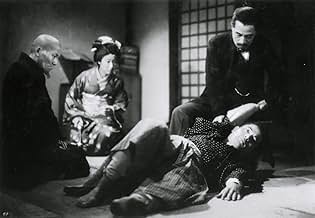
Susumu Fujita, Denjirô Ôkôchi, Yukiko Todoroki, and Ryûnosuke Tsukigata in La légende de judo (1943)
japonaisActionAventureDrame

Ajouter une intrigue dans votre langueSugata, a young man, struggles to learn the nuance and meaning of judo, and in doing so comes to learn something of the meaning of life.Sugata, a young man, struggles to learn the nuance and meaning of judo, and in doing so comes to learn something of the meaning of life.Sugata, a young man, struggles to learn the nuance and meaning of judo, and in doing so comes to learn something of the meaning of life.

  • Réalisation
    • Akira Kurosawa
  • Scénaristes
    • Akira Kurosawa
    • Tsuneo Tomita
  • Stars
    • Denjirô Ôkôchi
    • Susumu Fujita
    • Yukiko Todoroki
  • Voir les informations de production sur IMDbPro
  • NOTE IMDb
    6,7/10
    6,1 k
    MA NOTE
    • Réalisation
      • Akira Kurosawa
    • Scénaristes
      • Akira Kurosawa
      • Tsuneo Tomita
    • Stars
      • Denjirô Ôkôchi
      • Susumu Fujita
      • Yukiko Todoroki
    • 42avis d'utilisateurs
    • 29avis des critiques
  • Voir les informations de production sur IMDbPro
  • Voir les informations de production sur IMDbPro
  • Photos75

    Voir l'affiche
    Voir l'affiche
    Voir l'affiche
    Voir l'affiche
    Voir l'affiche
    Voir l'affiche
    Voir l'affiche
    + 68
    Voir l'affiche

    Casting principal18

    Modifier
    Denjirô Ôkôchi
    Denjirô Ôkôchi
    • Shogoro Yano
    Susumu Fujita
    Susumu Fujita
    • Sanshiro Sugata
    Yukiko Todoroki
    Yukiko Todoroki
    • Sayo Murai
    Ryûnosuke Tsukigata
    Ryûnosuke Tsukigata
    • Gennosuke Higaki
    Takashi Shimura
    Takashi Shimura
    • Hansuke Murai, Sayo's father
    Ranko Hanai
    Ranko Hanai
    • Osumi Kodana
    Sugisaku Aoyama
    Sugisaku Aoyama
    • Tsunetami Iinuma
    Ichirô Sugai
    Ichirô Sugai
    • Police Chief Mishima
    Yoshio Kosugi
    • Master Saburo Monma
    Kokuten Kôdô
    Kokuten Kôdô
    • Buddhist Priest
    Michisaburô Segawa
    • Hatta
    • (as Michisaburo Segawa)
    Akitake Kôno
    Akitake Kôno
    • Yoshimaro Dan
    Sôji Kiyokawa
    Sôji Kiyokawa
    • Yujiro Toda
    Kunio Mita
    • Kohei Tsuzaki
    Akira Nakamura
    • Toranosuke Niizeki
    Eizaburô Sakauchi
    • Nemeto
    Hajime Hikari
    • Torakichi
    Ichirô Ryûzaki
    • Monma's pupil
    • (non crédité)
    • Réalisation
      • Akira Kurosawa
    • Scénaristes
      • Akira Kurosawa
      • Tsuneo Tomita
    • Toute la distribution et toute l’équipe technique
    • Production, box office et plus encore chez IMDbPro

    Avis des utilisateurs42

    6,76.1K
    1
    2
    3
    4
    5
    6
    7
    8
    9
    10

    Avis à la une

    8crossbow0106

    Good Early Kurosawa

    A movie which gets better as it goes along, this is essentially a story about judo matches and honor. The fight scenes are good, they have a good level of tension. You see some elements to Kurosawa's film making here, like pointing the camera up at the sky, that he has used to even greater effect since. There is a love story here too, in the character Cree's opponents daughter, Siu. My copy of this film left some to be desired, in that the subtitles are not perfect, and it is not a great transfer, but this film has been on IFC, and that is the more recommended way I suggest you see this film. Not perfect, but it holds your interest, and it is Kurosawa, which is enough of an endorsement to watch any film.
    8Quinoa1984

    a kind of prototype for Kurosawa's future films, aside from being a fine debut

    There's a great small scene about ten to fifteen minutes into Sanshiro Sugata where the young and inexperienced Sugata, who has just gotten into a turbulent street-fight, is told by a judo instructor- the one he wants to be his instructor- that he has no humanity, at least not to be fighting Judo, and that giving judo skills to one without humanity is "like giving a knife to a lunatic." Did Akira Kurosawa know that one of his paramount concerns as a filmmaker would be to tell stories where characters were faced with this problem, of either gaining appropriate humanity, or losing it, or having the difficult but rewarding task of embracing it for him/herself? Probably not exactly, at the least that his other end of the career spectrum- Madadayo- would be precisely concerned with this ideal, of a man having to deal with self worth, and the skills that one's been given in life properly and with humility (and, in essence, Kurosawa himself as a director). But it's of interesting note, at least in the scope of his first film, Sanshiro Sugata (Judo Saga), which contains many of the trademarks of a Kurosawa film, and at the same time the fiery passion, if only in big spurts, of a filmmaker right on the edge of a career for Toho studios.

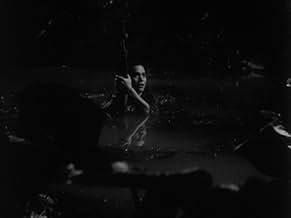
    There are little notes to take for Kurosawa fans, little things that will give many a grin and even a laugh at what pops up: the classic "wipes" as means of scene transitions; the usage of slow-motion during an action/fight sequence, in this case at the end of a fight as the opponent conks out and the flag (this part in slow-motion) falls to the ground; Takashi Shimura, who appeared in more Kurosawa films than Mifune, as one of Sugata's opponents, who's a tough cookie but a fair fight who at the end gives Sugata praise as a great fighter; symbolism in usage of the sky, flowers, and other Earthly means as a way to communicate the environment of a scene, and a specific nature about it, as much as the characters in it. All the same, this is not to say that Sanshiro Sugata is exactly a masterwork right off the bat for the 32 year old filmmaker; the use of certain symbols, like when Sugata is in the mucky pond trying to have his own form of penance and snaps out of it once seeing a flower right in front of his face, isn't really as effective as intended and comes off as more of a cliché than anything else. The subplot with Sugata and the daughter is undercooked as romance, even as brief as it is. And the fact that the film now stands as missing 17 minutes is a hindrance; one has to comment on what remains as opposed to what could have been a complete work from Kurosawa (not as detrimental as the Idiot, but still bothersome all the same as in the title-card transitions).

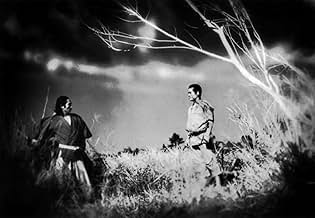
    But as an act of passionate action film-making, it stands its ground some 60+ years later in containing some intense scenes involving Sugata's training (I liked seeing Sugata coming face to face with a man who wants to challenge his boss, and dressed in more Western garb than anyone else in the film), and more specifically the actual fight scenes. While its a given that Kurosawa is a pro at getting down stubborn men- and professional traditionalist men for that matter- getting down and dirty and violent, it's impressive in hindsight from the rest of his career that he could add tension just by tilting the camera up during the street-fight, or in staying on the faces of the fighters, and numerous reaction shots, during the fights in the arena area. The Shimura fight especially has an aura of being as thrilling as a modern fight sequence, with aforementioned humanity coming through with every pummel and thrust and toss-up of one character over another. This all leads up to the climax, which is not only a highlight of the film but a highlight in the history of classic Japanese action sequences, as we see Kurosawa already relying on the sky, the grass pushed and pulled by wind, and the compassion of the others around the two opponents (the old man and the girl) as a fight to the death, seen mostly out of sight through the grass, proceeds intensely more due to the intent and emotion of the characters than traditional stunts and fast-pace editing.

    Sanshiro Sugata is a worthy production in the cinematic cannon of Kurosawa, acting as a very good stand-alone effort for genre fans while speaking to his practically intuitive cinematic strengths at controlling the pace of a scene and meaning via certain visual cues and enjoyable performances garnered by the pro actors. It does show some of its age, and along with the cuts made in the only version available today (in a print, by the way, that is rather horrid considering who the director is) it had to face some given restrictions due to Japan's censorship laws, but it's also a cunning display of a debut showcasing the talents of a confident director in a film that was meant to be seen by a mass audience, if only for diversion during the war.
    moonisgod

    Outstanding from Akira

    Sugata sanshiro is a wonderful feel-good film. It's tough to say that about a movie with martial arts where violence abounds, but Kurosawa's subtle approach to character development and mood carry this film above and beyond. Even those who don't look for the art in films will see the beauty of this direction. The definition of characters is difficult to follow in the early scenes, but Susumu Fujita does a marvelous job with his portrayal of an-unsure judo student. Definitely a film that deserves your full attention.
    9artzau

    Excellent

    This film was Kurasawa's big splash. The story based on the legends of Shiro Sakata, Jigoro Kano's (the founder of Kodokan Judo) bad boy is told with the art that only Kurasawa could muster. Fantastic camera work, tense and controlled action and done when Japan was losing the war. The film was competently remade in the early 60's with Mifune and Koyama. But, Koyama could not capture the simple intensity of Fujita in the original title role. A great monument to one of the greatest directors of all times, this film must be seen more than once to be thoroughly enjoyed.
    7patryk-czekaj

    Notable debut by the master of craft

    Though the story presented in Sugata Sanshiro might not be the most appealing one, it's still a considerably enjoyable tale about the beginnings of Judo and its most prominent representative, the titular Sugata (played by Susumu Fujita, in a role that earned him a notable spot in the Japanese cinematic history). It's a simple and modest, but a truly elaborate and serious tale of one man's difficult journey to martial arts stardom. In order to find peace in life and achieve perfection in the craft that he's been practicing for some time, Sanshiro needs to come to terms with his own emotions and find a right path, which might eventually lead him to the desired golden mean.

    Based on a best-selling novel, Sugata Sanshiro established the reputation of Kurosawa, and made him a prominent figure in the filmmaking business. Though it's far from being a genuine masterpiece, the film still shows the director's steady hand and is the admirable proof of his awe-inspiring versatility.

    To become the master of martial arts is an uneasy task, and Sanshiro learns the lesson in the first minutes of the picture. Trying to join a clan of Jujitsu fanatics, he quickly realizes that they're just a bunch of up to no good coxcombs. Seeing how easily Yano (Denjirô Ôkôchi), the originator and master of Judo, defeated the group, Sanshiro decides to become his student. To become a proficient Judo technician the young, strong-willed, yet somehow reckless Sugata must overcome many of his weaknesses and find out the meaning of a warrior's way, thus learning the true meaning of life. The student, struggling to accustom himself to the situation, is constantly tested by his master, in many more or less laborious ways. And when the time comes, Sanshiro is finally able to take part in tournaments, in order to prove his indisputable technique and unrestrained power. On his way Sanshiro meets a mysterious, elegant, devilish man by the name of Hagaki (Ryûnosuke Tsukigata), who's like a shadow that's been following Sugata everywhere that he goes. Ironically so, the man - with his familiar look and specifically evil attitude - comes as a typical dark character, taken straight out of a superhero movie. In the film's most climatic and disquieting sequence, the two rivals participate in a duel that will determine who's the strongest living martial artist.

    For all the lovers of Japanese culture, and for all the adepts of Asian martial arts, Sugata Sanshiro will definitely be a worthy film experience. For the rest it might be an insightful, valuable, and well-crafted period drama that's not only full of perfectly choreographed action scenes, but also full of humane qualities that prove to have an authentic meaning even in the modern times.

    Vous aimerez aussi

    La légende de judo II
    6,0
    La légende de judo II
    Les hommes qui marchèrent sur la queue du tigre
    6,7
    Les hommes qui marchèrent sur la queue du tigre
    Je ne regrette pas ma jeunesse
    7,1
    Je ne regrette pas ma jeunesse
    Un merveilleux dimanche
    7,2
    Un merveilleux dimanche
    Le Plus dignement
    5,6
    Le Plus dignement
    L'ange ivre
    7,6
    L'ange ivre
    Le duel silencieux
    7,3
    Le duel silencieux
    Scandale
    7,2
    Scandale
    Vivre dans la peur
    7,3
    Vivre dans la peur
    Les bas-fonds
    7,2
    Les bas-fonds
    L'idiot
    7,1
    L'idiot
    Chien enragé
    7,8
    Chien enragé

    Centres d’intérêt connexes

    Hidetoshi Nishijima and Tôko Miura in Drive My Car (2021)
    japonais
    Bruce Willis and Taniel in Piège de cristal (1988)
    Action
    Still frame
    Aventure
    Naomie Harris, Mahershala Ali, Janelle Monáe, André Holland, Herman Caheej McGloun, Edson Jean, Alex R. Hibbert, and Tanisha Cidel in Moonlight (2016)
    Drame

    Histoire

    Modifier

    Le saviez-vous

    Modifier
    • Anecdotes
      When asked about his experience filming his debut movie, Akira Kurosawa said "I simply enjoyed it. I went to sleep each night looking forward eagerly to the next day's shooting, and there was absolutely nothing painful in the experience... the whole task was carried out with a feeling of ease."
    • Citations

      Sanshiro Sugata: The spirits of heaven and earth congregate in our nation of gods. For us they have built Mt. Fuji that towers for eternity. For us they have brought water to flow around our islands. For us they have created the beauty of cherry blossoms...

      [he stops and remembers Sayo]

      Buddhist Priest: [hits Sanshiro on the head] Idiot! This is an important match. What the hell are you thinking?

      Sanshiro Sugata: I can't do it. I can't win.

      Buddhist Priest: What? Are you afraid of Hansuke Murai?

      Sanshiro Sugata: No. Someone stands between him and me.

      Buddhist Priest: Who?

      Sanshiro Sugata: His daughter.

      Buddhist Priest: You love her?

      Sanshiro Sugata: No. It's not that. Priest, I saw her praying selflessly for her father. It was beautiful and I was touched. That's the problem. How can I overcome it?

      Buddhist Priest: Stupid! Be pure and innocent like her.

      Sanshiro Sugata: I can't.

      Buddhist Priest: You can. You once were.

      Sanshiro Sugata: When?

      Buddhist Priest: [pointing to the pond] Sanshiro Sugata found new life there. Have you forgotten? What is your life, Sanshiro?

    • Versions alternatives
      Although originally released in Japan at 97 minutes, it was re-edited and re-released in Japan in 1952 at 80 minutes. This 80-minute version is all that is currently available, and it includes some slight changes in the film's structure as well as its running time.
    • Connexions
      Featured in Kurosawa: The Last Emperor (1999)

    Meilleurs choix

    Connectez-vous pour évaluer et suivre la liste de favoris afin de recevoir des recommandations personnalisées
    Se connecter

    FAQ14

    • How long is Sanshiro Sugata?Alimenté par Alexa

    Détails

    Modifier
    • Date de sortie
      • 11 janvier 2006 (France)
    • Pays d’origine
      • Japon
    • Langue
      • Japonais
    • Aussi connu sous le nom de
      • La légende du grand judo
    • Lieux de tournage
      • Toho Studios, Tokyo, Japon(Studio)
    • Sociétés de production
      • Toho Film (Eiga) Co. Ltd.
      • Toho
    • Voir plus de crédits d'entreprise sur IMDbPro

    Spécifications techniques

    Modifier
    • Durée
      • 1h 19min(79 min)
    • Couleur
      • Black and White
    • Mixage
      • Mono
    • Rapport de forme
      • 1.37 : 1

    Contribuer à cette page

    Suggérer une modification ou ajouter du contenu manquant
    • En savoir plus sur la contribution
    Modifier la page

    Découvrir

    Récemment consultés

    Activez les cookies du navigateur pour utiliser cette fonctionnalité. En savoir plus
    Obtenir l'application IMDb
    Identifiez-vous pour accéder à davantage de ressourcesIdentifiez-vous pour accéder à davantage de ressources
    Suivez IMDb sur les réseaux sociaux
    Obtenir l'application IMDb
    Pour Android et iOS
    Obtenir l'application IMDb
    • Aide
    • Index du site
    • IMDbPro
    • Box Office Mojo
    • Licence de données IMDb
    • Salle de presse
    • Annonces
    • Emplois
    • Conditions d'utilisation
    • Politique de confidentialité
    • Your Ads Privacy Choices
    IMDb, une société Amazon

    © 1990-2025 by IMDb.com, Inc.