

Un vendeur d'assurances se laisse entraîner par une femme au foyer séduisante dans un stratagème frauduleux de meurtre et d'assurance qui suscite la suspicion d'un enquêteur en assurance.Un vendeur d'assurances se laisse entraîner par une femme au foyer séduisante dans un stratagème frauduleux de meurtre et d'assurance qui suscite la suspicion d'un enquêteur en assurance.Un vendeur d'assurances se laisse entraîner par une femme au foyer séduisante dans un stratagème frauduleux de meurtre et d'assurance qui suscite la suspicion d'un enquêteur en assurance.
- Réalisation
- Scénaristes
- Stars
- Nommé pour 7 Oscars
- 5 victoires et 9 nominations au total



- Stage Hand
- (non crédité)
- Pullman Porter
- (non crédité)
- Bit Part
- (non crédité)


- Train Conductor
- (non crédité)

- Conductor
- (non crédité)

- Nettie - Dietrichsons' Maid
- (non crédité)

- Norton's Secretary
- (non crédité)
Résumé
Avis à la une
best American Film Noir ever made
Movie Heaven, Baby
One of the best films noir ever, Double Indemnity communicates with amazing effectiveness the depths of depravity, greed, lust, and betrayal of the seemingly innocent and beautiful.
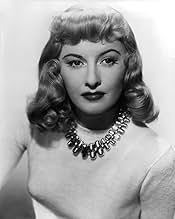
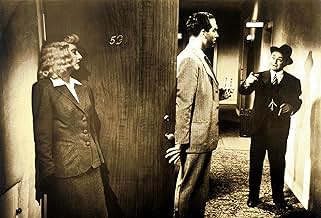
Barbara Stanwyck, in one of the most remembered performances of her extensive career, represents (with nearly flawless ease) the cold and ruthless manipulator who has no difficulty in ruining other people's lives in various ways (including death, if necessary) in order to get what she wants. Known in the film community as the `femme fatale,' this is someone who uses her sexual prowess, seductiveness, and emotional detachment to drag an unsuspecting person (generally an interested man) into a scheme from which she is expected to benefit heavily and he is most likely headed for destruction. In these types of films, the man often either finds his life in ruins or ends up dead, as is often (but not always) also the case with the fate of the femme fatale.
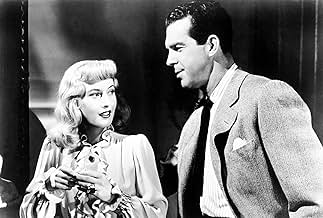
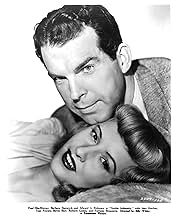
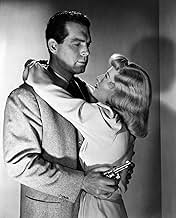
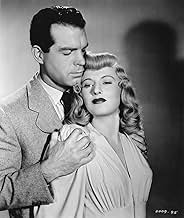
Barbara Stanwyck (as Phyllis Dietrichson, the murderous femme fatale in Double Indemnity) and Fred MacMurray (as Walter Neff, her victim'), have amazing chemistry on screen. Their attraction is incredibly well portrayed, and the development of their relationship with each other is so convincing that what happens between them almost seems normal. Besides that, their mutually calculated interaction, although it seems at first like it has been rehearsed endlessly and ultimately brought unconvincingly to the screen, is exactly as it was meant to be, because it represents each character's intentions, even very subtly foreshadowing their future betrayals against each other. Phyllis has gone through every word she ever says to Walter in her head. She has practiced what she wants to say when she brings up the idea of life insurance to Walter in the beginning and she knows what she wants to say whenever they interact with each other because she has been planning for quite some time the prospect of murdering her husband in order to collect his fortune. Walter, conversely, methodically makes amorous advances as though this is something that he does regularly, and then ultimately he also plans out his conversations with Phyllis because he begins to suspect her and is sure to tell her only what he wants her to hear. This seemingly stiff dialogue brilliantly represents Phyllis and Walter's precise (and sinister) intentions, and it's quick pace creates a feeling of urgency and restlessness.
Probably the most fascinating and entertaining actor in the film, Edward G. Robinson, plays Barton Keyes, Walter's friend and employer at the insurance company where he works. Keyes is a very suspicious man who closely investigates the insurance claims which come into the company, having a striking history of accurately isolating fraudulent claims and throwing them out. His handling of Phyllis's (and Walter's, technically) claim and the way that he gets closer and closer to the truth create a great atmosphere of tension and drama.
Double Indemnity is nearly flawless. From the shocking and unexpected beginning to the already known but still surprising end, the audience is held rapt by the excellent performances, the brilliant and imaginative direction, and the flawlessly created atmosphere. This is excellent, excellent filmmaking, and is a classic film that should not be missed.
The Not-So-Perfect Crime
The film begins in present day giving insight into Walter's current plight. Walter Neff gives the voice over as the plot unfolds. It starts in the present time allowing the audience to know what crime has happened without the interesting details to support it. This is an interesting twist to the common film noir plot. Knowing the crime at hand keeps the audience hungry for those details. Walter is the victim of the beautiful woman who manipulates him into pulling off a murderous insurance fraud scam. Walter is an impeccable insurance salesman and Phyllis, in some ways, forces him into providing her with what she needs. Phyllis is the typical femme fatale' who has no problem in using others to get what she wants.
Throughout the film Walter is completely enamored by Phyllis. Walter could have coined the pet name baby' with his fondness towards Phyllis by calling her that throughout the film. He is easily distracted by her beauty and evil charm. He seems to be entranced by Phyllis's ankle bracelet, so much that he mentions it numerous times. This allows the audience to feel the sexual tension between the two. Phyllis, on the other hand, shows the audience that she can use and abuse anyone who gets in her way. While believably attracted to Walter, Phyllis keeps him hopping to fulfill her needs. She pulls him in and handles him like a puppet. She is the epitome of the film noir genre's femme fatale'.
Barton Keyes, played by Edward G. Robinson, is Walter's co-worker and friend at the insurance company where he works. Barton closely investigates all insurance claims that come across his desk. While at one time Walter assuredly agreed with this practice, once Barton starts to unravel the mystery behind Mrs. Dietrichson's insurance claim, we begin to see just how nervous and paranoid Walter is. Walter then begins to see Phyllis in a whole new light. Barton plays the integral part by piecing together details that are thrown around throughout the film. This keeps the tension high for the filmgoer. These details are pieced together perfectly through to the end.
Double Indemnity has the perfect plot with the perfect cast. Walter and Phyllis' attraction are tasty and the crime is wonderfully puzzling. Double Indemnity is the true film noir giant.
A Noir Classic
Like POSTMAN, INDEMNITY offers the story of a married woman who plots with her lover to murder her husband. Given MacMurray's typically "good guy" image, I didn't expect to believe him in the role of Walter Neff in the role of skirt-hungry Walter Neff--but MacMurray's performance is exceptionally good here, and all the more effective because it so completely unexpected. But while MacMurray has most of the screen time, it is really Stanwyck and Edward G. Robinson who dominate the film. Stanwyck is truly memorable here, and gives us a woman who seems at once sexed-up and completely frigid, at once completely natural and absolutely artificial. It is a remarkable and often disturbing effect. Robinson, who endured decades of type-casting, is equally good as the blustery, slightly comic, and absolutely honest insurance man whose job it is to ferret out suspicious claims; it is largely due to his performance, which gives the film a moral center, that we are able to buy into the otherwise off-beat performances that drive the action.
This was one of director Billy Wilder's first major hits, and he deserves considerable credit for making the weird elements of the story work as a whole, keeping the film smartly paced, and heaping it up with atmosphere. So influential that its impact would be difficult to over-estimate, DOUBLE INDEMNITY is a touchstone for the entire film noir genre. Recommended.
Gary F. Taylor, aka GFT, Amazon Reviewer


Le saviez-vous
- AnecdotesAuthor James M. Cain later admitted that if he had come up with some of the solutions to the plot that screenwriters Billy Wilder and Raymond Chandler did, he would have employed them in his original novel.
- GaffesWhen Walter first kisses Phyllis, a wedding ring can be seen on Walter's hand. Fred MacMurray was married, and the ring was not noticed until post-production.
- Citations
[last lines]
Walter Neff: Know why you couldn't figure this one, Keyes? I'll tell ya. 'Cause the guy you were looking for was too close. Right across the desk from ya.
Barton Keyes: Closer than that, Walter.
Walter Neff: I love you, too.
- Crédits fousOpening credits are shown over a silhouette of a man on crutches, walking toward the camera.
- ConnexionsEdited into Les cadavres ne portent pas de costard (1982)
Meilleurs choix
Détails
- Date de sortie
- Pays d’origine
- Site officiel
- Langue
- Aussi connu sous le nom de
- Pacto de sangre
- Lieux de tournage
- 6301 Quebec Drive, Hollywood Hills, Los Angeles, Californie, États-Unis(Dietrichson house)
- Société de production
- Voir plus de crédits d'entreprise sur IMDbPro
Box-office
- Budget
- 927 262 $US (estimé)
- Montant brut mondial
- 21 900 $US
- Durée
- 1h 47min(107 min)
- Couleur
- Rapport de forme
- 1.37 : 1