Visez cette voiture de police
Titre original : 'Jûsangô taihisen' yori: Sono gosôsha o nerae
NOTE IMDb
6,6/10
1,5 k
MA NOTE

Ajouter une intrigue dans votre langueA prison truck is assaulted and the two convicts inside are murdered. The prison guard on duty gets suspended for negligence and takes it upon himself to track down the killers.A prison truck is assaulted and the two convicts inside are murdered. The prison guard on duty gets suspended for negligence and takes it upon himself to track down the killers.A prison truck is assaulted and the two convicts inside are murdered. The prison guard on duty gets suspended for negligence and takes it upon himself to track down the killers.
- Réalisation
- Scénaristes
- Stars



6,61.4K
1
2
3
4
5
6
7
8
9
10
Avis à la une
An absurdity set to jazz music
Great opening, but got messy quickly, and ultimately was an unsatisfying 79 minutes. The frumpled lead character (48 year old Michitaro Mizushima) reminded me a little of Glenn Ford in The Big Heat and the befuddling, often nonsensical plot reminded me of The Big Sleep, but Seijun Suzuki's work lacks the star power and atmosphere of those films. Questions piled up for me as I watched, and not just about the sequence of events from one scene to the next, but about basic character motivations for pretty much all of these people. The grand reveal of Akiba near the end was silly and a letdown too.
I never began actively disliking it though, because I never really knew what Suzuki was going to put on the screen next. There's a topless stripper shot in the chest with an arrow, and a James Bond like escape from an attempted execution (when of course a simple bullet would have made so much more sense). One of the mysterious young women being tracked down loves American rock 'n' roll, and has a gang of teenage friends pile out of car to protect her. There are several murders, but the main character believes in the goodness in people, and improbably the beautiful young femme fatale (Misako Watanabe) softens and falls in love with him. It's an absurdity set to a jazzy soundtrack and doesn't really work, but somehow held my interest. You can do better though.
I never began actively disliking it though, because I never really knew what Suzuki was going to put on the screen next. There's a topless stripper shot in the chest with an arrow, and a James Bond like escape from an attempted execution (when of course a simple bullet would have made so much more sense). One of the mysterious young women being tracked down loves American rock 'n' roll, and has a gang of teenage friends pile out of car to protect her. There are several murders, but the main character believes in the goodness in people, and improbably the beautiful young femme fatale (Misako Watanabe) softens and falls in love with him. It's an absurdity set to a jazzy soundtrack and doesn't really work, but somehow held my interest. You can do better though.
Take Aim at the Convoluted Plot
Suzuki would go on to do wonders with abstraction and suggestive atmosphere in his later films but this is mostly a compact potboiler that doesn't have any time to spare. In fact there's so much plot here we need to get inside the protagonist's head to hear him try and clear some of it out. Voice-over narration tells us that "Fuychita had a sister, she's my next lead" and we're immediately transported to a tavern where that sister may be spotted. The movie jumps like that from place to place and character to character, gathering very little as it does but a growing number of names and intertwining relationships which are only as meaningful as the next person or clue they lead us to, and then at some point a sharpshooter is shooting at the protagonist and an underground prostitution ring is revealed. This is the kind of movie where people are presumed dead only to reappear later, where the protagonist goes back to his place to find a key character waiting for him in his living room with no explanations given or asked, and where the bad guys stage an elaborate death for the protagonist and his girl to escape when two bullets would have sufficed. It's not film noir by the American standard of the term and it's not even film noir compared to some of the stuff Teruo Ishii was doing at the time in Shintoho studios. It's a comic-book murder mystery with onedimensional characters and convoluted plot (one to make up for the other), a couple of cool scenes, and a swinging jazzy score. Like a dimestore viper novel, it keeps you turning the page but you know you're reading something mostly cheap and disposable by the end of it.
A Pretty Good Mystery Film
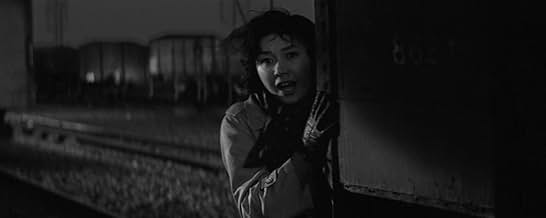
This film begins with a bus carrying two convicts to prison being ambushed by a man with a rifle which results in both of the prisoners being killed. Outraged about this incident, the authorities quickly suspend the prison guard responsible for the prisoner transport by the name of "Daijiro Tamon" (Michitaro Mizushima). So, with nothing but time on his hands, Daijiro goes about investigating the ambush and what clues he finds eventually leads him to a company known as the Hamaju Agency which is being temporarily run by a young woman by the name of "Yuko Hamajima" (Misako Watanabe). What he doesn't realize, however, is that the closer his investigation gets to the culprit behind the murders, the more dangerous it becomes for him. Now, rather than reveal any more, I will just say that this turned out to be a decent film due in large part to the mystery involved along with some good suspense here and there as well. Admittedly, there are some parts of the plot that are a bit unrealistic, but even so, I enjoyed this movie for the most part and I have rated it accordingly. Slightly above average.
A Disgraced Guard and a Feminist Businesswoman Try to Stop a Mysterious Killing Spree
Take Aim at the Police Van, originally known as Jûsangô taihisen' yori: Sono gosôsha o nerae, is a Japanese film noir that unfolds as an investigative thriller through seventy-nine minutes. The movie was made by renowned director Seijun Suzuki who had become a regular choice for Nikkatsu Studios by the early sixties before experimenting wildly with visual effects and being kicked out in 1967. Mizushima Michitaro incarnates the film's sincere protagonist and his grounded depiction provides much depth to the film while his acting experience of thirty-five years makes for a charismatic screen presence throughout. He is paired up with rising star Watanabe Misako who shines as charismatic feminist with remarkable courage, smart decisions and dedicated independence.
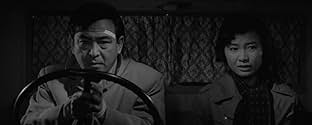
In this particular film, Mizushima Michitaro plays a guard who is supposed to bring a group of prisoners to a new location in the middle of the night. The van gets ambushed and two prisoners are brutally murdered. The guard is suspended for six months and decides to investigate the motive behind those assassinations. He starts by observing a third prisoner who survived the ordeal who seems to have ties to a shady call girl agency. Said agency is led by an enigmatic young woman whose father is in jail. She starts investigating the mysterious case as well as she believes a mysterious concurrent called Akiba might be the mastermind behind the crimes. The disgraced guard and the ambitious businesswoman team up in order to make justice prevail despite opposition from arrogant police officers and nagging business partners alike.
This film noir convinces on several levels. The movie oozes with sinister atmosphere thanks to excellent lighting techniques, gloomy camera work and appropriate settings on isolated roads in the middle of the night or in decaying industrial areas on the outskirts of rapidly developing towns. The acting performances are great as Mizushima Michitaro convinces as unusually old lead actor while Watanabe Misako is ahead of her time by portraying a strong feminist femme fatale. The film's finale is particularly intense and will leave a lasting emotional impression upon genre fans, thus bringing the movie full circle as it reconnects to its gripping overture.
However, this film is also weaker than many other Japanese films noirs that saw the light of day in the late fifties and early sixties. Despite its short running time, the movie has noticeable lengths and especially its middle section drags on for far too long. The script is thin and takes much time to unfold between the intense opening ten minutes and the conciliatory final ten minutes. The film's side characters remain shallow and the supporting actors and actresses aren't given any chance to showcase their talents significantly.
At the end of the day, the coolest thing about Take Aim at the Police Van, originally known as Jûsangô taihisen' yori: Sono gosôsha o nerae, might actually be its catchy title. Its gloomy atmosphere, excellent lead actress and lead actor as well as its gripping opening and closing scene keep this film from drowning in mediocrity. The middle section's exhausting lengths, weak script and shallow side characters incarnated by a cast that fails to stand out reduce this movie to a film noir that only just qualifies as good average movie that tends to be slightly overrated in hindsight. My sincere recommendation is to watch several other Japanese genre films of the same era instead while this particular film here is only of interest for adamant fans of the lead actor, the lead actress and the controversial director in particular.
In this particular film, Mizushima Michitaro plays a guard who is supposed to bring a group of prisoners to a new location in the middle of the night. The van gets ambushed and two prisoners are brutally murdered. The guard is suspended for six months and decides to investigate the motive behind those assassinations. He starts by observing a third prisoner who survived the ordeal who seems to have ties to a shady call girl agency. Said agency is led by an enigmatic young woman whose father is in jail. She starts investigating the mysterious case as well as she believes a mysterious concurrent called Akiba might be the mastermind behind the crimes. The disgraced guard and the ambitious businesswoman team up in order to make justice prevail despite opposition from arrogant police officers and nagging business partners alike.
This film noir convinces on several levels. The movie oozes with sinister atmosphere thanks to excellent lighting techniques, gloomy camera work and appropriate settings on isolated roads in the middle of the night or in decaying industrial areas on the outskirts of rapidly developing towns. The acting performances are great as Mizushima Michitaro convinces as unusually old lead actor while Watanabe Misako is ahead of her time by portraying a strong feminist femme fatale. The film's finale is particularly intense and will leave a lasting emotional impression upon genre fans, thus bringing the movie full circle as it reconnects to its gripping overture.
However, this film is also weaker than many other Japanese films noirs that saw the light of day in the late fifties and early sixties. Despite its short running time, the movie has noticeable lengths and especially its middle section drags on for far too long. The script is thin and takes much time to unfold between the intense opening ten minutes and the conciliatory final ten minutes. The film's side characters remain shallow and the supporting actors and actresses aren't given any chance to showcase their talents significantly.
At the end of the day, the coolest thing about Take Aim at the Police Van, originally known as Jûsangô taihisen' yori: Sono gosôsha o nerae, might actually be its catchy title. Its gloomy atmosphere, excellent lead actress and lead actor as well as its gripping opening and closing scene keep this film from drowning in mediocrity. The middle section's exhausting lengths, weak script and shallow side characters incarnated by a cast that fails to stand out reduce this movie to a film noir that only just qualifies as good average movie that tends to be slightly overrated in hindsight. My sincere recommendation is to watch several other Japanese genre films of the same era instead while this particular film here is only of interest for adamant fans of the lead actor, the lead actress and the controversial director in particular.
Shootin Vans & Chewing Bubble Gum
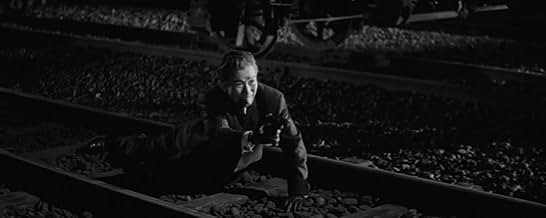
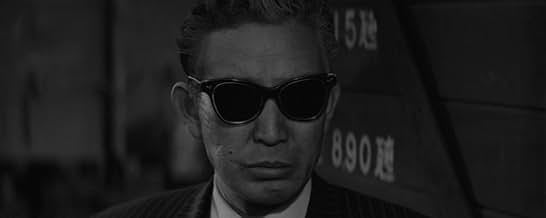
An exceptionally well-shot if bitterly average and utterly bewildering mystery, Take Aim at the Police Van marks the very early days for Seijun Suzuki, far less abstract than what I've heard about his more well-known works. He's shooting to a formula but delivering where it matters, be it the woman killed by an arrow to the boob or the faceless gunman who lovingly strokes his rifle's stock before sticking his bubblegum atop its scope. It's a film I wish was slightly more cohesive (and less jazzy) than it is but Police Van benefits from the endless swagger of its lead and fun filmmaking flourishes to stop it from being a frustrating or bad time. A testament to how artists pumping out quickie exploitation movies can often work in truths about their times that prestige filmmakers can't.


Le saviez-vous
- AnecdotesA trail of gasoline poured on the ground as depicted here, would burn at only about three miles per hour, or about the pace of a brisk walk. This velocity was tested on Trail Blazers (2007).
- GaffesIn the opening scenes, the prisoner's handcuffs are so loose that he could easily slip his hand through.
- ConnexionsFeatured in Best in Action: 1960 (2018)
Meilleurs choix
Connectez-vous pour évaluer et suivre la liste de favoris afin de recevoir des recommandations personnalisées
Détails
- Date de sortie
- Pays d’origine
- Langue
- Aussi connu sous le nom de
- Take Aim at the Police Van
- Société de production
- Voir plus de crédits d'entreprise sur IMDbPro
- Durée
- 1h 19min(79 min)
- Couleur
- Rapport de forme
- 2.35 : 1
Contribuer à cette page
Suggérer une modification ou ajouter du contenu manquant