NOTE IMDb
6,5/10
9 k
MA NOTE
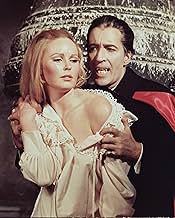
Ajouter une intrigue dans votre langueAfter a Monsignor accidentally brings Count Dracula back from the dead while exorcising his castle, the vampire preys on the holy man's beautiful niece and her friends.After a Monsignor accidentally brings Count Dracula back from the dead while exorcising his castle, the vampire preys on the holy man's beautiful niece and her friends.After a Monsignor accidentally brings Count Dracula back from the dead while exorcising his castle, the vampire preys on the holy man's beautiful niece and her friends.
- Réalisation
- Scénaristes
- Stars
- Récompenses
- 1 nomination au total
Christopher Cunningham
- Farmer
- (as Chris Cunningham)
Carrie Baker
- First victim
- (non crédité)
Donald Campbell
- Tavern Customer
- (non crédité)
Frank Forsyth
- Villager
- (non crédité)
Lindsay Hooper
- Tavern Customer
- (non crédité)
Philip Stewart
- Tavern Customer
- (non crédité)
John Timberlake
- Tavern Customer
- (non crédité)
6,58.9K
1
2
3
4
5
6
7
8
9
10
Avis à la une
Dracula is back!
Sporting the ultra camp title - "Dracula Has Risen From the Grave", this is a solid entry in Hammer's Dracula series. What I love about Hammer is that they aren't afraid to take an existing story and play around with it to create something new. Even if the idea behind is less than brilliant and most studios would have shied away, Hammer approach it with gusto, and the results are always good natured, easy viewing that's hard to dislike. This film follows Count Dracula as he is resurrected shortly after the priest, Ernst Muller, exorcises his castle. Dracula doesn't take this sort of behaviour lightly, and so decides to take on revenge on the holy man - by taking his niece as his bride!
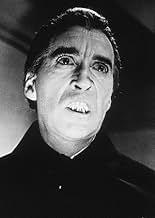
Dracula is one of the greatest characters ever to be written and portrayed on screen, and it's also one that Christopher Lee has become famous for playing. Unfortunately, Christopher Lee doesn't have a great deal of screen time in this flick; but every moment he is on screen is a highlight and, as usual, he does well with the role and proves that he is the only man other than Bela Lugosi to do it right. Freddie Francis (Dr Terror, The Creeping Flesh) directs this film and succeeds in creating a morbid and fascinating atmosphere that bodes well with the subject material on hand. The film is stylishly shot, and features some of the best use of lighting ever seen in a Hammer film. The camp style that the studio is famous for is here by the bucket load too, and that can only be a good thing. This is hardly Hammer's finest hour, however; the film is relatively slow to start, and the story isn't the most inventive ever to come from the studio - but Hammer fans will enjoy it, and I would have no qualms with recommending this as a decent waste of your time.
fairly good Hammer Dracula entry
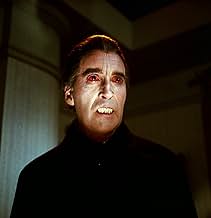
Early on, "Dracula Has Risen from the Grave" made me feel uneasy... From the scenes of a Monsignor (Rupert Davies) traveling with a priest to perform an exorcism on Castle Dracula in order to bring the superstitious (ha!) congregation back to church on Sunday, to the romantic subplot between a scholarly baker and the Monsignor's daughter, and a distinct lack of Drac, I began to wonder if I was being shortchanged by a title that looked to just capitalize on the success of the Hammer Dracula films. However, the more I kept with it, the more I enjoyed "Grave"--the above-mentioned plot threads, which at first seem corny, are interwoven with delicate skill by director Freddie Francis; the characters and their conflicts are surprisingly endearing (including an angle that brings atheism into the mix); and Christopher Lee is in fine form as the brooding, red-eyed Count (though the production suffers from the absence of frequent co-star Peter Cushing).
Gorgeous visuals and sumptuous settings but a weak script...
A weak script doesn't hinder "Dracula Has Risen from the Grave" from being absorbing most of the way. It has a weak mid-section full of repetitious scenes of Dracula about to take a bite out of a voluptuous female, scenes that don't advance the plot the way they should.
For this reason, some may find fault with the slow pace of much of the film but there's no denying the impressive look of sets, costumes and the proper Gothic atmosphere. Technicolor captures every bit of the shadows and light, just the way effective B&W photography has always done in the past. And the close-ups of Christopher Lee's bloodshot eyes lingers in the mind long after his infrequent appearance has been made.
That's also part of the problem. The role of Dracula really takes a back seat to others in the cast, all of whom are competent performers. Particularly engaging are Veronica Carlson (as one of Dracula's most sought after victims) and Barry Andrews as her infatuated boyfriend. Andrews plays the role of Paul with a saucy cockiness and a twinkle in his eye, easily making what is essentially a cardboard role a standout among the supporting players by virtue of his earnest performance and personality.
Engaging enough as a typical Dracula thriller, but clearly not the best of the Hammer films in this series. James Bernard's music helps keep the suspense level vibrant enough.
For this reason, some may find fault with the slow pace of much of the film but there's no denying the impressive look of sets, costumes and the proper Gothic atmosphere. Technicolor captures every bit of the shadows and light, just the way effective B&W photography has always done in the past. And the close-ups of Christopher Lee's bloodshot eyes lingers in the mind long after his infrequent appearance has been made.
That's also part of the problem. The role of Dracula really takes a back seat to others in the cast, all of whom are competent performers. Particularly engaging are Veronica Carlson (as one of Dracula's most sought after victims) and Barry Andrews as her infatuated boyfriend. Andrews plays the role of Paul with a saucy cockiness and a twinkle in his eye, easily making what is essentially a cardboard role a standout among the supporting players by virtue of his earnest performance and personality.
Engaging enough as a typical Dracula thriller, but clearly not the best of the Hammer films in this series. James Bernard's music helps keep the suspense level vibrant enough.
the ultimate amalgamation of Hammer Film's conventions
If a quintessential example of a Hammer Studio's exercise in Gothic Horror exists, it is probably this film. Not because it is a flawless piece of film-making, far from it. Rather because this film manages to squeeze just about all of Hammer's horror-show templates into it's 92 minute running time.
Here we have the unmistakeably distinctive set design and music score by Hammer mainstays Benard Robinson and James Benard; romantic leads transposing post Summer-of-Love sexual mores (and hairstyles!) to the film's indeterminate post Victorian location; two pub locales, one peopled with wary, hostile, superstitious East-Ender types, the other rollicking with high-spirited youthful inebriates; a pious religious figure (and a much less pious one); a cameo by Michael Ripper; day-for-night location shots; attractive women in low-cut bodices and nightgowns; yet another outlandish method of using trickling blood to revive the antagonist; an eventful screenplay that doesn't measure up to critical evaluation --- whew! I could go on and on.
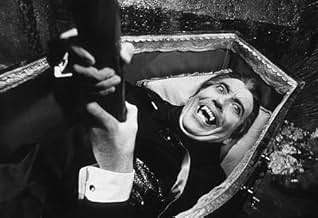
But please understand, I do not necessarily regard all of the above negatively, just realistically. "D.H.R.F.T.G." is a fun watch if you leave your thinking cap off. Several of the most memorable set-pieces in the Hammer canon are here; the discovery of the girl in the belfry, the attempted staking of Dracula, the Count's seduction of Veronica Carlson, and his over-the-top demise (I won't reveal it here). These scenes lingered for decades in my mind after I saw the film in the early seventies. I was joyful to find the videotape in the '90's and yes, I now happily own the DVD.
One of the harshest critics of this film, incidentally, was it's star. Christopher Lee, who entered the project enduring serious back pain (stuntman Eddie Powell handled the more strenuous action), disliked the script intensely, especially the attempted staking of the Count. His performance, however, betrays none of his vexation; this is one of his best outings as Dracula. Director Freddie Francis coaxes serviceable performances from the rest of the cast. Rupert Davies and Barbara Ewing stand out, as a noble cleric and lusty barmaid respectively.
At the end of the day, I really like this movie, despite it's shortcomings. Heck, I feel like putting on right now. So should you.
Here we have the unmistakeably distinctive set design and music score by Hammer mainstays Benard Robinson and James Benard; romantic leads transposing post Summer-of-Love sexual mores (and hairstyles!) to the film's indeterminate post Victorian location; two pub locales, one peopled with wary, hostile, superstitious East-Ender types, the other rollicking with high-spirited youthful inebriates; a pious religious figure (and a much less pious one); a cameo by Michael Ripper; day-for-night location shots; attractive women in low-cut bodices and nightgowns; yet another outlandish method of using trickling blood to revive the antagonist; an eventful screenplay that doesn't measure up to critical evaluation --- whew! I could go on and on.
But please understand, I do not necessarily regard all of the above negatively, just realistically. "D.H.R.F.T.G." is a fun watch if you leave your thinking cap off. Several of the most memorable set-pieces in the Hammer canon are here; the discovery of the girl in the belfry, the attempted staking of Dracula, the Count's seduction of Veronica Carlson, and his over-the-top demise (I won't reveal it here). These scenes lingered for decades in my mind after I saw the film in the early seventies. I was joyful to find the videotape in the '90's and yes, I now happily own the DVD.
One of the harshest critics of this film, incidentally, was it's star. Christopher Lee, who entered the project enduring serious back pain (stuntman Eddie Powell handled the more strenuous action), disliked the script intensely, especially the attempted staking of the Count. His performance, however, betrays none of his vexation; this is one of his best outings as Dracula. Director Freddie Francis coaxes serviceable performances from the rest of the cast. Rupert Davies and Barbara Ewing stand out, as a noble cleric and lusty barmaid respectively.
At the end of the day, I really like this movie, despite it's shortcomings. Heck, I feel like putting on right now. So should you.
Sags in the middle
The fourth entry in the Hammer Dracula series has an excellent opening, occasional good scenes, and a fantastic finish, but film seems stuck in a rut. Too much of the film is predictable, with John Elder's screenplay being a paint-by-numbers job that resembles earlier entries. The visual effects by Frank George and Peter Melrose range from ok to excellent. James Bernard's score sounds like a replay of his scores from "Dracula--Prince of Darkness" (1966) and "Horror of Dracula" (1958). Christopher Lee is good. Barbara Ewing is amusing as Zena, a tavern girl. Everyone else looks the part. Arthur Grants' fine cinematography uses shadows well and makes the film look better than it is
The next two entries (1970's "Taste the Blood of Dracula" and "Scars of Dracula") are returns to form for the series. "Dracula Has Risen From the Grave" is a mild disappointment, with some good scenes and two spectacular scenes making it worth the watch.
Le saviez-vous
- AnecdotesThis was the first ever movie to receive a rating from the MPAA in 1968.
- GaffesWhen the bell-ringer arrives at the church at the beginning of the movie he leaves his bicycle on the steps of the front door. When the priest arrives and rushes to investigate the screaming, the bicycle is no longer there.
- Versions alternativesThe UK cinema version was cut by the BBFC to remove some closeup shots of Dracula pulling a stake from his heart. Later video and DVD releases were uncut.
- ConnexionsFeatured in Une messe pour Dracula (1970)
Meilleurs choix
Connectez-vous pour évaluer et suivre la liste de favoris afin de recevoir des recommandations personnalisées
Détails
- Date de sortie
- Pays d’origine
- Langues
- Aussi connu sous le nom de
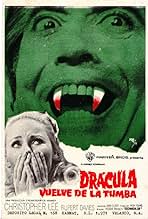
- Drácula vuelve de la tumba
- Lieux de tournage
- Société de production
- Voir plus de crédits d'entreprise sur IMDbPro
- Durée
- 1h 32min(92 min)
- Mixage
- Rapport de forme
- 1.66 : 1(original/negative ratio)
Contribuer à cette page
Suggérer une modification ou ajouter du contenu manquant