NOTE IMDb
6,7/10
9,7 k
MA NOTE


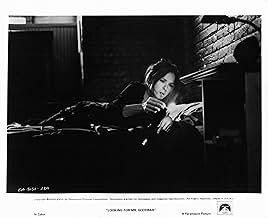
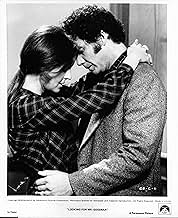
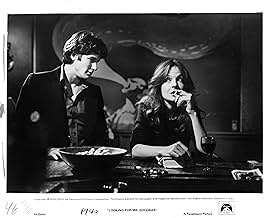
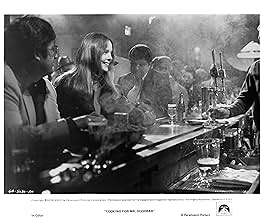
Une institutrice dévouée passe ses nuits dans les bars, à la recherche d'hommes violents avec lesquels elle aura des relations sexuelles de plus en plus brutales.Une institutrice dévouée passe ses nuits dans les bars, à la recherche d'hommes violents avec lesquels elle aura des relations sexuelles de plus en plus brutales.Une institutrice dévouée passe ses nuits dans les bars, à la recherche d'hommes violents avec lesquels elle aura des relations sexuelles de plus en plus brutales.
- Réalisation
- Scénaristes
- Stars
- Nommé pour 2 Oscars
- 1 victoire et 6 nominations au total


6,79.7K
1
2
3
4
5
6
7
8
9
10
Avis à la une
Great performances, classic 70's cinema.
Will they PLEASE release this on DVD! As of now, it's only available on PAN/SCAN VHS. ....Diane Keaton reinvents herself, going astray from her Annie Hall persona. Her character is complex and it's entertaining to watch her evolve or de-evolve. The mood is classic gritty 70's. Sometimes funny, sometimes sexy, sometimes bleak. ...The ending is of course what will stick with you forever. It's hard to tell what director Richard Brooks wanted to say with this, but none the less, it's a good ride. Highly recommended. Apparently it created quite a stir when it came out, and even today, critics like Leonard Maltin still bring it down saying it's lewd and pointless. You be the judge. Like it or not it's still a good period piece, showing the seedier side of one young woman's life in the city. I can't wait to get this and watch it again -- if the studio ever gets the nerve to release it. I give it a good 9/10.
Interesting portrayal of the late 1970s bar scene
This was an interesting movie and it shows how the world has changed in the last 30 years. The attitudes (between men and women, gays and straights), the language used back then, the social atmosphere (bar scene) of the late 1970s, even the financial differences--she's able to afford an apartment in Manhattan on a teachers salary! (even though it has roaches this still isn't possible in 2006). All of these things made the movie interesting for me. I also imagine it must have been a very shocking movie back then. I was 8 years old when it came out so I didn't see it in the theater but I would have liked to see it in a theater just to see how people took it back then. I would have liked to walk out of the theater and hear the conversations going on as people walked to their cars. Did people like it back then? Did they think it was shocking? Did they think it accurately portrayed a type of person they maybe knew or were themselves back then? Also, Diane Keaton was very good in it and it's very interesting to see a young Richard Gere and Tom Berenger when their careers were just beginning.
10t2kt2k
Here's the missing soundtrack listing
My wife has recently came across of a used vinyl somewhere titled "LOOKING FOR MR GOODBAR" MOTION PICTURE SOUNDTRACK and after noticed Diana Ross is listed she bought it for me for the price of... only $1!!! Despite it's almost 30 years old there are no scratches, excellent quality, sounds like new - unbelievable lucky, isn't she? :)
So here are the tracks:
Side 1 1. Theme from "LOOKING FOR MR GOODBAR" (Don't Ask To Stay Until Tomorrow) 1:16 2. Don't Leave Me This Way - Thelma Houston 3:37 3. Lowdown - Boz Scaggs 3:19 4. Machine Gun - Commodores 2:45 5. Love Hangover - Diana Ross 3:47 6. She Wants To (Get On Down) - Bill Withers 3:15 7. Theme from "LOOKING FOR MR GOODBAR" (Don't Ask To Stay Until Tomorrow) (Reprise) 2:24
Side 2 1. Theme from "LOOKING FOR MR GOODBAR" (Don't Ask To Stay Until Tomorrow) (Vocal) - Marlena Shaw 4:08 2. She's Lonely - Bill Withers 5:04 3. Try Me I Know We Can Make It - Donna Summers 4:14 4. Back Stabbers - The O'Jays 3:06 5. Prelude To Love - Donna Summer 6. Could It Be Magic - Donna Summer 6:12
PS: there's no time printed for 2/5 - in fact there's no such track present on the disc but it's listed on the label.
So here are the tracks:
Side 1 1. Theme from "LOOKING FOR MR GOODBAR" (Don't Ask To Stay Until Tomorrow) 1:16 2. Don't Leave Me This Way - Thelma Houston 3:37 3. Lowdown - Boz Scaggs 3:19 4. Machine Gun - Commodores 2:45 5. Love Hangover - Diana Ross 3:47 6. She Wants To (Get On Down) - Bill Withers 3:15 7. Theme from "LOOKING FOR MR GOODBAR" (Don't Ask To Stay Until Tomorrow) (Reprise) 2:24
Side 2 1. Theme from "LOOKING FOR MR GOODBAR" (Don't Ask To Stay Until Tomorrow) (Vocal) - Marlena Shaw 4:08 2. She's Lonely - Bill Withers 5:04 3. Try Me I Know We Can Make It - Donna Summers 4:14 4. Back Stabbers - The O'Jays 3:06 5. Prelude To Love - Donna Summer 6. Could It Be Magic - Donna Summer 6:12
PS: there's no time printed for 2/5 - in fact there's no such track present on the disc but it's listed on the label.
Cautionary tale holds up over time
Few viewers can deny the impact of this film on the '77 crowd and generations afterwards. As a curious 8-year-old up late watching HBO, I never forgot the story or the lesson. Based on a true story, Richard Brooks astutely translated Judith Rossner's best-selling novel to screen, choosing a luminous Diane Keaton, hot off `Annie Hall' and `The Godfather' to play Theresa Dunn, an up-and-coming Richard Gere, a quirky Tuesday Weld , and amazing Richard Kiley as Dunn, the overbearing Irish-Catholic father. The misogynistic Richard Atherton and an ominous Tom Berenger rounds out the solid cast.
Neither traditionally beautiful like her stewardess sister, Katherine or a baby factory like her other sister living at home with her, Theresa is the odd one out, the sister who is searching for approval from a father who barely acknowledges her existence. Childhood traumas mold her and make the fact that Theresa allows herself to be strong and fallible all the more powerful and endearing.
Tired of her father's unyielding rule, Theresa moves into the apartment building owned by Katherine's next attempt at a husband. As the women's freedom movement is underway, Theresa is caught in the position of questioning the traditional roles for women, roles against a new woman in control of her body and her sexuality. By day she teaches at a school for the deaf. By night her nightly jaunts into New York's seamier nightlife scene, expose the dichotomy of being a professional woman by day who must maintain credibility and responsibility, especially with young children while trying to be sexually active, experimental and suffering the stigma attached to both as whore and as a free woman wanting purely physical experiences much the same as men, yet realizing the label is different.
Throughout this film, Brooks explores Theresa's perpetual search for acceptance by men but a need to maintain her own identity. From a failed affair with a Prof. she was a TA to, to her fling with Tony, a local hustler, Theresa is perpetually in question of her sexuality and her allure for men, making poor choices in her partners only to endure their violence and possessiveness - much like her father. That she meets up with a homicidal drifter the New Year's Eve night she has decided to quit drugs and cruising, is the irony of her self-discovery.
The only positive male in her life appears to be is LaVar Burton's character, Cap Jackson, the sullen brother of one of Theresa's students. He is the only male presence in the movie that is not malevolent or trying to extract something from Theresa and during her altercation with Tony at the school, he is the only person to defend and protect her.
While the scare of AIDS stole later generations' promiscuity, this tale still resonates for viewers, especially for women on their own, looking for intimacy yet craving isolation.
While the ending tends to drag with one too many drug scenes the movie still packs a wallop for a finale.
Neither traditionally beautiful like her stewardess sister, Katherine or a baby factory like her other sister living at home with her, Theresa is the odd one out, the sister who is searching for approval from a father who barely acknowledges her existence. Childhood traumas mold her and make the fact that Theresa allows herself to be strong and fallible all the more powerful and endearing.
Tired of her father's unyielding rule, Theresa moves into the apartment building owned by Katherine's next attempt at a husband. As the women's freedom movement is underway, Theresa is caught in the position of questioning the traditional roles for women, roles against a new woman in control of her body and her sexuality. By day she teaches at a school for the deaf. By night her nightly jaunts into New York's seamier nightlife scene, expose the dichotomy of being a professional woman by day who must maintain credibility and responsibility, especially with young children while trying to be sexually active, experimental and suffering the stigma attached to both as whore and as a free woman wanting purely physical experiences much the same as men, yet realizing the label is different.
Throughout this film, Brooks explores Theresa's perpetual search for acceptance by men but a need to maintain her own identity. From a failed affair with a Prof. she was a TA to, to her fling with Tony, a local hustler, Theresa is perpetually in question of her sexuality and her allure for men, making poor choices in her partners only to endure their violence and possessiveness - much like her father. That she meets up with a homicidal drifter the New Year's Eve night she has decided to quit drugs and cruising, is the irony of her self-discovery.
The only positive male in her life appears to be is LaVar Burton's character, Cap Jackson, the sullen brother of one of Theresa's students. He is the only male presence in the movie that is not malevolent or trying to extract something from Theresa and during her altercation with Tony at the school, he is the only person to defend and protect her.
While the scare of AIDS stole later generations' promiscuity, this tale still resonates for viewers, especially for women on their own, looking for intimacy yet craving isolation.
While the ending tends to drag with one too many drug scenes the movie still packs a wallop for a finale.
We're all hurt someplace and we're all looking for a painkiller.
Looking for Mr. Goodbar is directed by Richard Brooks and Brooks adapts the screenplay from the Judith Rossner novel of the same name. It stars Diane Keaton, Tuesday Weld, William Atherton, Richard Kiley, Richard Gere, Alan Feinstein and Tom Berenger. Music is by Artie Kane and cinematography by William A. Fraker.
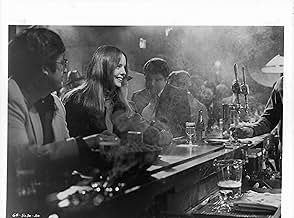
Theresa Dunn (Keaton) is a dedicated schoolteacher to deaf children by day, but at night she cruises bars looking for abusive men with whom she can engage in progressively violent sexual encounters.
First off it should be noted that the Judith Rosner novel is based on the real life case of the 1973 murder of New York City schoolteacher Roseann Quinn. Also of note is that Rossner was not enamoured with this filmic adaptation.
What we have here is a tragic tale set in the promiscuous pre AIDS era of 1970s America. It's a bleak observation of the swinging singles scene of the era, providing caution of patriarch pressures, religious suffocation and the dangers of casual encounters for sexual gratification. Is it any wonder the big hitting critics of the time were nonplussed by it?...
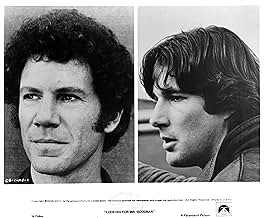
The pic generated a lot of buzz for handsome new actor, Richard Gere, even if he does overact, it actually works in context to the brashness of the period. It also introduced Tom Berenger, in what is a frightening portrayal of a very sexually confused man. Tuesday Weld got a Best Supporting Actress Oscar nomination for playing Theresa's sister, which was richly deserved, so much so one wishes she was in the film more.
Yet it's Keaton who absolutely shines here, lifting an overlong picture to greater heights. Proving she had more in her armoury than merely playing kooks, Keaton imbues Theresa with a desperation and loneliness that is shattering for viewing purpose. The whole narrative bites with a crushing inevitability, that the nihilistic back drop can only bring pain and misery, and so it proves.
Richard Brooks should have sliced at lest thirty minutes from the run time, especially given that the "Theresa fantasy sequences" just come off as pointless and take one out of the heartbeat of the story. Yet this is still a fine movie, not one to be cheered up by of course, but poignant, relative and with the real life story at the core, important. 7/10
Theresa Dunn (Keaton) is a dedicated schoolteacher to deaf children by day, but at night she cruises bars looking for abusive men with whom she can engage in progressively violent sexual encounters.
First off it should be noted that the Judith Rosner novel is based on the real life case of the 1973 murder of New York City schoolteacher Roseann Quinn. Also of note is that Rossner was not enamoured with this filmic adaptation.
What we have here is a tragic tale set in the promiscuous pre AIDS era of 1970s America. It's a bleak observation of the swinging singles scene of the era, providing caution of patriarch pressures, religious suffocation and the dangers of casual encounters for sexual gratification. Is it any wonder the big hitting critics of the time were nonplussed by it?...
The pic generated a lot of buzz for handsome new actor, Richard Gere, even if he does overact, it actually works in context to the brashness of the period. It also introduced Tom Berenger, in what is a frightening portrayal of a very sexually confused man. Tuesday Weld got a Best Supporting Actress Oscar nomination for playing Theresa's sister, which was richly deserved, so much so one wishes she was in the film more.
Yet it's Keaton who absolutely shines here, lifting an overlong picture to greater heights. Proving she had more in her armoury than merely playing kooks, Keaton imbues Theresa with a desperation and loneliness that is shattering for viewing purpose. The whole narrative bites with a crushing inevitability, that the nihilistic back drop can only bring pain and misery, and so it proves.
Richard Brooks should have sliced at lest thirty minutes from the run time, especially given that the "Theresa fantasy sequences" just come off as pointless and take one out of the heartbeat of the story. Yet this is still a fine movie, not one to be cheered up by of course, but poignant, relative and with the real life story at the core, important. 7/10


Le saviez-vous
- AnecdotesTom Berenger admitted in an interview that he had nightmares after he was finished shooting all of his scenes as Gary.
- GaffesTheresa is supposed to be a first-grade teacher, but all her students look to be way older. The youngest seem to be 9 or 10 while the oldest could be 12, 13 or even older.
- Citations
Man in bar: Me, queer! Jesus, I'm a married man, I've got 2 kids and a very expensive mistress. I'm an animal.
Theresa: That's why you go to gay bars ?
- Crédits fousThe Paramount logo is shortened at both ends, fading in at the point the text already appears. It was gray-scaled in the closing version.
- ConnexionsFeatured in Sex, Censorship and the Silver Screen: Forward Into the Past (1996)
- Bandes originalesTry Me, I Know We Can Make It
Written by Donna Summer (uncredited), Giorgio Moroder (uncredited) and Pete Bellotte (uncredited)
Performed by Donna Summer
Courtesy of Casablanca Record & FilmWorks
Meilleurs choix
Connectez-vous pour évaluer et suivre la liste de favoris afin de recevoir des recommandations personnalisées
- How long is Looking for Mr. Goodbar?Alimenté par Alexa
Détails
Box-office
- Montant brut aux États-Unis et au Canada
- 22 512 655 $US
- Week-end de sortie aux États-Unis et au Canada
- 1 540 635 $US
- 23 oct. 1977
- Montant brut mondial
- 22 513 584 $US
- Durée
- 2h 16min(136 min)
- Mixage
- Rapport de forme
- 1.85 : 1
Contribuer à cette page
Suggérer une modification ou ajouter du contenu manquant