NOTE IMDb
7,2/10
16 k
MA NOTE


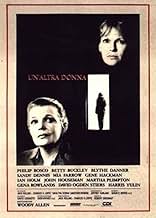
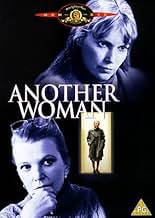
Une femme loue un appartement et se retrouve impliquée dans la situation d'une femme enceinte qui demande l'aide de son voisin psychiatre.Une femme loue un appartement et se retrouve impliquée dans la situation d'une femme enceinte qui demande l'aide de son voisin psychiatre.Une femme loue un appartement et se retrouve impliquée dans la situation d'une femme enceinte qui demande l'aide de son voisin psychiatre.
- Réalisation
- Scénariste
- Stars
- Récompenses
- 1 victoire et 3 nominations au total



7,216K
1
2
3
4
5
6
7
8
9
10
Avis à la une
This film blew me away
I just watched this last night, and I've been thinking about it all day. What an amazing film! So poignant, so subtle. A woman re-evaluates her life and begins to lament the choices she made years ago. Such a simple premise, such immense possibilities.
This film demands a lot of its audience. There is no humor, no action, and very little plot. Most people won't be into this at all, I imagine, which is a shame. This film offers a really wonderful perspective on a subject that is so very rarely addressed in films today: aging. This film is about a woman taking stock of her life at the age of fifty. She looks back, she sees the choices she made and how they turned out. She sees the compromises she made to get where she is today (very successful, head of a philosophy department, about to write another book), and she begins to appreciate, for the first time, what those compromises cost.
This is, in my opinion, the central tragedy of human existence. You only get one shot at life, and no one ever tells you how to manage it. So, you make mistakes, and one day, when you're fifty, you've finally learned enough to start making the right choices. But, by that time, is it too late? This film doesn't answer that question, at least not for its central character. But it does offer hope.
The film is propelled by several dynamite performances. But, even in such a crowded field of great performances, it is not difficult to pick out Gena Rowlands, who gives an unforgettably nuanced performance as Marion, the film's central character.
You may notice that this film is propelled by a number of coincidences. Every chance encounter, however, has an eerie relevance to Marion's soul-searching. It may look contrived, but it isn't. These aren't coincidences at all. The pregnant woman, played by Mia Farrow, is instrumental in setting up each of these 'coincidences', and that character's name is Hope. I was half-expecting a "Fight Club" revelation at the end, but it never came, which is good. This film could stand both ways, and it's better for the director to leave the audience to consider the relationship between Hope and Marion on their own. Like I said, I've been thinking about it all day.
This film demands a lot of its audience. There is no humor, no action, and very little plot. Most people won't be into this at all, I imagine, which is a shame. This film offers a really wonderful perspective on a subject that is so very rarely addressed in films today: aging. This film is about a woman taking stock of her life at the age of fifty. She looks back, she sees the choices she made and how they turned out. She sees the compromises she made to get where she is today (very successful, head of a philosophy department, about to write another book), and she begins to appreciate, for the first time, what those compromises cost.
This is, in my opinion, the central tragedy of human existence. You only get one shot at life, and no one ever tells you how to manage it. So, you make mistakes, and one day, when you're fifty, you've finally learned enough to start making the right choices. But, by that time, is it too late? This film doesn't answer that question, at least not for its central character. But it does offer hope.
The film is propelled by several dynamite performances. But, even in such a crowded field of great performances, it is not difficult to pick out Gena Rowlands, who gives an unforgettably nuanced performance as Marion, the film's central character.
You may notice that this film is propelled by a number of coincidences. Every chance encounter, however, has an eerie relevance to Marion's soul-searching. It may look contrived, but it isn't. These aren't coincidences at all. The pregnant woman, played by Mia Farrow, is instrumental in setting up each of these 'coincidences', and that character's name is Hope. I was half-expecting a "Fight Club" revelation at the end, but it never came, which is good. This film could stand both ways, and it's better for the director to leave the audience to consider the relationship between Hope and Marion on their own. Like I said, I've been thinking about it all day.
10canadude
Returning to Bergmanesque Roots
It's worth noting that in 1978, ten years before he made "Another Woman," Woody Allen created another quiet film, a drama with prominent Bergmanesque influences. The film was called "Interiors," and it was a tribute, or an American take on Bergman's "Cries and Whispers." "Interiors" examined the relationships of three sisters and their husbands in the face of the divorce of their dominant mother and detached father. The film essentially detailed the fall of "interiors," or illusory worlds created by the dominant mother in the face of tragedy and loneliness.
"Another Woman," made ten years later, shares similar themes with "Interiors," but it is more akin to Bergman's "Wild Strawberries" than to "Cries and Whispers." It is a story of a university professor, played spectacularly by Gena Rowlands, in whom something stirs when she overhears a therapy session with a young 30-something woman who is discontent with her life. The professor, Marion, feels an emptiness rise inside her - an emptiness that had settled there years before, that she can consciously feel now. Little by little, like in "Interiors," the world she has constructed for herself, a cold, cerebral world, deconstructs.
Marion despairs, enters into conflicts with herself, and questions endlessly trying to reason her way out of her malaise. But the cure for her malaise is not rational resolution and she, realizing that her strongest characteristic (namely her rational intelligence) is not enough to untangle what worries her, finds herself entirely helpless in the face of an unraveling existence.
Her drama is very much like the drama of Professor Isak Borg from Bergman's film, a man on his way to receive a medal for his lifetime achievements. And, on the road, he also succumbs to the same malaise as Marion, the same questioning and the same painful re-evaluation. The horror shared by both Marion and Professor Borg, of course, is that despite their highly lauded accomplishments and their intellectual self-satisfaction, they feel void. There must, in other words, be something else to life than strictly intellectual work, however satisfying it may be.
In Bergman (both "Cries and Whispers" and "Wild Strawberries") and in Allen (both "Interiors" and "Another Woman") life falls under question. The entire existence is evaluated, its worth and meaning doubted. In "Interiors" and "Cries and Whispers," however, the meaninglessness pervades everything in the films - the dialogues, behaviors and even visuals. The sisters in "Interiors" shatter the mother's reality and find nothingness - they continue as they were, much like the two sisters in "Cries and Whispers" for whom the death of their young sister changed absolutely nothing, and only confirmed their beliefs about the world.
However, "Another Woman" is not as stark (though it is stark indeed at times). Marion grabs at the chance to re-evaluate the life she feels she painfully wasted and tries to start again. It's not a false choice, or a gimmick on Allen's part, but it's a true depiction of Marion's sincere desire to continue to struggle because her life does have value for her. She rediscovers a passion for the struggle and her motivation is the same curiosity that made her go through the questioning process in the first place.
"Another Woman" is a testament to the fact that Woody Allen was still at the top of his game in the late 1980s. It is a brilliant, honest and (surprisingly) warm film. It is not a remake or rip-off of Bergman's work, though it is highly influenced by him (which shouldn't seem so surprising to anyone, because Bergman himself was influenced by the most basic questions of existence). "Another Woman" is an existential film that is both uncompromising and not hopeless. It's one of my favorite Woody Allen films and it reveals to us not only a great American director, but one whose films are of worldly greatness.
"Another Woman," made ten years later, shares similar themes with "Interiors," but it is more akin to Bergman's "Wild Strawberries" than to "Cries and Whispers." It is a story of a university professor, played spectacularly by Gena Rowlands, in whom something stirs when she overhears a therapy session with a young 30-something woman who is discontent with her life. The professor, Marion, feels an emptiness rise inside her - an emptiness that had settled there years before, that she can consciously feel now. Little by little, like in "Interiors," the world she has constructed for herself, a cold, cerebral world, deconstructs.
Marion despairs, enters into conflicts with herself, and questions endlessly trying to reason her way out of her malaise. But the cure for her malaise is not rational resolution and she, realizing that her strongest characteristic (namely her rational intelligence) is not enough to untangle what worries her, finds herself entirely helpless in the face of an unraveling existence.
Her drama is very much like the drama of Professor Isak Borg from Bergman's film, a man on his way to receive a medal for his lifetime achievements. And, on the road, he also succumbs to the same malaise as Marion, the same questioning and the same painful re-evaluation. The horror shared by both Marion and Professor Borg, of course, is that despite their highly lauded accomplishments and their intellectual self-satisfaction, they feel void. There must, in other words, be something else to life than strictly intellectual work, however satisfying it may be.
In Bergman (both "Cries and Whispers" and "Wild Strawberries") and in Allen (both "Interiors" and "Another Woman") life falls under question. The entire existence is evaluated, its worth and meaning doubted. In "Interiors" and "Cries and Whispers," however, the meaninglessness pervades everything in the films - the dialogues, behaviors and even visuals. The sisters in "Interiors" shatter the mother's reality and find nothingness - they continue as they were, much like the two sisters in "Cries and Whispers" for whom the death of their young sister changed absolutely nothing, and only confirmed their beliefs about the world.
However, "Another Woman" is not as stark (though it is stark indeed at times). Marion grabs at the chance to re-evaluate the life she feels she painfully wasted and tries to start again. It's not a false choice, or a gimmick on Allen's part, but it's a true depiction of Marion's sincere desire to continue to struggle because her life does have value for her. She rediscovers a passion for the struggle and her motivation is the same curiosity that made her go through the questioning process in the first place.
"Another Woman" is a testament to the fact that Woody Allen was still at the top of his game in the late 1980s. It is a brilliant, honest and (surprisingly) warm film. It is not a remake or rip-off of Bergman's work, though it is highly influenced by him (which shouldn't seem so surprising to anyone, because Bergman himself was influenced by the most basic questions of existence). "Another Woman" is an existential film that is both uncompromising and not hopeless. It's one of my favorite Woody Allen films and it reveals to us not only a great American director, but one whose films are of worldly greatness.
One of Woody's most mature and underrated dramas
There was a certain period in Woody Allen's career when he was trying desperately to imitate Ingmar Bergman's work. It rarely worked, and often turned out disasters like the execrable September. Another Woman is a riff on Bergman's Wild Strawberries: a college professor, played by Gena Rowlands, is past fifty and looking back on and reliving key events in her life as her present life is falling apart. The film is quite stagy at times, just as it was in September, Allen's previous film. He seems to think that adds something, but it really doesn't. One other problem Another Woman has is a couple of very clunky scenes, and a few poor bit performers, which were much bigger problems in September, which was actually the last Allen film that I saw and the one that made me subconsciously avoid him for the past several months. Allen's script here is excellent. He has produced an excellent character study which is probably unsurpassed in all of his other films that I've seen. The lead actors are wonderful here, Rowlands, Ian Holms, Blythe Danner, Sandy Dennis, and Gene Hackman. Allen's use of piano music is beautifully touching. It all adds up to a very touching and sad little film. It might not be Woody's best film, but it ought to be better respected and known. 8/10.
Another great Woody Allen drama
This is a wonderful movie but not an easy one. It mixes the present with the past and dreams with real life. You will need to see it three or four times at least to get the best out of it but it's well worth doing. Every performance is spot on, every scene has a purpose, there is no padding here. It comes as a shock to Gena Rowlands character that she is not what she thought she was, that people do not view her in the way she thought they did.She takes a journey through her life to see what went wrong with the unwitting aid of a psychiatrist and patient in the apartment next door. The film ends abruptly without a proper resolution just as life can and does. The final line of Gena Rowlands beautiful narration will haunt you. A masterpiece of writing and direction to say nothing of superb acting and masterful cinematography.
Another Woody
The melancholic mood and Gena Rowland's impressing acting are the most important elements of this movie. It's the Ingmar-Bergman type of film, like Interiors`, much more serious and thoughtful than all of Woody Allen's other movies, not at all typical for him. In my opinion, it's even more vivid than Interiors` because there are less people involved and something that happens less and less in Woody Allen's movies there is only one main character. This time, it's the character herself who tells the story which is really unusual for Allen.
By leaving every other trade mark in plot and topics away, Allen concentrates on the intellectual dialogues and the analyses people make about each other. It's characteristic that Marion Post is a professor for philosophy. She automatically analyzes everybody around her, which leads to the fact that they start analyzing her. Her crisis begins, when she learns that people talk about her which, of course, is something completely natural and therefore starts analyzing herself. Her character really impressed me because I know people myself who are exactly like Marion Post. Woody Allen is a brilliant psychologist who watches people precisely and that's why he is able to create such believable characters.
By leaving every other trade mark in plot and topics away, Allen concentrates on the intellectual dialogues and the analyses people make about each other. It's characteristic that Marion Post is a professor for philosophy. She automatically analyzes everybody around her, which leads to the fact that they start analyzing her. Her crisis begins, when she learns that people talk about her which, of course, is something completely natural and therefore starts analyzing herself. Her character really impressed me because I know people myself who are exactly like Marion Post. Woody Allen is a brilliant psychologist who watches people precisely and that's why he is able to create such believable characters.


Le saviez-vous
- AnecdotesUnlike most actors and actresses in Woody Allen's movies, Gena Rowlands was allowed to read the entire script before taking the part.
- GaffesWhilst it is true that the tune of Gymnopédie No. 1 is played at the beginning of the film, it is not the piano version but rather the orchestral version orchestrated by Debussy. For some unknown reason, Debussy changed the numbers of the Gymnopédies: thus the orchestral version of Gymnopédie No. 3 bears the tune of Gymnopédie No. 1!
- Bandes originalesGymnopédie No 1
Music by Erik Satie
Performed by Orchestre de la Société des Concerts du Conservatoire
Conducted by Louis Auriacombe
Courtesy of EMI Pathé-Marconi/Capitol Records Special Markets
Meilleurs choix
Connectez-vous pour évaluer et suivre la liste de favoris afin de recevoir des recommandations personnalisées
- How long is Another Woman?Alimenté par Alexa
Détails
Box-office
- Budget
- 10 000 000 $US (estimé)
- Montant brut aux États-Unis et au Canada
- 1 562 749 $US
- Week-end de sortie aux États-Unis et au Canada
- 75 196 $US
- 16 oct. 1988
- Montant brut mondial
- 1 562 749 $US
Contribuer à cette page
Suggérer une modification ou ajouter du contenu manquant