Easy Riders, Raging Bulls: How the Sex, Drugs and Rock 'N' Roll Generation Saved Hollywood
NOTE IMDb
7,5/10
3,2 k
MA NOTE


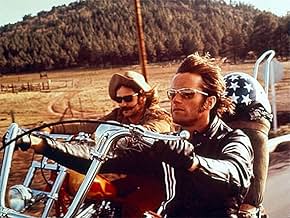
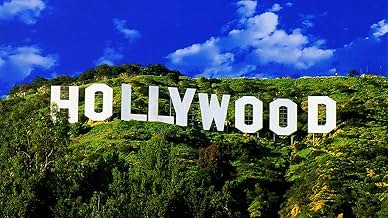
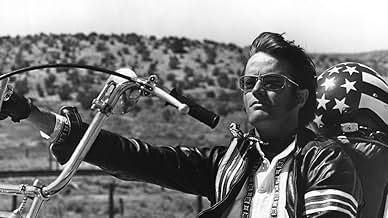
Ajouter une intrigue dans votre langueA look at 1970s Hollywood when it was known as New Hollywood, and the director was the star of the movie.A look at 1970s Hollywood when it was known as New Hollywood, and the director was the star of the movie.A look at 1970s Hollywood when it was known as New Hollywood, and the director was the star of the movie.
- Réalisation
- Scénaristes
- Stars




Sam Peckinpah
- Self
- (images d'archives)


Sharon Tate
- Self
- (images d'archives)

Roman Polanski
- Self
- (images d'archives)

7,53.1K
1
2
3
4
5
6
7
8
9
10
Avis à la une
A Bit of a Stretch
I read and enjoyed the book, too, but it and the movie make several points I disagree with: _ Almost all of the people mentioned in this film are still around, if you don't count cancer victim Hal Ashby, one-hit wonder Sam Peckinpah and the inconsequential Julia Phillips. The idea that most of them crashed and burned, never to return, is a bit of a stretch, unless you include those whose careers have tanked over the past 20 years, e.g., Coppola. _ The film neglects to mention that the architect of the auteur-smothering blockbuster was/is Steven Spielberg, who never seems to have had a nasty moment with anybody ... not the Easy Riders/Raging Bulls, and not the studios. There was some good dish, though, and on the whole it was worthwhile viewing.
Good introduction, but nothing on the book
The last golden age of Hollywood film-making is captured in this two hour documentary, based on Peter Biskind's bestselling book of the same name. Director Kenneth Bowser does a commendable job of corralling many of the key names of the period in this light but passable introduction to the topic.
Bowser's treatise of 1970s Hollywood is essentially a potted history of the time many of the key developments and vital films that were made during this period are passed over or given nothing more than a cursory glance. The documentary suffers as a result and added to this, historical inaccuracies are also evident.
Film fans will most enjoy the scenes of archival footage a desperately nerdy George Lucas being introduced as Francis Ford Coppola's 'assistant'; Jack Nicholson, Bob Rafelson, Dennis Hopper and Peter Tork on the set of The Monkees vehicle 'Head'; and the piece de resistance, a home movie with Messrs Spielberg, Lucas, Milius, Coppola, de Palma, Schrader and Scorsese all in the same room. To be a fly on the wall at that party!
There are also current interviews with the likes of Peter Bogdanovich, Dennis Hopper, Peter Bart, John Milius, Michael Phillips, Paul Schrader, Peter Fonda, Albert S. Ruddy and many more figures of the time.
Bowser's documentary serves as a snapshot of the time Biskind's novel is a veritable diary. The book is packed with amazing stories that even a 13-part series couldn't document. Watch this documentary, get a taste of the time and then buy the book to immerse yourself in a fantastic period of American filmic creativity.
Bowser's treatise of 1970s Hollywood is essentially a potted history of the time many of the key developments and vital films that were made during this period are passed over or given nothing more than a cursory glance. The documentary suffers as a result and added to this, historical inaccuracies are also evident.
Film fans will most enjoy the scenes of archival footage a desperately nerdy George Lucas being introduced as Francis Ford Coppola's 'assistant'; Jack Nicholson, Bob Rafelson, Dennis Hopper and Peter Tork on the set of The Monkees vehicle 'Head'; and the piece de resistance, a home movie with Messrs Spielberg, Lucas, Milius, Coppola, de Palma, Schrader and Scorsese all in the same room. To be a fly on the wall at that party!
There are also current interviews with the likes of Peter Bogdanovich, Dennis Hopper, Peter Bart, John Milius, Michael Phillips, Paul Schrader, Peter Fonda, Albert S. Ruddy and many more figures of the time.
Bowser's documentary serves as a snapshot of the time Biskind's novel is a veritable diary. The book is packed with amazing stories that even a 13-part series couldn't document. Watch this documentary, get a taste of the time and then buy the book to immerse yourself in a fantastic period of American filmic creativity.
Catchphrases without substance
This docu makes the misguided error of comparing the careers of Hal Ashby and Steven Spielberg. More different film-makers there have never been. However, by sheer virtue of sharing artistic or commercial success in Hollywood in the same decade, these two anomylous inclusions are lumped in together. Peter Bogdanovich regales us simpletons with his self-encyclopedia, as if he were ever more than a journey-man director. It's intriguing to see the commercial success of The Exorcist and the critical success of Mean Streets sharing the same five minute discussion with various Hollywood talking heads all of whom are past their prime.
One of the rare gems of the film is the sequence recalling how Martin Scorcese, Paul Schrader, George Lucas, Spielberg and many other prominent male film-makers would hang out in the same beach houses in Malibu, but it's only ten minutes long. This is a film obsessed with the tangential perks of that divine spark that was the 70's renaissance of American movies. Presumably this film is based on a best-selling book of the same name, but all this film can sum up is that a bunch of cool movies came out in the 70's, and that, YES, the men who made those movies hung out from time to time. Honestly, you'd be better off just watching every film by the directors that this film interviews and save yourself the thankless task of listening to too many Hollywood has-beens pine for yesteryear. What really happened to these people's careers? Drugs for some, ego for others. Spotty at best, this film just isn't all it could be. 3/10
One of the rare gems of the film is the sequence recalling how Martin Scorcese, Paul Schrader, George Lucas, Spielberg and many other prominent male film-makers would hang out in the same beach houses in Malibu, but it's only ten minutes long. This is a film obsessed with the tangential perks of that divine spark that was the 70's renaissance of American movies. Presumably this film is based on a best-selling book of the same name, but all this film can sum up is that a bunch of cool movies came out in the 70's, and that, YES, the men who made those movies hung out from time to time. Honestly, you'd be better off just watching every film by the directors that this film interviews and save yourself the thankless task of listening to too many Hollywood has-beens pine for yesteryear. What really happened to these people's careers? Drugs for some, ego for others. Spotty at best, this film just isn't all it could be. 3/10
A Glance at the Second Golden Age of Cinema
"Easy Riders, Raging Bulls" is an orgy for movie lovers. How can anyone who loves film not be in heaven at the constant parade of landmark films and key industry figures that charges across the screen in this fast-paced documentary? If you've read the book, the movie will feel cursory, and one will find himself wishing for more detail, more insider stories. There are curious omissions here, and wonders if Bowser structured his content based on who he could get to agree to interviews. Altman is hardly mentioned, Scorsese (who shows up everywhere talking about movies) is not interviewed, and Kubrick isn't mentioned at all (save for one shot of the "2001" poster). Still, what's there is great, and if you're like me, you'll be left with a twinge of sadness that such a rich time in film artistry seems to be gone forever.
Grade: A-
Grade: A-
Documentary on a golden era in Hollywood which didn't go sour so much as it evaporated...
After 20th Century-Fox's "The Sound of Music" raked in big box-office and Academy Awards, every Hollywood studio was busy for the next couple of years trying to duplicate its success (it isn't specified here, but Fox itself was one of the hungriest at pilfering from this genre). Unfortunately, "The Sound of Music" was really the end of the popular, old-fashioned, break-out-in-song Hollywood movie, giving way to the rebellious counterculture. Seen as a major turning point--and released before "Bonnie & Clyde"--"The Wild Angels", a Roger Corman biker flick from A.I.P. (which came out one year after "The Sound of Music"), signaled a change in perceptions. The studio system was breaking down and actors were no longer on contract (since the youth movement didn't exactly want pretty stars). Most young, hungry American movie makers of this period took their cues from the European directors of the early '60s, and this documentary chronicles their battles with the ever-present Hollywood regime into getting their avant garde movies made, marketed and released. Most of the movers and shakers from the past are here, looking quite good, and their recollections from this fertile period for thought-provoking entertainment are fascinating. The downfalls (the drugs, the egos) are documented in a matter-of-fact way, nobody is chastised or condescended to, as the rise of the summer blockbuster (Steven Spielberg's "Jaws") heralded the weakening of the character-driven drama. This film does make it seem as if the smaller, more personal Hollywood motion picture is completely dead now, but fails to take into consideration terrific films like "Sling Blade" or "Monster's Ball" which, high profile or not, give serious movie-fans hope for the future. But as a chronicle of this golden era, "Easy Riders, Raging Bulls", narrated by William H. Macy, is fairly straightforward, mostly accurate, very entertaining, and a great tool for film buffs who weren't privileged to have been there. *** from ****


Le saviez-vous
- AnecdotesMany of the subjects profiled in author Peter Biskind's book, including directors Steven Spielberg, George Lucas, Robert Altman, and 'William Friedkin', declined interviews for the documentary.
- ConnexionsFeatures L'Halluciné (1963)
Meilleurs choix
Connectez-vous pour évaluer et suivre la liste de favoris afin de recevoir des recommandations personnalisées
Détails
- Date de sortie
- Pays d’origine
- Langue
- Aussi connu sous le nom de
- Easy Riders, Raging Bulls: Comment la génération sexe, drogue et rock 'n roll a sauvé Hollywood
- Sociétés de production
- Voir plus de crédits d'entreprise sur IMDbPro
- Durée
- 1h 59min(119 min)
- Couleur
- Mixage
- Rapport de forme
- 1.78 : 1
Contribuer à cette page
Suggérer une modification ou ajouter du contenu manquant