

Ajouter une intrigue dans votre langueA white family and a black family find out what it's like to switch lives.A white family and a black family find out what it's like to switch lives.A white family and a black family find out what it's like to switch lives.
- Récompensé par 1 Primetime Emmy
- 1 victoire et 1 nomination au total
Parcourir les épisodes





5,3301
1
2
3
4
5
6
7
8
9
10
Avis à la une
Just saw the series premiere on F/X...
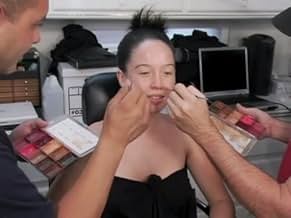
...And I can honestly my jaw dropped. I just couldn't believe it. Hollywood makeup effects artist Keith VanderLaan (whose work on "Big Momma's House" and "White Chicks" has not gone unnoticed) has done the unthinkable by transforming a black family into a white family, and a white family into a black family. The Sparks, is the black family (Brian, his wife Renee, son Nick) from an Atlanta suburb and the white Wurgel-Marcotulli family (Carmen, her live-in boyfriend Bruno, Carmen's daughter Rose) from Santa Monica, California, must live together and walk and talk, as the opposite race.
Now before I heard about this show, courtesy of the rants of the many EB Soldiers at Public Enemy's official website message boards, I have to say I first met "Black. White." with great skepticism. But as I heard more about it, and even though I agree largely with the rants of the EB Soldiers, I was still enticed. I wanted to see more, and what I saw tonight was nothing short of an outstanding examination of how the black and white races interact with one another and as each other.
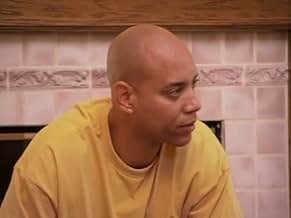
As a 20-year-old black male, "Black. White." not only forced to me to take into account what whites think and experience, but it also made room for me to ponder my own conceptions about myself, and my fellow brothers and sisters in America. Bruno and Carmen and Brian and Renee all attend separate black/white focus groups, in disguise, and each gets a taste of what the other race feels about the other race. Before the meetings, though, the participants gave their companions advice on how to "act" while listening to the discussion; Brian says Bruno should slouch a little bit and Bruno says Brian should keep an upright, or otherwise proper posture. We can see them nervously squirming in their seats as they all get anxious about the discussions taking place. I couldn't help but feel the heat too.
Hopefully, this show will open eyes, minds, and hearts about walking a mile in the shoes of somebody different. According to the Style section of today's Washington Post newspaper, the show's creator R.J. Cutler seems to know all about this sort of touchy reality thing. He produced "Super Size Me" (2004) filmmaker Morgan Spurlock's "30 Days" (damn, I really wanted to see that show), which frequently had similar role-swapping role-playing that included a fundamentalist Christian living with a Muslim family and a straight homophobe taking up residence in San Franciso's openly-gay Castro district.
Rapper Ice Cube, who is no stranger to politics and the racial divide in America, also did the opening theme song and is the show's co-producer and that should hopefully draw in more viewers, particularly those who pay attention to political hip-hop.
What we may see on "Black. White." may not be new to a lot of us, and I won't disagree with anyone who says otherwise. What it will do, I hope, is show what America is like from the other side for these six people. It shows much promise. The dynamics of racism, as portrayed often in the media, is sour compared to what really goes on out there. We can no longer turn a blind eye and a deaf ear to this cancerous epidemic in our country.
Now let's see what the other side says.
Now before I heard about this show, courtesy of the rants of the many EB Soldiers at Public Enemy's official website message boards, I have to say I first met "Black. White." with great skepticism. But as I heard more about it, and even though I agree largely with the rants of the EB Soldiers, I was still enticed. I wanted to see more, and what I saw tonight was nothing short of an outstanding examination of how the black and white races interact with one another and as each other.
As a 20-year-old black male, "Black. White." not only forced to me to take into account what whites think and experience, but it also made room for me to ponder my own conceptions about myself, and my fellow brothers and sisters in America. Bruno and Carmen and Brian and Renee all attend separate black/white focus groups, in disguise, and each gets a taste of what the other race feels about the other race. Before the meetings, though, the participants gave their companions advice on how to "act" while listening to the discussion; Brian says Bruno should slouch a little bit and Bruno says Brian should keep an upright, or otherwise proper posture. We can see them nervously squirming in their seats as they all get anxious about the discussions taking place. I couldn't help but feel the heat too.
Hopefully, this show will open eyes, minds, and hearts about walking a mile in the shoes of somebody different. According to the Style section of today's Washington Post newspaper, the show's creator R.J. Cutler seems to know all about this sort of touchy reality thing. He produced "Super Size Me" (2004) filmmaker Morgan Spurlock's "30 Days" (damn, I really wanted to see that show), which frequently had similar role-swapping role-playing that included a fundamentalist Christian living with a Muslim family and a straight homophobe taking up residence in San Franciso's openly-gay Castro district.
Rapper Ice Cube, who is no stranger to politics and the racial divide in America, also did the opening theme song and is the show's co-producer and that should hopefully draw in more viewers, particularly those who pay attention to political hip-hop.
What we may see on "Black. White." may not be new to a lot of us, and I won't disagree with anyone who says otherwise. What it will do, I hope, is show what America is like from the other side for these six people. It shows much promise. The dynamics of racism, as portrayed often in the media, is sour compared to what really goes on out there. We can no longer turn a blind eye and a deaf ear to this cancerous epidemic in our country.
Now let's see what the other side says.
Cutler and Cube's reality series is a unique social experiment that goes horribly awry
Network: FX; Genre: Reality, Documentary; Content Rating: TV-MA (strong language); Perspective: Contemporary (star range: 1 - 4);
Seasons Reviewed: Complete Series (1 season)
I love FX. Even when their shows aren't very good, they are still so bold and unique that they thrash about making a formidable fight. "Black. White." is a 1-shot, 6 episode series developed by R. J. Cutler and Ice Cube - lending his celebrity name and a halfway decent theme song to "the project" - about two families who employ an elaborate Hollywood make-up regimen to "trade races", making the white family (Bruno, Carmen and daughter Rose) appear black and the black family (Brian, Renee, and son Nick) appear white. Creepy? Maybe a little, but we've never seen this before, which is always a find in the creatively dead and socially irresponsible reality genre.
It starts out fun enough. It's fascinating watching the family members react to each other's new appearance. The opportunity they are given to walk around looking like someone other than themselves, is a cathartic human curiosity that goes beyond race and ethnicity. Brian gets his white make-over and goes straight to the driving range, then gets treatment from a shoe salesman I've never heard of life-long white men getting. Bruno, on the other hand, relishes what he will do when first called the N-word while in black make-up. But after the first episode, which also includes a test group where the two races hear what others think of them (the show's provocative high point), the fun is pretty much gives way to standard reality series impulses.
From there, you can take "Black. White." one of two ways: as a reality series or as a social experiment. Taken simply as a reality show it is decidedly above the rest, and both families have enough emotional baggage to pass the mustard for simple, interesting TV. End of that review.
But like Actual Reality's other FX series, the entertaining "30 Days", Cutler and Cube want "Black. White." to be more. They want to make us think. They want to break down the wall of self-segregation that these two races erect for themselves. For the duration of the project the families are made to live together so that they will share their experiences, and, hopefully, have intellectual discussions on the state of race relations in America. Because talking is the first step toward fixing the problem - right? But it isn't long before the women are at each others throats just like in any other reality show.
For all of its good intentions, in choosing these particular people as its participants they force us to debate a false reality. Instead of showing the national battle between black and white, "Black" actually ends up showing the battle between blacks and liberals, with Carmen as the prototype for someone who thinks that because her parents where involved with the civil rights movement, that she's got the right idea about race, all the while not realize that every "tolerant", "open-minded" idea she has toward black people is rooted in a weird core belief that they are SO different that they need to be understood like "creatures" as she puts it and coddled in society. Renee notes that Carmen treats her like an alien.
The subjects quickly prove themselves to be too kooky; saying things and making social mistakes that the average person really wouldn't say or do. We constantly feel like we are smarter than they are and as a result, can't learn anything from them. Is it all about skin color? Is racism perceived or indoctrinated? Any message the show was going for in the first place gets muddled, falling back on the old "there are no easy answers" line and refusing to pose any theories. Any hope of getting people to talk about race evaporates the moment Bruno showcases his own (hold on ) rap video.
The guys are pretty cool, but as guinea pigs, both Bruno and Brian are so hell bent on proving their take on racism they, frustratingly, won't even consider another view. Bruno (a pompous ass who views the world through the prism of himself), to prove that people see racism because they are looking for it, and Brian who takes the traditional line that black people are immersed in white culture and are constantly being sized up every where they go (like teenagers) by whites. When racist things don't happen, Brian and Renee assume that it would have happened had they not been in white make-up. For her part, Renee befriends a white women outside the project, deciding that she can be friends with her - not because she has learned anything about "the white experience", but because of the understanding way the women treats her. It is still all about her.
The show completely falls apart as an experiment when it starts to obviously take Brian's side. The last half of the series is less about two different ethnicities learning about each other and becomes a cliché, sanctimonious sermon, the yardstick for success of which is how well it can beat into Bruno, Carmen and us how victimized black America is. "Black" has a view of race no deeper than surface-level stereotypes.
What does work about "Black.White" are the kids. Rose, the overly emotional daughter, is ripped apart having to lie to her new friends in a black poetry group. A bond forms between her, Brian and Renee and the series rightly climaxes at Rose's poetry showcase.
Nick, who in white face looks like Michael Jackson but hilariously won't change the way he speaks, is equally hell bent, but on learning absolutely nothing. The most fascinating storyline in the show involves Nick's disrespect for money, his ignorance over the use of the N-word and the fact that he doesn't see things in terms of race until his parents train him to see it.
* * / 4
Seasons Reviewed: Complete Series (1 season)
I love FX. Even when their shows aren't very good, they are still so bold and unique that they thrash about making a formidable fight. "Black. White." is a 1-shot, 6 episode series developed by R. J. Cutler and Ice Cube - lending his celebrity name and a halfway decent theme song to "the project" - about two families who employ an elaborate Hollywood make-up regimen to "trade races", making the white family (Bruno, Carmen and daughter Rose) appear black and the black family (Brian, Renee, and son Nick) appear white. Creepy? Maybe a little, but we've never seen this before, which is always a find in the creatively dead and socially irresponsible reality genre.
It starts out fun enough. It's fascinating watching the family members react to each other's new appearance. The opportunity they are given to walk around looking like someone other than themselves, is a cathartic human curiosity that goes beyond race and ethnicity. Brian gets his white make-over and goes straight to the driving range, then gets treatment from a shoe salesman I've never heard of life-long white men getting. Bruno, on the other hand, relishes what he will do when first called the N-word while in black make-up. But after the first episode, which also includes a test group where the two races hear what others think of them (the show's provocative high point), the fun is pretty much gives way to standard reality series impulses.
From there, you can take "Black. White." one of two ways: as a reality series or as a social experiment. Taken simply as a reality show it is decidedly above the rest, and both families have enough emotional baggage to pass the mustard for simple, interesting TV. End of that review.
But like Actual Reality's other FX series, the entertaining "30 Days", Cutler and Cube want "Black. White." to be more. They want to make us think. They want to break down the wall of self-segregation that these two races erect for themselves. For the duration of the project the families are made to live together so that they will share their experiences, and, hopefully, have intellectual discussions on the state of race relations in America. Because talking is the first step toward fixing the problem - right? But it isn't long before the women are at each others throats just like in any other reality show.
For all of its good intentions, in choosing these particular people as its participants they force us to debate a false reality. Instead of showing the national battle between black and white, "Black" actually ends up showing the battle between blacks and liberals, with Carmen as the prototype for someone who thinks that because her parents where involved with the civil rights movement, that she's got the right idea about race, all the while not realize that every "tolerant", "open-minded" idea she has toward black people is rooted in a weird core belief that they are SO different that they need to be understood like "creatures" as she puts it and coddled in society. Renee notes that Carmen treats her like an alien.
The subjects quickly prove themselves to be too kooky; saying things and making social mistakes that the average person really wouldn't say or do. We constantly feel like we are smarter than they are and as a result, can't learn anything from them. Is it all about skin color? Is racism perceived or indoctrinated? Any message the show was going for in the first place gets muddled, falling back on the old "there are no easy answers" line and refusing to pose any theories. Any hope of getting people to talk about race evaporates the moment Bruno showcases his own (hold on ) rap video.
The guys are pretty cool, but as guinea pigs, both Bruno and Brian are so hell bent on proving their take on racism they, frustratingly, won't even consider another view. Bruno (a pompous ass who views the world through the prism of himself), to prove that people see racism because they are looking for it, and Brian who takes the traditional line that black people are immersed in white culture and are constantly being sized up every where they go (like teenagers) by whites. When racist things don't happen, Brian and Renee assume that it would have happened had they not been in white make-up. For her part, Renee befriends a white women outside the project, deciding that she can be friends with her - not because she has learned anything about "the white experience", but because of the understanding way the women treats her. It is still all about her.
The show completely falls apart as an experiment when it starts to obviously take Brian's side. The last half of the series is less about two different ethnicities learning about each other and becomes a cliché, sanctimonious sermon, the yardstick for success of which is how well it can beat into Bruno, Carmen and us how victimized black America is. "Black" has a view of race no deeper than surface-level stereotypes.
What does work about "Black.White" are the kids. Rose, the overly emotional daughter, is ripped apart having to lie to her new friends in a black poetry group. A bond forms between her, Brian and Renee and the series rightly climaxes at Rose's poetry showcase.
Nick, who in white face looks like Michael Jackson but hilariously won't change the way he speaks, is equally hell bent, but on learning absolutely nothing. The most fascinating storyline in the show involves Nick's disrespect for money, his ignorance over the use of the N-word and the fact that he doesn't see things in terms of race until his parents train him to see it.
* * / 4
21st Century Minstrel Show?
FX's "Black. White." was a curious concept. This was a limited run series (6 episodes) that promised some kind of earth-shattering revelations about the state of race in America today.
The premise: Two families, lined up as a Mother, a Father figure and teen, are there to learn about what sort of racism exists in what could otherwise be called "mainstream" America. The Caucasian Tribe are The Wurgel family (Carmen, Bruno and Rose). The African-Americans are The Sparks family (Rene, Brian and Nick). They trade places and take on the race of the other group, through the magic of makeup.
Now, I don't want to say this isn't an original idea, but Eddie Murphy did exactly this as a filmed segment on NBC's "Saturday Night Live" some 20 years before. It never claimed to give any "real" insights about people, but, it actually did suggest some thoughts about the differences in how whites get treated better than the darker skinned individuals in our society. Of course, the SNL segment was completely controlled, using actors in the parts of the people Murphy's straight-laced "White Guy" interacted with, and played strictly for laughs. Brilliantly.
In "Black. White." we're told we have a great experiment going on here, a real sociological examination of culture clash. Will people who cross the paths of these cosmetically enhanced performers be able to know that they are talking to people who are not what they appear to be?
At any rate, the two families lived under the same roof of a large house in a Los Angeles suburb, where they observed one another, shared information about their "different camps" and used what they learned in their guises to understand more about what it is to be the other.
The only one of the six participants who is *completely* convincing as their opposite is Rose, the white daughter turned black poetess. Her look, style and mannerisms seemed most true and she had a clear vision of the program's intentions, or really, what she hoped to gain from this project. Rose is also the only one who seemed to be "learning" anything about racism, culture, class, and ultimately, herself.
Conversely, the "adults" were all concerned with proving their pre-conceived notions about what racism is and what people had to say to them about it. And Rose's teen counterpart, Nick, admitted that he was only doing this for the fun of it. With that sort of attitude, "Black. White." really dissolves into a 21st Century Minstrel Show, with people getting made up and acting in the "stereotypical" manner to "fit in" with societal norms and provide entertainment for the viewing audience. There's not a lot of substantive learning going on here.
Also, the program was heavily edited, the stars spent hours in their makeup chairs and were subsequently placed in situations that were, at times, laughably unrealistic, and occasionally seemed more an exercise in tricking people, a la Ashton Kutcher's "Punk'd" than anything.
To the good, Rose is the saving grace of the program. Her sense of this being an opportunity to understand these issues, the trust and the truth that she has for her interactions and the honesty of her heart in wanting to grasp what's going on shines brightly. She is the only reason to watch.
The rest of it, we can all do without. The name calling, the misunderstandings turned into arguments, the tunnel vision, the wanting to use certain epithets, and the lack of intention and interest that the other participants had, brought the show way down.
Famed rapper Ice Cube is one of the executive producers of the program, and he performs the show's theme song ("Race Card") as well.
There are some worthwhile moments, so I don't want to knock this completely. It is an interesting idea, but it fails in the execution. If all six people involved had the same open-mindedness and same attitude about the concept as Rose clearly did, this could have been what it claims to be. Then again, were the participants all "open minded," they wouldn't have needed to have this experience.
The premise: Two families, lined up as a Mother, a Father figure and teen, are there to learn about what sort of racism exists in what could otherwise be called "mainstream" America. The Caucasian Tribe are The Wurgel family (Carmen, Bruno and Rose). The African-Americans are The Sparks family (Rene, Brian and Nick). They trade places and take on the race of the other group, through the magic of makeup.
Now, I don't want to say this isn't an original idea, but Eddie Murphy did exactly this as a filmed segment on NBC's "Saturday Night Live" some 20 years before. It never claimed to give any "real" insights about people, but, it actually did suggest some thoughts about the differences in how whites get treated better than the darker skinned individuals in our society. Of course, the SNL segment was completely controlled, using actors in the parts of the people Murphy's straight-laced "White Guy" interacted with, and played strictly for laughs. Brilliantly.
In "Black. White." we're told we have a great experiment going on here, a real sociological examination of culture clash. Will people who cross the paths of these cosmetically enhanced performers be able to know that they are talking to people who are not what they appear to be?
At any rate, the two families lived under the same roof of a large house in a Los Angeles suburb, where they observed one another, shared information about their "different camps" and used what they learned in their guises to understand more about what it is to be the other.
The only one of the six participants who is *completely* convincing as their opposite is Rose, the white daughter turned black poetess. Her look, style and mannerisms seemed most true and she had a clear vision of the program's intentions, or really, what she hoped to gain from this project. Rose is also the only one who seemed to be "learning" anything about racism, culture, class, and ultimately, herself.
Conversely, the "adults" were all concerned with proving their pre-conceived notions about what racism is and what people had to say to them about it. And Rose's teen counterpart, Nick, admitted that he was only doing this for the fun of it. With that sort of attitude, "Black. White." really dissolves into a 21st Century Minstrel Show, with people getting made up and acting in the "stereotypical" manner to "fit in" with societal norms and provide entertainment for the viewing audience. There's not a lot of substantive learning going on here.
Also, the program was heavily edited, the stars spent hours in their makeup chairs and were subsequently placed in situations that were, at times, laughably unrealistic, and occasionally seemed more an exercise in tricking people, a la Ashton Kutcher's "Punk'd" than anything.
To the good, Rose is the saving grace of the program. Her sense of this being an opportunity to understand these issues, the trust and the truth that she has for her interactions and the honesty of her heart in wanting to grasp what's going on shines brightly. She is the only reason to watch.
The rest of it, we can all do without. The name calling, the misunderstandings turned into arguments, the tunnel vision, the wanting to use certain epithets, and the lack of intention and interest that the other participants had, brought the show way down.
Famed rapper Ice Cube is one of the executive producers of the program, and he performs the show's theme song ("Race Card") as well.
There are some worthwhile moments, so I don't want to knock this completely. It is an interesting idea, but it fails in the execution. If all six people involved had the same open-mindedness and same attitude about the concept as Rose clearly did, this could have been what it claims to be. Then again, were the participants all "open minded," they wouldn't have needed to have this experience.
To learn, it has to go both ways...
I don't get it. I watched the show tonight and it blew my mind. We all get it Carmen is an idiot, but I really think shes trying. She is doing anything and everything she can to be black and every time she does all she gets in return is hate. She asked for help on what to wear and she was lied to. I thought this project was supposed to be about the families showing one another and teaching one another what it is to be the opposite race. Nick and Renee are black and they don't want to be anything else. They aren't even trying. Rose went out and gave of herself and worked to try and see the other side. Nick doesn't even care enough to try. I just don't understand why everything Bruno and Carmen try is crap to the Sparks. They went to church and they enjoyed it, all Brian had to say was that it wasn't real. I don't see Bruno saying that every time Brian is white. The show doest have that much credibility to me because I feel like the Spark's came into this house with the intent to show how racist white people are. They don't care about being white, they don't want to learn what its like to be white. All they want to do is show this white family what its like to be black. Carmen is lost she has no idea what to say or do around the other family and why should she ? Anytime she tries to learn how to be black they throw her in the gutter and say "Well I learned a lot from her today" they don't try and help her they don't correct her. From my point of view the Sparks are looking for a fight, not just outside the house but in the house as well. After any experience outside the house we get this commentary from the Sparks vehicle and its always criticism about how they felt hurt by something the Wurgles have said or done. I just don't think both families are trying very hard. I believe that Rose is the only one who is really getting anything out of this experience and she had to leave the house to get it. The only people who were actually real with her are the people who had no idea. For anyone to get something from this the effort has to go both ways.
Great series, providing depth of discussion amongst high school students.
I began discussions about prejudice with my high school students, before starting to show this series. My classrooms consist of equal representation of Asian, Black, Hispanic, and White races. Many of them were not aware of racism in their personal experience. Each week I've been showing the new episode of "Black, White". Each week they've been asked to write their views and comments on several questions concerning that episode. Then the next day the students are asked to share their comments, which manifests a lot of good discussion and interaction amongst the students.
Most of the students do not receive the FX Channel at home so they really look forward to each week's showing and the ensuing discussion. This lesson plan will definitely become part of my annual repertoire. I hope that this series is released on DVD, for easier setup in the future.
As a comment for further seasons, the producers could develop the racial differences between other cultural combinations (i.e.: Black and Hispanic, Gays and Straights, Jews and Gentiles, Male and Female, etc.)
Most of the students do not receive the FX Channel at home so they really look forward to each week's showing and the ensuing discussion. This lesson plan will definitely become part of my annual repertoire. I hope that this series is released on DVD, for easier setup in the future.
As a comment for further seasons, the producers could develop the racial differences between other cultural combinations (i.e.: Black and Hispanic, Gays and Straights, Jews and Gentiles, Male and Female, etc.)


Le saviez-vous
- AnecdotesA part of this experiment, was for the two families to live together in the same house. With their false identities, they found jobs, enrolled their kids in schools and at the end of each day shared their interactions amongst each other.
- ConnexionsReferenced in Alex Meyers: the new Hunger Games movie is kinda dumb... (2024)
Meilleurs choix
Connectez-vous pour évaluer et suivre la liste de favoris afin de recevoir des recommandations personnalisées
- How many seasons does Black. White. have?Alimenté par Alexa
Détails
- Couleur
Contribuer à cette page
Suggérer une modification ou ajouter du contenu manquant