NOTE IMDb
5,7/10
1,3 k
MA NOTE

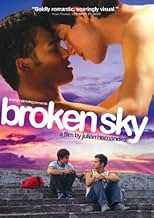
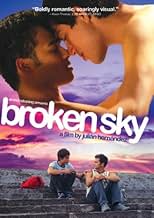
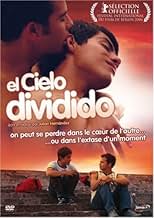
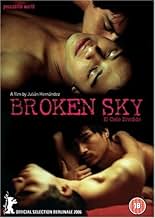
Ajouter une intrigue dans votre langueTwo students, Gerardo and Jonas, are in love. However, Jonas becomes obsessed with another boy, which leads to Gerardo moving into arms of Sergio.Two students, Gerardo and Jonas, are in love. However, Jonas becomes obsessed with another boy, which leads to Gerardo moving into arms of Sergio.Two students, Gerardo and Jonas, are in love. However, Jonas becomes obsessed with another boy, which leads to Gerardo moving into arms of Sergio.
- Réalisation
- Scénariste
- Stars
- Récompenses
- 2 victoires au total

Clarisa Rendón
- María
- (as Clarissa Rendón)
5,71.2K
1
2
3
4
5
6
7
8
9
10
Avis à la une
Worthwhile attempt, but too self-indulgent
The film is a bit tedious. It's mostly a silent film, with the bulk o the story provided through a series of voice-overs. While making a silent film like this is not such a bad idea, this is one of those films where the lack of dialog and the repetitive early scenes make it simply tedious. You don't understand the reason for the tedium until well into the picture, and by then it's too late. The first 40 minutes of film is something of a slow piece of Mexican soft porn, and unimaginative soft porn at that. Later in the film the style of the first 40 minutes starts to makes sense, but it's too late, because by then the audience is lost. There is some nice location shooting at the National Autonomous University of Mexico. I've often wondered why more films aren't shot there. The campus is built on the edge of lava fields that lend the campus a very otherworldly feel. My biggest problem with the film is that the director/writer has made the film the way he wanted to see it without regard for how a viewer who doesn't know the story will view it. You can't ignore the audience when you tell a story.
An Epic Tale Of Nothing.
This could have been the gay counterpart to Gone With The Wind given its epic lenght, but instead it satisfied itself by being a huge chain of empty episodes in which absolutely nothing occurs. The characters are uni-dimensional and have no other development in the story (there's actually no story either) than looking for each other and kissing. It's a shame that an interesting aesthetic proposition like having almost no dialog is completely wasted in a film than makes no effort in examining the psychology of its characters with some dignity, and achieving true emotional resonance. On top of that, it pretends to be an "art" film by using the worst naive clichés of the cinematic snobbery. But anyway, if someone can identify with its heavy banality, I guess that's fine.
A new cinematic language? but can anyone read it? can it say more than one thing?
Like João Pedro Rodrigues (Two Drifters), Mexican filmmaker Julián Hernández makes obsessively gay films unlike Almodóvar, whose outlook may be gay but who has achieved almost universal acceptance through his varied milieus, intricately amusing plots and use of women in prominent roles (not to mention his general brilliance as a filmmaker, which neither Rodrigues nor Hernández has yet established). Hernández's sphere is even more narrow than Rodrigues', but more emotionally accessible and less odd. Influences include Cocteau, Pasolini, Wong Kar Wai and the Duras/Resnais collaboration of' Hiroshima mon amour, a line from which is quoted as an epigraph. Unlike Rodrigues', this filmmaker's few characters are not oddballs or obsessives but simply prettier-than-average middle-class Mexico City young men oppressed by love-longing. Like Hernández's previous feature A Thousand Clouds of Peace (2003) in its preoccupations but with higher production values, the subject is a young man whose love object eludes him. Two female characters are barely more than glimpsed in passing. We're examining a gay love affair and nothing else. These are students, but don't ask what their majors are. They spend more time in discos than in classrooms.
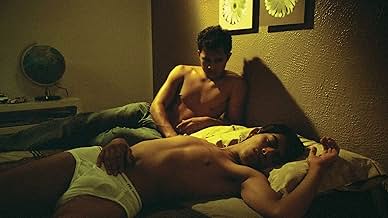
As in the previous Hernández feature, plot and dialogue are minimized. There are voiceovers but the characters rarely speak. We get used to their miming their feelings. Gerardo (Miguel Angel Hoppe) picks up Jonas (Fernando Arroyo) in a playing field at the university and the passionate kisses and embraces and the sex begin right away. Then Jonas starts averting his face when Gerardo tries to caress or kiss him. And yet they're still regularly sleeping together. Gradually a third person enters the picture Sergio (Alejandro Rojo), a slightly older man, a tall, dark, brooding fellow, even easier on the eyes than the other two. He has already watched the pair play hide and seek in the library stacks when he was installing a light bulb. Sergio has wanted Gerardo for a long time, or so he says when they finally get together after one of several encounters in a gay-friendly club in this film, everywhere is gay friendly. Scenes take place either around the university, in the guy's rooms, or in a club; all problems other than love are minimized or eliminated. Except for some yellow filters, the photography is pretty, but straightforward. None of Wong Kar Wai's richly grungy pads here: the rooms are conventional middle-class housing, with tasteful prints on the walls and textbooks on the shelves, not palatial but posh for students' digs. The guys only have a few pairs of jeans, but they sure have lots of shirts.
The message that the film conveys and though it is too long, it's basic idea works; the scenes convey the desired feelings and the editing is seamless at first is that two people never seem to love each other at the same time to the same degree in the same way.
But the ending is a happy and romantic one. Once Sergio and Gerardo are a couple, Jonas begins to long for Gerardo again, and in the final scene, they've gotten back together.
Broken Sky is more like a poem or an opera or most of all, a dance than a conventional film. It's a different experience. The mainstream audience would never put up with all this gay sex without dialogue or plot. Not every gay man will have the patience to watch these amorous comings and goings for the full 140 minutes, either. I'm not sure that the poetic voiceovers were necessary; and a third of them are lost to non Spanish-speakers because the white-on-white subtitles are illegible. They are a bit too poetic and general. The boys are too specific to be so generalized by the language. Needless to say, "the real world" is beyond the range of Broken Sky. But there's no denying that Broken Sky in its own way is unique and beautiful. The director achieves what he was clumsily groping for in his first one. He is using cinematic language in a way that it rarely is any more he achieves the instinctive identification and emotional directness of the silent film. Broken Sky makes you think about the unspoken element in any relationship, the things that can never be communicated in words: in short, the world of eroticism and feelings. Hernández contributes to the effectiveness of his visual poem through excellent use of various musical accompaniments, a few notes on a clavicord, a string quartet above all, a sweet pop love song the lyrics of each lovingly translated in subtitles. It's as if Gerardo and Jonas were trying to live a pop song. And I guess that's what moony young gay guys do a lot of the time. There's even a coloratura operatic aria; considering the operatic tone of things, the filmmakers exercise great forbearance in using only one. Maybe this is "a new cinematic language," as was said of Antonioni's L'Avventura. For a while one can savor it, admire the naive sweetness of it. But can anyone read it? And can it say more than one thing?
As in the previous Hernández feature, plot and dialogue are minimized. There are voiceovers but the characters rarely speak. We get used to their miming their feelings. Gerardo (Miguel Angel Hoppe) picks up Jonas (Fernando Arroyo) in a playing field at the university and the passionate kisses and embraces and the sex begin right away. Then Jonas starts averting his face when Gerardo tries to caress or kiss him. And yet they're still regularly sleeping together. Gradually a third person enters the picture Sergio (Alejandro Rojo), a slightly older man, a tall, dark, brooding fellow, even easier on the eyes than the other two. He has already watched the pair play hide and seek in the library stacks when he was installing a light bulb. Sergio has wanted Gerardo for a long time, or so he says when they finally get together after one of several encounters in a gay-friendly club in this film, everywhere is gay friendly. Scenes take place either around the university, in the guy's rooms, or in a club; all problems other than love are minimized or eliminated. Except for some yellow filters, the photography is pretty, but straightforward. None of Wong Kar Wai's richly grungy pads here: the rooms are conventional middle-class housing, with tasteful prints on the walls and textbooks on the shelves, not palatial but posh for students' digs. The guys only have a few pairs of jeans, but they sure have lots of shirts.
The message that the film conveys and though it is too long, it's basic idea works; the scenes convey the desired feelings and the editing is seamless at first is that two people never seem to love each other at the same time to the same degree in the same way.
But the ending is a happy and romantic one. Once Sergio and Gerardo are a couple, Jonas begins to long for Gerardo again, and in the final scene, they've gotten back together.
Broken Sky is more like a poem or an opera or most of all, a dance than a conventional film. It's a different experience. The mainstream audience would never put up with all this gay sex without dialogue or plot. Not every gay man will have the patience to watch these amorous comings and goings for the full 140 minutes, either. I'm not sure that the poetic voiceovers were necessary; and a third of them are lost to non Spanish-speakers because the white-on-white subtitles are illegible. They are a bit too poetic and general. The boys are too specific to be so generalized by the language. Needless to say, "the real world" is beyond the range of Broken Sky. But there's no denying that Broken Sky in its own way is unique and beautiful. The director achieves what he was clumsily groping for in his first one. He is using cinematic language in a way that it rarely is any more he achieves the instinctive identification and emotional directness of the silent film. Broken Sky makes you think about the unspoken element in any relationship, the things that can never be communicated in words: in short, the world of eroticism and feelings. Hernández contributes to the effectiveness of his visual poem through excellent use of various musical accompaniments, a few notes on a clavicord, a string quartet above all, a sweet pop love song the lyrics of each lovingly translated in subtitles. It's as if Gerardo and Jonas were trying to live a pop song. And I guess that's what moony young gay guys do a lot of the time. There's even a coloratura operatic aria; considering the operatic tone of things, the filmmakers exercise great forbearance in using only one. Maybe this is "a new cinematic language," as was said of Antonioni's L'Avventura. For a while one can savor it, admire the naive sweetness of it. But can anyone read it? And can it say more than one thing?
"Broken Sky" is an art film -- well directed, great performances from the actors and visually entertaining!
"Broken Sky" is an art film with great performances, visually entertaining (stills/photography shots during credits are superbly done!), and plot treatment not usually seen in any gay films. Some people may find scenes excruciatingly long, but I've enjoyed every moment of it and the journey the director wants to convey in this movie. You must know that you need this arduous shots to feel the emotions of the characters in the movie. The sex scenes are tastefully done, not vulgar, and the gratuitous frontal nudity is significant (in one scene, main actor examines his body/self on the mirror). I've always admired Latin cinema movie-making as mostly they always get the right texture and lighting for their 35 mm. movie. In totality, it's one of the best films I've seen during L.A. OUTFEST 2006 (next to movies: "A Love to Hide," "Boy Culture" and "The Blossoming of Maximo Oliveros"). -- Oliver Carnay
Interesting and different kind of film
Saw it at SIFF. This is a different kind of film -- but I loved it. I loved the fact that there wasn't a lot of dialogue. I appreciated the non-verbal aspects of this film. While the lack of dialogue some may find tedious it was nice to see something that wasn't shot for the small screen, something that made me pay attention visually, and something that made me think a bit. I thought the camera technique used to convey the passage of time was quite effective. The only technical aspect which drove me nuts was the use of white subtitles on a white background; fortunately this was a small, small part of the film but at key junctions in the story development. I'm rather fond of this film and would like to watch it again.


Le saviez-vous
- ConnexionsReferenced in Les Griffin: Road to Rupert (2007)
- Bandes originalesEn mi cielo
Written and performed by Volovan
By Arrangement with Universal Music Mexico
Meilleurs choix
Connectez-vous pour évaluer et suivre la liste de favoris afin de recevoir des recommandations personnalisées
Détails
- Date de sortie
- Pays d’origine
- Sites officiels
- Langue
- Aussi connu sous le nom de
- Broken Sky
- Lieux de tournage
- Sociétés de production
- Voir plus de crédits d'entreprise sur IMDbPro
Box-office
- Montant brut aux États-Unis et au Canada
- 29 185 $US
- Week-end de sortie aux États-Unis et au Canada
- 4 956 $US
- 1 oct. 2006
- Montant brut mondial
- 160 445 $US
- Durée
- 2h 20min(140 min)
- Couleur
- Mixage
- Rapport de forme
- 1.85 : 1
Contribuer à cette page
Suggérer une modification ou ajouter du contenu manquant