Women Talking
- 2022
- Tous publics
- 1h 44min


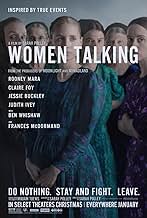
En 2010, les femmes d'une communauté religieuse isolée s'efforcent de concilier leur réalité avec leur foi. Basé sur le roman de Miriam Toews.En 2010, les femmes d'une communauté religieuse isolée s'efforcent de concilier leur réalité avec leur foi. Basé sur le roman de Miriam Toews.En 2010, les femmes d'une communauté religieuse isolée s'efforcent de concilier leur réalité avec leur foi. Basé sur le roman de Miriam Toews.
- Réalisation
- Scénaristes
- Stars
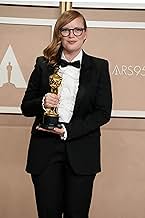
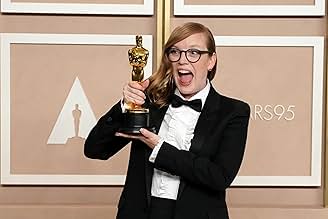
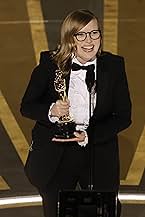
- Récompensé par 1 Oscar
- 65 victoires et 164 nominations au total




6,947.1K
1
2
3
4
5
6
7
8
9
10
Avis à la une
Needs to be seen multiple times to get all the layers
It's an ensemble drama set within 24 hours in 2010 in an unknown location. It follows the conversation of three generations of women discussing how to respond to the sexual abuse and rape experienced by many women in the colony over the previous years.
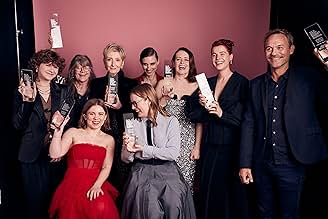
The conversation occurs while the colony's men are away in the city, raising bail for colony men arrested for sexual crimes. Eight women participate in most of the discussion. Two grandmother matriarchs are Agata (Judith Ivey) and Greta (Sheila McCarthy). The next generation includes Ona (Rooney Mara), an unmarried woman pregnant with a child resulting from rape. Mariche (Jessie Buckley) is married to a very abusive husband. Salome (Clare Foy) is Ona's younger married sister who is very angry over the abuse of her young daughter. Some girls from the next generation provide comments and some narration to the film. Scarface Janz (Frances McDormand), another matriarch, leaves the discussion early. Since the women are illiterate (only boys go to school), they ask the schoolteacher, August (Ben Whishaw), to record their discussion. August, who had left the colony with his mother, was university-educated but was allowed to return to teach school.
The film shows no sexual violence but does show some results of the violence. The only adult male face seen throughout is that of August. The women discuss three options: staying and forgiving the perpetrators, staying and fighting the perpetrators, or leaving with all the children under a certain age. They must make a quick decision because one of the men is returning from the city in the evening. The decision taken by the group is a very "Mennonite" one.
I had a lot of ambivalence going into the film. I didn't like the novel when I read it several years ago. The author closely tied the story to accounts of crimes in one of Bolivia's very conservative Mennonite groups. However, the novel's nuanced dialogue was far beyond illiterate Mennonite women without education who could not even read a map. And a university-educated August would never be allowed back to teach in such a conservative colony.
Sarah Polley extracts the story from Mennonite specificity (the film never mentions the word and doesn't mention "Mennonite" last names). Polley uses very subdued colors in the filming, reinforcing the conservative impression. Although the movie's setting still looks Mennonite, its greater abstraction allowed me to focus on the issues being discussed--rage, forced ignorance, the necessity of faith and how to reconcile this faith with what happened, how best to embody their pacifist ethic, etc. The discussion is wide-ranging and doesn't provide easy and ready solutions. Rooney Mara, Claire Foy, and Jessie Buckley are excellent as they express contrasting and shifting perspectives.
"Women Talking" probably needs to be seen multiple times to get all the layers. The Mennonite context sells the movie, but for me, it only made sense to push that representation to the rear. I wish critics would focus on it less. The film's ending unfolds a little too slowly once their decision has been made.
The conversation occurs while the colony's men are away in the city, raising bail for colony men arrested for sexual crimes. Eight women participate in most of the discussion. Two grandmother matriarchs are Agata (Judith Ivey) and Greta (Sheila McCarthy). The next generation includes Ona (Rooney Mara), an unmarried woman pregnant with a child resulting from rape. Mariche (Jessie Buckley) is married to a very abusive husband. Salome (Clare Foy) is Ona's younger married sister who is very angry over the abuse of her young daughter. Some girls from the next generation provide comments and some narration to the film. Scarface Janz (Frances McDormand), another matriarch, leaves the discussion early. Since the women are illiterate (only boys go to school), they ask the schoolteacher, August (Ben Whishaw), to record their discussion. August, who had left the colony with his mother, was university-educated but was allowed to return to teach school.
The film shows no sexual violence but does show some results of the violence. The only adult male face seen throughout is that of August. The women discuss three options: staying and forgiving the perpetrators, staying and fighting the perpetrators, or leaving with all the children under a certain age. They must make a quick decision because one of the men is returning from the city in the evening. The decision taken by the group is a very "Mennonite" one.
I had a lot of ambivalence going into the film. I didn't like the novel when I read it several years ago. The author closely tied the story to accounts of crimes in one of Bolivia's very conservative Mennonite groups. However, the novel's nuanced dialogue was far beyond illiterate Mennonite women without education who could not even read a map. And a university-educated August would never be allowed back to teach in such a conservative colony.
Sarah Polley extracts the story from Mennonite specificity (the film never mentions the word and doesn't mention "Mennonite" last names). Polley uses very subdued colors in the filming, reinforcing the conservative impression. Although the movie's setting still looks Mennonite, its greater abstraction allowed me to focus on the issues being discussed--rage, forced ignorance, the necessity of faith and how to reconcile this faith with what happened, how best to embody their pacifist ethic, etc. The discussion is wide-ranging and doesn't provide easy and ready solutions. Rooney Mara, Claire Foy, and Jessie Buckley are excellent as they express contrasting and shifting perspectives.
"Women Talking" probably needs to be seen multiple times to get all the layers. The Mennonite context sells the movie, but for me, it only made sense to push that representation to the rear. I wish critics would focus on it less. The film's ending unfolds a little too slowly once their decision has been made.
They did talk...
I feel this was a missed opportunity, I was surprised to see that this was based on real events, not in America but rather in Bolivia (even though they all speak English, but that's a topic for another discussion), somehow I really doubt it went down the way it did.
They took advantage of the story and tried to approach it "12 Angry Men style" with relevant topics of gender discrimination and feminism, but while there's a good concept behind the idea and the topics themselves are highly important and relevant, I felt the execution didn't do them justice.
The set is a bit odd, even though its "based on true events" the language and the way the argumentation takes place doesn't really match the closed religious community set.
They could've used a different plot to make these statements, it feels very forced and the discussion almost feel separate of the rest of the movie storyline, it's just an odd experience.
Also even though the movie isn't too long it feel extended, the conclusion is a bit anti-climactic and a rather slow burner and it's hard to identify with most of the characters.
Interesting approach, relevant topics and discussion, questionable execution.
Far from being an Academy Award worthy contender.
They took advantage of the story and tried to approach it "12 Angry Men style" with relevant topics of gender discrimination and feminism, but while there's a good concept behind the idea and the topics themselves are highly important and relevant, I felt the execution didn't do them justice.
The set is a bit odd, even though its "based on true events" the language and the way the argumentation takes place doesn't really match the closed religious community set.
They could've used a different plot to make these statements, it feels very forced and the discussion almost feel separate of the rest of the movie storyline, it's just an odd experience.
Also even though the movie isn't too long it feel extended, the conclusion is a bit anti-climactic and a rather slow burner and it's hard to identify with most of the characters.
Interesting approach, relevant topics and discussion, questionable execution.
Far from being an Academy Award worthy contender.
Suspend disbelief.....
This movie needs to be seen in the view of what domestic abuse victims suffer through in their decision process to stay, fight, or leave. Taken in that sense, the conflicts that each woman and the group experience make sense. If you expect a dramatic story within the construct (that of an ultra-conservative fundamentalist community, where the women are kept illiterate and totally subjugated to the men), well then it won't work. These women were much too intelligent to be illiterate, and the men would have been much more a factor in the outcome.
The movie is really about the heartbreaking choices abused women are faced with. Stripped out of the setting and set up, it does work. Suspend disbelief and you will be moved.
The movie is really about the heartbreaking choices abused women are faced with. Stripped out of the setting and set up, it does work. Suspend disbelief and you will be moved.
A powerful movie, with a great cast.
A group of women from a small religious community discuss various violent acts, beatings and rape.
It is a heavy going watch, a film that manages to intrigue, sicken and inform. Some of the content, some of what you'll hear will genuinely lower your opinion on human nature, the harrowing acts some people can commit.
The best element for me, the acting, if I had to pick out a standout, I'd argue Claire Foy did a supreme job, but the likes of Ben Wishaw and Frances McDormand were excellent also.
I feel like it plays out like a stage play, I can only imagine how powerful some of the content would play out in a small, intimate theatre, one or two bits maybe get a little lost in translation onto the big screen.
I've read some very impressive reviews about this film, some people have spoken candidly about first hand experience of violence, that has clearly given them a different perspective on the film.
At times I felt a little bit like an outsider looking in, and sometimes I couldn't relate, or get into it, some of the sequences felt just a tad slow, some threads were explored but not tied up, I suppose that's just normal in such circumstances.
It's definitely a powerful time, and one that's very, very relevant in today's day and age, a time where women's rights seem to be being downplayed somewhat.
I would recommend it.
7/10.
It is a heavy going watch, a film that manages to intrigue, sicken and inform. Some of the content, some of what you'll hear will genuinely lower your opinion on human nature, the harrowing acts some people can commit.
The best element for me, the acting, if I had to pick out a standout, I'd argue Claire Foy did a supreme job, but the likes of Ben Wishaw and Frances McDormand were excellent also.
I feel like it plays out like a stage play, I can only imagine how powerful some of the content would play out in a small, intimate theatre, one or two bits maybe get a little lost in translation onto the big screen.
I've read some very impressive reviews about this film, some people have spoken candidly about first hand experience of violence, that has clearly given them a different perspective on the film.
At times I felt a little bit like an outsider looking in, and sometimes I couldn't relate, or get into it, some of the sequences felt just a tad slow, some threads were explored but not tied up, I suppose that's just normal in such circumstances.
It's definitely a powerful time, and one that's very, very relevant in today's day and age, a time where women's rights seem to be being downplayed somewhat.
I would recommend it.
7/10.
A Plea, A Protest & A Parable All At Once
Powered by strong performances across the board, Women Talking follows the women of an isolated & ultraconservative community who take it upon themselves to decide the course of their future in the wake of a shattering revelation which compels them to reconcile their faith with their violent reality. Bracingly crafted & effectively told, it serves as a plea, a protest & a parable all at once.
Written & directed by Sarah Polley, the story borrows its premise from a real-life event and the film is an imagined response to it - a reaction through fiction. The disturbing truth surfaces in gut-punching ways as the women argue & discuss their next move while snippets of their past adds more weight to their collective pain, rage, fear & trauma. It does get repetitive but it also gets the point across with clarity.
The colour grading is an interesting choice, for it illustrates the bleakness of their existence in a colony ripe with unchecked male aggression but more could've been achieved with the camera. Still, what it lacks in cinematic qualities, it makes up in dramatic heft & strong emotional wallop, thanks to impressive work from the entire cast, ranging from Claire Foy's fierce rendition to Ben Whishaw's tender act, all enriching the narrative.
Overall, Women Talking is a timely, topical & thought-provoking drama that brims with hate, hurt & heartbreak in its illustration of the horrifying reality of female experience but there is also hope for a better future despite the agonising brutality of their past & present. Though there was more up for grabs which it fumbles with its very own creative choices, the commitment from the cast & searing intensity of their inputs makes it an essential viewing.
Written & directed by Sarah Polley, the story borrows its premise from a real-life event and the film is an imagined response to it - a reaction through fiction. The disturbing truth surfaces in gut-punching ways as the women argue & discuss their next move while snippets of their past adds more weight to their collective pain, rage, fear & trauma. It does get repetitive but it also gets the point across with clarity.
The colour grading is an interesting choice, for it illustrates the bleakness of their existence in a colony ripe with unchecked male aggression but more could've been achieved with the camera. Still, what it lacks in cinematic qualities, it makes up in dramatic heft & strong emotional wallop, thanks to impressive work from the entire cast, ranging from Claire Foy's fierce rendition to Ben Whishaw's tender act, all enriching the narrative.
Overall, Women Talking is a timely, topical & thought-provoking drama that brims with hate, hurt & heartbreak in its illustration of the horrifying reality of female experience but there is also hope for a better future despite the agonising brutality of their past & present. Though there was more up for grabs which it fumbles with its very own creative choices, the commitment from the cast & searing intensity of their inputs makes it an essential viewing.


Le saviez-vous
- AnecdotesExplaining the color grading of the film, director Sarah Polley said the filmmakers played with saturation levels to create a feeling of "a world that had faded in the past." This is why the film appears to be almost black and white, but not quite.
- GaffesNettie identifies as a man name "Melvin". The Mennonite do not allow members to identify as anything other than their biological sex and gender. In real life, Nettie would have been excommunicated. There are over one hundred different Anabaptist (Amish, Brethren, Hutterite, Mennonite) church groups, counting more than 6,000 congregations, all holding to slightly different traditions and their own interpretations of the Bible. The movie never identified the Anabaptist group of the colony.
- Bandes originalesDaydream Believer
Written by John Stewart
Performed by The Monkees
Courtesy of Rhino Entertainment Company
By arrangement with Warner Music Group Film & TV Licensing
Meilleurs choix
Connectez-vous pour évaluer et suivre la liste de favoris afin de recevoir des recommandations personnalisées
Détails
- Date de sortie
- Pays d’origine
- Site officiel
- Langue
- Aussi connu sous le nom de
- Ellas hablan
- Lieux de tournage
- Enercare Centre, 100 Princes' Boulevard, Toronto, Ontario, Canada(Barn interior scenes)
- Sociétés de production
- Voir plus de crédits d'entreprise sur IMDbPro
Box-office
- Montant brut aux États-Unis et au Canada
- 5 456 531 $US
- Week-end de sortie aux États-Unis et au Canada
- 40 530 $US
- 25 déc. 2022
- Montant brut mondial
- 9 276 103 $US
- Durée
- 1h 44min(104 min)
- Couleur
- Rapport de forme
- 2.76 : 1
Contribuer à cette page
Suggérer une modification ou ajouter du contenu manquant