Vleesdag
- 2025
- 1h 26min


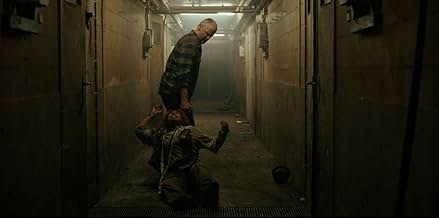
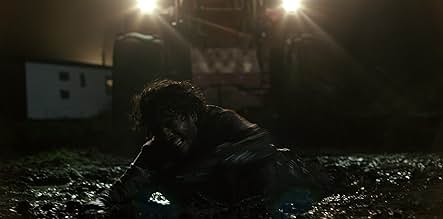
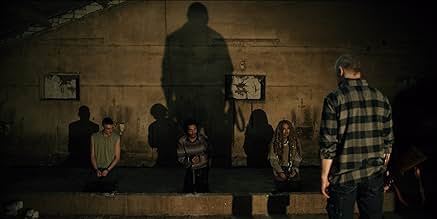
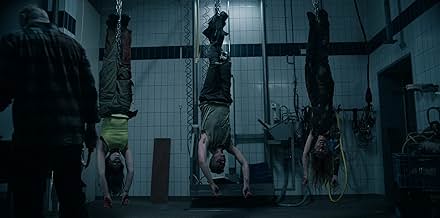
Ajouter une intrigue dans votre langueTo join an activist group, Mirthe films a pig farm's cruelty. When they return to free the pigs, they're already dead. The leader seeks revenge on the farmer's children, forcing Mirthe to ch... Tout lireTo join an activist group, Mirthe films a pig farm's cruelty. When they return to free the pigs, they're already dead. The leader seeks revenge on the farmer's children, forcing Mirthe to choose sides as violence erupts.To join an activist group, Mirthe films a pig farm's cruelty. When they return to free the pigs, they're already dead. The leader seeks revenge on the farmer's children, forcing Mirthe to choose sides as violence erupts.
- Réalisation
- Scénariste
- Stars


5,9839
1
2
3
4
5
6
7
8
9
10
Avis à la une
Failed to entertain me...
Needless to say that I had, of course, never heard about this 2025 Dutch horror movie titled "Vleesdag" prior to stumbling upon it by random chance. And given my love of all things horror, of course I had to check out this movie, even without knowing what I was in for.
Writer Paul de Vrijer put together a script that sadly failed to entertain me. The narrative just didn't latch on to me, and the character gallery was too bland.
Given my very limited exposure to the Dutch cinema, then I wasn't familiar with a single actor or actress on the cast list. And that was actually something that worked in favor of the movie. And I will say that the acting performances in the movie were good, despite the fact that the script was a dud.
Oddly enough this movie was titled "Meat Kills", when the literal translation from Dutch is "Meat Day".
Hardly a noteworthy foray into the horror genre, despite some fair enough special effects. Hardly a movie that I would recommend to horror fans, and definitely not a movie that I will return to watch a second time.
My rating of director Martijn Smits's 2025 movie "Vleesdag" lands on a generous three out of ten stars.
Writer Paul de Vrijer put together a script that sadly failed to entertain me. The narrative just didn't latch on to me, and the character gallery was too bland.
Given my very limited exposure to the Dutch cinema, then I wasn't familiar with a single actor or actress on the cast list. And that was actually something that worked in favor of the movie. And I will say that the acting performances in the movie were good, despite the fact that the script was a dud.
Oddly enough this movie was titled "Meat Kills", when the literal translation from Dutch is "Meat Day".
Hardly a noteworthy foray into the horror genre, despite some fair enough special effects. Hardly a movie that I would recommend to horror fans, and definitely not a movie that I will return to watch a second time.
My rating of director Martijn Smits's 2025 movie "Vleesdag" lands on a generous three out of ten stars.
Not for Vegans. Marketting spoiled this as overhyped as gory when not rhat gory at all.
Aka MEAT DAY.
Just finished watching it.
And throughout I was really wanting it to prove to me that it wasn't the usual overhyped nonsense we usually see.
Sadly it was and the whole film was actually quite tame except one, maybe two kill scenes (first real kill was an amusing callback to a earlier foreshadowing scene, I smiled because I had thought to myself, "I bet thats how he dies later" and there it was. Ha ha)
None of the characters are particularly likeable at all so I puzzled who I was meant to be rooting for lot of the time.
It doesn't hugely paint either side in a good light really so can't be seen as either pro or anti Meat. Make of that as you will.
The activists really were awful people from the start though in this film and it seems the Farmer was just doing his job until they arrived and things quickly got out of hand. With the activists being the main protagonists of abuse and torture.
After an inevitable death there are a couple of cat n mouse scenes which really didnt work or build any tension at all. Unsure why but the director failed to create any real tension with those scene. Even though most of the actors were good. Maybe because didnr care for them at all.
An attempt at some sort of love story felt forced in and didnt really change anything. The one son flip flopping sides was frustrating.
The main badly was taken out quickly and kinda prematurely anticlimax. Leaving me thinking......is that it!? Oh! The scene was very bloody but not paticularly gory. And noticed one continuity error as victims face had hardly any blood on it at end even though was covered during. Oops.
A predictable first ending. (Although the final little ending was kinda unexpected and fun) good girl.
All in all an OK film. Nothing original. Badly overhyped as this amazing Gorefest by many as the first NC17 Horror from Netherlands or something. They do seem a little behind but hoping they'll catch up. And up the gore. (Maybe take notes from French films 'Inside' & 'Haute Tension') But apart from a couple of scenes it was tame.
Just finished watching it.
And throughout I was really wanting it to prove to me that it wasn't the usual overhyped nonsense we usually see.
Sadly it was and the whole film was actually quite tame except one, maybe two kill scenes (first real kill was an amusing callback to a earlier foreshadowing scene, I smiled because I had thought to myself, "I bet thats how he dies later" and there it was. Ha ha)
None of the characters are particularly likeable at all so I puzzled who I was meant to be rooting for lot of the time.
It doesn't hugely paint either side in a good light really so can't be seen as either pro or anti Meat. Make of that as you will.
The activists really were awful people from the start though in this film and it seems the Farmer was just doing his job until they arrived and things quickly got out of hand. With the activists being the main protagonists of abuse and torture.
After an inevitable death there are a couple of cat n mouse scenes which really didnt work or build any tension at all. Unsure why but the director failed to create any real tension with those scene. Even though most of the actors were good. Maybe because didnr care for them at all.
An attempt at some sort of love story felt forced in and didnt really change anything. The one son flip flopping sides was frustrating.
The main badly was taken out quickly and kinda prematurely anticlimax. Leaving me thinking......is that it!? Oh! The scene was very bloody but not paticularly gory. And noticed one continuity error as victims face had hardly any blood on it at end even though was covered during. Oops.
A predictable first ending. (Although the final little ending was kinda unexpected and fun) good girl.
All in all an OK film. Nothing original. Badly overhyped as this amazing Gorefest by many as the first NC17 Horror from Netherlands or something. They do seem a little behind but hoping they'll catch up. And up the gore. (Maybe take notes from French films 'Inside' & 'Haute Tension') But apart from a couple of scenes it was tame.
Turns Opponents of Animal Exploitation into the Real Monsters
The narrative architecture of Meat Kills distributes moral legitimacy. The story positions the farmer as the morally intelligible protector whose violence is framed as reactive and therefore excusable, while activists are portrayed as the initiators of brutality. This asymmetry reproduces a classic pattern described in the moral typecasting literature in which one group is coded as a moral agent and the other as a moral threat, regardless of the structural context in which harm actually occurs.
The film's portrayal of activism further reflects a familiar media distortion: activists are depicted not as political actors confronting systemic animal exploitation, but as inherently violent extremists. Research on protest coverage has shown how media routinely amplify radicalized stereotypes to delegitimize activist movements. Meat Kills mirrors this pattern, presenting lethal violence by activists-an empirically unsubstantiated phenomenon-as central to its conflict. The effect is to redirect the viewer's moral attention away from institutionalized animal harm and toward the preservation of an agrarian household.
This sentimental centering of the farming family fits within what animal-studies scholars identify as agrarian sentimentalism: a narrative mode that foregrounds rural precarity while rendering animal suffering invisible. By framing meat production as the threatened norm and activism as the destabilizing force, the film reinforces dominant carnist assumptions rather than interrogating them. The result is not a morally ambiguous thriller but a story that tacitly normalizes violence toward animals while pathologizing attempts to challenge it.
Compounding this representational imbalance is the absence of any public information about ethical standards during production. No available sources clarify whether animal-derived materials were used or whether non-animal alternatives were employed, leaving the film's own ethical footprint undocumented. The classic 'no animals were harmed' notion at the end credits is non-existent here. The crew filmed in an operational slaughterhouse with animals inside.
Meat Kills thus replicates a broader discursive pattern: it humanizes the agents of structural animal exploitation while caricaturing those who contest it. The film's tension may register as effective genre storytelling, but its ideological effects are clear. It leaves the viewer with a moral world in which institutionalized animal harm is an unremarkable part of everyday life, and those who confront it are framed as extremist and dangerous.
The film's portrayal of activism further reflects a familiar media distortion: activists are depicted not as political actors confronting systemic animal exploitation, but as inherently violent extremists. Research on protest coverage has shown how media routinely amplify radicalized stereotypes to delegitimize activist movements. Meat Kills mirrors this pattern, presenting lethal violence by activists-an empirically unsubstantiated phenomenon-as central to its conflict. The effect is to redirect the viewer's moral attention away from institutionalized animal harm and toward the preservation of an agrarian household.
This sentimental centering of the farming family fits within what animal-studies scholars identify as agrarian sentimentalism: a narrative mode that foregrounds rural precarity while rendering animal suffering invisible. By framing meat production as the threatened norm and activism as the destabilizing force, the film reinforces dominant carnist assumptions rather than interrogating them. The result is not a morally ambiguous thriller but a story that tacitly normalizes violence toward animals while pathologizing attempts to challenge it.
Compounding this representational imbalance is the absence of any public information about ethical standards during production. No available sources clarify whether animal-derived materials were used or whether non-animal alternatives were employed, leaving the film's own ethical footprint undocumented. The classic 'no animals were harmed' notion at the end credits is non-existent here. The crew filmed in an operational slaughterhouse with animals inside.
Meat Kills thus replicates a broader discursive pattern: it humanizes the agents of structural animal exploitation while caricaturing those who contest it. The film's tension may register as effective genre storytelling, but its ideological effects are clear. It leaves the viewer with a moral world in which institutionalized animal harm is an unremarkable part of everyday life, and those who confront it are framed as extremist and dangerous.
A truly enjoyable and likable Dutch slasher
Desperate to make an impression, a woman trying to get involved in an animal-rights activist group leads them to a farm where they overtake the family that works there, but as the night progresses and each side battles for supremacy, it begins to take a toll as both groups struggle to survive.
Overall, this was a rather strong genre effort with a lot to like. One of the better factors with this one comes from the immensely strong and enjoyable setup that manages to talk candidly about a genuine problem as a pretense for getting the group into danger. The idea of the activist believing they're in the right, taking out the owners of the farm for perceived cruelty to animals, and deciding to go after them to make sure their personal brand of justice is imposed, offers the kind of engrossing setup that gives everything that happens to them a strong purpose. When they decide to take action and sneak onto the property to carry out their plan and become successful enough to take the family hostage and begin working with their plans, it sets off a generally fun series of conflicts where it changes sides who's allegiance to what side of the cruelty sphere people are going to fall on when each side takes hold of the situation to either stop the family from killing them or the family has the upperhand and dishing out punishment. That is accomplished through a series of impressive stalking scenes that utilize their surroundings or the different motivations of the group at the time. With the early scenes of them taking over the house and holding them hostage trying to impart the idea of their determination to stop the slaughter of pigs against the family trying to justify everything, the whole thing becomes twisted nicely into a series of flip-flopping struggles for power that mean there's some great brawls and tortures that go on with each side looking to escape their situation to get something happening for their side. That means plenty of high-energy confrontations and plenty of brutal, graphic encounters that are designed to mimic the treatment of pigs, which is quite nicely highlighted in the finale with the struggle to get to safety. The effective use of the great gore make-up that looks incredibly wet and graphic helps this significantly, and alongside the shocking twist ending that's quite unexpected, these all provide the film with a lot to like. There are a few slight drawbacks here to hold this one down. The most obvious issue here is the inability to connect with the activist on their mission, as everything they spout seems to be with the right intentions, but is told in the wrong context. These scenes show them operating under the guise of trying to understand what the family is doing to the pigs, but it soon turns into an idea of being cruel for the sake of being cruel, with how they target and torture the family without any kind of genuine proof that they're doing anything wrong to warrant the intrusion in the first place. It goes against any kind of interest to see what's happening to the shift in behavior since the ideology they spout to justify everything is so off-putting that it's hard to get behind. The other slight drawback is how it tries to also paint the extreme jump to murder and torture from the family as the logical step, as that becomes somewhat of a large jump that never feels like it should be justified, which makes this feel unlikely as they hold it down.
Rated Unrated/R: Extreme Graphic Violence and Graphic Language.
Overall, this was a rather strong genre effort with a lot to like. One of the better factors with this one comes from the immensely strong and enjoyable setup that manages to talk candidly about a genuine problem as a pretense for getting the group into danger. The idea of the activist believing they're in the right, taking out the owners of the farm for perceived cruelty to animals, and deciding to go after them to make sure their personal brand of justice is imposed, offers the kind of engrossing setup that gives everything that happens to them a strong purpose. When they decide to take action and sneak onto the property to carry out their plan and become successful enough to take the family hostage and begin working with their plans, it sets off a generally fun series of conflicts where it changes sides who's allegiance to what side of the cruelty sphere people are going to fall on when each side takes hold of the situation to either stop the family from killing them or the family has the upperhand and dishing out punishment. That is accomplished through a series of impressive stalking scenes that utilize their surroundings or the different motivations of the group at the time. With the early scenes of them taking over the house and holding them hostage trying to impart the idea of their determination to stop the slaughter of pigs against the family trying to justify everything, the whole thing becomes twisted nicely into a series of flip-flopping struggles for power that mean there's some great brawls and tortures that go on with each side looking to escape their situation to get something happening for their side. That means plenty of high-energy confrontations and plenty of brutal, graphic encounters that are designed to mimic the treatment of pigs, which is quite nicely highlighted in the finale with the struggle to get to safety. The effective use of the great gore make-up that looks incredibly wet and graphic helps this significantly, and alongside the shocking twist ending that's quite unexpected, these all provide the film with a lot to like. There are a few slight drawbacks here to hold this one down. The most obvious issue here is the inability to connect with the activist on their mission, as everything they spout seems to be with the right intentions, but is told in the wrong context. These scenes show them operating under the guise of trying to understand what the family is doing to the pigs, but it soon turns into an idea of being cruel for the sake of being cruel, with how they target and torture the family without any kind of genuine proof that they're doing anything wrong to warrant the intrusion in the first place. It goes against any kind of interest to see what's happening to the shift in behavior since the ideology they spout to justify everything is so off-putting that it's hard to get behind. The other slight drawback is how it tries to also paint the extreme jump to murder and torture from the family as the logical step, as that becomes somewhat of a large jump that never feels like it should be justified, which makes this feel unlikely as they hold it down.
Rated Unrated/R: Extreme Graphic Violence and Graphic Language.
The bloodiest, yes ... but also one of the best!
With lots of pride and a bit of inevitable show, "Vleesdag" is currently being promoted as the bloodiest horror film ever made in the Netherlands. Is that so? Yes, certainly, but to be honest, the competition for this honorable title is not that big. What I personally find more important is that "Vleesdag" in general has become one of the better Dutch horror films of the last 20-25 years, and that has a lot to do with the choice of a very actual and relevant theme, and it has even more to do with the conscious decision to make it a dead-serious & brutal film instead of half a comedy. Unfortunately, the latter happens too often.
The Netherlands is a country with many extreme activists, that is simply undeniable. The climate and animal rights activists are very fanatical here, so the characters that invade a pig farm/slaughterhouse to save the animals are quite believable and realistic (even though they are quite unpleasant themselves). However, they do not encounter helpless pigs, but a farming family struggling with financial and emotional issues, and so the confrontation quickly gets out of hand.
What is especially splendid about the screenplay by Paul De Vrijer and the direction by Martijn Smits is that the point of view remains neutral and objective. Needless animal suffering for the food industry is unacceptable, but the illegal trespassing and destructing of other people's property is also something that should not remain unpunished. "Vleesdag" leaves the final judgment to the viewer. And yes, the gore and the bloody massacres are great! What makes it even better for old-school horror fanatics is that almost everything was realized with practical makeup effects, without much interference from digital effects. The violence is mean and hardcore, but not too extreme. Here and there it could have been even a bit more extreme. Nevertheless, warmly recommended for fans of nasty horror, whether they are from the Netherlands or the rest of the world.
The Netherlands is a country with many extreme activists, that is simply undeniable. The climate and animal rights activists are very fanatical here, so the characters that invade a pig farm/slaughterhouse to save the animals are quite believable and realistic (even though they are quite unpleasant themselves). However, they do not encounter helpless pigs, but a farming family struggling with financial and emotional issues, and so the confrontation quickly gets out of hand.
What is especially splendid about the screenplay by Paul De Vrijer and the direction by Martijn Smits is that the point of view remains neutral and objective. Needless animal suffering for the food industry is unacceptable, but the illegal trespassing and destructing of other people's property is also something that should not remain unpunished. "Vleesdag" leaves the final judgment to the viewer. And yes, the gore and the bloody massacres are great! What makes it even better for old-school horror fanatics is that almost everything was realized with practical makeup effects, without much interference from digital effects. The violence is mean and hardcore, but not too extreme. Here and there it could have been even a bit more extreme. Nevertheless, warmly recommended for fans of nasty horror, whether they are from the Netherlands or the rest of the world.


Le saviez-vous
- AnecdotesThis marks the first ever Dutch horror movie with a 18+ classification. For American viewers: rated NC-17.
- GaffesWhen Mirthe ties the tourniquet on Nasha's leg, she ties it below the wound, which would do nothing but cut off the blood flow to the rest of the leg.
Meilleurs choix
Connectez-vous pour évaluer et suivre la liste de favoris afin de recevoir des recommandations personnalisées
Détails
- Durée
- 1h 26min(86 min)
- Couleur
- Rapport de forme
- 2.00 : 1
Contribuer à cette page
Suggérer une modification ou ajouter du contenu manquant