IMDb रेटिंग
7.4/10
48 हज़ार
आपकी रेटिंग


काउंट ड्रैकुला ट्रांसिल्वेनिया से विस्मर तक जाता है, पूरे देश में ब्लैक प्लेग फैलाता है. केवल एक शुद्ध दिल वाली महिला ही उसके आतंक के शासन का अंत कर सकती है.काउंट ड्रैकुला ट्रांसिल्वेनिया से विस्मर तक जाता है, पूरे देश में ब्लैक प्लेग फैलाता है. केवल एक शुद्ध दिल वाली महिला ही उसके आतंक के शासन का अंत कर सकती है.काउंट ड्रैकुला ट्रांसिल्वेनिया से विस्मर तक जाता है, पूरे देश में ब्लैक प्लेग फैलाता है. केवल एक शुद्ध दिल वाली महिला ही उसके आतंक के शासन का अंत कर सकती है.
- पुरस्कार
- 5 जीत और कुल 8 नामांकन




Rijk de Gooyer
- Town official
- (as Ryk de Gooyer)


Attila Árpa
- Violinist Boy
- (बिना क्रेडिट के)
Michael Edols
- Lord of the Manor
- (बिना क्रेडिट के)
7.448.4K
1
2
3
4
5
6
7
8
9
10
फ़ीचर्ड समीक्षाएं
Stunning!!
I just purchased this on DVD and its easily one of my favorite new disks. Included in the DVD masterpiece are: the English Version, the German Version with English subtitles, audio commentary by director Werner Herzog, 2 different US theatrical trailers, 1 Spanish theatrical trailer and even a making of the movie mini-feature!!! Very worth the money!!!
This is not an average movie by any means!!! It also appears to be a salute to the great German Expressionist films of the early 1900's. The story line is very intelligent and compassionate. The dialogue is spoken very soft and slowly. There is not very much action in the film, but the performances and cinematography are nothing short of breathtaking!!
Klaus Kinski plays a very convincing Dracula in this 1979 classic. His slow movements are almost hypnotizing!!! Just watch how he moves his hands!! They move so slow and very mysterious!! The guy who played the "nut case" was great!! The images of coffins, crucifixes, rats, and how rumors of the plague were spreading were brilliantly executed.
If you liked this film, you might want to check out 1992's "The Cronos" for another example of a compassionate and intelligent story about Vampires, but set in Mexico. Both films explore the "humanistic" internal conflict in vampires.
This is not an average movie by any means!!! It also appears to be a salute to the great German Expressionist films of the early 1900's. The story line is very intelligent and compassionate. The dialogue is spoken very soft and slowly. There is not very much action in the film, but the performances and cinematography are nothing short of breathtaking!!
Klaus Kinski plays a very convincing Dracula in this 1979 classic. His slow movements are almost hypnotizing!!! Just watch how he moves his hands!! They move so slow and very mysterious!! The guy who played the "nut case" was great!! The images of coffins, crucifixes, rats, and how rumors of the plague were spreading were brilliantly executed.
If you liked this film, you might want to check out 1992's "The Cronos" for another example of a compassionate and intelligent story about Vampires, but set in Mexico. Both films explore the "humanistic" internal conflict in vampires.
How do you remake one of the most historic films your country ever produced?
With Nosferatu: Phantom der Nacht, Werner Herzog replies firmly "by making it your own". Undertaking not only his first genre film in a career rich enough already by 1979 to earn Herzog a place among the most prolific German directors, but also a film with so much baggage, historical, stylistic or otherwise. Not only a retelling essentially of Bram Stocker's Dracula story but also a reimagining an expressionist universe defined by Herzog's cinematic forefathers (FW Murnau a key figure among them). In that aspect, Noferatu is one of the loftier, most ambitious and trickiest films Herzog tackled in a career already filled with them.
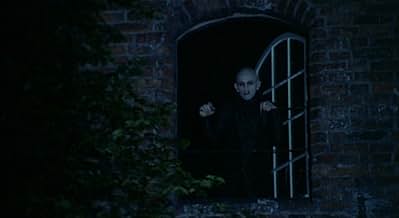
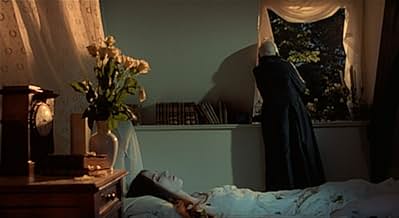
Anyone who comes to this with a previous experience of Herzog's style will realize that the German infant terrible has made the material unmistakeably his. Like most of his films, Noferatu is like a film about a dream about a documentary depicting weird people doing weird things - yet, beneath the minimalism of the plot and the docu-style naturalism of his photography, the movie resonates with the kind of hypnotic power Coppola missed in the alchemical migraine of his '92 version. Filming a medieval German town swept by plague like a grotesque carnival complete with people dancing with goats on tables and having a feast in the middle of a swarm of mice, Herzog goes on to choreograph a heavily made-up Klaus Kinski (looking like a rodent and playing a theatric version of his real half-mad self) through the steps Max Schreck's character took on the deck of the ship in the original movie as though he wants to prove that he can make it look every bit as creepy as Murnau did.
Perhaps reflecting the original in this department, Herzog's Nosferatu is still a pretty uneven film. Parts of it work better than others. When Kinski makes a grand appearance seething malice and despair, the screen is on fire. Grand antics work really well for this kind of character and this kind of movie. Bruno Ganz and Isabelle Adjani have enough charisma to carry the rest of the movie but the story structure occasionally betrays them. When Herzog cuts to Renfield's parts, you can feel the movie loosing steam with every gleeful cackle. When he cuts back to some kind of devilment going on, or even better the surreal stylizations of a bat flying in slow-motion set to Popol Vuh's repetitive drones, the movie comes closer to hitting the right emotional notes. When it achieves that kind of hypnotic, nightmarish vibe, the movie is great; when it doesn't, it's not bad.
And lastly, even though I understand Herzog's dislike for formalism, is there any particular reason why 90% of the movie is shot from eye-level? Makes one wish for the extreme skewed angles of Japanese New Wave directors.
Anyone who comes to this with a previous experience of Herzog's style will realize that the German infant terrible has made the material unmistakeably his. Like most of his films, Noferatu is like a film about a dream about a documentary depicting weird people doing weird things - yet, beneath the minimalism of the plot and the docu-style naturalism of his photography, the movie resonates with the kind of hypnotic power Coppola missed in the alchemical migraine of his '92 version. Filming a medieval German town swept by plague like a grotesque carnival complete with people dancing with goats on tables and having a feast in the middle of a swarm of mice, Herzog goes on to choreograph a heavily made-up Klaus Kinski (looking like a rodent and playing a theatric version of his real half-mad self) through the steps Max Schreck's character took on the deck of the ship in the original movie as though he wants to prove that he can make it look every bit as creepy as Murnau did.
Perhaps reflecting the original in this department, Herzog's Nosferatu is still a pretty uneven film. Parts of it work better than others. When Kinski makes a grand appearance seething malice and despair, the screen is on fire. Grand antics work really well for this kind of character and this kind of movie. Bruno Ganz and Isabelle Adjani have enough charisma to carry the rest of the movie but the story structure occasionally betrays them. When Herzog cuts to Renfield's parts, you can feel the movie loosing steam with every gleeful cackle. When he cuts back to some kind of devilment going on, or even better the surreal stylizations of a bat flying in slow-motion set to Popol Vuh's repetitive drones, the movie comes closer to hitting the right emotional notes. When it achieves that kind of hypnotic, nightmarish vibe, the movie is great; when it doesn't, it's not bad.
And lastly, even though I understand Herzog's dislike for formalism, is there any particular reason why 90% of the movie is shot from eye-level? Makes one wish for the extreme skewed angles of Japanese New Wave directors.
Atmospheric Remake of a Classic
In Wismar, Germany, Lucy (Isabelle Adjani) and the real state agent Jonathan Harker (Bruno Ganz) is a happily married couple. Jonathan's boss Renfield (Roland Topor) sends him to Transylvania to sell an old house in Wismar to Count Dracula (Klaus Kinski). Jonathan is advised by the locals of a village to return since the count is a vampire, but he does not give up of his intent.
Jonathan visits Count Dracula and when he sees the photograph of Lucy, he immediately buys the real estate. He drinks the blood of Jonathan and navigates to Wismar, carrying coffins with the soil of his land, rats and plague in the ship. Along the voyage, Count Dracula kills the crew-members and a ghost vessel arrives in Wismar. Meanwhile Jonathan rides to his homeland to save Lucy from the vampire.
"Nosferatu: Phantom der Nacht" is a wonderful and atmospheric remake of F. W. Murnau's classic film based on Bram Stoker's novel (but uncredited). Herzog has also changed the ending of the novel and uses wonderful cinematography supported by magnificent performances in his version. Klaus Kinski is one of the scariest Dracula of cinema history. My vote is eight.
Title (Brazil): "Nosferatu - O Vampiro da Noite" ("Nosferatu – The Vampire of the Night")
Jonathan visits Count Dracula and when he sees the photograph of Lucy, he immediately buys the real estate. He drinks the blood of Jonathan and navigates to Wismar, carrying coffins with the soil of his land, rats and plague in the ship. Along the voyage, Count Dracula kills the crew-members and a ghost vessel arrives in Wismar. Meanwhile Jonathan rides to his homeland to save Lucy from the vampire.
"Nosferatu: Phantom der Nacht" is a wonderful and atmospheric remake of F. W. Murnau's classic film based on Bram Stoker's novel (but uncredited). Herzog has also changed the ending of the novel and uses wonderful cinematography supported by magnificent performances in his version. Klaus Kinski is one of the scariest Dracula of cinema history. My vote is eight.
Title (Brazil): "Nosferatu - O Vampiro da Noite" ("Nosferatu – The Vampire of the Night")
10mstomaso
Atmospheric, creepy and gorgeous
Another classic collaboration of Werner Herzog and Klaus Kinski, Nosferatu is not just a remake of the F. W. Murnau silent classic, but an extension of it. Herzog not only develops the Stoker story more directly than the original did, but even reintroduces the original characters - Orlok becomes Dracula, and the Hutters become the Harkers.
Like many of the films involving Herzog and Kinski, Nosferatu is a period piece and creates the context of its plot through beautiful cinematography and a relentless but unhasty pace, not through the script. ThoughKinski dominates the screen just as he always does in these collaborations, the performances of fellow greats Isabelle Adjani and Bruno Ganz are also worthy of mention. Ganz's Jonathan Harker is certainly the most sympathetic character in the film, and Adjani's Lucy is beautiful, spooky, and just odd enough to fit the role perfectly.
Nosferatu is a retelling of the Dracula tale. Unlike its generally inferior competitors, Nosferatu - both the 1922 and 1979 versions - sticks very close to Bram Stoker's text - neither elaborating the focus on bloodsucking (obsessed upon by most American interpretations of Dracula), nor revising Jonathan Harker and Dr. Van Helsing as heroic characters, nor adding erotic or romantic elements to the depravity of the original concept. If you know what Stoker was about, you will thrill to the often forgotten aspects of Stoker's novel which are redeemed here - the plague rats, the gypsies, etc.
Kinki's intensity allows him to become a perfect Dracula. He understands his role perfectly and never once slips out of 'the hunter'. This is another very important aspect of the Stoker legend which has been sadly contorted by the popularization of the Dracula legend. Nosferatu's Count Dracula is not a charming eastern European gentleman with a quirky bloodsucking habit and a lovesick soul, he is a wily, terrifying, soulless, inhuman, obsessive, predator. And he has absolutely no concern for the affairs of Homo sapiens sapiens.
The film is mostly shot in Amsterdam's old city, which fits the mood of the film well. Other locations are in Germany, and Dracula's castle, for once, is an actual castle - even the interior shots! The wonderfully eerie and disorienting Popul Vuh soundtrack compliments the typically Herzogian picture-perfect visuals.
This is a great film for those seeking an accessible introduction to film-as-art, and the legendary collaborations of Herzog and Kinski. It will likely annoy those who think of Dracula as a good looking romantic guy with a nasty habit, but is highly recommended for fans of Stoker's original work.
.
Like many of the films involving Herzog and Kinski, Nosferatu is a period piece and creates the context of its plot through beautiful cinematography and a relentless but unhasty pace, not through the script. ThoughKinski dominates the screen just as he always does in these collaborations, the performances of fellow greats Isabelle Adjani and Bruno Ganz are also worthy of mention. Ganz's Jonathan Harker is certainly the most sympathetic character in the film, and Adjani's Lucy is beautiful, spooky, and just odd enough to fit the role perfectly.
Nosferatu is a retelling of the Dracula tale. Unlike its generally inferior competitors, Nosferatu - both the 1922 and 1979 versions - sticks very close to Bram Stoker's text - neither elaborating the focus on bloodsucking (obsessed upon by most American interpretations of Dracula), nor revising Jonathan Harker and Dr. Van Helsing as heroic characters, nor adding erotic or romantic elements to the depravity of the original concept. If you know what Stoker was about, you will thrill to the often forgotten aspects of Stoker's novel which are redeemed here - the plague rats, the gypsies, etc.
Kinki's intensity allows him to become a perfect Dracula. He understands his role perfectly and never once slips out of 'the hunter'. This is another very important aspect of the Stoker legend which has been sadly contorted by the popularization of the Dracula legend. Nosferatu's Count Dracula is not a charming eastern European gentleman with a quirky bloodsucking habit and a lovesick soul, he is a wily, terrifying, soulless, inhuman, obsessive, predator. And he has absolutely no concern for the affairs of Homo sapiens sapiens.
The film is mostly shot in Amsterdam's old city, which fits the mood of the film well. Other locations are in Germany, and Dracula's castle, for once, is an actual castle - even the interior shots! The wonderfully eerie and disorienting Popul Vuh soundtrack compliments the typically Herzogian picture-perfect visuals.
This is a great film for those seeking an accessible introduction to film-as-art, and the legendary collaborations of Herzog and Kinski. It will likely annoy those who think of Dracula as a good looking romantic guy with a nasty habit, but is highly recommended for fans of Stoker's original work.
.
Pretty As A Picture
It's taken me awhile to feel like I "get" Werner Herzog movies, I often find myself arguing with myself during his stuff. Half the time is, what a pretentious hack God when will this s**t be over, the other half is my God that's beautiful, he really is a mad genius...and by the end I usually don't know what to think.
I've never watched a movie by Herzog where the plot really amounted to much, the scenarios are set up, and they follow their natural courses, but it's the moments along the way, the journey itself, and not the prize at the end, that makes his film's worth watching.
Herzog makes images, often of people being surrounded and enveloped by nature and the world around them, but images I can safely say I'd never seen before anywhere.
Whether photographing a beach, a horde of plague rats, or a man wandering through mountains, there's a photorealism and dreaminess to everything that goes hand in hand, and that it's that kind of paradox that seems at the heart of Herzog, if it sounds like too much or not enough, just get out now.
Nosferatu is the Dracula story most people are familiar with, no Romance here though, just craven greed and lust. But the directors skills transform it into something else...However I would be lying if I said I knew what, because it's not really the point, were given the images and the framework of the story and either we find something beautiful or true or we don't.
I paused this movie quite a few times just to look at it, and that's the best endorsement I can give to this, and a lot of the Herzog stuff that I end up liking(Aguire:The Wrath Of God, Heart Of Glass, Even Dwarfs Started Small, Strosvek, etc). Beautiful, unique, and challenging, but not for everyone.
I've never watched a movie by Herzog where the plot really amounted to much, the scenarios are set up, and they follow their natural courses, but it's the moments along the way, the journey itself, and not the prize at the end, that makes his film's worth watching.
Herzog makes images, often of people being surrounded and enveloped by nature and the world around them, but images I can safely say I'd never seen before anywhere.
Whether photographing a beach, a horde of plague rats, or a man wandering through mountains, there's a photorealism and dreaminess to everything that goes hand in hand, and that it's that kind of paradox that seems at the heart of Herzog, if it sounds like too much or not enough, just get out now.
Nosferatu is the Dracula story most people are familiar with, no Romance here though, just craven greed and lust. But the directors skills transform it into something else...However I would be lying if I said I knew what, because it's not really the point, were given the images and the framework of the story and either we find something beautiful or true or we don't.
I paused this movie quite a few times just to look at it, and that's the best endorsement I can give to this, and a lot of the Herzog stuff that I end up liking(Aguire:The Wrath Of God, Heart Of Glass, Even Dwarfs Started Small, Strosvek, etc). Beautiful, unique, and challenging, but not for everyone.


क्या आपको पता है
- ट्रिवियाWerner Herzog decided to restore the original names of the characters the day the copyright of the original "Dracula" expired, while still following the movie blueprint laid out by F.W. Murnau's Nosferatu, eine Symphonie des Grauens (1922).
- गूफ़(at around 58 mins) When the captain of the ship is writing in his log he says they left the Caspian Sea, which is landlocked and nearly 1000 miles away from the port in Bulgaria where the voyage started. Bulgaria is on the Black Sea.
- भाव
Count Dracula: [subtitled version] Time is an abyss... profound as a thousand nights... Centuries come and go... To be unable to grow old is terrible... Death is not the worst... Can you imagine enduring centuries, experiencing each day the same futilities...
- इसके अलावा अन्य वर्जनThe English-language version was only available in a shorter cut until 2000, which was about 10 minutes shorter.
- कनेक्शनEdited into Spisok korabley (2008)
- साउंडट्रैकRheingold
Written by Richard Wagner
Performed by Wiener Philharmoniker
Conducted by Georg Solti (as Sir Georg Solti)
Decca LC 0171
टॉप पसंद
रेटिंग देने के लिए साइन-इन करें और वैयक्तिकृत सुझावों के लिए वॉचलिस्ट करें
विवरण
- रिलीज़ की तारीख़
- कंट्री ऑफ़ ओरिजिन
- भाषाएं
- इस रूप में भी जाना जाता है
- Nosferatu the Vampyre
- फ़िल्माने की जगहें
- Delft, Zuid-Holland, नीदरलैंड(many exteriors)
- उत्पादन कंपनियां
- IMDbPro पर और कंपनी क्रेडिट देखें
बॉक्स ऑफ़िस
- दुनिया भर में सकल
- $3,451
इस पेज में योगदान दें
किसी बदलाव का सुझाव दें या अनुपलब्ध कॉन्टेंट जोड़ें