IMDb रेटिंग
6.7/10
1.9 हज़ार
आपकी रेटिंग


अपनी भाषा में प्लॉट जोड़ेंA film crew documents a folk story-exquisite corpse combination by random Thai people; the story is reenacted.A film crew documents a folk story-exquisite corpse combination by random Thai people; the story is reenacted.A film crew documents a folk story-exquisite corpse combination by random Thai people; the story is reenacted.
- पुरस्कार
- 4 जीत और कुल 4 नामांकन

6.71.8K
1
2
3
4
5
6
7
8
9
10
फ़ीचर्ड समीक्षाएं
Trying To Figure This One Out
Director Apichatpong Weerasethakul went around Thailand with a film crew for three years, having what seem to be random people tell a round-robin story. One person would tell one part, then on to the next. It's a technique I've seen used in a couple of amateur-press stories from the 1930s, when professional science fiction writers were cheap -- the line was that WONDER STORIES offered a quarter cent per word, payable upon lawsuit. One writer would start the story, another would continue for a few pages, and so forth.
As a story-telling movie, it's .... well, it's an interesting experiment that does not work. The writers in the 1930s round-robin stories were pros, who understood how plotting worked and how far they could veer. With this one, we watch people do a hard left on the story, argue about what has been been decided earlier in the story. It's less like the way in LOVE ME TONIGHT, the song "Isn't It Romantic?" wafts from Paris to a distant castle, changing to various tempi along the way, and more like the way my great-aunt Esther would tell a story. She would drone on for about thirty minutes, pause to make sure I understood some point -- "...so they had to find the money for the rent. If they didn't pay the rent, they could be out on the street, you know what I mean?" After I would tiredly admit that I understood eviction, she would continue with "So once I knew this guy, I think I met him through my friend Rosie from high school, he had a picture of Rutherford B. Hayes on his kitchen wall next to the electric clock." Then she would talk about the clock for half an hour. Not that there was anything interesting about the clock; had there been, I think, she would never have mentioned it at all.
That's what the story-telling in this reminds me of. Oh, the people are trying to tell a good story, but they lack the training.
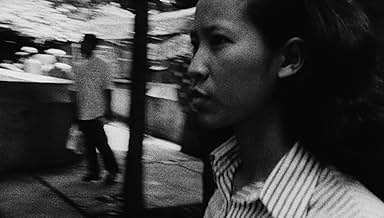
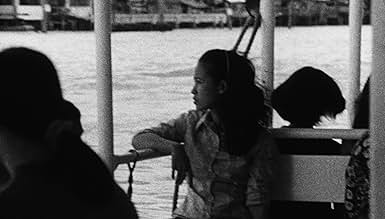
What I think this movie works as is a city-symphony picture, one of those movies in the 1920s and 1930s which purported to show you Berlin in BERLIN, SYMPHONY OF A GREAT CITY or New York in MANHATTA. I think it works better as that, although it's less about the city and the countryside, their institutions and rhythms, than individuals.
As a story-telling movie, it's .... well, it's an interesting experiment that does not work. The writers in the 1930s round-robin stories were pros, who understood how plotting worked and how far they could veer. With this one, we watch people do a hard left on the story, argue about what has been been decided earlier in the story. It's less like the way in LOVE ME TONIGHT, the song "Isn't It Romantic?" wafts from Paris to a distant castle, changing to various tempi along the way, and more like the way my great-aunt Esther would tell a story. She would drone on for about thirty minutes, pause to make sure I understood some point -- "...so they had to find the money for the rent. If they didn't pay the rent, they could be out on the street, you know what I mean?" After I would tiredly admit that I understood eviction, she would continue with "So once I knew this guy, I think I met him through my friend Rosie from high school, he had a picture of Rutherford B. Hayes on his kitchen wall next to the electric clock." Then she would talk about the clock for half an hour. Not that there was anything interesting about the clock; had there been, I think, she would never have mentioned it at all.
That's what the story-telling in this reminds me of. Oh, the people are trying to tell a good story, but they lack the training.
What I think this movie works as is a city-symphony picture, one of those movies in the 1920s and 1930s which purported to show you Berlin in BERLIN, SYMPHONY OF A GREAT CITY or New York in MANHATTA. I think it works better as that, although it's less about the city and the countryside, their institutions and rhythms, than individuals.
Creates a mood of tranquility
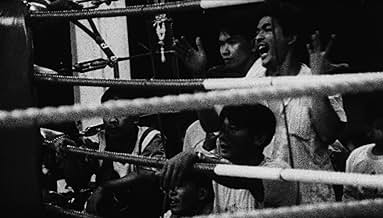
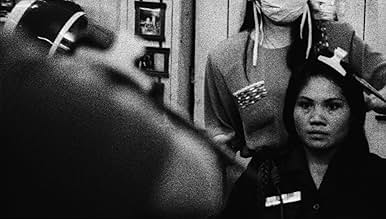
A camera attached to a moving car takes us down a busy city street in Thailand. Abruptly, the car turns into a narrow alley where we see brush grass and run down shacks. As the camera enters one of the houses, a heavy-set woman speaks of the trauma involved in her being sold into prostitution by her father. When she is finished, an off-camera voice asks her to tell another story, real or fiction. It is then that we begin to sense that cinematically we are in unchartered territory. Internationally acclaimed Thai director Apichatpong Weerasethakul's first feature Mysterious Object at Noon is an offbeat mixture of reality and fiction in which there is no screenplay or linear narrative, only a story created and added to by each participant in the mode of the French game "exquisite corpse".
The story the woman first tells is that of a teacher named Dogfahr whose young pupil is a cripple confined to a wheelchair. The tale is then dramatized on screen by non actors alternating with the talking storyteller. As the camera moves north and south of Bangkok into the Thai countryside, a cross section of Thai's continue the story by adding a few lines. These include two deaf girls using sign language, a song and dance troupe, and children in a rural Thai school. With each addition, the tale becomes vastly different and increasingly fantastic. The mysterious object in the title falls from the teacher who has collapsed and turns into an extraterrestrial boy with strange powers, a duplicate teacher, and finally a "witch tiger" and a magic sword.
Some sequences stand by themselves and are without any relation to the continuing storyline. The teacher brings her father to the doctor for a hearing test and complains of a strange line around her neck which the doctor dismisses as an allergy or the effect of wearing her necklace. Parents talk of a boy who escaped death in a plane crash because he was protected by amulets, and a scene shows women bargaining at a fish market. An experimental film with a small budget shot in 16-millimeter black and white, Mysterious Object at Noon glows with warmth and playfulness. As it progresses, it also slows down and becomes more of a meditation on Thai culture, creating a mood of tranquility and peace. Like Seinfeld, it is ostensibly "about nothing", but turns out to be about everything.
The story the woman first tells is that of a teacher named Dogfahr whose young pupil is a cripple confined to a wheelchair. The tale is then dramatized on screen by non actors alternating with the talking storyteller. As the camera moves north and south of Bangkok into the Thai countryside, a cross section of Thai's continue the story by adding a few lines. These include two deaf girls using sign language, a song and dance troupe, and children in a rural Thai school. With each addition, the tale becomes vastly different and increasingly fantastic. The mysterious object in the title falls from the teacher who has collapsed and turns into an extraterrestrial boy with strange powers, a duplicate teacher, and finally a "witch tiger" and a magic sword.
Some sequences stand by themselves and are without any relation to the continuing storyline. The teacher brings her father to the doctor for a hearing test and complains of a strange line around her neck which the doctor dismisses as an allergy or the effect of wearing her necklace. Parents talk of a boy who escaped death in a plane crash because he was protected by amulets, and a scene shows women bargaining at a fish market. An experimental film with a small budget shot in 16-millimeter black and white, Mysterious Object at Noon glows with warmth and playfulness. As it progresses, it also slows down and becomes more of a meditation on Thai culture, creating a mood of tranquility and peace. Like Seinfeld, it is ostensibly "about nothing", but turns out to be about everything.
A superb, but very strange, film
The strangest film I've seen in some time is an experimental docu-drama from Thailand called Mysterious Object at Noon, directed by Apichatpong Weerasethakul, a Thai architect who has an MFA in film from the School of the Art Institute of Chicago (which, when you think about it, is a great town for an architect to go to in order to study film). It's not a docu-drama in the American sense of the word, but rather a film that documents a narrative, the tale of a home study teacher and her disabled student. How it does this is what is so unusual. Working for over three years with an all-volunteer cast & crew which also means an ever-changing cast & crew Weerasethakul employed the surrealist game of the Exquisite Corpse, which, as described by one web site devoted to this practice,
was played by several people, each of whom would write a phrase on a sheet of paper, fold the paper to conceal part of it, and pass it on to the next player for his contribution.
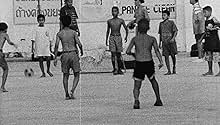
Now imagine playing this same game with film, not only with the urban elites of Bangkok, but with villagers in Weerasethakul's native north who have only limited experience with cinema and no real concept of fiction. The results are both primitive and startling. Filmed in black & white with the cheapest imaginable equipment and film stock, Mysterious Object is something akin to a surrealist version of Dziga Vertov's Man with a Movie Camera set in the Thailand of the 1990s, which means everything from contemporary skyscrapers and freeway on-ramps to elephants wandering into the scene as some boys who've been playing a version of hacky sack try to improvise what might come next. One group of villagers act out their section, which includes music (some of it involving a mouth organ unlike anything I've ever seen before). Another woman, early on, simply tells her own story, which involves being sold by her father in return for bus fare. There is a long truck ride through Bangkok at the beginning that feels like an homage both to Vertov and to Tarkovsky's Solaris until the driver and his partner start trying to sell tuna. During the course of the film, the teacher gives birth tho that verb phrase doesn't really do justice to what actually happens to a young man who zips her unconscious body into a closet and ransacks the student's home, World War 2 comes to a conclusion, the populace is admonished to buy American products, aliens invade, and the teacher gets a rash. The young boy is both much loved and abandoned by his parents. At one point, the boy to whom the teacher gives birth turns into a murderous giant. The one element that Weerasethakul uses to keep his various narrative threads from entirely spinning out of control is a small team of actors who periodically act out some of the threads narrated by different speakers.
This film works for many of the same reasons that any artwork that is actively trying to invent its own genre does in this sense, Man with a Movie Camera, as well as books as diverse as Tristram Shandy, The Childlike Life of the Black Tarantula, Moby Dick, Spring & All and Visions of Cody, are almost parallel projects. Each questions everything and makes no assumptions as to how to proceed. In this context, even a wrong decision (presuming of course we could define such) would be a fresh one. At the same time, Weerasethakul clearly understands this role as historical there is a scene in which the film-maker and his colleagues are walking along & one comments "We should have had a script." The film ends when & where it does because that's where, literally, the film stock Weerasethakul had at his disposal ran out.
If you don't care for experimental cinema, you can almost be certain that you're going to hate this film. Even if you love the work of Stan Brakhage, Warren Sonbert & Abigail Child, you may find it hard to imagine that something like this can still be produced in the 21st century. Would it still hold its fascination if the film were in English about Oakland? Frankly, it might not Steve Benson, who first turned me on Mysterious Object, calls Tropical Malady, Weerasethakul's other film available through NetFlix, "catastrophically disappointing" tho it won the Jury Prize at Cannes in 2004. In any event, there is this film, which taken on its own is a dive into a culture and into a perspective on cinema that few of us will every have the opportunity to experience directly. As such, it's a trip you should probably take.
was played by several people, each of whom would write a phrase on a sheet of paper, fold the paper to conceal part of it, and pass it on to the next player for his contribution.
Now imagine playing this same game with film, not only with the urban elites of Bangkok, but with villagers in Weerasethakul's native north who have only limited experience with cinema and no real concept of fiction. The results are both primitive and startling. Filmed in black & white with the cheapest imaginable equipment and film stock, Mysterious Object is something akin to a surrealist version of Dziga Vertov's Man with a Movie Camera set in the Thailand of the 1990s, which means everything from contemporary skyscrapers and freeway on-ramps to elephants wandering into the scene as some boys who've been playing a version of hacky sack try to improvise what might come next. One group of villagers act out their section, which includes music (some of it involving a mouth organ unlike anything I've ever seen before). Another woman, early on, simply tells her own story, which involves being sold by her father in return for bus fare. There is a long truck ride through Bangkok at the beginning that feels like an homage both to Vertov and to Tarkovsky's Solaris until the driver and his partner start trying to sell tuna. During the course of the film, the teacher gives birth tho that verb phrase doesn't really do justice to what actually happens to a young man who zips her unconscious body into a closet and ransacks the student's home, World War 2 comes to a conclusion, the populace is admonished to buy American products, aliens invade, and the teacher gets a rash. The young boy is both much loved and abandoned by his parents. At one point, the boy to whom the teacher gives birth turns into a murderous giant. The one element that Weerasethakul uses to keep his various narrative threads from entirely spinning out of control is a small team of actors who periodically act out some of the threads narrated by different speakers.
This film works for many of the same reasons that any artwork that is actively trying to invent its own genre does in this sense, Man with a Movie Camera, as well as books as diverse as Tristram Shandy, The Childlike Life of the Black Tarantula, Moby Dick, Spring & All and Visions of Cody, are almost parallel projects. Each questions everything and makes no assumptions as to how to proceed. In this context, even a wrong decision (presuming of course we could define such) would be a fresh one. At the same time, Weerasethakul clearly understands this role as historical there is a scene in which the film-maker and his colleagues are walking along & one comments "We should have had a script." The film ends when & where it does because that's where, literally, the film stock Weerasethakul had at his disposal ran out.
If you don't care for experimental cinema, you can almost be certain that you're going to hate this film. Even if you love the work of Stan Brakhage, Warren Sonbert & Abigail Child, you may find it hard to imagine that something like this can still be produced in the 21st century. Would it still hold its fascination if the film were in English about Oakland? Frankly, it might not Steve Benson, who first turned me on Mysterious Object, calls Tropical Malady, Weerasethakul's other film available through NetFlix, "catastrophically disappointing" tho it won the Jury Prize at Cannes in 2004. In any event, there is this film, which taken on its own is a dive into a culture and into a perspective on cinema that few of us will every have the opportunity to experience directly. As such, it's a trip you should probably take.
Deadbeat Dada
This approaches art, and does so from an oblique angle and in an exotic locale. That being said for me, it never achieves that art., Despite the loose effort to stitch a thread of a story through this, and some curious disjointed elements, the whole does not hold.
See this film if you are willing to bring a lot to the party. (And kudos to you, davidals@msn.com) Or play it in your rental store, or during a party with the sound off, and it will probably snare more fish than it does standing alone with you and your remote.
I'm all for experimental film, this could have been whittled down to a 7 minute beauty for the Ann Arbor Film Fest; at 83 min, it came across as a chore, a corpse less than exquisite. And while I'm coming across as the anti-hipster, why black (or almost a dusty brown) and white for this film? Color I think would have made this more florid and captivating, although perhaps more common-place and thus undermined the art?
Wait till your film professor assigns this one to you.
3/10
See this film if you are willing to bring a lot to the party. (And kudos to you, davidals@msn.com) Or play it in your rental store, or during a party with the sound off, and it will probably snare more fish than it does standing alone with you and your remote.
I'm all for experimental film, this could have been whittled down to a 7 minute beauty for the Ann Arbor Film Fest; at 83 min, it came across as a chore, a corpse less than exquisite. And while I'm coming across as the anti-hipster, why black (or almost a dusty brown) and white for this film? Color I think would have made this more florid and captivating, although perhaps more common-place and thus undermined the art?
Wait till your film professor assigns this one to you.
3/10
exquisite? Pas problemes..
The idea of "Exquisite Corpse" has always fascinated me, and I'm happy that there's a movie based around such a unique method of story-telling. The director comments that by the end, it was less about the actual story the villagers were telling and more about the social implications; therefore the movie becomes more of a documentary. I enjoyed this movie but would like to see more movies based on the Exquisite Corpse method, possibly one part going "out into the field" and talking to villagers, gathering the story, and then a second part where either a rehearsed play or actual movie was written given those elements. Mysterious Object at Noon gets an A- from me.


क्या आपको पता है
- ट्रिवियाFilming was carried out for three years with a volunteer crew, and only stopped when the camera broke down - the last shot of the movie is literally the last piece of film that passed through the camera.
- कनेक्शनFeatured in 40 Days to Learn Film (2020)
टॉप पसंद
रेटिंग देने के लिए साइन-इन करें और वैयक्तिकृत सुझावों के लिए वॉचलिस्ट करें
- How long is Mysterious Object at Noon?Alexa द्वारा संचालित
विवरण
- चलने की अवधि
- 1 घं 29 मि(89 min)
- रंग
- ध्वनि मिश्रण
- पक्ष अनुपात
- 1.37 : 1(original 16mm negative ratio)
इस पेज में योगदान दें
किसी बदलाव का सुझाव दें या अनुपलब्ध कॉन्टेंट जोड़ें