

अपनी भाषा में प्लॉट जोड़ेंIt's been months since Jafar Panahi, stuck in jail, has been awaiting a verdict by the appeals court. By depicting a day in his life, Panahi and Mojtaba Mirtahmasb try to portray the depriva... सभी पढ़ेंIt's been months since Jafar Panahi, stuck in jail, has been awaiting a verdict by the appeals court. By depicting a day in his life, Panahi and Mojtaba Mirtahmasb try to portray the deprivations looming in contemporary Iranian cinema.It's been months since Jafar Panahi, stuck in jail, has been awaiting a verdict by the appeals court. By depicting a day in his life, Panahi and Mojtaba Mirtahmasb try to portray the deprivations looming in contemporary Iranian cinema.
- पुरस्कार
- 10 जीत और कुल 14 नामांकन


फ़ीचर्ड समीक्षाएं
An act of non-violent protest
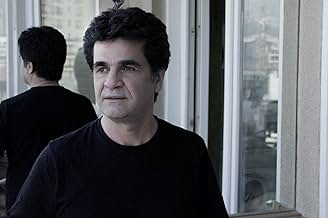
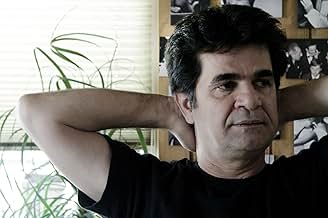
As part of his sentence, Panahi is barred from making films or writing screenplays, is unable to speak in his behalf, and forbidden to leave the country. While awaiting the results of his appeal, Panahi is filmed in his home by fellow director Mojtaba Mirtahmasb using a digital video camera and a cell phone. What begins as an innocuous home movie with Panahi sitting at his table eating breakfast takes on an added dimension when he calls Mirtahmasb, asking him to come by to discuss some ideas, but cautions him not to tell anyone about his visit.
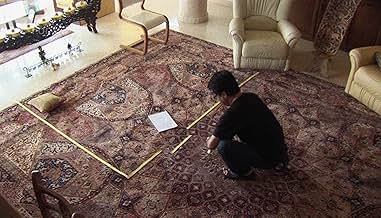
While waiting for his friend to arrive, he talks on the phone with his lawyer who tells him that the court may waive the 20-year ban on filmmaking but are not likely to reduce his jail sentence. When Mirtahmasb arrives, Panahi reads from his latest screenplay which was rejected by the censors. Acting out the story, he puts tape around the area to suggest the apartment in which the story occurs. As he begins to read the screenplay about a young woman forbidden by her parents to attend university, tears come to his eyes and he stops, saying poignantly,
"If we could tell a film, then why make a film?" and expresses his regret about the harshness of the penalty he faces. Soon he takes care of his pet Iguana, Igi, and cares for a neighbor's dog who doesn't know the value of silence. As fireworks explode on the streets to celebrate the Persian New Year, a college student arrives to collect the trash as a substitute for the custodian, and the two engage in a dialogue, remembering the day when Panahi was arrested. To bring home the point even more forcefully, Panahi watches as a TV newscaster proclaims that fireworks are illegal. What started out as a home movie at the end becomes an act of non-violent protest.
Revealing inside view in Iranian apartment of a film maker, confined to his home while awaiting an appeal. Though not really boring, don't expect much action
Nearly all 75 minutes that the replacement film takes, are shot within the apartment of the director in question. He is not allowed to make films, but nowhere was forbidden to read a screenplay aloud. On the other hand, as correctly noted by the camera man, recording this reading might still be considered film making. Hence he named this film "This Is Not A film", which may or may not help to evade the issue.
There were fireworks, which we saw announced on TV as non-religious, a different word for Not Allowed. Yet we clearly saw and heard fireworks on several places spread over the neighborhood. Could this be construed as some not-so-silent protest?? We felt a volatile atmosphere around these fireworks, albeit in an indirect way, because everyone seemed worried about their kids and relatives coming home in time. Moreover, when he was talking on the phone with a colleague who was underway, the latter had to discontinue abruptly when stopped by the police. This very apparently was cause for alarm. Later on he phoned back, and reassured us that the police only wanted to check his camera, lying unused on the passenger seat. All such signals combined clearly demonstrated an atmosphere of suppression and fear for the police.
I was prejudiced by some reviews I've read, describing this not-a-film as a bit boring. Having seen it, I found that too harsh. It may apply to the elevator scene, but that was neatly broken up in small scenes providing for some diversion. Within the apartment, a nice intermezzo was created by a pet lizard. It was being fed in the beginning, and then disappeared out of sight for a while. Later on we saw it crawling over our main character (complaining about its sharp nails) and over the couch, to eventually find a resting place in the bookshelves.
Throughout the film I was surprised that someone convicted for 6 years in prison, and a ban to make films for 20 years, was not locked up, but instead having some house arrest while awaiting an appeal. It clearly shows that I know nothing about the Iranian judicial system. Especially, as we learned from a phone call with his attorney, that his conviction was not on a legal basis, but on political grounds only. The latter is a concept very alien to us.
All in all, this not-a-film gave a limited inside view in a country we only know from newspapers. It was also a revealing inside view in an Iranian apartment, larger and better equipped than I had assumed beforehand. We can only speculate how he pays for all this, given the ban on his regular work. It shows (again) how little we know about Iran. My final conclusion is that I did not regret keeping my tickets for this not-a-film, though I was entitled for a substitute at choice out of the festival program.
Fascinating in how storytelling through film is unintentionally broken down and laid out.
8/10
It's not a film; why am I reviewing it?
We see Panahi, alone in his large high-rise apartment, go about his daily activities, which include eating breakfast, playing with his daughter's iguana named Igi, analyzing his older films in a very deep sense, acting out scenes from his movies, and repeatedly calling his attorney to get a ruling on his case. Because of his "propaganda" films, Panahi has the potential to face six years in prison and the possibility of never directing another film again. This is a scary thought for a man who is clearly not our of words to say.
The naturalism and simplicity is what immediately sold me on this film. It's not hard to tell that much of this picture was comprised on Panahi's spontaneous thoughts. Nothing is very consistent; not all of it is particularly compelling, but all of it is truly a sight to behold. This is Not a Film, in order to receive distribution, was put on a flash drive and smuggled out of Iran in a cake, making this a truly unique picture just in its story. How many films (or "films") can you say you've seen that really shouldn't have been made? While my biggest compliment to the "film" is its naturalism and biographical nature, it also is my most prominent complaint. Many things happen here, some interesting, some not, making this experience fluctuate in quality more-so than any other picture I've seen this year. A strong part of me absolutely lauds Panahi for his bravery and commitment to get his "film" released, yet because of its loose, lax nature, I question why he chose to make it more about his typical day instead of voicing an opinion on the cruelty of the Iranian government. Now, I realize how deviant and asking that sounds, seeing as it was incalculably daring for Panahi to make a film at all. But why not go for broke if you chose to go back on a law at all? Why not question or defend the "propaganda" accusation his films now bear? Why not take in account how you really feel about this whole thing? However, one surprisingly elegant thing he does in This is Not a Film is question what exactly a film is? Moreover, does this picture he's making now count as a film? Is it "illegal" that he's getting his pal Mojtaba Mirtahmasb to film much of it on a cell-phone camera? Is it because it's spontaneous, and follows a very non-linear style that it doesn't qualify as a film? Does a film need to be a certain length to be constituted that? Does anything need to happen? I was reminded of those short films I always find myself watching on Youtube from the late 1800's to the early 1900's of little skits or documentaries that briefly regard life/humor/culture of a country at that specific time. Were they films? They never seemed to follow a strict plot line.
This is Not a Film is something people from all countries (especially America) should watch in order to truly view how repressed, censored, and limited other countries can be. In America, grotesque films like The Human Centipede can be made, showcasing disgust and loathe at its height, 2016: Obama's America can be made, a film that deliberately regards almost everything the current US president says as lies and cites his motives as unworthy, and The Hangover Part II can be made, a raunchy comedic exercise capitalizing off lewdness and politically incorrect humor. The fact that This is Not a Film came to be may sit indifferently with people from America, but the fact that it exists is an astonishing landmark for Iranian freedom of speech. While I can't recommend this work in an overbearing nature, if you go to a video store and find it there, it is probably the one you should pick up for its importance and bold roots. But since it isn't a film, I technically should be reviewing it or saying any of this.
Starring: Jafar Panahi. Directed by: Jafar Panahi and Mojtaba Mirtahmasb.
Insightful and unique documentary
Here in the Western world, our access to information, democratic governments, and human rights are taken for granted. Panahi and Mirtahmasb are putting their lives on the line to tell the stories they feel they must tell, in the hope that, one day, their nation will be able to have the same sort of pro-democratic freedom as the rest of us. Gripping entertainment. Little by little "This Is Not a Film" leads to a final scene of overwhelming power. Anyone interested in cinema and/or Iran owes it to themselves to become familiar with this "not" film.


क्या आपको पता है
- ट्रिवियाDirector Jafar Panahi was put under house arrest in 2010 and banned from filmmaking for 20 years. This film was smuggled out of Iran on a USB stick hidden in a cake.
- भाव
Mojtaba Mirtahmasb: It's important that the cameras are ON.
- कनेक्शनFeatured in Brows Held High: This Is Not a Film, but It's Definitely Filmmaking (2014)
टॉप पसंद
- How long is This Is Not a Film?Alexa द्वारा संचालित
विवरण
- रिलीज़ की तारीख़
- कंट्री ऑफ़ ओरिजिन
- आधिकारिक साइटें
- भाषा
- इस रूप में भी जाना जाता है
- Esto no es una película
- फ़िल्माने की जगहें
- उत्पादन कंपनी
- IMDbPro पर और कंपनी क्रेडिट देखें
बॉक्स ऑफ़िस
- US और कनाडा में सकल
- $77,016
- US और कनाडा में पहले सप्ताह में कुल कमाई
- $12,608
- 4 मार्च 2012
- दुनिया भर में सकल
- $88,758
- चलने की अवधि
- 1 घं 15 मि(75 min)
- रंग