VALUTAZIONE IMDb
8,1/10
8132
LA TUA VALUTAZIONE
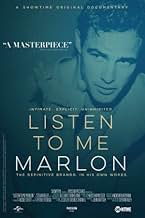
Aggiungi una trama nella tua linguaA documentary that utilizes hundreds of hours of audio that Marlon Brando recorded over the course of his life to tell the screen legend's story.A documentary that utilizes hundreds of hours of audio that Marlon Brando recorded over the course of his life to tell the screen legend's story.A documentary that utilizes hundreds of hours of audio that Marlon Brando recorded over the course of his life to tell the screen legend's story.
- Regia
- Sceneggiatura
- Star
- Candidato a 1 Primetime Emmy
- 5 vittorie e 21 candidature totali
Marlon Brando
- Self
- (filmato d'archivio)
Stella Adler
- Self
- (filmato d'archivio)
- (non citato nei titoli originali)
Bernardo Bertolucci
- Self
- (filmato d'archivio)
- (voce)
- (non citato nei titoli originali)
Michael Borne
- Self - Young Marlon Brando
- (non citato nei titoli originali)
Marlon Brando Sr.
- Self
- (filmato d'archivio)
- (non citato nei titoli originali)
Christian Brando
- Self
- (filmato d'archivio)
- (non citato nei titoli originali)
Dick Cavett
- Self
- (filmato d'archivio)
- (non citato nei titoli originali)
Connie Chung
- Self
- (filmato d'archivio)
- (non citato nei titoli originali)
Montgomery Clift
- Self
- (filmato d'archivio)
- (non citato nei titoli originali)
Francis Ford Coppola
- Self
- (filmato d'archivio)
- (non citato nei titoli originali)
Bette Davis
- Self
- (filmato d'archivio)
- (non citato nei titoli originali)
Anna Kashfi
- Self
- (filmato d'archivio)
- (non citato nei titoli originali)
Elia Kazan
- Self
- (filmato d'archivio)
- (non citato nei titoli originali)
Robert F. Kennedy
- Self
- (filmato d'archivio)
- (non citato nei titoli originali)
Martin Luther King
- Self
- (filmato d'archivio)
- (non citato nei titoli originali)
Sacheen Littlefeather
- Self
- (filmato d'archivio)
- (non citato nei titoli originali)
Dorothy Malone
- Self
- (filmato d'archivio)
- (non citato nei titoli originali)
8,18.1K
1
2
3
4
5
6
7
8
9
10
Recensioni in evidenza
Fascinating Tapes; Music, less so
This makes largely creative use of Brando's career-long tendency to create diaries on audio tape. He also made self-hypnosis or relaxation tapes that are used here to very interesting effect; these are poignant, funny, and profound at once. Brando was shrewd and insightful, but the tapes also demonstrate the difficulty of healing private wounds through introspection alone. He resisted anyone who tried to be close to him; if they succeeded, as Bertolucci seemed to, he felt betrayed. These monologues are occasionally the stuff of Sophocles or Samuel Becket--but overall like some involuted, existentialist novel. I am less enthusiastic about the editing, which is often abrupt and involves oscillatory panning or camera movements that suggest a rough ferry ride. His words are often dynamic enough. A holographic computer image of Brando's head, seeming to date from around 1998, is made to animate many of his words, about once every ten minutes or so. This is at once spooky and quaint (if the 1990s are now quaint) but it recurs so much that it's like a child in a mask over-doing a joke at a party. The photographic choices from Brando's career are often good, but Brando's childhood home (suggested in a fantasy sequence) is furnished like some impoverished house from 1980, among a few such anachronisms. My strongest criticism of this still engaging movie is for its use of music. It is needlessly chronic--it never shuts up-- serving as a constant, indicative background, when Brando's voice would often suffice. And this soundtrack music itself is not great--at its best, it is Philip Glassy stuff, but often it sounds like a melodramatic "dark" variety of 1980s "new age" music. The music is extremely high in the soundtrack mix, and strangest of all, the director/ sound editors chose to let this new-agey soundtrack compete obnoxiously with any original music that may have been part of any film clip. So when we see famous clips from his major movies, like "Streetcar," the original music mixes dissonantly with the faux-Glass music. I found the sound editing a real distraction that shouldn't have passed the draft stage.
A fascinating look into the life and very mind of a legendary actor
We've been extremely lucky over recent years with a plethora of fantastic and visionary documentaries on a range of different subject matters. From Man on Wire, The Act of Killing through to last year's Virunga and Amy, documentary craftsmanship has really gone from strength to strength as filmmakers look at ways to tell stories and shine a light on their subjects in all new ways and Stevan Riley's Listen to Me Marlon is quite possibly the first documentary of its kind.
An unquestionably fascinating look into not only the life but the very mind of legendary screen actor Marlon Brando, Riley and his crew had the rare opportunity to unearth boxes upon boxes of recordings that Brando himself had made through his entire career. These tapes range from confessionals through to self-hypnosis works but no matter what they're labelled as there all an insight into the inner workings of a man that dealt from a very young age with inner demons and wants that Hollywood could not heal.
For any fan of Brando or really any fan of movie history, Listen to Me Marlon offers a once in a lifetime like chance to hear the game changing method actor speak openly about his life as a kid, as a budding star, as a reclusive island wanderer and later in life a man that held many regrets and unfortunately found himself apart of a number of tragedies that clearly affected his life unmeasurably. Some of the most fascinating and open revelations we hear from Brando include his thoughts on acting as merely a means to be able to live his life and his deep love for the island of Tahiti and how he saw that as a place that showcased the best of humanity.
Listen to Me Marlon is a fabulously constructed documentary and while it would've been nice in a way to hear from others involved in Brando's life what better way to hear about his story is there than hearing from the man himself? An historic figure of depth and emotional nuances, Listen to Me Marlon is a must watch for any fan of cinema and easily one 2015's best documentary features.
4 scanned talking heads out of 5
An unquestionably fascinating look into not only the life but the very mind of legendary screen actor Marlon Brando, Riley and his crew had the rare opportunity to unearth boxes upon boxes of recordings that Brando himself had made through his entire career. These tapes range from confessionals through to self-hypnosis works but no matter what they're labelled as there all an insight into the inner workings of a man that dealt from a very young age with inner demons and wants that Hollywood could not heal.
For any fan of Brando or really any fan of movie history, Listen to Me Marlon offers a once in a lifetime like chance to hear the game changing method actor speak openly about his life as a kid, as a budding star, as a reclusive island wanderer and later in life a man that held many regrets and unfortunately found himself apart of a number of tragedies that clearly affected his life unmeasurably. Some of the most fascinating and open revelations we hear from Brando include his thoughts on acting as merely a means to be able to live his life and his deep love for the island of Tahiti and how he saw that as a place that showcased the best of humanity.
Listen to Me Marlon is a fabulously constructed documentary and while it would've been nice in a way to hear from others involved in Brando's life what better way to hear about his story is there than hearing from the man himself? An historic figure of depth and emotional nuances, Listen to Me Marlon is a must watch for any fan of cinema and easily one 2015's best documentary features.
4 scanned talking heads out of 5
"Life is a rehearsal"
If the usual celebrity documentary too often strays into the realm of "Let's see how many famous friends we can find to say nice things about the subject", Listen to Me Marlon, by contrast, is one of the loneliest feeling films about a performer whose works were experienced by so many. Billing itself as comprised from "hundreds of hours" of audio diaries recorded by the man almost universally billed as 'the world's greatest actor', the film is ultimately only half Brando in Brando's own words, interspersing his introspective mumblings with interview and news footage from the actor's life for a more neatly rounded documentary.
With this in mind, it's frustrating that, for a film about the actor celebrated for introducing method authenticity to the big screen, director/editor Stevan Riley indulges in so much cinematic trickery and documentary cliché (you can count the number of transitions not marked by solemn footage of wind chimes rustling on one hand ). Riley particularly gets a kick out of the trope of Brando's digitized head (but with nary a shout out to Brando's posthumously recycled performance in Superman Returns!), even having this CGI rendition 'speak' many of Brando's audio diaries, making significant eye contact with the audience at meaningful moments. Brando himself would likely scoff at the tackiness of this 'ghost Brando', and, while it does add a mesmerizing visual dimension to the 'talking heads' genre (arr arr arr ), it feels overused by the end, particularly while accompanied by the film's distractingly overbearing musical score. Mercifully, Riley stops short of having Ghost Brando sing "Luck Be a Lady Tonight". Shudder.
However, the real draw of the film, the 'Brando on Brando' audio recordings, do not disappoint. Brando has, of late, become almost less famous for his iconic performances as his on-set belligerence (guzzling jars of peanut butter in between takes, reading his lines off a baby's diaper in Superman, or refusing to wear pants on set); here, he is firmly restored as a human being. The Brando we get here is far more earnest and sensitive than the shirt-tearing brute cinema would make him out to be: articulate (no cotton-mouthed mumbling here!), introspective, surprisingly witty, and desperate to have a meaningful impact on the world. Amidst the pontifications on the value and necessity of acting and scorn for the falsities of celebrity – rousing in themselves – there are some movingly raw and emotional moments to be found, as Brando ruminates on the disastrous ramifications of his abusive upbringing and the ripple effects in the tragic lives of his own children, as well as important coverage of his often forgotten work with the civil rights movement from the 1950s-1970s. But, there's warmth to be found amongst the solemnity, as hearing Brando wax poetic about the paradise he found in Tahiti is genuinely moving, and it's hard, by the end, not to feel like he deserved the happiness.
As the film dreamily tumbles through the consecutive stages of Brando's career, it's fascinating to hear him candidly respond to audience reactions to him see-saw from Beatles- level hysteria to condescending indifference and back again through the years (spoiler alert: actors actually are affected by mass criticism!). Riley interweaves compellingly nostalgic clips from some of the earlier works in Brando's career (The Men, Brando's amusingly cringeworthy Mexican in Viva Zapata, Julius Caesar) and the seminal works (A Streetcar Named Desire, On the Waterfront, The Godfather), and hearing Brando's stiltedly pretentious justification for straying into "lighter fare" in Guys and Dolls is just about worth the price of admission alone. Riley particularly devotes focus to the controversy of Mutiny on the Bounty, which Brando attributes both his love of Tahiti and his loss of public favour to, while hearing Brando and Francis Ford Coppola trade barbs about whose fault the disastrous shoot of Apocalypse Now was (amusingly, both try to take credit for Kurtz being mostly kept in shadow – Brando claiming it was his aesthetic take on the character, while Coppola snaps it was to hide how obese Brando had become) is a masterclass of parallel editing in itself.
Listen to Me Marlon may be flimsier than one would hope for such a rich, intimate opportunity – content-wise, there's nothing that couldn't be found in his IMDb biography ¬– but Brando's life and career are wild enough that it still makes for a highly compelling watch. Where the film truly excels is not in facts, but feelings, as Brando himself conveys passion, dry wit, and a voluminous loneliness like none other. If nothing else, Listen to Me Marlon is worth it for granting Brando the true performance of his career: himself – not an overeating, eccentric, reclusive genius, but a human being, vulnerable, flawed, and perpetually yearning to make a difference in himself and the world. Few would dispute it: he was a contender, and he really was something.
-7/10
With this in mind, it's frustrating that, for a film about the actor celebrated for introducing method authenticity to the big screen, director/editor Stevan Riley indulges in so much cinematic trickery and documentary cliché (you can count the number of transitions not marked by solemn footage of wind chimes rustling on one hand ). Riley particularly gets a kick out of the trope of Brando's digitized head (but with nary a shout out to Brando's posthumously recycled performance in Superman Returns!), even having this CGI rendition 'speak' many of Brando's audio diaries, making significant eye contact with the audience at meaningful moments. Brando himself would likely scoff at the tackiness of this 'ghost Brando', and, while it does add a mesmerizing visual dimension to the 'talking heads' genre (arr arr arr ), it feels overused by the end, particularly while accompanied by the film's distractingly overbearing musical score. Mercifully, Riley stops short of having Ghost Brando sing "Luck Be a Lady Tonight". Shudder.
However, the real draw of the film, the 'Brando on Brando' audio recordings, do not disappoint. Brando has, of late, become almost less famous for his iconic performances as his on-set belligerence (guzzling jars of peanut butter in between takes, reading his lines off a baby's diaper in Superman, or refusing to wear pants on set); here, he is firmly restored as a human being. The Brando we get here is far more earnest and sensitive than the shirt-tearing brute cinema would make him out to be: articulate (no cotton-mouthed mumbling here!), introspective, surprisingly witty, and desperate to have a meaningful impact on the world. Amidst the pontifications on the value and necessity of acting and scorn for the falsities of celebrity – rousing in themselves – there are some movingly raw and emotional moments to be found, as Brando ruminates on the disastrous ramifications of his abusive upbringing and the ripple effects in the tragic lives of his own children, as well as important coverage of his often forgotten work with the civil rights movement from the 1950s-1970s. But, there's warmth to be found amongst the solemnity, as hearing Brando wax poetic about the paradise he found in Tahiti is genuinely moving, and it's hard, by the end, not to feel like he deserved the happiness.
As the film dreamily tumbles through the consecutive stages of Brando's career, it's fascinating to hear him candidly respond to audience reactions to him see-saw from Beatles- level hysteria to condescending indifference and back again through the years (spoiler alert: actors actually are affected by mass criticism!). Riley interweaves compellingly nostalgic clips from some of the earlier works in Brando's career (The Men, Brando's amusingly cringeworthy Mexican in Viva Zapata, Julius Caesar) and the seminal works (A Streetcar Named Desire, On the Waterfront, The Godfather), and hearing Brando's stiltedly pretentious justification for straying into "lighter fare" in Guys and Dolls is just about worth the price of admission alone. Riley particularly devotes focus to the controversy of Mutiny on the Bounty, which Brando attributes both his love of Tahiti and his loss of public favour to, while hearing Brando and Francis Ford Coppola trade barbs about whose fault the disastrous shoot of Apocalypse Now was (amusingly, both try to take credit for Kurtz being mostly kept in shadow – Brando claiming it was his aesthetic take on the character, while Coppola snaps it was to hide how obese Brando had become) is a masterclass of parallel editing in itself.
Listen to Me Marlon may be flimsier than one would hope for such a rich, intimate opportunity – content-wise, there's nothing that couldn't be found in his IMDb biography ¬– but Brando's life and career are wild enough that it still makes for a highly compelling watch. Where the film truly excels is not in facts, but feelings, as Brando himself conveys passion, dry wit, and a voluminous loneliness like none other. If nothing else, Listen to Me Marlon is worth it for granting Brando the true performance of his career: himself – not an overeating, eccentric, reclusive genius, but a human being, vulnerable, flawed, and perpetually yearning to make a difference in himself and the world. Few would dispute it: he was a contender, and he really was something.
-7/10
Amazing and haunting experience
Greetings from Lithuania.
I was dying to see "Listen to Me Marlon" (2015) from the first moment i heard about it. I won't lie - i'm a huge Marlon Brando fan so i was really looking forward to see a good documentary about the man himself. "Listen to Me Marlon" is a superb experience. Experience, because it is not a traditional straightforward biopic documentary. It is told by Brando himself, using audiotapes that he was recording during his life. We do get so see glimpses and most important aspects from his life from a childhood till the end. It shows a bit about the infamous movies he made. But more it is about listening to his thoughts, and they are haunting. It is like listening to extended version of Kurtz himself.
Overall, i highly enjoyed "Listen to Me Marlon". It is informative, superbly paced and very self confident and fascinating documentary. It is a haunting experience, not for everyone i guess, but if you liked the acting of this screen legend and would like to go a bit beyond the face of a man, "Listen to Me Marlon" is a must see.
I was dying to see "Listen to Me Marlon" (2015) from the first moment i heard about it. I won't lie - i'm a huge Marlon Brando fan so i was really looking forward to see a good documentary about the man himself. "Listen to Me Marlon" is a superb experience. Experience, because it is not a traditional straightforward biopic documentary. It is told by Brando himself, using audiotapes that he was recording during his life. We do get so see glimpses and most important aspects from his life from a childhood till the end. It shows a bit about the infamous movies he made. But more it is about listening to his thoughts, and they are haunting. It is like listening to extended version of Kurtz himself.
Overall, i highly enjoyed "Listen to Me Marlon". It is informative, superbly paced and very self confident and fascinating documentary. It is a haunting experience, not for everyone i guess, but if you liked the acting of this screen legend and would like to go a bit beyond the face of a man, "Listen to Me Marlon" is a must see.
Brando on Brando
Listen to Me Marlon (2015)
**** (out of 4)
We are told that when Marlon Brando died in 2004 he left behind hundreds of hours worth of audio recordings that he made throughout his life. This rather unique documentary has Brando telling us his life story by using these audio recordings as well as some older interview footage.
Writer, director and editor Stevan Riley really did an amazing job here because it couldn't have been easy to take all of these audio recordings and put them into a "story" that it's clear and makes sense. The documentary covers Brando's early years with his parents and then gets into his movie career where it's clear the actor wasn't his fondest fan. Films like ON THE WATERFRONT, A STREETCAR NAMED DESIRE, THE GODFATHER and LAST TANGO IN Paris get some great talk but there's also some great audio footage dealing with Brando's "lost" period in the 60s when he was basically just doing films for the money.
Brando's life had all sorts of bad things happen including the various issues with is son and daughter. Those sad topics are covered here as well as other issues including his battle over the treatment of Indians. If you're a fan of Brando then you're certainly going to love this documentary because, well, the actor was a rather private person and didn't give too many interviews so it was great getting to hear his thoughts on life, himself and of course the movies.
**** (out of 4)
We are told that when Marlon Brando died in 2004 he left behind hundreds of hours worth of audio recordings that he made throughout his life. This rather unique documentary has Brando telling us his life story by using these audio recordings as well as some older interview footage.
Writer, director and editor Stevan Riley really did an amazing job here because it couldn't have been easy to take all of these audio recordings and put them into a "story" that it's clear and makes sense. The documentary covers Brando's early years with his parents and then gets into his movie career where it's clear the actor wasn't his fondest fan. Films like ON THE WATERFRONT, A STREETCAR NAMED DESIRE, THE GODFATHER and LAST TANGO IN Paris get some great talk but there's also some great audio footage dealing with Brando's "lost" period in the 60s when he was basically just doing films for the money.
Brando's life had all sorts of bad things happen including the various issues with is son and daughter. Those sad topics are covered here as well as other issues including his battle over the treatment of Indians. If you're a fan of Brando then you're certainly going to love this documentary because, well, the actor was a rather private person and didn't give too many interviews so it was great getting to hear his thoughts on life, himself and of course the movies.
Lo sapevi?
- QuizA documentary made entirely out of archive footage and Marlon Brando's own words from recordings, confessionals, and self hypnosis.
- Citazioni
Marlon Brando, Himself: Everything that you do - make it real as you can. Make it alive. Make it tangible. Find the truth of that moment.
- ConnessioniFeatures Luci della città (1931)
- Colonne sonoreInfra 1
Written by Max Richter
Performed by Max Richter, Louisa Fuller, Natalia Bonner, Nick Barr (as Nick Carr), Ian Burdge and Chris Worsey
I più visti
Accedi per valutare e creare un elenco di titoli salvati per ottenere consigli personalizzati
- How long is Listen to Me Marlon?Powered by Alexa
Dettagli
Botteghino
- Lordo Stati Uniti e Canada
- 425.831 USD
- Fine settimana di apertura Stati Uniti e Canada
- 30.068 USD
- 2 ago 2015
- Lordo in tutto il mondo
- 516.337 USD
- Tempo di esecuzione
- 1h 43min(103 min)
- Colore
- Proporzioni
- 1.85 : 1
Contribuisci a questa pagina
Suggerisci una modifica o aggiungi i contenuti mancanti