VALUTAZIONE IMDb
6,7/10
1244
LA TUA VALUTAZIONE


Aggiungi una trama nella tua linguaDuring the 1982 invasion of Lebanon, an 11-year-old boy tries to tell a classmate about his crush on her while their teachers try to hide their fear of the conflict.During the 1982 invasion of Lebanon, an 11-year-old boy tries to tell a classmate about his crush on her while their teachers try to hide their fear of the conflict.During the 1982 invasion of Lebanon, an 11-year-old boy tries to tell a classmate about his crush on her while their teachers try to hide their fear of the conflict.
- Premi
- 16 vittorie e 14 candidature totali


Saeed Sarhan
- Georges
- (as Said Serhan)
6,71.2K
1
2
3
4
5
6
7
8
9
10
Recensioni in evidenza
Boring
Shouldn't be on Netflix, it is extremely bad, many wrong msgs, i can't believe they participated in cannes festivals or even thought it will lead them somewhere, I've seen short movies for students and unfortunately it was beter big time.
A film providing a different perspective to a familiar event
I stumbled upon this film by accident while researching a different movie I found it quite captivating as it provided a different perspective on a conflict that I was somewhat familiar with. I found the actors for the most part quite believable and in many cases, the storyline was very touching. The young stars at the centre of the story are consummate actors and I will be looking forward to seeing more of their performances, I was; however disappointed with the ending as it seemed amateurish and to be totally out of place with a very professional piece that had proceeded it. But for the disappointing end, I thurally enjoyed the film and would recommend it heartly.
A beautiful blend of different perspectives in wartime.
The realism that is displayed in the new film "1982" was definitely a great breath of fresh air providing an interesting perspective on war. Straight from the brilliant mind of director Oualid Mouaness, he depicts the events of what could have occurred at an average Lebanese school during the invasion. The camera angles and suspenseful cinematography entices the audience's attention and brings you into the minds of people living in a war-zone. The characters are thoughtfully constructed from the 11-year-old main character who has a crush on his classmate to his conflicted and terrified teachers and staff at this grade school. The juxtaposition of storylines combines to formulate an unsettling mood, leaving you on the edge of your seat. The superbly raw emotions simply radiate from each actor and actress creating a touching sense of a loss that had yet to happen. However, you know in the very beginning how the story ends and hang off the silence in every scene foreshadowing the pain that would come to this country. As a human, you feel inspired to recognize the horrors that are happening as the result of war and disagreements on ideology. The tension of the consequences also added to the general tone of losing and gaining hope and the fear of ultimately being trapped and unprotected. Since watching this film, I have personally gained a new intriguing perspective of what life is like for people on the other side of the globe, and it makes me want to help and advocate for them; because they are also human.
A boy's commitment to love and protect.
On June 6, 1982, exactly 38 years after D-Day, roughly 60,000 Israeli troops and more than 800 tanks, heavily supported by aircraft, attack helicopters, artillery, and missile boats invaded Southern Lebanon, a country already involved in a decades-long civil war. Israel's publicly-stated objective was to push PLO (Palestine Liberation Organization) forces back 40 kilometers (25 miles) to the north and establish an expanded security zone that would put northern Israel out of range of the continuing onslaught of PLO rockets.
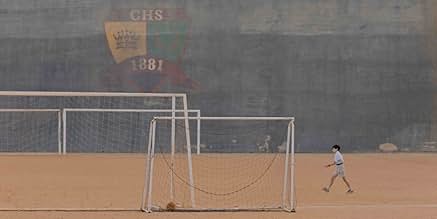
In his first feature film, 1982, winner of the Network for the Promotion of Asian Cinema (NETPAC) award at the Toronto Film Festival, Lebanese director Oualid Mouaness looks at the Israeli-Lebanese War through the eyes of pre-adolescent children in Cedar High School, a private elementary school near Beirut. Based on his own experience as a ten-year old student on the last day of school in Lebanon in 1982, Mouaness' film explores the children's attempt to make sense of an incomprehensible situation, one that they can sense is fraught with danger for themselves and their families.
The camera, under the direction of cinematographer Brian Rigby Hubbard ("Ambition"), opens the film with shots of the beautiful and peaceful surrounding countryside but the landscape is soon punctured by the sound of telephone lines being blown up, tanks driving on the nearby streets, warships dotting the sea, and dueling fighter jets, like an out-of-sync video game, closing any space between the silences. On the last school day of the year, 11-year-old Wissam's (Mohamad Dalli) focus is not on what is going on outside the school, however, but on summoning enough courage to tell a girl in his class, Joana (Gia Madi), that he loves her.
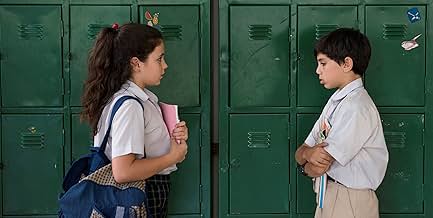
Part of his reluctance is that his parents have told him that he should wait until he is older before expressing his love to someone. Watching Joana after final exams, however, he follows her trying to get up enough courage to tell her what he rehearses in front of the bathroom mirror "Joana, I love you. Joana, I love you." Though his best friend Majid (Ghassan Maalouf) tells him that we are not in America and this is not a movie, he insists on leaving her a note in her locker with a picture he drew of a superhero named Tigron who resembles a Japanese Super Robot from the anime television series "UFO Robot Grendizer."
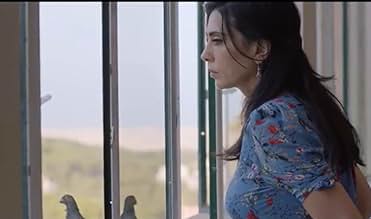
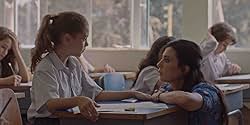
As the children look out the window to find the source of the increasing noise, Mouaness juxtaposes an adult relationship that is more complex but also filled with fear and avoidance. As plans are underway for the student's graduation, Yasmine (Nadine Labaki, "Capernaum"), homeroom teacher and exam administrator, is in a relationship with fellow teacher Joseph (Rodrigue Sleiman, "Good Morning"). Straining to avoid discussing their political differences over the war in order to create a safe environment for the children, Yasmine struggles to have her students focus on their exams, telling them "it is nothing. It is far away," and that what happens outside does not concern them.
As the children wait for their parents to pick them up and the tension increases, Wissam resorts to fantasies about how the robot Tigron can save them from harm. "What's going on?" Joana asks, looking away. "I don't know," Wissam replies. While his full understanding of events taking place is spotty, he reaches out to protect Joana in a way that signals the beginning of his maturity. Making sure that she gets on the bus seated next to him, he seems to recognize perhaps for the first time that the truth of one's relationship to another human being is not only the physical attraction but the commitment to love and protect.
In this lovely film which was eight years in the making, Mouannes explores, "the idea that children have a world that's complete for them. They sort of understand what's going on in the adult world but they have peace with how complete their own world is in and of itself." He shows, in the phrase of Israeli author Aharon Applefeld ("To the Edge of Sorrow") that in "the darkest places of human behavior generosity and love can survive; that humanity and love can overcome cruelty and brutality." "I see the world," he says, "in a very positive light and try to hold the darkness." That is his gift to us in 1982.
In his first feature film, 1982, winner of the Network for the Promotion of Asian Cinema (NETPAC) award at the Toronto Film Festival, Lebanese director Oualid Mouaness looks at the Israeli-Lebanese War through the eyes of pre-adolescent children in Cedar High School, a private elementary school near Beirut. Based on his own experience as a ten-year old student on the last day of school in Lebanon in 1982, Mouaness' film explores the children's attempt to make sense of an incomprehensible situation, one that they can sense is fraught with danger for themselves and their families.
The camera, under the direction of cinematographer Brian Rigby Hubbard ("Ambition"), opens the film with shots of the beautiful and peaceful surrounding countryside but the landscape is soon punctured by the sound of telephone lines being blown up, tanks driving on the nearby streets, warships dotting the sea, and dueling fighter jets, like an out-of-sync video game, closing any space between the silences. On the last school day of the year, 11-year-old Wissam's (Mohamad Dalli) focus is not on what is going on outside the school, however, but on summoning enough courage to tell a girl in his class, Joana (Gia Madi), that he loves her.
Part of his reluctance is that his parents have told him that he should wait until he is older before expressing his love to someone. Watching Joana after final exams, however, he follows her trying to get up enough courage to tell her what he rehearses in front of the bathroom mirror "Joana, I love you. Joana, I love you." Though his best friend Majid (Ghassan Maalouf) tells him that we are not in America and this is not a movie, he insists on leaving her a note in her locker with a picture he drew of a superhero named Tigron who resembles a Japanese Super Robot from the anime television series "UFO Robot Grendizer."
As the children look out the window to find the source of the increasing noise, Mouaness juxtaposes an adult relationship that is more complex but also filled with fear and avoidance. As plans are underway for the student's graduation, Yasmine (Nadine Labaki, "Capernaum"), homeroom teacher and exam administrator, is in a relationship with fellow teacher Joseph (Rodrigue Sleiman, "Good Morning"). Straining to avoid discussing their political differences over the war in order to create a safe environment for the children, Yasmine struggles to have her students focus on their exams, telling them "it is nothing. It is far away," and that what happens outside does not concern them.
As the children wait for their parents to pick them up and the tension increases, Wissam resorts to fantasies about how the robot Tigron can save them from harm. "What's going on?" Joana asks, looking away. "I don't know," Wissam replies. While his full understanding of events taking place is spotty, he reaches out to protect Joana in a way that signals the beginning of his maturity. Making sure that she gets on the bus seated next to him, he seems to recognize perhaps for the first time that the truth of one's relationship to another human being is not only the physical attraction but the commitment to love and protect.
In this lovely film which was eight years in the making, Mouannes explores, "the idea that children have a world that's complete for them. They sort of understand what's going on in the adult world but they have peace with how complete their own world is in and of itself." He shows, in the phrase of Israeli author Aharon Applefeld ("To the Edge of Sorrow") that in "the darkest places of human behavior generosity and love can survive; that humanity and love can overcome cruelty and brutality." "I see the world," he says, "in a very positive light and try to hold the darkness." That is his gift to us in 1982.
Slow-moving with poor scenario
Despite that the movie is well captured in terms of technology like cameras and equipment, and the casting staff did tremendous job, the movie all in all lacked a strong scenario and had one major event, the whole movie covers this event throughout half day. and it was very slow moving! Disappointing.


Lo sapevi?
- QuizDirector Oualid Mouaness was actually a student in the school where "1982" was filmed.
I più visti
Accedi per valutare e creare un elenco di titoli salvati per ottenere consigli personalizzati
- How long is 1982?Powered by Alexa
Dettagli
- Data di uscita
- Paesi di origine
- Siti ufficiali
- Lingue
- Celebre anche come
- Nineteen Eighty Two
- Luoghi delle riprese
- Brummana, Libano(main location: Brummana High School)
- Aziende produttrici
- Vedi altri crediti dell’azienda su IMDbPro
Botteghino
- Lordo Stati Uniti e Canada
- 43.829 USD
- Fine settimana di apertura Stati Uniti e Canada
- 4900 USD
- 12 giu 2022
- Lordo in tutto il mondo
- 60.751 USD
- Tempo di esecuzione
- 1h 40min(100 min)
- Colore
Contribuisci a questa pagina
Suggerisci una modifica o aggiungi i contenuti mancanti