VALUTAZIONE IMDb
6,0/10
1745
LA TUA VALUTAZIONE

Aggiungi una trama nella tua linguaA native girl falls for a visitor to her island, but she's chosen to be sacrificed to the volcano god.A native girl falls for a visitor to her island, but she's chosen to be sacrificed to the volcano god.A native girl falls for a visitor to her island, but she's chosen to be sacrificed to the volcano god.
- Regia
- Sceneggiatura
- Star
- Premi
- 1 vittoria in totale




Dolores Del Río
- Luana
- (as Dolores del Rio)


Lon Chaney Jr.
- Thornton
- (as Creighton Chaney)


Mailoa Kalili
- Child on Beach
- (non citato nei titoli originali)
Freddie Letuli
- Child on Beach
- (non citato nei titoli originali)
Kuka Tuima
- Child on Beach
- (non citato nei titoli originali)
6,01.7K
1
2
3
4
5
6
7
8
9
10
Recensioni in evidenza
Interesting In a Number of Respects, & Del Rio Is Dazzling
This feature is interesting in a number of respects, both in its techniques and in its subject matter. And if neither of those is enough, Dolores Del Rio has a role that allows her to dazzle the viewer with her beauty and her screen presence. A young-looking Joel McCrea, as her co-star, is himself earnest and likable, though he is overshadowed by Del Rio in their scenes together.
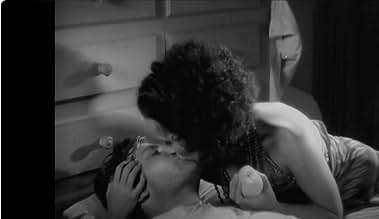
The story starts off with McCrea, as a sailor on a yacht, being rescued from a shark by Del Rio, as the daughter of the king of a native tribe. Romance develops from there, with McCrea's character dreaming of taking her back home with him when his trip is done, but having his plans hindered by the responsibilities she faces as a king's daughter. (Why any man, given the opportunity to live alone with a woman like Del Rio on a tropical island, would yearn for 'civilization', is also a pretty good question.)
The story features some rather sensitive themes in the running contact between the two cultures. If it does not always face them comfortably, at least it is relatively even-handed much of the time. Although some 'primitive' beliefs are ascribed to the natives' culture, they are portrayed as sincere beliefs. There are also a number of points of interest on the technical side. Most obviously, there are the wealth of atmospheric shots of the tropical setting. But beyond that, there are a few interesting attempts to offer some interesting views with the camera, such as the water-level shots in the opening sailing sequence.
One particularly interesting idea is that, for a long time, the language barrier is allowed to stand realistically between the characters, especially in McCrea's efforts to communicate, instead of using a stock device to get around it. Only much later is it assumed that Del Rio's character has learned enough English to be able to communicate.
Certainly, there are times when this feature shows a little of its age, and in some respects it's not completely successful. But it would probably be worth watching to see Del Rio alone, and the rest of it contains several interesting aspects.
The story starts off with McCrea, as a sailor on a yacht, being rescued from a shark by Del Rio, as the daughter of the king of a native tribe. Romance develops from there, with McCrea's character dreaming of taking her back home with him when his trip is done, but having his plans hindered by the responsibilities she faces as a king's daughter. (Why any man, given the opportunity to live alone with a woman like Del Rio on a tropical island, would yearn for 'civilization', is also a pretty good question.)
The story features some rather sensitive themes in the running contact between the two cultures. If it does not always face them comfortably, at least it is relatively even-handed much of the time. Although some 'primitive' beliefs are ascribed to the natives' culture, they are portrayed as sincere beliefs. There are also a number of points of interest on the technical side. Most obviously, there are the wealth of atmospheric shots of the tropical setting. But beyond that, there are a few interesting attempts to offer some interesting views with the camera, such as the water-level shots in the opening sailing sequence.
One particularly interesting idea is that, for a long time, the language barrier is allowed to stand realistically between the characters, especially in McCrea's efforts to communicate, instead of using a stock device to get around it. Only much later is it assumed that Del Rio's character has learned enough English to be able to communicate.
Certainly, there are times when this feature shows a little of its age, and in some respects it's not completely successful. But it would probably be worth watching to see Del Rio alone, and the rest of it contains several interesting aspects.
Beautiful Film
A very beautiful & romantic film. It's about a lovely native woman named Luana (Dolores del Rio) and the man that falls in-love with her, Johnny Baker (Joel McCrea). Luana is chosen by the other island natives to be sacrificed to the volcano. This is a story we've all heard of by now but this might be the first film on the subject matter.
I discovered this film via Creighton Chaney. I was looking to watch a film from him that I have yet to see. He's not in this one very much, his character Thornton is more of a supporting role, but he did not have to be in this film for me to enjoy it. I'm glad to discover it because it's a wonderful story.
8/10
I discovered this film via Creighton Chaney. I was looking to watch a film from him that I have yet to see. He's not in this one very much, his character Thornton is more of a supporting role, but he did not have to be in this film for me to enjoy it. I'm glad to discover it because it's a wonderful story.
8/10
Passionate romance in tropical setting
I despair of non-romantics taking the time to denigrate with their reviews ultra-romantic films, such as this.
BIRD OF PARADISE is a masterwork - superbly photographed (the lighting, composition and mobility of the camera are astonishing), lushly scored (Max Steiner's score is the first ever to run from beginning to end of a talking film), and lyrically directed. Del Rio's performance is perfection - a native woman whose only future is to be sacrificed to Pele, the God of Volcanos, who finds true love with a white man who visits her island and chooses to stay.
For romantics, this is a classic tear-jerker and an exercise in sheer visual beauty. The underwater swimming scene between a nude Del Rio and a McCrea clad only in the thinnest of briefs is unique in cinema.
Perhaps the Academy's shut-out of this work is due to its coming on the heel of the semi-documentary Murnau TABU, the year before which explored similar themes. No reason however not to nominate it for Del Rio's performance, the cinematography and the score.
One of the most visually beautiful films ever made and a must-see for romantics.
BIRD OF PARADISE is a masterwork - superbly photographed (the lighting, composition and mobility of the camera are astonishing), lushly scored (Max Steiner's score is the first ever to run from beginning to end of a talking film), and lyrically directed. Del Rio's performance is perfection - a native woman whose only future is to be sacrificed to Pele, the God of Volcanos, who finds true love with a white man who visits her island and chooses to stay.
For romantics, this is a classic tear-jerker and an exercise in sheer visual beauty. The underwater swimming scene between a nude Del Rio and a McCrea clad only in the thinnest of briefs is unique in cinema.
Perhaps the Academy's shut-out of this work is due to its coming on the heel of the semi-documentary Murnau TABU, the year before which explored similar themes. No reason however not to nominate it for Del Rio's performance, the cinematography and the score.
One of the most visually beautiful films ever made and a must-see for romantics.
"You certainly make civilization look silly"
There was a certain kind of picture in the "pre-code" era, in which the licentiousness of the times would throw up any kind of strange fantasy. In the most significant period of sexual liberation before the 1960s, and still in an era where plucking a bride from a primitive culture did not seem a bit dodgy, a picture like Bird of Paradise could exist. A yarn like this would be the stuff of corny B-flicks a few decades later, but back in 1932 it was acceptable A-feature material.
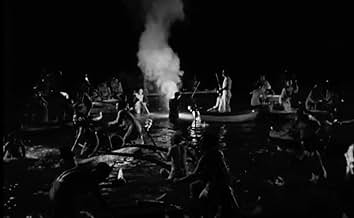
So what we have here is a rather odd dichotomy. A daft storyline, yet one pulled off with panache. The producer and director is King Vidor, one of the most uniquely talented filmmakers of all time, and what's more he appears to have taken Bird of Paradise very seriously. His camera set-ups give an almost documentary feel to the proceedings. He doesn't force us in with point-of-view shots, or make us coldly objective, but often has us peeping over shoulders or from behind props, like an extra amid the action. This not only gives us the feeling of being there, it is also incredibly vivid and dynamic. He directs with a mixture of realism (most of the extras were genuine Polynesians) and bizarre stylisation, culminating in rituals which become macabre and frenzied riots.
Bird of Paradise also includes a couple of "before they were famous" curios. Those wild tribal dances are choreographed by Busby Berkeley. His stark, abstract formations are already evident, and nicely suit the feel of this picture. Then there is music by Max Steiner, composing what happens to be one of the earliest examples of an orchestral backing score in a talking picture. Steiner's score is a little awkward in its mixing, but melodically it is fine, establishing themes for different characters, setting tones, matching action but never once threatening to upstage the images. Berkeley and Steiner would soon take up residence at Warner Brothers, and the rest would be history. Oh, and there's one more curio, in that you several times clearly hear the Hawaiian word "wiki", nearly seventy years before anyone thought of joining it to "pedia".
The cast of Bird of Paradise are a rather odd bunch, but it doesn't seem to matter. The ship's crew members are filled out with a number of comedy supporting players, like 'Skeets' Gallagher and Bert Roach. They make the onboard scenes a little more interesting, but their appearances are fleeting and their performances muted enough that they never threaten to overbalance the picture or make it too farcical. Lead man Joel McCrea was a competent rather than an exceptional actor, but he has the ideal physique and manner for the character. Importantly he is also a generous player, who never attempts to steal the scene. And finally we have Dolores del Rio, of course looking far more Hispanic than Polynesian, but nevertheless convincing as a native woman, and certainly vivacious.
In spite of, or perhaps because of the talkies being firmly established and no longer stilted, Bird of Paradise seems more than anything like a silent picture. It does not make do without dialogue, but what dialogue there is tends to be superfluous, the images speaking eloquently enough. In other words, you could have released it as a silent, and not needed many title cards. With its mystical, exotic tone we do not really need to hear the actors rabbiting on to retain a sense of naturalism. And yes, it does contain many moments that are somewhat laughable (such as Joel McCrea riding a turtle like it was a surfboard), but thanks to its inventive direction, spot-on casting, and professional production it manages, against all odds, to salvage some dignity.
So what we have here is a rather odd dichotomy. A daft storyline, yet one pulled off with panache. The producer and director is King Vidor, one of the most uniquely talented filmmakers of all time, and what's more he appears to have taken Bird of Paradise very seriously. His camera set-ups give an almost documentary feel to the proceedings. He doesn't force us in with point-of-view shots, or make us coldly objective, but often has us peeping over shoulders or from behind props, like an extra amid the action. This not only gives us the feeling of being there, it is also incredibly vivid and dynamic. He directs with a mixture of realism (most of the extras were genuine Polynesians) and bizarre stylisation, culminating in rituals which become macabre and frenzied riots.
Bird of Paradise also includes a couple of "before they were famous" curios. Those wild tribal dances are choreographed by Busby Berkeley. His stark, abstract formations are already evident, and nicely suit the feel of this picture. Then there is music by Max Steiner, composing what happens to be one of the earliest examples of an orchestral backing score in a talking picture. Steiner's score is a little awkward in its mixing, but melodically it is fine, establishing themes for different characters, setting tones, matching action but never once threatening to upstage the images. Berkeley and Steiner would soon take up residence at Warner Brothers, and the rest would be history. Oh, and there's one more curio, in that you several times clearly hear the Hawaiian word "wiki", nearly seventy years before anyone thought of joining it to "pedia".
The cast of Bird of Paradise are a rather odd bunch, but it doesn't seem to matter. The ship's crew members are filled out with a number of comedy supporting players, like 'Skeets' Gallagher and Bert Roach. They make the onboard scenes a little more interesting, but their appearances are fleeting and their performances muted enough that they never threaten to overbalance the picture or make it too farcical. Lead man Joel McCrea was a competent rather than an exceptional actor, but he has the ideal physique and manner for the character. Importantly he is also a generous player, who never attempts to steal the scene. And finally we have Dolores del Rio, of course looking far more Hispanic than Polynesian, but nevertheless convincing as a native woman, and certainly vivacious.
In spite of, or perhaps because of the talkies being firmly established and no longer stilted, Bird of Paradise seems more than anything like a silent picture. It does not make do without dialogue, but what dialogue there is tends to be superfluous, the images speaking eloquently enough. In other words, you could have released it as a silent, and not needed many title cards. With its mystical, exotic tone we do not really need to hear the actors rabbiting on to retain a sense of naturalism. And yes, it does contain many moments that are somewhat laughable (such as Joel McCrea riding a turtle like it was a surfboard), but thanks to its inventive direction, spot-on casting, and professional production it manages, against all odds, to salvage some dignity.
Love, Romance & A Volcano
A young man, sailing the South Seas with friends, is saved from a shark by a lovely chief's daughter. They fall madly in love, only to have him learn that his beautiful BIRD OF PARADISE is destined to be sacrificed to Pele, the volcano god.
Essentially a piece of fluff, this film is enhanced by the performances of Dolores Del Rio & Joel McCrea. They handle the romantics quite nicely (her skinny dip providing proof this is a pre-Production Code movie). The rest of the cast, which includes Lon Chaney Jr. & 'Skeets' Gallagher, exist purely to provide support to the stars.
Location filming in Hawaii and a beautiful, evocative score by Max Steiner emphasize the languid mood of the plot.
Essentially a piece of fluff, this film is enhanced by the performances of Dolores Del Rio & Joel McCrea. They handle the romantics quite nicely (her skinny dip providing proof this is a pre-Production Code movie). The rest of the cast, which includes Lon Chaney Jr. & 'Skeets' Gallagher, exist purely to provide support to the stars.
Location filming in Hawaii and a beautiful, evocative score by Max Steiner emphasize the languid mood of the plot.


Lo sapevi?
- QuizFilm debut of Lon Chaney Jr., billed under his real name of Creighton Chaney.
- BlooperAt about the 16:00 mark there is a medium shot of 3 characters. The one on the right pulls off his sweater and begins to unbutton his shirt. He is then shown in a 2 character shot still wearing the sweater, followed by another medium shot with the sweater off.
- Citazioni
Chester: What do they call this place?
Johnny Baker: Probably one of the Virgin Islands
Chester: Heaven forbid.
- ConnessioniEdited into La pericolosa partita (1932)
- Colonne sonoreWhere the Blue of the Night (Meets the Gold of the Day)
(1931) (uncredited)
Music by Fred E. Ahlert
Sung (with non-lexical vocables) by Johnny as Luana pulls his dinghy to shore.
I più visti
Accedi per valutare e creare un elenco di titoli salvati per ottenere consigli personalizzati
- How long is Bird of Paradise?Powered by Alexa
Dettagli
- Data di uscita
- Paese di origine
- Lingue
- Celebre anche come
- Bird of Paradise
- Luoghi delle riprese
- Hawaii, Stati Uniti(2nd unit establishing shots)
- Azienda produttrice
- Vedi altri crediti dell’azienda su IMDbPro
Botteghino
- Budget
- 752.000 USD (previsto)
- Tempo di esecuzione
- 1h 20min(80 min)
- Colore
- Proporzioni
- 1.37 : 1
Contribuisci a questa pagina
Suggerisci una modifica o aggiungi i contenuti mancanti