VALUTAZIONE IMDb
7,8/10
54.018
LA TUA VALUTAZIONE


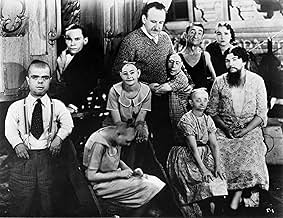
La bella artista di un circo accetta di sposare il leader di uno degli attori, ma i suoi amici deformi scoprono che lo sta solo sposando per la sua eredità.La bella artista di un circo accetta di sposare il leader di uno degli attori, ma i suoi amici deformi scoprono che lo sta solo sposando per la sua eredità.La bella artista di un circo accetta di sposare il leader di uno degli attori, ma i suoi amici deformi scoprono che lo sta solo sposando per la sua eredità.
- Regia
- Sceneggiatura
- Star
- Premi
- 2 vittorie e 1 candidatura in totale

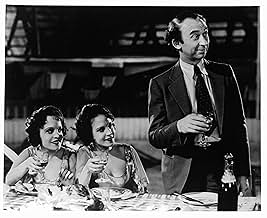

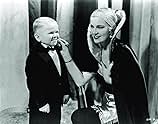


Roscoe Ates
- Roscoe
- (as Rosco Ates)


Prince Randian
- The Living Torso
- (as Rardion)
7,854K
1
2
3
4
5
6
7
8
9
10
Recensioni in evidenza
Great horror classic from early 30's.
"Freaks" is one of the most controversial horror films from the 30's,mainly because director Tod Browning hired as the actors real sideshow freaks.It does have a rather unsettling effect,but I think that really does work for the film.Browning builds up a great amount of suspense with the good use of locations,story and lots of atmosphere.The ending,where we see freaks crawling in the mud,is pretty creepy.Anyway check this one out-it's worth watching.
The studio got it so wrong...
In the first place, this movie was originally made to compete with the Universal Horror films, as though these human beings who are the titular "freaks" are not human. Director Tod Browning was still reeling from the loss of his big star, Lon Chaney, to cancer, and thought this would be a good follow up to his previous horror films without Chaney. And after all, he had just finished directing Dracula.
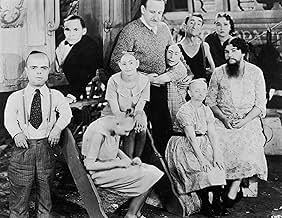
Actually, it paints a very sympathetic picture of the disabled and deformed circus performers, who, at this time of limited medical knowledge and abounding prejudice, were very limited in what they could do in life. They have a very deep camaraderie that is shown through such events as the birth of a child to the bearded lady and the engagement of one of the conjoined twins. Since the other twin is already married, there is much arguing over what the logistics are going to be in these two marriages.
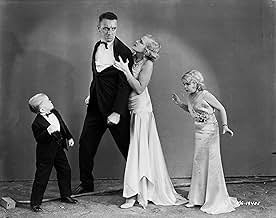
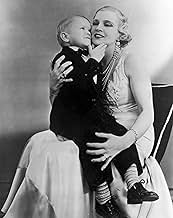
The actual "monsters" in this film are the acrobat "Cleopatra" (Olga Baclanova), and strong man Hercules (Henry Victor), who are having an affair. Two physical specimens with monstrous morality. When the dwarf Hans is captivated by Cleopatra's beauty, she at first teases him by leading him on. But then he starts giving her expensive jewelry and she decides to keep up the ruse. When Freida, Hans' dwarf girlfriend, comes to Cleopatra and asks her to stop teasing him, she accidentally tips off Cleo to the fact that Hans has inherited a great fortune. Hercules and Cleo then plan to get Hans to marry Cleo and then poison him so she can inherit his money. But the two don't realize the close strong bond that the circus performers have with one another and that they are literally each others eyes and ears. Complications ensue.
The film was originally set to run at 90 minutes, but test audiences were so revolted that 30 minutes were cut out so that the remaining film only runs at an hour. Then a scene was tacked on at the end to show Hans' grief over what has ultimately happened. MGM would often add an end scene that really didn't fit the mood of the rest the film during Irving Thalberg's reign there to wrap things up.
This film pretty much finished the career of director Browning as afterwards he only directed a farcical sound remake of a silent film he had made at MGM and one other film and then retired. This was a good late role for Olga Baclanova. She had a very thick Russian accent and had some great late silent roles at Paramount, but talking film had not been kind to her career. This really gave her one last great role where her accent really fit into the plot, plus this was not a film where lots of dialogue was called for, and she was very good at using gestures and expressions to convey emotion.
In the 1960s this film got a fresh look, and today is widely celebrated as having been ahead of its time. The horror is implied and left up to your imagination as to just HOW it happened, and the empathy shown the circus performers is profound. It even got a separate DVD release with commentary.
Actually, it paints a very sympathetic picture of the disabled and deformed circus performers, who, at this time of limited medical knowledge and abounding prejudice, were very limited in what they could do in life. They have a very deep camaraderie that is shown through such events as the birth of a child to the bearded lady and the engagement of one of the conjoined twins. Since the other twin is already married, there is much arguing over what the logistics are going to be in these two marriages.
The actual "monsters" in this film are the acrobat "Cleopatra" (Olga Baclanova), and strong man Hercules (Henry Victor), who are having an affair. Two physical specimens with monstrous morality. When the dwarf Hans is captivated by Cleopatra's beauty, she at first teases him by leading him on. But then he starts giving her expensive jewelry and she decides to keep up the ruse. When Freida, Hans' dwarf girlfriend, comes to Cleopatra and asks her to stop teasing him, she accidentally tips off Cleo to the fact that Hans has inherited a great fortune. Hercules and Cleo then plan to get Hans to marry Cleo and then poison him so she can inherit his money. But the two don't realize the close strong bond that the circus performers have with one another and that they are literally each others eyes and ears. Complications ensue.
The film was originally set to run at 90 minutes, but test audiences were so revolted that 30 minutes were cut out so that the remaining film only runs at an hour. Then a scene was tacked on at the end to show Hans' grief over what has ultimately happened. MGM would often add an end scene that really didn't fit the mood of the rest the film during Irving Thalberg's reign there to wrap things up.
This film pretty much finished the career of director Browning as afterwards he only directed a farcical sound remake of a silent film he had made at MGM and one other film and then retired. This was a good late role for Olga Baclanova. She had a very thick Russian accent and had some great late silent roles at Paramount, but talking film had not been kind to her career. This really gave her one last great role where her accent really fit into the plot, plus this was not a film where lots of dialogue was called for, and she was very good at using gestures and expressions to convey emotion.
In the 1960s this film got a fresh look, and today is widely celebrated as having been ahead of its time. The horror is implied and left up to your imagination as to just HOW it happened, and the empathy shown the circus performers is profound. It even got a separate DVD release with commentary.
'Freaks' is an extraordinary movie with a lot of heart.
I really dig 1930s horror movies. There's just something special about them that can never be recreated. A lot of it has to do with the talkies being new territory, many of the directors adapting German Expressionist techniques to Hollywood melodrama, and the freedom allowed before the Hayes Code really kicked in. Movies like 'Dracula', 'Frankenstein', 'Bride Of Frankenstein', 'Island Of Lost Souls', 'The Invisible Man' and 'White Zombie' are horror classics which still impress today. I wonder whether anyone will be watching the lame horror movies of today in seventy years for any other reason than some cheap laughs? Todd Browning made the transition from silent movies and directed the hugely successful 'Dracula' in 1931. It was a sensation and made Bela Lugosi a horror icon. Browning could pretty much do anything he chose after that. He chose to do 'Freaks'. Great for us as, not so great for him. The movie was universally reviled and even banned in some countries and his career never fully recovered. But 'Freaks' is an extraordinary movie with a lot of heart. It has faults, sure - some corny acting at times, and not so great production values - but it really doesn't matter. I don't know anyone who's seen it who hasn't been deeply affected by it. The reason the movie caused such a negative reaction back in the 1930s was because it used real circus performers including Zip the Pinhead and Radian "The Living Torso". Many people found this to be distasteful and exploitative, but the performers seemed to be glad to get the opportunity to work, and the whole crux of the movie is that the "freaks" are more decent than the "normal" Cleopatra (Olga Baclanova) , the trapeze artist who marries little person Hans (Harry Earls) for his money. 'Freaks' is still a very powerful and unique movie. It has inspired many creative people over the years from the Surrealists to The Ramones to Jodorowsky to David Lynch. 'Freaks' comes with my highest recommendation!
I finally found out where Joey got his inspiration...
D-U-M-B! Everyone's accusin' me!
I've been listening to The Ramones' music off and on for almost 30 years now, and despite reading and viewing tons of stuff about the band and its origins, I'd never run across how they came up with the whole "pinhead" theme.
Well, I've finally seen FREAKS, often listed as one of the great cult flicks of all time. And wouldn't you know it, the "pinheads", including "Schlitze", the inspiration for The Ramones' mascot who always came out to join the band during their live shows at the end of the Pinhead song, were in FREAKS.
The Ramones also slightly modified the "freak chant" from the wedding scene, changing "Gooble-Gobble" to "Gabba-Gabba". I guess Jeffrey Hyman (Joey Ramone) must have viewed himself as somewhat "freakish" (he did have an incredible look), and really related to the group of circus curiosities assembled for this film.
After being shelved for about three decades, FREAKS started playing again at art-house theaters in the mid-60's, and that's where Joey had to have come across it.
As far as my film review, this movie needs to be viewed. Look past the stilted acting, and soak up the message. It will stay with you for a long, long time.
I've been listening to The Ramones' music off and on for almost 30 years now, and despite reading and viewing tons of stuff about the band and its origins, I'd never run across how they came up with the whole "pinhead" theme.
Well, I've finally seen FREAKS, often listed as one of the great cult flicks of all time. And wouldn't you know it, the "pinheads", including "Schlitze", the inspiration for The Ramones' mascot who always came out to join the band during their live shows at the end of the Pinhead song, were in FREAKS.
The Ramones also slightly modified the "freak chant" from the wedding scene, changing "Gooble-Gobble" to "Gabba-Gabba". I guess Jeffrey Hyman (Joey Ramone) must have viewed himself as somewhat "freakish" (he did have an incredible look), and really related to the group of circus curiosities assembled for this film.
After being shelved for about three decades, FREAKS started playing again at art-house theaters in the mid-60's, and that's where Joey had to have come across it.
As far as my film review, this movie needs to be viewed. Look past the stilted acting, and soak up the message. It will stay with you for a long, long time.
Not exploitative, but a haunting look into the world of sideshow artists
Banned in most countries for over three decades, this is one of the most bizarre and fascinating films Hollywood ever produced. Basically a soap-opera set in a side-show, it is a look into the lives of a group of sideshow performers in a traveling circus.
In the beginning of the film, we meet Cleopatra (Baclanova), a beautiful but avaricious trapeze artist who seduces and marries midget circus owner Hans (Earles) to get at his money. At the wedding reception, the close-knit society of freaks welcomes her into the family as "one of us, one of us." Cleopatra is disgusted however by this very thought and tells them she will never be grotesque, while her secret lover, Hercules the strongman, howls with laughter. She humiliates her smitten husband by openly kissing Hercules. After they find out they tried to poison Hans, the group comes up with an idea to take revenge at the beautiful trapeze artist and her strongman lover.
Tod Browning (DRACULA, THE UNHOLY THREE) put his career on the line with the making of this film. MGM, trying to compete with Universal, and cash in on the new appetite for horror films in the early thirties, never knew what hit them with this film. It caused quite a stir and such an amount of negative publicity they decided to virtually disown it and until the '60s it remained practically unseen. The fact that infamous bad film maker Dwain Esper (REEFER MADNESS, MANIAC, see my earlier review), showed the film in road shows and burlesque houses, only enhanced the film's notorious cult reputation.
Even today many scour away from seeing this film because of its supposed voyeurism. It might be seen as a very disturbing and ugly film, but at the same time a beautiful and ultimately a moving account of the shortcomings and prejudice of mankind. Most people didn't get it and many thought of it as a new low in Hollywood depravity and were horrified with the film. In truth it's a very warm and humane look at how physically deformed people manage on their own, and a fascinating insight in the world of side-show performers, a milieu Browning (a former "snake man" in the circus himself) was very familiar with. Not an outstanding film in terms of cinematic qualities, but because of the completely unique subject matter and the almost documentary like approach to the phenomenon of the side show, whilst using actual freaks, a term that didn't have the same connotation as today.
In 1994 the film was selected for the National Film Registry's archive of cinematic treasures. Rightfully so, not only because it's a unique piece of cinema but historically one the very few cinematic accounts left on attitudes towards disabled persons. Even today, the reluctance by most people to even admit this film's very existence, only exemplifies how many misunderstandings about people that are not "normal", still exist.
The recent DVD-release comes with the excellent documentary "Freaks: Sideshow Cinema."
Camera Obscura --- 9/10
In the beginning of the film, we meet Cleopatra (Baclanova), a beautiful but avaricious trapeze artist who seduces and marries midget circus owner Hans (Earles) to get at his money. At the wedding reception, the close-knit society of freaks welcomes her into the family as "one of us, one of us." Cleopatra is disgusted however by this very thought and tells them she will never be grotesque, while her secret lover, Hercules the strongman, howls with laughter. She humiliates her smitten husband by openly kissing Hercules. After they find out they tried to poison Hans, the group comes up with an idea to take revenge at the beautiful trapeze artist and her strongman lover.
Tod Browning (DRACULA, THE UNHOLY THREE) put his career on the line with the making of this film. MGM, trying to compete with Universal, and cash in on the new appetite for horror films in the early thirties, never knew what hit them with this film. It caused quite a stir and such an amount of negative publicity they decided to virtually disown it and until the '60s it remained practically unseen. The fact that infamous bad film maker Dwain Esper (REEFER MADNESS, MANIAC, see my earlier review), showed the film in road shows and burlesque houses, only enhanced the film's notorious cult reputation.
Even today many scour away from seeing this film because of its supposed voyeurism. It might be seen as a very disturbing and ugly film, but at the same time a beautiful and ultimately a moving account of the shortcomings and prejudice of mankind. Most people didn't get it and many thought of it as a new low in Hollywood depravity and were horrified with the film. In truth it's a very warm and humane look at how physically deformed people manage on their own, and a fascinating insight in the world of side-show performers, a milieu Browning (a former "snake man" in the circus himself) was very familiar with. Not an outstanding film in terms of cinematic qualities, but because of the completely unique subject matter and the almost documentary like approach to the phenomenon of the side show, whilst using actual freaks, a term that didn't have the same connotation as today.
In 1994 the film was selected for the National Film Registry's archive of cinematic treasures. Rightfully so, not only because it's a unique piece of cinema but historically one the very few cinematic accounts left on attitudes towards disabled persons. Even today, the reluctance by most people to even admit this film's very existence, only exemplifies how many misunderstandings about people that are not "normal", still exist.
The recent DVD-release comes with the excellent documentary "Freaks: Sideshow Cinema."
Camera Obscura --- 9/10


Lo sapevi?
- QuizThe on-screen romance between Hans and Frieda was very subdued because the roles were being played by real life brother and sister Harry Earles and Daisy Earles.
- BlooperAt 43:40 when Cleo tosses the wine at Angeleno, she is standing in front of him, but the wine she throws comes from the far right side of the frame.
- Citazioni
Freaks: We accept you, one of us! Gooble Gobble!
- Versioni alternativeReissue prints included a two-and-a-half minute written prologue about historical interpretations and contemporary studies of "misshapen misfits." These same prints remove the MGM Lion (the studio having disowned the film for many years).
- ConnessioniEdited into Histoire(s) du cinéma: Le contrôle de l'univers (1999)
I più visti
Accedi per valutare e creare un elenco di titoli salvati per ottenere consigli personalizzati
Dettagli
Botteghino
- Budget
- 310.607 USD (previsto)
- Lordo in tutto il mondo
- 4693 USD
- Tempo di esecuzione
- 1h 4min(64 min)
- Colore
- Proporzioni
- 1.37 : 1
Contribuisci a questa pagina
Suggerisci una modifica o aggiungi i contenuti mancanti