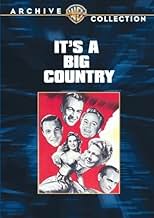
Aggiungi una trama nella tua linguaComprised of eight unrelated episodes of inconsistent quality, this anthology piece of American propaganda features some of MGM Studios' best directors, screenwriters and actors; it is narra... Leggi tuttoComprised of eight unrelated episodes of inconsistent quality, this anthology piece of American propaganda features some of MGM Studios' best directors, screenwriters and actors; it is narrated by Louis Calhern.Comprised of eight unrelated episodes of inconsistent quality, this anthology piece of American propaganda features some of MGM Studios' best directors, screenwriters and actors; it is narrated by Louis Calhern.
- Miss Coleman
- (as Nancy Davis)
- Joey Esposito
- (as Bobby Hyatt)
Recensioni in evidenza
Definitely American
Wellmann and co tell us that America is a big country ,with big differences but where everybody has his place in the sun: in the "celebrities" segment,there are plenty of black artists such as Armstrong ,but the civil rights were ignored in 1949.
What saves this naive film containing more finer feelings than a Capra movie,is some kind of humor .Take the first scene on a train and the last sentence of the baffled traveler or the Hungarian daddy who does not want his daughters to marry a Greek,cause we are "enemies" .How great the melting pot is!And so are Gene Kelly and Janet Leigh.
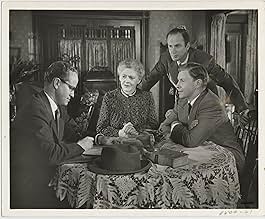
Some stars only appear a few minutes:Gary Cooper tells us what a wonderful state "Lone Star" Texas is where oil spurts out everywhere under your feet;Ethel Barrymore plays a delightful old lady who is cross cause she was not counted when they took a census of the population.
The last sketch ,about glasses ,was perhaps not a very good choice to conclude the movie.
It was,is and will always be a big country.
Excellent for anyone to watch
Big cast and big ideas
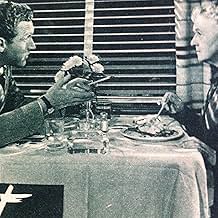
An opening segment on a train, that draws us into the whole thing, features James Whitmore as a patriotic, "I love America" type. "Which America?" asks the always-debonair and well-spoken William Powell. We then see the many sides of our country depicted through vignettes.
There are a couple of segments against prejudice. One is about a Greek-hating Hungarian American father of several girls (S. Z. Sakall) whose eldest daughter (Janet Leigh) falls for a young Greek American (Gene Kelly - actually pushing 40 at the time but you'd never guess it). As a piece against xenophobia, it's nice, and gets its point across with humor, wit, and romance.
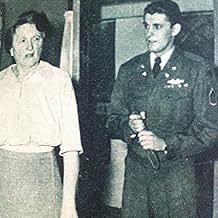
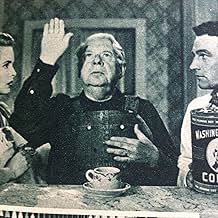
There's also a segment against religious prejudice, where an ex-seviceman named Maxie Klein (Keefe Brasselle) visits the mother (Marjorie Main) of a dead war buddy. At first the mother doesn't know the man because her son had used his nickname in his letters. She's suspicious of his motives because he's Jewish. Eventually she's grateful for the comfort the stranger has given her, putting aside whatever prejudices she was harboring, and requesting his mother's address so that she can write her about it all.
The segments are all fairly interesting, but not exactly first-rate drama or comedy.
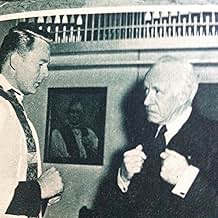
There's one about a minister (Van Johnson) who learns a lesson in humility from a deacon (played by Louis Stone). There's one in which Fredric March plays a working-class Italian American who won't be convinced by a schoolteacher (Nancy Davis) his son needs glasses. Gary Cooper plays a cowboy in a humorous monologue about Texas. Louis Calhern narrates a documentary sequence about African Americans. Ethel Barrymore and George Murphy star in a dramatic sketch wherein an old Boston-Irish woman is upset because the US Census ignored her. Etc.
The overall effect is a little like picking up an old copy of Reader's Digest.
Without the stars, this would be very minor, indeed. With them, it becomes a big film. Not a great film, but, undoubtedly, a big one. It covers a lot of ground, and comes up a little bit short.
A cute little rarity
Episodic by nature and all the vignettes have their charm but the first three are really the best.
William Powell and James Whitmore breeze their way through a lively discussion of the ever evolving nature of the country. Their reactions to each other are what makes the skit.
Next up is a little story about not being lost in the crowd made charming by Ethel Barrymore's gentle performance.
The next segment is a tribute to notable African Americans which is nice in and of itself but that's also why it's a bit problematic. Considering the time it was made the isolated state of the short would have made it easy to snip out in the South. Of course the same could be said for any of the stories but since their are not people of color in any of the other segments it's rather obvious that was the intention at the time. Still it's a nice opportunity to see the significant Americans it spotlights.
The other sections all showing various slices of life, aside from Gary Cooper's star bit simply representing Texas, are pleasant but are on the sticky side of sweet.
The U.S.A. of the Cold War
It's a film with several different segments, some serious some pretty funny about every day Americans in all walks of life, in all parts of the then 48 states.
The two I liked best were those that ironically starred the two men who were not MGM contract players, Gary Cooper and Fredric March. Gary Cooper plays a Texas cowboy talking about his state and disillusioning us with a tongue in cheek delivery about the way Texans and Texas are perceived by the other 47 states. Of course Cooper's humor and the whole premise behind this segment was that Texas was our largest state in land mass. That ended in 1959 when Alaska became the 49th state, still it's the highlight of It's A Big Country.
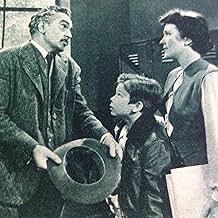
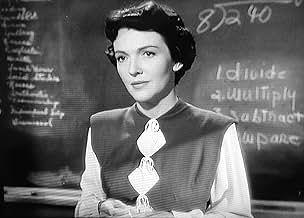
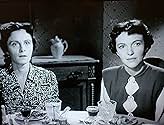
Fredric March plays an Italian American father who's opposed to his son, Bobby Hyatt, getting needed glasses even after teacher Nancy Davis tells him it's necessary. He's got some old world ideas that need a bit of adjustment. March plays the role with dignity never do you feel he's a caricature.
Another episode that is nicely done involves Gene Kelly, Greek American boy falling for Janet Leigh, Hungarian American girl. They've got a problem though, her father played by Hollywood's number one Hungarian S.Z. Sakall. In the past 20 years we've seen a whole lot of stories about ancient ethnic hatreds coming out of Eastern Europe. Sakall is carrying some old grudges against Greeks though he really isn't sure why. Point being that here in America you're supposed to leave that all behind. That segment is still very much relevant.
Could we make It's A Big Country today? Not at this time, maybe at some future point when we've reached a national consensus that despite all our problems, America's a pretty good place after all.
Lo sapevi?
- QuizWhen she discovers that Icarus Xenophon (Gene Kelly) is Greek, Janet Leigh does a spot-on imitation of S.Z. "Cuddles" Sakall's (S.Z. Sakall) trademark response to upsetting news, placing her palms against her cheeks and emitting an exasperated "Sheeeesh!"
- BlooperWhen the census taker asks Ethel Barrymore her name, she replies "Mrs. Brian Patrick Riordan" and he writes it down. Always with censuses, a woman's given name is entered.
- Citazioni
Rosa Szabo Xenophon: Marry me? You don't know anything about me.
Icarus Xenophon: You're a girl. You're pretty and you're modest. What else is there to know?
- ConnessioniEdited into A Letter from a Soldier (1951)
I più visti
- How long is It's a Big Country: An American Anthology?Powered by Alexa
Dettagli
- Data di uscita
- Paese di origine
- Lingue
- Celebre anche come
- Nueve vidas
- Luoghi delle riprese
- 1772 Church Street NW, Washington, District of Columbia, Stati Uniti(St. Thomas Episcopal Church - where Rev. Birch was assigned)
- Azienda produttrice
- Vedi altri crediti dell’azienda su IMDbPro
Botteghino
- Budget
- 1.013.000 USD (previsto)
- Tempo di esecuzione
- 1h 29min(89 min)
- Colore
- Proporzioni
- 1.37 : 1