VALUTAZIONE IMDb
7,9/10
40.416
LA TUA VALUTAZIONE


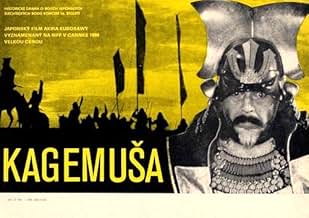
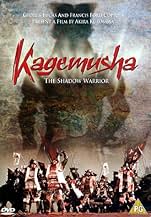
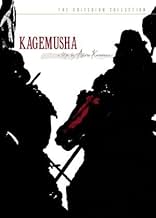
Un piccolo ladro con un'assoluta somiglianza con un signore della guerra samurai viene assunto come sosia del signore. Quando il signore della guerra in seguito muore, il ladro è costretto a... Leggi tuttoUn piccolo ladro con un'assoluta somiglianza con un signore della guerra samurai viene assunto come sosia del signore. Quando il signore della guerra in seguito muore, il ladro è costretto a prendere le armi al suo posto.Un piccolo ladro con un'assoluta somiglianza con un signore della guerra samurai viene assunto come sosia del signore. Quando il signore della guerra in seguito muore, il ladro è costretto a prendere le armi al suo posto.
- Regia
- Sceneggiatura
- Star
- Candidato a 2 Oscar
- 20 vittorie e 5 candidature totali


7,940.4K
1
2
3
4
5
6
7
8
9
10
Recensioni in evidenza
Better than Shakespeare
I saw the director's cut about twenty years after I first saw the film. Kagemusha is as magnificent now as before, but what has changed in the meantime is my appreciation of the meaning of Shakespeare's plays. The history plays and most of the tragedies were about the political dilemmas facing the new Tudor state. The Elizabethan audience sat on the edge of their seats waiting to see how political order might be restored once it had been set in disarray. The Wars of the Roses sequence culminates in the late political tragedies -- Julius Caesar, Macbeth, Hamlet and Lear. The question is always the same. How is an impersonal modern state possible when its leader is a person, the King? Or is rule by office compatible with the human flaws of the person occupying it? Shakespeare was the client of a conservative aristocratic faction, no rabble-rousing democrat he. But he went so deep into this political question in the course of writing all his plays that he dug deeper into this core issue of modern politics than anyone since.
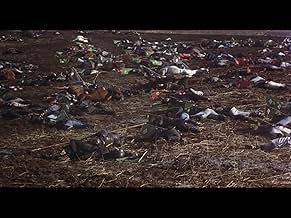
Kurosawa approaches the same question through the notion of a double,"the shadow of a warrior", Kagemusha. Here the contrast between the office of the political leader and its personal incumbent is brought vividly to life in so many ways. The period is the Japanese equivalent of England's War of the Roses, the transition from feudalism to the beginnings of the modern state. The losing side in this case is the one that tries to resolve the contradiction of personality and office by a subterfuge, a thief masquerading as a lord. The winning side and founder of the Japanese state is the Tokugawa clan. The climactic battle symbolises the passage from traditional to modern warfare, as the horses of the losers are mown down by fusillades of gunfire. The credits run as the corpse of the double crosses a submerged flag whose abstract symbolism shows us which aspects of feudalism the modern state will borrow. Personality is vanquished.
The aesthetic vision animating this movie is incredible. There is so much to look at and admire, perhaps interpret. One striking feature for me was the persistent strong breeze ripping through the banners, a symbol of the winds of change running through 16th century Japan, contemporary to Shakespeare's period. Because this drama was made by and for the modern cinema, in many ways Kurosawa's masterpiece is better than Shakespeare.
Kurosawa approaches the same question through the notion of a double,"the shadow of a warrior", Kagemusha. Here the contrast between the office of the political leader and its personal incumbent is brought vividly to life in so many ways. The period is the Japanese equivalent of England's War of the Roses, the transition from feudalism to the beginnings of the modern state. The losing side in this case is the one that tries to resolve the contradiction of personality and office by a subterfuge, a thief masquerading as a lord. The winning side and founder of the Japanese state is the Tokugawa clan. The climactic battle symbolises the passage from traditional to modern warfare, as the horses of the losers are mown down by fusillades of gunfire. The credits run as the corpse of the double crosses a submerged flag whose abstract symbolism shows us which aspects of feudalism the modern state will borrow. Personality is vanquished.
The aesthetic vision animating this movie is incredible. There is so much to look at and admire, perhaps interpret. One striking feature for me was the persistent strong breeze ripping through the banners, a symbol of the winds of change running through 16th century Japan, contemporary to Shakespeare's period. Because this drama was made by and for the modern cinema, in many ways Kurosawa's masterpiece is better than Shakespeare.
epic with static scenes
A petty thief is pulled from crucifixion and made to be the double of the ruthless powerful warlord Shingen Takeda. Both the warlord and his brother Nobukado are impressed. It's 1573. Shingen is mortally wounded at a siege. He orders his generals to hide his death for at least 3 years and not to advance from their domain. When he dies in secret, Nobukado proposes to use the double. However the double is uncontrollable and he discovers the dead body. Meanwhile spies are looking for the truth.
Director Akira Kurosawa has made a meticulous movie. It is big. There are lots of costumes. The battles have lots of participants. It's real. It is 3 hours and lots of it is very static. It's very old school in that respect. The action isn't very visceral. It is more cerebral. What I mean is that it is visions of formation. There are few actual fights and little blood or gore. The big battle is seen not in the action but in the reaction of the people seeing the action. It is a different way of doing action. It's poetic but also a bit sterile.
Director Akira Kurosawa has made a meticulous movie. It is big. There are lots of costumes. The battles have lots of participants. It's real. It is 3 hours and lots of it is very static. It's very old school in that respect. The action isn't very visceral. It is more cerebral. What I mean is that it is visions of formation. There are few actual fights and little blood or gore. The big battle is seen not in the action but in the reaction of the people seeing the action. It is a different way of doing action. It's poetic but also a bit sterile.
incredibly BIG and beautiful but also very sterile
I have seen nearly all of Akira Kurosawa's films, so my opinion shouldn't be completely ignored. Although I am in the distinct minority, I didn't particularly like KAGEMUSHA. Yes, it was big and beautiful and had great scope but it was also emotionally sterile and bore little resemblance to Kurosawa's earlier, more famous works. The same, by the way, can be said about RAN. Both films had relatively HUGE budgets but the dialog and connectedness between the characters was lacking. As a result, I felt pretty bored when I watched both of them--especially this film.
So, if you compare these two movies with THE 7 SAMURAI or YOJIMBO, for example, they seem VERY different. These older films, though not filmed in color, had a greater sense of humanity about them--great importance was placed on the INTERRELATIONSHIPS between the characters AND the camera work was very different, with more closeups and a more intimate feel. So, while RAN and KAGEMUSHA were pretty to look at, I felt much more detached from them and cared much less about the characters. I really think the problem with these two movies, and the reason I like them less than the average Kurosawa film, was that the big budget in these later films actually HURT them, as too much emphasis was placed on effects and dialog was purely secondary.
So, in summary, I am the odd-ball that didn't love this film. You will probably disagree and might be tempted to mark my review as "not helpful", as the reviews on IMDb are generally glowing. But having seen many Japanese films, I can't help but feel there are better films out there waiting to be seen. Most any other Kurosawa film, and films by other great directors (such as THE SAMURAI TRILOGY, the films of Yasujiro Ozu) are more appealing to me. I think the popularity of this film is in part due to its having been seen in theaters by more Westerners than any other of Kurosawa's films--SEEK OUT HIS EARLIER AND MID-CAREER FILMS--they are better and far more emotionally involving.
So, if you compare these two movies with THE 7 SAMURAI or YOJIMBO, for example, they seem VERY different. These older films, though not filmed in color, had a greater sense of humanity about them--great importance was placed on the INTERRELATIONSHIPS between the characters AND the camera work was very different, with more closeups and a more intimate feel. So, while RAN and KAGEMUSHA were pretty to look at, I felt much more detached from them and cared much less about the characters. I really think the problem with these two movies, and the reason I like them less than the average Kurosawa film, was that the big budget in these later films actually HURT them, as too much emphasis was placed on effects and dialog was purely secondary.
So, in summary, I am the odd-ball that didn't love this film. You will probably disagree and might be tempted to mark my review as "not helpful", as the reviews on IMDb are generally glowing. But having seen many Japanese films, I can't help but feel there are better films out there waiting to be seen. Most any other Kurosawa film, and films by other great directors (such as THE SAMURAI TRILOGY, the films of Yasujiro Ozu) are more appealing to me. I think the popularity of this film is in part due to its having been seen in theaters by more Westerners than any other of Kurosawa's films--SEEK OUT HIS EARLIER AND MID-CAREER FILMS--they are better and far more emotionally involving.
8ccwf
some knowledge of Japanese history is useful in appreciating this film
This film is set at the beginning of the Warring States era of Japanese history, which most Japanese film viewers would have studied extensively in school. Unfortunately for Western viewers, these historical aspects are therefore given little exposition, making some aspects of the film hard to follow for those without such schooling.
Here are some attempts at "liner notes" to help in understanding and appreciating the film (warning: I'm not Japanese and have not had Japanese schooling):
* Shingen Takeda is a warlord vying for power with Oda Nobunaga and his ally Ieyasu.
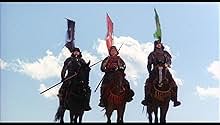
* Takeda had a reputation for the military prowess of their cavalry. Thus, you see lots and lots of horses featured in the film. Horses were important to the clan. Takeda's symbol is the four diamonds (the exact symbolism is explained in the film). Just as in the West, use of such heraldic symbols in war banners and clothing was very useful in figuring out who is who. So, keep in mind that when you see the four diamonds, whatever their color, those are Takeda forces.
* Nobunaga was known for his adoption of many Western ways. This is why he wears European-influenced clothing and doesn't have the standard samurai haircut (basically, shaved head, topknot). Nobunaga was also known for his use of rifles in battles. So, one of the themes of the film is the struggle of tradition against the influence of the West (in the film, mostly shown through the use of guns although their is also a brief shot of some clerics). Nobunaga's symbol is the five-sectioned flower. Nobunaga is also known for his love of Noh dramas, a dramatic form incorporating difficult-to-understand archaic language and restrained, careful action, somewhat like the film "Kagemusha" itself. Nobunaga launches into a bit of Noh at one point in the film.
* At this early time, Ieyasu was mostly known for his political survival skills. Ieyasu is probably best known to American viewers as the basis for James Clavell's Toranaga character in "Shogun". (Nobunaga is also in "Shogun" albeit as a minor character and under a different name.) The events in this film take place roughly two decades prior to those in "Shogun".
* Takeda's generals each also have their own symbols to help you track them. One of Ieyasu's generals also has a "symbol" (actually, the character "hon", which IMDb will not display).
* Haircuts are a sign of rank. This is why all the lords (except Nobunaga) have a certain haircut, all the pages have the same hairstyle, and so forth. The haircut~rank connection figures even more strongly and explicitly in Kurosawa's "Throne of Blood".
* Japanese men during this period often changed their names as their status changed. For example, in "Toshie to Matsu", Toshie, who is one of Nobunaga's (and, later, Hideyoshi's and Ieyasu's) generals/lords is granted the honor of changing his name to one which incorporates part of his lord's name into his own. Keep this in mind as Takeda's son discusses the use of his father's name and symbol.
* Miltary success and bravery in battle were key means of advancement. Thus, military leaders of this time are often depicted as ever-volunteering to do brave (even stupidly brave) things in hopes of gaining greater status. In "Kagemusha", Takeda's son is desperate for such advancement.
Here are some attempts at "liner notes" to help in understanding and appreciating the film (warning: I'm not Japanese and have not had Japanese schooling):
* Shingen Takeda is a warlord vying for power with Oda Nobunaga and his ally Ieyasu.
* Takeda had a reputation for the military prowess of their cavalry. Thus, you see lots and lots of horses featured in the film. Horses were important to the clan. Takeda's symbol is the four diamonds (the exact symbolism is explained in the film). Just as in the West, use of such heraldic symbols in war banners and clothing was very useful in figuring out who is who. So, keep in mind that when you see the four diamonds, whatever their color, those are Takeda forces.
* Nobunaga was known for his adoption of many Western ways. This is why he wears European-influenced clothing and doesn't have the standard samurai haircut (basically, shaved head, topknot). Nobunaga was also known for his use of rifles in battles. So, one of the themes of the film is the struggle of tradition against the influence of the West (in the film, mostly shown through the use of guns although their is also a brief shot of some clerics). Nobunaga's symbol is the five-sectioned flower. Nobunaga is also known for his love of Noh dramas, a dramatic form incorporating difficult-to-understand archaic language and restrained, careful action, somewhat like the film "Kagemusha" itself. Nobunaga launches into a bit of Noh at one point in the film.
* At this early time, Ieyasu was mostly known for his political survival skills. Ieyasu is probably best known to American viewers as the basis for James Clavell's Toranaga character in "Shogun". (Nobunaga is also in "Shogun" albeit as a minor character and under a different name.) The events in this film take place roughly two decades prior to those in "Shogun".
* Takeda's generals each also have their own symbols to help you track them. One of Ieyasu's generals also has a "symbol" (actually, the character "hon", which IMDb will not display).
* Haircuts are a sign of rank. This is why all the lords (except Nobunaga) have a certain haircut, all the pages have the same hairstyle, and so forth. The haircut~rank connection figures even more strongly and explicitly in Kurosawa's "Throne of Blood".
* Japanese men during this period often changed their names as their status changed. For example, in "Toshie to Matsu", Toshie, who is one of Nobunaga's (and, later, Hideyoshi's and Ieyasu's) generals/lords is granted the honor of changing his name to one which incorporates part of his lord's name into his own. Keep this in mind as Takeda's son discusses the use of his father's name and symbol.
* Miltary success and bravery in battle were key means of advancement. Thus, military leaders of this time are often depicted as ever-volunteering to do brave (even stupidly brave) things in hopes of gaining greater status. In "Kagemusha", Takeda's son is desperate for such advancement.
A grand spectacle of samurais and shoguns.
What happens to the doppelganger when the original dies? Does he flitter out of existence or does he find his own. Kagemusha (shadow warrior in Japanese) is the story of a thief who is to be hanged, but is saved by a warlord's brother, Katsuyori Takeda, because of a peculiar resemblance to the king Shingen Takeda. Tatsuya Nakadai brilliantly plays both roles of Shingen and the thief. The thief is trained to fill in as Shingen's double, a position previously played by his brother Katsuyori. Shingen receives a mortal wound during a siege and the Takeda Clan retreat. His dying wish is that he wants his death not to be known for at least three years. Kagemusha eventually acquiesces to the role of not just doubling for the king, but being a figurehead twenty-four hours a day.
The intimate circle of Shingen's family and guard knows about the double. They advise him about how to be like Shingen. He plays the part well. Shingen's son Nobukado, who knows that he is the double, is convinced that his father did this to spite him. Nobukado was passed over as king and that position was granted to Shingen's grandson and Nobukado's son Takemaru as soon as he reaches of mature age. Later in the film, we realize that Shingen did this because Nobukado is too aggressive and is not leader material, not to spite him. The backing of Kagemusha helped Nobukado's one great military victory. Nobukado would forever be in Shingen's shadow.
The relationships between the thief and the Lord's men make this a fascinating film. There is a rich tapestry of multidimensional characters. To some critics the action was too slow. It was not as fast paced as The Seven Samurai or Yojimbo. I think it is a mature film from a maturing director who would go on to direct another of my favorite films Ran. This film was nominated for two academy awards and would co-win the grand prize at the Cannes Film Festival. The juxtaposition between the titanic and minute is a favorite concept of Kurosawa. Stolid men have tragic faults. Beggars can be kings.
Kurosawa is one of the world's most famous directors. Yet in the 1980's, he did not get much respect from his home country Japan. He had not had released a film since 1975 -- the beautiful and brilliant Dersu Uzala and he was reportedly suicidal. This film would not have been made if it were not for George Lucas and Francis Ford Coppola whom helped finance this film. Lucas has always been a big fan of Kurosawa. Star Wars was partially influenced by Kurosawa's film The Hidden Fortress. I am a big fan of Kurosawa too. His films always have the most beautiful cinematography, intricate plots and grand characters. Kagemusha is no exception.
The intimate circle of Shingen's family and guard knows about the double. They advise him about how to be like Shingen. He plays the part well. Shingen's son Nobukado, who knows that he is the double, is convinced that his father did this to spite him. Nobukado was passed over as king and that position was granted to Shingen's grandson and Nobukado's son Takemaru as soon as he reaches of mature age. Later in the film, we realize that Shingen did this because Nobukado is too aggressive and is not leader material, not to spite him. The backing of Kagemusha helped Nobukado's one great military victory. Nobukado would forever be in Shingen's shadow.
The relationships between the thief and the Lord's men make this a fascinating film. There is a rich tapestry of multidimensional characters. To some critics the action was too slow. It was not as fast paced as The Seven Samurai or Yojimbo. I think it is a mature film from a maturing director who would go on to direct another of my favorite films Ran. This film was nominated for two academy awards and would co-win the grand prize at the Cannes Film Festival. The juxtaposition between the titanic and minute is a favorite concept of Kurosawa. Stolid men have tragic faults. Beggars can be kings.
Kurosawa is one of the world's most famous directors. Yet in the 1980's, he did not get much respect from his home country Japan. He had not had released a film since 1975 -- the beautiful and brilliant Dersu Uzala and he was reportedly suicidal. This film would not have been made if it were not for George Lucas and Francis Ford Coppola whom helped finance this film. Lucas has always been a big fan of Kurosawa. Star Wars was partially influenced by Kurosawa's film The Hidden Fortress. I am a big fan of Kurosawa too. His films always have the most beautiful cinematography, intricate plots and grand characters. Kagemusha is no exception.


Lo sapevi?
- QuizMuch of the film recounts actual historical events, including Shingen's death and the two-year secret, and the climactic Battle of Nagashino in 1575. Those scenes are also modeled closely on detailed accounts of the battle.
- BlooperIn the final battle there are at least 100 riflemen shown firing their matchlock rifles in volleys. The smoke generated by the matchlocks almost immediately dissipates. This indicates a more modern gunpowder was used in the matchlocks as the historically correct black powder load would blanket the battlefield with thick smoke after a handful of volleys.
- Citazioni
Nobukado Takeda: The shadow of a man can never stand up and walk on its own.
- Versioni alternativeIn the original Japanese version, there are 20 minutes featuring Kenshin Uesugi. For some reason, these scenes were cut out of the USA version.
- ConnessioniFeatured in A.K. (1985)
I più visti
Accedi per valutare e creare un elenco di titoli salvati per ottenere consigli personalizzati
Dettagli
- Data di uscita
- Paesi di origine
- Lingua
- Celebre anche come
- Kagemusha: The Shadow Warrior
- Luoghi delle riprese
- Himeji Castle, Himeji, Giappone(Nobunaga's castle)
- Aziende produttrici
- Vedi altri crediti dell’azienda su IMDbPro
Botteghino
- Budget
- 6.000.000 USD (previsto)
- Lordo Stati Uniti e Canada
- 4.000.000 USD
- Lordo in tutto il mondo
- 4.018.532 USD
- Tempo di esecuzione
- 3h(180 min)
- Colore
- Mix di suoni
- 4-Track Stereo(original version)
- Proporzioni
- 1.85 : 1
Contribuisci a questa pagina
Suggerisci una modifica o aggiungi i contenuti mancanti