71 frammenti di una cronologia del caso
Titolo originale: 71 Fragmente einer Chronologie des Zufalls
VALUTAZIONE IMDb
7,1/10
9460
LA TUA VALUTAZIONE

Settantuno scene che ruotano attorno a un recente immigrato.Settantuno scene che ruotano attorno a un recente immigrato.Settantuno scene che ruotano attorno a un recente immigrato.
- Premi
- 4 vittorie e 1 candidatura in totale



Michael Jackson
- Self
- (filmato d'archivio)
- (non citato nei titoli originali)
7,19.4K
1
2
3
4
5
6
7
8
9
10
Recensioni in evidenza
Haneke has an amazing clarity about people's alienation
This film is the last in Michael Haneke's trilogy about alienation called "Vergletscherung die Gefühle", and it ends in a violent climax which is a result of the previous fragments that Haneke presents to us. In this film Haneke developed a style that is very reminiscient of his 2000 film "Code Inconnu". It features rather short episodes, and within each episode there is scarcely editing or camera movement. Each episode is divided by a second's black screen, and Haneke often interrupts and ends the episode in the middle of a person's sentence. This is a very economical style of filmmaking, and it certainly demands a lot of the viewers, because you only get the information you really need to connect this episode thematically to the others. Because this is a thematic film, and it is a brilliant, stylish, ice-cold half-misanthropic study of people's lack of ability to perform tender acts with each other. I have never seen people make love in a film by Haneke, except for the masochistic and sad attempts in "La Pianiste". Rather, Haneke shows his characters in situations where they are tired, fed up, irritated or full of hate; quite ordinary human emotions. You cannot blame Haneke for not being a positive director, for he is the only filmmaker working today who can portray and observe his characters so coldly and so unpassionately. And his project seems to be to expose our lack of love and passion for each other, but most of all our lack of ability to tell it as it is. Speak to each other and solve everything, seems to be Haneke's advice, without him really giving it. I never seem to like Haneke's characters, and that is a good thing really. Like fellow German-speaking directors Herzog and Fassbinder, Haneke seems a bit misanthropic in his characteristics. Too many directors try too hard to give characters sympathetic traits, and you just lose interest in the story. "71 Fragmente einer Chronologie des Zufalls" is quite an achievement in filmmaking, and it is a film that will stick with me forever. I will never forget because I never knew why (the incident at the end). That is how I will remember this film, and how many times in real life is "why" the only question never answered?
71 Fragmente einer Chronologie des Zufalls: Impactful, Subtle, and the Perfect Finale
After watching Der Siebente Kontinent and Benny's Video in rather rapid succession, it took me an inexplicably long time to get around to this, the third in Michael Haneke's Glaciation Trilogy, the director's exploration of isolation and alienation in modern society.
Following the unrelated stories of an array of everyday Austrians, 71 Fragmente einer Chronologie des Zufalls explores the weeks immediately before a bank shooting that leaves four, including the gunman, dead.
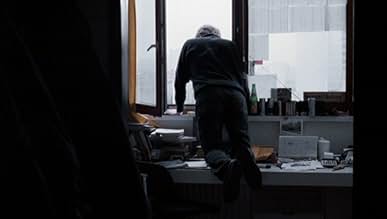
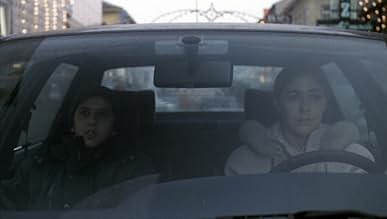
A written introduction tells us the eventual outcome of the film's events, leading us immediately to conclude that the climactic crescendo to which we will build is not so much the film's subject as a means by which to explain it. What follows is a ninety minute procession of apparently unrelated stories unfolding before us, detailing the lives of everyday people. From a lonely old man to a couple fostering an aloof child, a border hopping street urchin to an austere and religious security guard and his wife, the film covers many lives and relationships. The transitions between these are marked by a black screen, with occasional footage of news stories interjected throughout. These show us the chaos and anarchy of the characters' world, bitesize glimpses into everyday horrors. Perhaps the only discernible thing connecting them is the mire of insanity which occupies their television screens, something best remembered for later. Each miniature story is compelling and interesting, a fine achievement given the limited screen time each gets with such an array of characters to be explored. Some, of course, engender more interest than others, the old man and student characters two which I found myself particularly drawn to. Haneke, unsurprisingly, constructs long and unconventional shots, beautiful in their individuality. An early morning ritual scene recalls Der Siebente Kontinent, the camera's focus on actions rather than faces an important technique in establishing the life of this particular family. A long and winding scene featuring the elderly man on the phone to his daughter is, though entirely banal and mundane, one of the film's strongest moments, its ability to so simply yet comprehensively detail a character quite wonderful. Though one might argue that the film appears to go in no clear direction for most of its running time, this is a clear part of its slowly unfolding eventual plan. It is only in the last ten minutes of the film that we see anything more than a fly-on-the-wall documentary of regular lives and are introduced to the film's true message: one that is impactful, subtle, and the perfect finale for a trilogy that delightfully explores its chosen theme.
Creating portraits of a wide number of characters, each more intimate than many films' main characters, 71 Fragmente einer Chronologie des Zufalls is a very fine final act in a very fine trilogy. Just as subtle, removed, and non-judgmental as its predecessors, this is a comprehensive and thought-provoking social commentary which will doubtlessly benefit from multiple viewings, perhaps even more so than its cinematic siblings.
Following the unrelated stories of an array of everyday Austrians, 71 Fragmente einer Chronologie des Zufalls explores the weeks immediately before a bank shooting that leaves four, including the gunman, dead.
A written introduction tells us the eventual outcome of the film's events, leading us immediately to conclude that the climactic crescendo to which we will build is not so much the film's subject as a means by which to explain it. What follows is a ninety minute procession of apparently unrelated stories unfolding before us, detailing the lives of everyday people. From a lonely old man to a couple fostering an aloof child, a border hopping street urchin to an austere and religious security guard and his wife, the film covers many lives and relationships. The transitions between these are marked by a black screen, with occasional footage of news stories interjected throughout. These show us the chaos and anarchy of the characters' world, bitesize glimpses into everyday horrors. Perhaps the only discernible thing connecting them is the mire of insanity which occupies their television screens, something best remembered for later. Each miniature story is compelling and interesting, a fine achievement given the limited screen time each gets with such an array of characters to be explored. Some, of course, engender more interest than others, the old man and student characters two which I found myself particularly drawn to. Haneke, unsurprisingly, constructs long and unconventional shots, beautiful in their individuality. An early morning ritual scene recalls Der Siebente Kontinent, the camera's focus on actions rather than faces an important technique in establishing the life of this particular family. A long and winding scene featuring the elderly man on the phone to his daughter is, though entirely banal and mundane, one of the film's strongest moments, its ability to so simply yet comprehensively detail a character quite wonderful. Though one might argue that the film appears to go in no clear direction for most of its running time, this is a clear part of its slowly unfolding eventual plan. It is only in the last ten minutes of the film that we see anything more than a fly-on-the-wall documentary of regular lives and are introduced to the film's true message: one that is impactful, subtle, and the perfect finale for a trilogy that delightfully explores its chosen theme.
Creating portraits of a wide number of characters, each more intimate than many films' main characters, 71 Fragmente einer Chronologie des Zufalls is a very fine final act in a very fine trilogy. Just as subtle, removed, and non-judgmental as its predecessors, this is a comprehensive and thought-provoking social commentary which will doubtlessly benefit from multiple viewings, perhaps even more so than its cinematic siblings.
Elephant by Haneke
A Sample film in 90's about violence and how it improves. Pazzle-like narration with 71 episodes, shows us a story about the history of violence. "71 Fragmente einer Chronologie des Zufalls" has all the signs of a film which could be made in 90's. Haneke is one of the contemporary filmmaker who use the violence scenes to show us how this huge question (why violence?) has no straight answer. 71... is almost look like another haneke's famous film (Code unknown,2000) which both of them are narrating unfinished stories of some journeys. Unexpected final scenes and also, unexpected shocking shots are two icons in this film like another Haneke's films. Haneke's style is like the way Robert bresson made films. Bresson's cinematograph and also Hitchcock's suspense are affected in his cinema. His cinema invites us to watch untold stories about complicated questions of contemporary world.
I'll never play table tennis again
A fine movie that explores the lives of many strangers in Austria that are connected by the same thing: all their lives are pointless and meaningless. Though the pace is slow all the scenes work to the conclusion that is the only solution to break the deadlock. A thought-provoking film.
GOOD
I must say that I really enjoyed this movie. The subtle exploration of the character in very personal en realistic scenes were executed in the perfect cinematic way (framing, staging, blocking, pacing, editing). The way Haneke used (the lack
of) cohesive plot really caught my attention and made me excited about how the story was going to unfold. Though the end was a bit unsatisfying for me. I wasn't drawn enough to the characters to experience a emotional climax through any strong perspective from a character arc. I understanded the thematic exploration but found the climax a bit underwhelming. I'll defintely rewatch to get a hold of more missed details which might immerse me more than my first viewing.


Lo sapevi?
- QuizFilm debut of Sebastian Stan.
- BlooperWhen Tomek (Otto Grünmandl) makes himself dinner, around the 20 minutes mark, there's a mirror in the background that reflects the boom mic.
- ConnessioniFeatured in Mein Leben: Michael Haneke (2009)
I più visti
Accedi per valutare e creare un elenco di titoli salvati per ottenere consigli personalizzati
- How long is 71 Fragments of a Chronology of Chance?Powered by Alexa
Dettagli
- Data di uscita
- Paesi di origine
- Lingue
- Celebre anche come
- 71 Fragments of a Chronology of Chance
- Luoghi delle riprese
- Aziende produttrici
- Vedi altri crediti dell’azienda su IMDbPro
Botteghino
- Lordo in tutto il mondo
- 406 USD
- Tempo di esecuzione
- 1h 40min(100 min)
- Colore
- Proporzioni
- 1.66 : 1
Contribuisci a questa pagina
Suggerisci una modifica o aggiungi i contenuti mancanti