VALUTAZIONE IMDb
7,2/10
2994
LA TUA VALUTAZIONE
Aggiungi una trama nella tua linguaThe blind masseur and swordsman, Zatoichi, learns of a powerful political figure's secret and is quickly tailed by a group of killers.The blind masseur and swordsman, Zatoichi, learns of a powerful political figure's secret and is quickly tailed by a group of killers.The blind masseur and swordsman, Zatoichi, learns of a powerful political figure's secret and is quickly tailed by a group of killers.
Yaeko Mizutani
- Setsu
- (as Yoshie Mizutani)
Tomisaburô Wakayama
- Nagisa no Yoshiro
- (as Jô Kenzaburô)
7,22.9K
1
2
3
4
5
6
7
8
9
10
Recensioni in evidenza
Zatoichi, mark two
With continuity directly linking it with its immediate predecessor ( released only five months and three weeks prior ) , and also holding a perfect 100 percent score on rotten tomatoes, this beautifully photographed ( in high contrast black and white, like its predecessor ) Zatoichi film is as good as that film was, even if the end scene is too abrupt, although it also shows just how quickly and efficiently Zatoichi fights. A double-edged sword, pun completely intended.
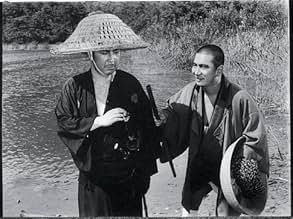
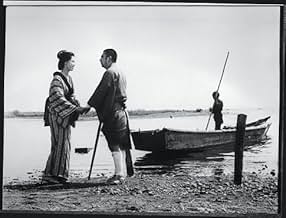
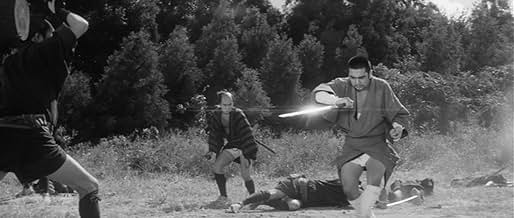
Hypnotically beautiful looking, I could easily tune out the plot, and just enjoy the visuals, and impressive swordplay. Sadly though, this second film is also the final film in this series to be shot in black and white, as the numerous continuation films were in colour.
If only they'd have asked.
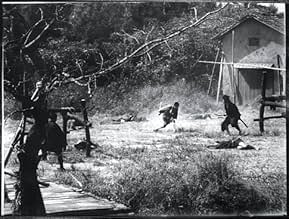
'The Tale Of Zatoichi Continues (1962)' works both as a stand-alone experience and a direct continuation of its predecessor, playing with similar themes but framing them through a lens soaked with regret. It's a shorter, more action-packed affair but it's still primarily a character study. The eponymous stoic swordsman unwillingly gets caught up in the kind of trouble that forces him to show off his skills, which tend to swiftly and decisively resolve his immediate issues. Most of his introspection surrounds the melancholy of the last movie's events. Towards the end, however, a new relationship is revealed that threatens to see history repeat itself. Katsu, who's still fantastic in the role, is joined by his brother - perhaps better known for the much pulpier 'Lone Wolf and Cub (1972-1976)' series - which results in most of the film's emotion. It's rather resonant, leaving the entire experience tinged in sadness. The focus on character is, essentially, what makes the film so successful. You care about all the major players and their struggles resonate with you. The narrative moves almost as swiftly as Zatoichi's sword, ultimately coming to an incredibly abrupt end, and it balances its tone perfectly. It isn't groundbreaking but it's very enjoyable. It's also very well-made. Its crisp black-and-white cinematography is often highlighted by stunning chiaroscuro lighting and absolutely perfect composition, its dialogue is to the point but never on the nose, and its acting is subtle but successful. When it comes to the action, the thing doesn't disappoint, either. Most of it is shot wide, allowing you to see every quick-moving moment uninterrupted, and the choreography dances between unbearable anticipation and samurai-slaying pay-off impeccably. It isn't perfectly clean, with the villains scrambling about in fear before they make their ill-fated attempt on our often almost clumsy but always keenly aware protagonist, which lends a lot of credence to the fact that it's supposed to involve a highly feared yet blind man. Overall, the picture is very entertaining. It won't change your life, but it'll make you smile more than once. 7/10
Good Film
Return of Masseur Ichi, The (1962)
*** (out of 4)
Blind masseur Zatoichi (Shintaro Katsu) discovers the weakness of a lord and must fight off various assassins who fear he will give away that secret. This was a pretty interesting samurai film from director Kazuo Mori, which relies a lot on fantasy but most of all is just all action and nice swordplay. Katsu makes for a wonderful lead and the supporting roles are filled nicely. The cinematography stretched out the full 2.35:1 looks incredibly sharp and the fights are well staged even though I have a somewhat hard time seeing a blind person doing all that.
*** (out of 4)
Blind masseur Zatoichi (Shintaro Katsu) discovers the weakness of a lord and must fight off various assassins who fear he will give away that secret. This was a pretty interesting samurai film from director Kazuo Mori, which relies a lot on fantasy but most of all is just all action and nice swordplay. Katsu makes for a wonderful lead and the supporting roles are filled nicely. The cinematography stretched out the full 2.35:1 looks incredibly sharp and the fights are well staged even though I have a somewhat hard time seeing a blind person doing all that.
The Blind Master Draws His Sword
Roughly a year after his first run-in with the shady Yakuza types of small-town Japan, a notorious blind swordsman blows back into town seeking an encore. Actually, the hopeful pacifist Zatoichi is merely interested in paying his respects at the grave of a fallen comrade, the honorable samurai he out-dueled last time, but the shadier denizens of this corrupt village have long memories and see his visit as an opportunity for revenge.
While that drama plays out, Ichi makes enemies with a misbehaving prince, befriends a trio of prostitutes and crosses paths with another acquaintance: a one-armed former romantic rival who still carries a grudge. The latter is portrayed by Tomisaburo Wakayama, later known for his lead role in the Lone Wolf and Cub films (and star Shintaro Katsu's real-life brother), which makes his eventual duel with Ichi doubly interesting as a sort of unofficial pre-crossover. Not for the last time, either, as 1970 would produce a match between our blind protagonist and Toshirô Mifune's Yojimbo... but that's a topic for another time.
As The Tale Continues is concerned, I found it a mild step down from the first film. There's more action this time, and a much faster pace, but the additional subplots make for a less focused narrative and drain power from the larger developments and reveals of the third act. Another outstanding performance from Katsu, though, and wow, what a final shot!
While that drama plays out, Ichi makes enemies with a misbehaving prince, befriends a trio of prostitutes and crosses paths with another acquaintance: a one-armed former romantic rival who still carries a grudge. The latter is portrayed by Tomisaburo Wakayama, later known for his lead role in the Lone Wolf and Cub films (and star Shintaro Katsu's real-life brother), which makes his eventual duel with Ichi doubly interesting as a sort of unofficial pre-crossover. Not for the last time, either, as 1970 would produce a match between our blind protagonist and Toshirô Mifune's Yojimbo... but that's a topic for another time.
As The Tale Continues is concerned, I found it a mild step down from the first film. There's more action this time, and a much faster pace, but the additional subplots make for a less focused narrative and drain power from the larger developments and reveals of the third act. Another outstanding performance from Katsu, though, and wow, what a final shot!
Hyperdrive Mode
Never mind the first film to take its time in introducing the character to us, of which I am glad that it didn't rush. Now that we and the others in the film "know" him ( although part of the fun is that nobody is really able to know him and his skill really) the film goes to hyperdrive mode straightaway.
It's fascinating to see this in retrospect, knowing it is a long franchise, and trying to map out the development and where the film and its success came from. Inthink the first film is strong because it takes its time in creating its own universe, simply so that the sequels don't have to work so hard in setting things up. It's nice, and so is the self-reference it allows both in humour and mythology, but the films quickly morph into each other. It doesn't seem to be a problem here, since aren't all series all about working for or against the set rules and archetypes in the previous films?
Anyway, I think the two films have very well set up Zatoichi's blindness as a metaphor, yet it's the first film that's more ambitiously conceived. In this respect these two first films are like "Yojimbo" and "Sanjuro", Kurosawa's duology. The last shot of this film, however, is one of the coolest film moments I know of. Seriously. That last five seconds.
It's fascinating to see this in retrospect, knowing it is a long franchise, and trying to map out the development and where the film and its success came from. Inthink the first film is strong because it takes its time in creating its own universe, simply so that the sequels don't have to work so hard in setting things up. It's nice, and so is the self-reference it allows both in humour and mythology, but the films quickly morph into each other. It doesn't seem to be a problem here, since aren't all series all about working for or against the set rules and archetypes in the previous films?
Anyway, I think the two films have very well set up Zatoichi's blindness as a metaphor, yet it's the first film that's more ambitiously conceived. In this respect these two first films are like "Yojimbo" and "Sanjuro", Kurosawa's duology. The last shot of this film, however, is one of the coolest film moments I know of. Seriously. That last five seconds.
Lo sapevi?
- QuizThe Tale of Zatoichi proved to be so popular that this sequel went into production the same year, 1962.
- ConnessioniFeatured in Best in Action: 1962 (2018)
I più visti
Accedi per valutare e creare un elenco di titoli salvati per ottenere consigli personalizzati
- How long is The Tale of Zatoichi Continues?Powered by Alexa
Dettagli
- Data di uscita
- Paese di origine
- Lingua
- Celebre anche come
- The Tale of Zatoichi Continues
- Azienda produttrice
- Vedi altri crediti dell’azienda su IMDbPro
- Tempo di esecuzione
- 1h 12min(72 min)
- Colore
- Mix di suoni
- Proporzioni
- 2.35 : 1
Contribuisci a questa pagina
Suggerisci una modifica o aggiungi i contenuti mancanti