The Prisoner
- Mini serie TV
- 2009
- 45min
Un agente governativo viene rapito e si ritrova in un'isola misteriosa chiamata "Il Villaggio", dove gli abitanti sono identificati solo da numeri e nessuno può fuggire.Un agente governativo viene rapito e si ritrova in un'isola misteriosa chiamata "Il Villaggio", dove gli abitanti sono identificati solo da numeri e nessuno può fuggire.Un agente governativo viene rapito e si ritrova in un'isola misteriosa chiamata "Il Villaggio", dove gli abitanti sono identificati solo da numeri e nessuno può fuggire.
- Candidato a 2 Primetime Emmy
- 10 candidature totali
Sfoglia gli episodi
6,18.2K
1
2
3
4
5
6
7
8
9
10
Recensioni in evidenza
cult snobs lay off
Would anyone really want to see a verbatim remake of a 1960s TV series? C'mon people, spies? It's not the cold war. Let the new series explore themes of paranoia, subversion, and identity in a new, interesting, and CURRENT context. At the same time it's adding new mystery. Part of the fun is figuring out what's going on. I wouldn't want a replica mystery and therefore be spoiled. I applaud the update, its creepy, technically sound, and confusing as hell. Granted, the acting is not top notch, Caviezel is doing the best he can but can't carry it, although McKellen and Ruth Wilson are great. Is it perfect? No. But does it deserve 1-2/10 just because it doesn't mimic its predecesor? C'mon people stop living in the past.
Vaguely Interesting but mostly off-the-mark reboot.
Too much dialog written in the most obvious fashion. Too little mystery. Too little tension. The essential drama and motivation of the story missing as much as No. 6's mind.
The issues with this series have less to do with its similarity or non-similarity to its source material than it has with the tenor of contemporary film-making and writing. Classicism and all its artistic forms have all but disappeared from education, so it is not surprising that what passes off as entertainment today is hardly groundbreaking or even interesting. There are exceptions to the rule, of course, but by and large episodic television is at a low point.
It isn't even so much that Prisoner 2.0 differs from the original (in itself not necessarily a bad thing if handled properly) but the fact there is little personality to the proceedings is its major weakness.
Film-making, collaborative or auteur, rely on the singular voice of its many artists ringing out in concert, guided by the deliberate hand of a producer or director who sees the forest for the trees. Film-making is about style as much as about content and the two have to cohere meaningfully. When it doesn't, as in this new reboot, the results are muddled.
The presence of Ian McKellen isn't enough to elevate it and Caviezel simply miscast.
Too bad.
The issues with this series have less to do with its similarity or non-similarity to its source material than it has with the tenor of contemporary film-making and writing. Classicism and all its artistic forms have all but disappeared from education, so it is not surprising that what passes off as entertainment today is hardly groundbreaking or even interesting. There are exceptions to the rule, of course, but by and large episodic television is at a low point.
It isn't even so much that Prisoner 2.0 differs from the original (in itself not necessarily a bad thing if handled properly) but the fact there is little personality to the proceedings is its major weakness.
Film-making, collaborative or auteur, rely on the singular voice of its many artists ringing out in concert, guided by the deliberate hand of a producer or director who sees the forest for the trees. Film-making is about style as much as about content and the two have to cohere meaningfully. When it doesn't, as in this new reboot, the results are muddled.
The presence of Ian McKellen isn't enough to elevate it and Caviezel simply miscast.
Too bad.
It's Not The Prisoner of Old.
This is a completely unique interpretation of The Prisoner (1967), so if you are expecting a remake, it will disappoint you. I was an avid viewer of the original. While it shares some imagery and key aspects, beyond that this is a standalone original TV series. Instead (and for some context), imagine what sort of world you live in now, and that someone kidnaps you and you wake up in a mythical village. The question then is why? These changes are not always bad things.
The narrative structure is except for the last episode, also different. The original had concrete narrative blocks, which meant each episode had some clarity. In this series there is no obvious individual narrative block in each episode, the plots run around semi-randomly, only pose questions and don't answer them. The last episode is ironically clearer than the original series, but still leaves the viewer with some sense of confusion. Also, this series only works if you watch it until the end. The dialogue is ok, occasionally very good, but often seems a little too contrived.
Many of the themes from the original series remain such as identity, individuality etc, but perhaps because of the more modern style feel lost or half hearted. There is too much going on, and as a result it lacks depth. This series is from 2009, with a different acting style to the 1960s. Back in those days, stage style acting often appeared on TV, and the original series was no exception to this. Sometimes this worked, other times it was just over the top. Fast forward to this version and the acting is more consistent and suited to the small screen. As ever, Ian McKellen does an excellent job. Jim Caviezel is 90% there. His acting sometimes shines, but it lacks the consistent, excellent performance that you get from McKellen. It feels like he just needs more rehearsal and an injection of some spontaneity now and again. Otherwise his performance and those of the supporting cast is consistent, good but lacks buzz. It feels unfair to compare everyone in The Prisoner to someone such as Ian McKellen, but you just can't help it. In reality, he just lacked a comparable sparring partner in this series.
Image is everything, and the sets and locations are as impressive as the original series. Perhaps more menacing is the sheer similarity of most houses except for the Palace of No. 2. This serves to make the feeling of forced conformity clearer. The design team did an excellent job, with one notable exception, The Clinic; it just feels lame in terms of interior and exterior. There are some occasional references to the original series.
Overall, this series is watchable. Not bad, but just not as good as it could have been. The writing and episode structures are just too confusing and will put many people off. This is a great pity, as its ending is no less clever than the original, only different. Try to get to the end and you will get some reward. This series just tries to hard which is why it doesn't quite make it.
The narrative structure is except for the last episode, also different. The original had concrete narrative blocks, which meant each episode had some clarity. In this series there is no obvious individual narrative block in each episode, the plots run around semi-randomly, only pose questions and don't answer them. The last episode is ironically clearer than the original series, but still leaves the viewer with some sense of confusion. Also, this series only works if you watch it until the end. The dialogue is ok, occasionally very good, but often seems a little too contrived.
Many of the themes from the original series remain such as identity, individuality etc, but perhaps because of the more modern style feel lost or half hearted. There is too much going on, and as a result it lacks depth. This series is from 2009, with a different acting style to the 1960s. Back in those days, stage style acting often appeared on TV, and the original series was no exception to this. Sometimes this worked, other times it was just over the top. Fast forward to this version and the acting is more consistent and suited to the small screen. As ever, Ian McKellen does an excellent job. Jim Caviezel is 90% there. His acting sometimes shines, but it lacks the consistent, excellent performance that you get from McKellen. It feels like he just needs more rehearsal and an injection of some spontaneity now and again. Otherwise his performance and those of the supporting cast is consistent, good but lacks buzz. It feels unfair to compare everyone in The Prisoner to someone such as Ian McKellen, but you just can't help it. In reality, he just lacked a comparable sparring partner in this series.
Image is everything, and the sets and locations are as impressive as the original series. Perhaps more menacing is the sheer similarity of most houses except for the Palace of No. 2. This serves to make the feeling of forced conformity clearer. The design team did an excellent job, with one notable exception, The Clinic; it just feels lame in terms of interior and exterior. There are some occasional references to the original series.
Overall, this series is watchable. Not bad, but just not as good as it could have been. The writing and episode structures are just too confusing and will put many people off. This is a great pity, as its ending is no less clever than the original, only different. Try to get to the end and you will get some reward. This series just tries to hard which is why it doesn't quite make it.
No good at all, except technically
I have been an enthusiastic follower/student of the original "The Prisoner" since the premiere episode "Arrival" had its first USA showing in May 1968. Consequently, I was looking forward to this remake/update. Unfortunately, I was so disappointed that I changed the channel about five minutes into "Harmony." It was well acted, photographed, etc., but the problems were unsurmountable.
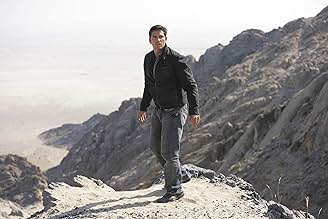
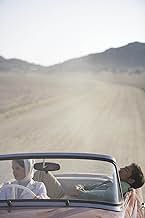
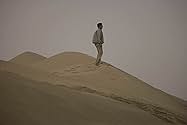
Right off, it starts with The Prisoner awakening, but not within The Village. He is instead in a desert, which proves to be not far removed from that community. We are never given any hint of a reason why--or even how--he comes to be there. Even Number Two, in the first interrogation scene, indicates that he does not know. It may be that the producers have disposed with the superficial level storyline, which even Patrick McGoohan considered unimportant, a necessity to get Lew Grade to agree to back the series. However, I feel that it is necessary to initiate audience involvement/sympathy. Here, "they" are trying to get our nameless hero to believe that The Village and environs is the entire world, no other population centers and indeed no other people. The only information sought from him concerns an old man he met in the desert, undoubtedly intended to be played by McGoohan; he even wears Patrick's Village costume. That is resolved in this opening episode.
This version of The Village, despite its name, looks like a small city, and not architecturally distinctive/surreal like "the grounds of the Hotel Portmeirion" (the location credit on the original show's finale), which was the initial inspiration. The residents wear normal clothing instead of distinctive Village costumes; although "Number Six" sports an outfit that would not have looked particularly out of place on a "Star Trek" set, it would not get a second look on a city street, either.
People unfamiliar with the original might not have the problems I had, but I can not guarantee that. For myself, I am done with this program.
Right off, it starts with The Prisoner awakening, but not within The Village. He is instead in a desert, which proves to be not far removed from that community. We are never given any hint of a reason why--or even how--he comes to be there. Even Number Two, in the first interrogation scene, indicates that he does not know. It may be that the producers have disposed with the superficial level storyline, which even Patrick McGoohan considered unimportant, a necessity to get Lew Grade to agree to back the series. However, I feel that it is necessary to initiate audience involvement/sympathy. Here, "they" are trying to get our nameless hero to believe that The Village and environs is the entire world, no other population centers and indeed no other people. The only information sought from him concerns an old man he met in the desert, undoubtedly intended to be played by McGoohan; he even wears Patrick's Village costume. That is resolved in this opening episode.
This version of The Village, despite its name, looks like a small city, and not architecturally distinctive/surreal like "the grounds of the Hotel Portmeirion" (the location credit on the original show's finale), which was the initial inspiration. The residents wear normal clothing instead of distinctive Village costumes; although "Number Six" sports an outfit that would not have looked particularly out of place on a "Star Trek" set, it would not get a second look on a city street, either.
People unfamiliar with the original might not have the problems I had, but I can not guarantee that. For myself, I am done with this program.
Steaming pile of equine excrement
As a fan of the original Prisoner I can't begin to say how incredibly disappointed I am with this "remake". The "plot" is non-existent and makes no sense. It might be good if it had characters that made kept your interest in spite of the unintelligible plot line but sadly there isn't a single character that makes me care about what happens to them. In the original Patrick McGoohan was an excellent actor and portrayed an engaging character. The character of 6 in the original embodied the admirable quality of not giving up in spite of the odds. He was direct, smart and capable. In contrast, this 6 is a confused mamby-pamby guy with the personality of a doorstop. I am especially disappointed that one of my favorite actors, Ian McKellen would agree to appear in this mess. I think Patrick McGoohan is turning over in his grave.
Lo sapevi?
- Quiz"Be seeing you" is a commonly-heard phrase in Il prigioniero (1967), this movie, and was also one of Patrick McGoohan's catchphrases in Danger Man (1960) and Gioco pericoloso (1964) . McGoohan's character "Johnny Cousin" (a pot-smoking drummer) in All Night Long (1962) uses the phrase also when he says goodbye to the road manager "Berger" towards the end of the movie.
- ConnessioniFeatured in A Six Hour Film Shot in 92 Days: The Diary of 'The Prisoner' (2010)
I più visti
Accedi per valutare e creare un elenco di titoli salvati per ottenere consigli personalizzati
- How many seasons does The Prisoner have?Powered by Alexa
Dettagli
- Tempo di esecuzione
- 45min
- Colore
- Proporzioni
- 1.78 : 1
Contribuisci a questa pagina
Suggerisci una modifica o aggiungi i contenuti mancanti