

Un attore a Tokyo viene assunto come ragazzo americano simbolo per una società di noleggio familiare, che lo porta in un viaggio inaspettato interpretando ruoli nella vita di altre personeUn attore a Tokyo viene assunto come ragazzo americano simbolo per una società di noleggio familiare, che lo porta in un viaggio inaspettato interpretando ruoli nella vita di altre personeUn attore a Tokyo viene assunto come ragazzo americano simbolo per una società di noleggio familiare, che lo porta in un viaggio inaspettato interpretando ruoli nella vita di altre persone
- Premi
- 7 vittorie e 6 candidature totali







Ryôko Osada
- Neighbor Wife
- (as Ryoko Osada)


Shôhei Uno
- Mr. Daitoh
- (as Shohei Uno)

Kimura Bun
- Kota Nakano
- (as Bun Kimura)
7,93.2K
1
2
3
4
5
6
7
8
9
10
Recensioni in evidenza
There are moments in life when a stranger...
There are moments in life when a stranger can make you feel more understood than someone you've known for years - and sometimes that connection comes from the most unexpected places.
That's the feeling this film left me with.
Rental Family dives into Japan's rental-service industry-something that often gets misunderstood or written off as "strange" by people who aren't familiar with Japanese culture. But instead of treating it like a curiosity, Rental Family shows something deeper: the quiet emotional needs people have, the parts of themselves they can't openly reveal, and how rental services become a safe space to express those hidden truths.
There are situations where people can't show their true selves - not because they're emotionless, but because the cultural pressure to maintain harmony or meet expectations is incredibly strong. And when you can't openly express who you are or what you need, it becomes hard to feel seen or understood, even by the people closest to you.
Rental Family shows how these services can sometimes offer a rare, quietly powerful alternative - a way for someone to experience honesty, support, or connection in circumstances where they simply can't reveal the full truth to their real family or community. It's not about deception. It's about finding comfort, dignity, or emotional safety in a world where not everyone has the freedom to live openly, the way they wish for or is expected of them.
Brendan Fraser plays a foreigner living in Japan who speaks the language yet still doesn't quite fit in-a feeling many expats know all too well, including myself. He's unfulfilled at work, chasing purpose without even realizing what he's actually looking for. And then he's presented with a job he doesn't understand, nearly rejects, and ultimately discovers himself through. The fulfillment he finds doesn't come from success, money, or accolades, but from emotional connection in one of the most unconventional places. And that's the beauty of the movie.
It also reminded me of my own time in Japan. When I first arrived, new to the country and with very few friends, I actually looked into renting a boyfriend for my birthday-not as a joke, not out of desperation, but because the idea felt comforting. As someone who couldn't celebrate with anyone, it sounded like a brilliant way to create a meaningful memory. The agency told me the guy I chose wasn't available on the actual day, so it didn't happen. But I still think the concept is wonderful for people who need connection when they don't have access to it.
And then there are host clubs. They get a bad reputation, and I'm not promoting them, but taken the right way, they can give people a sense of warmth or companionship they may be missing - whether they're single, far from home, or simply craving connection in a safe, controlled environment. It's another one of those very Japan-specific situations that looks unusual from the outside but makes a surprising amount of emotional sense once you understand the culture.
Because the truth is this: everyone wants to feel seen, accepted, and understood - but in Japan, expressing those needs openly isn't always easy. Cultural expectations, social harmony, and family pressures can make honesty complicated. So these rental services become a rare, structured space where people can access feelings they can't show in their everyday lives. A quiet bridge between what they can't reveal and what they still deeply need.
That's what the film captures so beautifully: that beneath the surface - beneath the politeness, the social expectations, the silence - people still carry the same longing for connection that all of us do.
And that's why this film is worth watching.
By the way, I saw this at the pre-premiere screening - and the full release is on November 21st.
If you want a nuanced, heartfelt insight into a uniquely Japanese corner of human connection, go see this movie.
That's the feeling this film left me with.
Rental Family dives into Japan's rental-service industry-something that often gets misunderstood or written off as "strange" by people who aren't familiar with Japanese culture. But instead of treating it like a curiosity, Rental Family shows something deeper: the quiet emotional needs people have, the parts of themselves they can't openly reveal, and how rental services become a safe space to express those hidden truths.
There are situations where people can't show their true selves - not because they're emotionless, but because the cultural pressure to maintain harmony or meet expectations is incredibly strong. And when you can't openly express who you are or what you need, it becomes hard to feel seen or understood, even by the people closest to you.
Rental Family shows how these services can sometimes offer a rare, quietly powerful alternative - a way for someone to experience honesty, support, or connection in circumstances where they simply can't reveal the full truth to their real family or community. It's not about deception. It's about finding comfort, dignity, or emotional safety in a world where not everyone has the freedom to live openly, the way they wish for or is expected of them.
Brendan Fraser plays a foreigner living in Japan who speaks the language yet still doesn't quite fit in-a feeling many expats know all too well, including myself. He's unfulfilled at work, chasing purpose without even realizing what he's actually looking for. And then he's presented with a job he doesn't understand, nearly rejects, and ultimately discovers himself through. The fulfillment he finds doesn't come from success, money, or accolades, but from emotional connection in one of the most unconventional places. And that's the beauty of the movie.
It also reminded me of my own time in Japan. When I first arrived, new to the country and with very few friends, I actually looked into renting a boyfriend for my birthday-not as a joke, not out of desperation, but because the idea felt comforting. As someone who couldn't celebrate with anyone, it sounded like a brilliant way to create a meaningful memory. The agency told me the guy I chose wasn't available on the actual day, so it didn't happen. But I still think the concept is wonderful for people who need connection when they don't have access to it.
And then there are host clubs. They get a bad reputation, and I'm not promoting them, but taken the right way, they can give people a sense of warmth or companionship they may be missing - whether they're single, far from home, or simply craving connection in a safe, controlled environment. It's another one of those very Japan-specific situations that looks unusual from the outside but makes a surprising amount of emotional sense once you understand the culture.
Because the truth is this: everyone wants to feel seen, accepted, and understood - but in Japan, expressing those needs openly isn't always easy. Cultural expectations, social harmony, and family pressures can make honesty complicated. So these rental services become a rare, structured space where people can access feelings they can't show in their everyday lives. A quiet bridge between what they can't reveal and what they still deeply need.
That's what the film captures so beautifully: that beneath the surface - beneath the politeness, the social expectations, the silence - people still carry the same longing for connection that all of us do.
And that's why this film is worth watching.
By the way, I saw this at the pre-premiere screening - and the full release is on November 21st.
If you want a nuanced, heartfelt insight into a uniquely Japanese corner of human connection, go see this movie.
A Great, Emotional Story
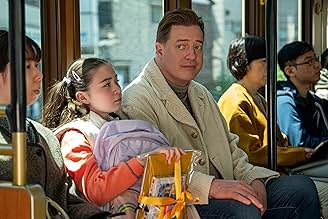
Rental Family is a film that just recently made it onto my radar, and I'm so glad it did. I'll always give a film starring Brendan Fraser a chance. I love him and have so much respect for his work. Once again taking on a dramatic role, Fraser proves his acting abilities here with a quiet, emotional performance that truly anchors the story. The film centers around Phillip (Fraser), a struggling actor living in Tokyo who takes a job at a "rental family" agency, where his work involves pretending to be someone in a stranger's life.
Most of the film focuses on Phillip's assignment as the father to a young girl who has never met her real dad, and it's through this relationship that the story finds its emotional core. There are other subplots as well, but I won't get into those details here. What really stood out to me were the moments of genuine emotion. There were scenes that had my eyes welling up, in the best way possible. The premise could have easily come across as something cheesy or sentimental, like a made-for-TV movie, but director Hikari brings a sense of maturity, charm, and humor that makes it feel grounded and authentic.
I never watched Hikari's show Beef on Netflix, though I've heard great things about it, and now I see why she's so highly regarded. This is a very talented filmmaker with a strong sense of empathy and visual storytelling, and Rental Family further proves her skill. I especially appreciated how the film explores the moral complexities of Phillip's job - a profession that actually exists in real life. There's a fascinating gray area here about whether what he's doing is right or wrong, and the film doesn't shy away from asking those difficult questions.
If I had one minor critique, it's that there are a couple of moments that, while effective, feel a bit emotionally manipulative - like the filmmakers were pushing a little too hard to make the audience feel something. That said, those instances are rare, and Rental Family still worked for me about 95% of the time. It's a heartfelt, thought-provoking, and beautifully made film that ranks among the best I've seen in 2025. When it hits theaters, I highly recommend giving it a watch.
Most of the film focuses on Phillip's assignment as the father to a young girl who has never met her real dad, and it's through this relationship that the story finds its emotional core. There are other subplots as well, but I won't get into those details here. What really stood out to me were the moments of genuine emotion. There were scenes that had my eyes welling up, in the best way possible. The premise could have easily come across as something cheesy or sentimental, like a made-for-TV movie, but director Hikari brings a sense of maturity, charm, and humor that makes it feel grounded and authentic.
I never watched Hikari's show Beef on Netflix, though I've heard great things about it, and now I see why she's so highly regarded. This is a very talented filmmaker with a strong sense of empathy and visual storytelling, and Rental Family further proves her skill. I especially appreciated how the film explores the moral complexities of Phillip's job - a profession that actually exists in real life. There's a fascinating gray area here about whether what he's doing is right or wrong, and the film doesn't shy away from asking those difficult questions.
If I had one minor critique, it's that there are a couple of moments that, while effective, feel a bit emotionally manipulative - like the filmmakers were pushing a little too hard to make the audience feel something. That said, those instances are rare, and Rental Family still worked for me about 95% of the time. It's a heartfelt, thought-provoking, and beautifully made film that ranks among the best I've seen in 2025. When it hits theaters, I highly recommend giving it a watch.
A Poignant and Hilarious Journey Through Tokyo
As someone less familiar with Japanese filmography beyond a watch of the recent hit, Shogun, this was refreshingly different, but not in an unapproachable way; the friendly face of Brendan Fraser provides an instant point of recognition for westerners such as myself. Throughout this two-hour journey, the audience are given insight into the many joys and throws of modern Japanese culture, whether it comes from cleverly written emotional dialogue or visual cues such as the Monster Cat Festival - yet the film is far from an oversimplification of modern Japan - as Takehiro Hira says in an opening sequence, you could live in Tokyo for 100s of years and still not uncover all of its secrets. Director Hikari builds upon this cultural foundation with a poignant and hilarious emotional odyssey, featuring gut-wrenching moments of pain juxtaposed by much needed comedic relief. Neither sides are done cheaply - although the plot is generally predictable, it does not need to be complex; the writing is intelligent enough by itself. I thoroughly look forward to the film's general release, when I will be attending again for a second viewing!
The Brendan Fraser Renaissance
I've been curious about this film for a while and it had such an interesting premise to me that I had to see this one. I think this film is absolutely heart wrenching and just throws so much emotional moments towards you that it gets you really close to crying or crying already. Brendan Fraser is just absolutely phenomenal and truly delivered yet another absolutely remarkable performance and the moments between Mia and Kikuo had me absolutely so emotional and really just elevated this film even more for me. The story here is absolutely beautiful and it's really a fresh concept which has you really thinking about the storyline going here and how Hikari truly had a brilliant idea with a beautiful work of cinematography and visuals to deliver this film which elevates it even higher for me. I really love the film delves the audience into more about the Japanese culture as that's something I'm not too knowledge about and I love how the film portrays the culture of Japan and all the beauty's and how you can't uncover all of its secrets even if you lived there for 100 years like the film states. I really love the score for the film as well and there's such beautiful moments when the film relies on the score to help bring out more emotional moments with beautiful and astonishing visuals. I feel like the film was a little predictable but that's not anything bad about the film though I feel like sometimes I could just see where things were headed pretty easily I feel like I didn't mind that due to this incredible and emotional story that were following throughout the movie. It's so emotional and wholesome seeing Brendan Fraser's character of Phillip and how he's trying to just help these people if he can possibly can and how he's going out of his way to make sure these people can have memories that can change them for the better. I honestly just think this movie was absolutely fantastic and it had me balling my eyes out near the end of the film due to how beautiful this story truly was and hats off to Brendan Fraser for another incredible performance. This is definitely worth watching in my opinion for sure.
Why Do Adults Always Lie?
It was going to happen at some point that someone turns this real life industry into a major film. The Japanese rental family introduces all kinds of moral issues.
Brendan Fraser's Philip is a struggling American actor in Tokyo. He doesn't buy into being a fake husband, father, journalist, or friend easily. He properly conveys the moral weight of the rental family while making the best of this situation.
This is potentially heavy material, Yes people's lives are affected, often for the better and sometimes for the worse, but it's handled in a lighthearted engaging way.
It may feel cliché the way things ultimately unravel but this is a smartly made film that leaves you with something to think about.
Brendan Fraser's Philip is a struggling American actor in Tokyo. He doesn't buy into being a fake husband, father, journalist, or friend easily. He properly conveys the moral weight of the rental family while making the best of this situation.
This is potentially heavy material, Yes people's lives are affected, often for the better and sometimes for the worse, but it's handled in a lighthearted engaging way.
It may feel cliché the way things ultimately unravel but this is a smartly made film that leaves you with something to think about.


Lo sapevi?
- QuizAccording to Brendan Fraser himself, he rented a hedgehog for a day while filming, in keeping with the theme of the film.
- Colonne sonoreKill Them With Niceness
written by Devin Marsh
performed by Nori Nori
courtesy of: Wax On The Floor
published by: Shelly Bay Music LLC
I più visti
Accedi per valutare e creare un elenco di titoli salvati per ottenere consigli personalizzati
2025 TIFF Festival Guide
2025 TIFF Festival Guide
See the current lineup for the 50th Toronto International Film Festival this September.

Dettagli
Botteghino
- Lordo Stati Uniti e Canada
- 7.392.228 USD
- Fine settimana di apertura Stati Uniti e Canada
- 3.336.147 USD
- 23 nov 2025
- Lordo in tutto il mondo
- 7.392.228 USD
- Tempo di esecuzione
- 1h 50min(110 min)
- Colore
- Proporzioni
- 2.00 : 1
Contribuisci a questa pagina
Suggerisci una modifica o aggiungi i contenuti mancanti