VALUTAZIONE IMDb
6,1/10
7653
LA TUA VALUTAZIONE


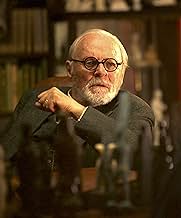
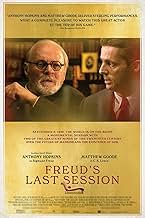
Freud invita l'iconico autore Clive Staples Lewis a discutere dell'esistenza di Dio.Freud invita l'iconico autore Clive Staples Lewis a discutere dell'esistenza di Dio.Freud invita l'iconico autore Clive Staples Lewis a discutere dell'esistenza di Dio.
- Regia
- Sceneggiatura
- Star
- Premi
- 1 candidatura in totale




George Andrew-Clarke
- Paddy Moore
- (as George Clarke)


Nina Goldvin
- Sophie Freud
- (as Nina Kolomiitseva)


Anna Amalie Blomeyer
- Ilsa
- (as Anna Blomeyer)
Recensioni in evidenza
Strictly evaluated as an opening-to-closing credits endeavor, Freud's Last Session isn't a terrific film (probably more like 6-stars). But director/writer Matt Brown's effort features enough interesting philosophical nuggets-bolstered by one terrific acting performance-to be enjoyable for those who may sit down to watch it.
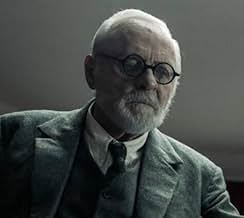
For a very basic overview, Freud's Last Session imagines a fictional encounter-which may or may not have actually occurred-between the titular psychoanalyst (Anthony Hopkins) and Christian apologist C. S. Lewis (Matthew Goode). As the two trade philosophical worldviews in Freud's home, the doctor's daughter Anna (Liv Lisa Fries) struggles with her own relationship with her famous father alongside a closeted relationship with colleague Dorothy Burlingham (Jodi Balfour).
I'm not entirely sure if Freud's Last Session has ever been produced as a stage play, but if so that might actually be the better format for it. With the core of the film being an intellectual sparring match between two academics, it's a bit of an odd fit for a big-screen format or presentation. Brown tries to flesh things out with the Freud daughter plotline and various flashbacks, but those avenues feel a bit forced and ultimately serve to take the focus off the "main event".
Fortunately, the movie has two things squarely in its corner: First, the back-and-forth repartee truly does raise some food for thought (if treading somewhat familiar religion vs atheism ground). A few lines really stuck with me. Secondly, Hopkins continues to provide transformative performances. Fans of his won't regret the admission just based on his turn alone here.
Overall, I settled on 7/10 stars for Freud's Last Session. Technically it isn't even "that good" of a flick, but the Hopkins performance and general setup are enough that those even nominally interested in the premise can find enough to enjoy.
For a very basic overview, Freud's Last Session imagines a fictional encounter-which may or may not have actually occurred-between the titular psychoanalyst (Anthony Hopkins) and Christian apologist C. S. Lewis (Matthew Goode). As the two trade philosophical worldviews in Freud's home, the doctor's daughter Anna (Liv Lisa Fries) struggles with her own relationship with her famous father alongside a closeted relationship with colleague Dorothy Burlingham (Jodi Balfour).
I'm not entirely sure if Freud's Last Session has ever been produced as a stage play, but if so that might actually be the better format for it. With the core of the film being an intellectual sparring match between two academics, it's a bit of an odd fit for a big-screen format or presentation. Brown tries to flesh things out with the Freud daughter plotline and various flashbacks, but those avenues feel a bit forced and ultimately serve to take the focus off the "main event".
Fortunately, the movie has two things squarely in its corner: First, the back-and-forth repartee truly does raise some food for thought (if treading somewhat familiar religion vs atheism ground). A few lines really stuck with me. Secondly, Hopkins continues to provide transformative performances. Fans of his won't regret the admission just based on his turn alone here.
Overall, I settled on 7/10 stars for Freud's Last Session. Technically it isn't even "that good" of a flick, but the Hopkins performance and general setup are enough that those even nominally interested in the premise can find enough to enjoy.
The script is thought provoking as you follow a neurologist who discovered psychoanalysis conversing with a Christian author who wrote The Chronicles of Narnia. ALSO, the events take place on the day before WWII and both gentlemen are equally brilliant as they are stubborn, as seen with each of the many discussions-turned-arguments that take place. Transitions and flashbacks are heavily utilized to portray character depth, but whether it's a particular style of acting or the timing of each scene paired together, this format ultimately doesn't work. Anthony Hopkins and Matthew Goode showcase their individual acting talent with long monologues and fluctuating emotions, but in the pivotal moments of occupying a scene together, the chemistry never quite flourishes. However, director Matt Brown keeps the viewer engaged by allowing us to be an unbiased fly on the wall rather than purposely tilting the conversation in one direction. The story feels restrained, most likely due to the subject matter, but that won't affect the enjoyable experience that many will have.
There is a recent outbreak of films made for people past puberty and this film is one of them. Serious issues are discussed. Thoughts are provoked. Both actors (and the actresses who get less flamboyant screen time) play intelligent philosophers grappling with something we all have to face - is there an eternity? Or oblivion? What prompts a genocide by humans to eliminate theirnown species? No flying cars or superheros, just intelligent adults grappling with serious questions.
Anthony Hopkins fills his unpleasant character with a minimum of scenery chewing, and Matthew Goode was a pleasant surprise, keeping his more quiet character in the mental battle. But the little known story of Anna Freud is tragic and brings real emotion to the story. A grown up film (sorry, Barbie).
Anthony Hopkins fills his unpleasant character with a minimum of scenery chewing, and Matthew Goode was a pleasant surprise, keeping his more quiet character in the mental battle. But the little known story of Anna Freud is tragic and brings real emotion to the story. A grown up film (sorry, Barbie).
"Freud's Last Session" comes as a huge disappointment for me. This fictionalized encounter between groundbreaking pyschoanalyst Sigmund Freud
(Anthony Hopkins) and writer C. S. Lewis (Matthew Goode), on the early days of World War II with the first German bombers coming to England, doesn't
challenge viewers in asking themselves about what they're trying to figure out while challenging themselves about the nature of man and if God exists
or not (Freud is an atheist; Lewis is a Christian believer).
Adapted from Matt Brown's play, the material is poorly translated to the screen which doesn't allow a solid 15 minutes with both of those characters alone in their session without coming back and forth between some background moments from each character, or either some present situations with the threats of bombing or Freud's poor health that needs constant care from his daughter, of which we have some tense revelations about her relationship with her dominating father. And they tried so hard to make it a plot twist when it comes about that character and her secretary that it was annoying - specially if you know that while Freud didn't condemn homosexuality as a moral issue, he didn't want them near him (read Paul Roazen's works on him).
One sort of expects this being a psychoanalysis session rather than a weird chatting between famous authors with opposite views. For the life of me, as it wasn't a session in fact, I still don't have a clue on what Lewis was doing there. The verbal duels are the moments we wait for, there are so many interesting bits and exchanges between them but as a whole it all falls flat because either the dialogue is not that brilliant; the editing makes it all look like a tennis match - there's not a single moment for some monologue or some plan sequence; and the constant sidetrack of past moments that tries to build some character, or show some background but it's all disengaging and tedious.
A film that works with such ideals and challenges about mankind, God, faith and human relations while opposed or favorable to all that must have some coherence between action and dialogues, to create something that we in the audience might have question ourselves or haven't thought about. It must create some excitment even if those issues aren't all that thrilling (to some) and stay in the "boring" play format without distractions. If there's a play and film adaptation that translated such sentiment in a brilliant way was "The Sunset Limited", with Samuel L. Jackson and Tommy Lee Jones. Simple through actions as it stays in a small apartment room and the brilliance from the complex dialogues becomes a fascinating and mindblowing experience. Hopkins and Goode don't share the same dynamic despite being good performers. The excessive use of humor and the many interruptions in their digressions didn't help, and we perceive them as bitter figures that don't reach any enlightning conclusion.
Here's a film that crushed any previous and possible good expectations that I could have about presenting a challenging duel of opposed views from great minds of the 20th century, starring two favorite actors of mine. Its flawed and distractive presentation left me emptied out and waiting for more. Sadly, it delivered so little that either Freud and Lewis still became mysteries to me, and only their works or books about them will solve a little such mystery. I'd rather see Freud's first session, instead. 5/10.
Adapted from Matt Brown's play, the material is poorly translated to the screen which doesn't allow a solid 15 minutes with both of those characters alone in their session without coming back and forth between some background moments from each character, or either some present situations with the threats of bombing or Freud's poor health that needs constant care from his daughter, of which we have some tense revelations about her relationship with her dominating father. And they tried so hard to make it a plot twist when it comes about that character and her secretary that it was annoying - specially if you know that while Freud didn't condemn homosexuality as a moral issue, he didn't want them near him (read Paul Roazen's works on him).
One sort of expects this being a psychoanalysis session rather than a weird chatting between famous authors with opposite views. For the life of me, as it wasn't a session in fact, I still don't have a clue on what Lewis was doing there. The verbal duels are the moments we wait for, there are so many interesting bits and exchanges between them but as a whole it all falls flat because either the dialogue is not that brilliant; the editing makes it all look like a tennis match - there's not a single moment for some monologue or some plan sequence; and the constant sidetrack of past moments that tries to build some character, or show some background but it's all disengaging and tedious.
A film that works with such ideals and challenges about mankind, God, faith and human relations while opposed or favorable to all that must have some coherence between action and dialogues, to create something that we in the audience might have question ourselves or haven't thought about. It must create some excitment even if those issues aren't all that thrilling (to some) and stay in the "boring" play format without distractions. If there's a play and film adaptation that translated such sentiment in a brilliant way was "The Sunset Limited", with Samuel L. Jackson and Tommy Lee Jones. Simple through actions as it stays in a small apartment room and the brilliance from the complex dialogues becomes a fascinating and mindblowing experience. Hopkins and Goode don't share the same dynamic despite being good performers. The excessive use of humor and the many interruptions in their digressions didn't help, and we perceive them as bitter figures that don't reach any enlightning conclusion.
Here's a film that crushed any previous and possible good expectations that I could have about presenting a challenging duel of opposed views from great minds of the 20th century, starring two favorite actors of mine. Its flawed and distractive presentation left me emptied out and waiting for more. Sadly, it delivered so little that either Freud and Lewis still became mysteries to me, and only their works or books about them will solve a little such mystery. I'd rather see Freud's first session, instead. 5/10.
Hopkins playing Freud was bound to be hit or miss. Unfortunately, he delivers here one of his familiar, highly mannered performances. Whenever this "Freud" opens his mouth, he speaks in the same rapid, slightly eccentric rhythm Hopkins favors. Then he pauses, reflects a moment, flashes a sudden rueful grin, and utters a little chuckle or cackle. It's been Hopkins' default style throughout his career (at least when not playing Lecter), this time with a Viennese accent. I doubt Freud was ever so hammy.
My faith was also shaken early in the movie when, for no discernible reason, the order of two famous events was reversed. On September 3, 1939, Prime Minister Chamberlain announced over the radio that the nation was at war with Germany. A few minutes later, air raid sirens went off, terrifying London's populace. (It proved to be a false alarm.) For some reason, the movie has the false air raid preceding the declaration of war.
It also features, in connection with Chamberlain's broadcast, an old bête noire of mine: A large group of psychologists is listening to his historic speech on the radio, and when it's over, the BBC announcer says something like "That ends the Prime Minister's message" -- at which point someone (is it Anna Freud?) snaps off the radio. No one would do that in real life, with war just declared and with urgent government announcements yet to follow (and there were plenty of them).
One further complaint: the clumsy way flashbacks are shoehorned into the narrative, giving us the backstories of Freud, Lewis, and Anna, with a heavy emphasis on Anna's lesbianism.
Incidentally, considering that C. S. Lewis was one of the most brilliant speakers in Britain -- eloquent, persuasive, never at a loss for words -- he is uncharacteristically tight-lipped, timid, and hesitant in this movie, even for someone being courteous to a revered, dying old man. Armand Nicholi's fanciful book "The Question of God," one of the inspirations for this movie, lets the two iconic figures battle it out, with Lewis (and God) ultimately gaining the upper hand. But in this movie's version of that imaginary encounter, Lewis has little to say. It is all Freud's show.
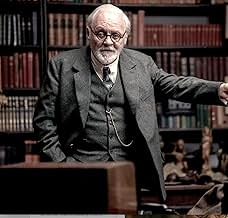
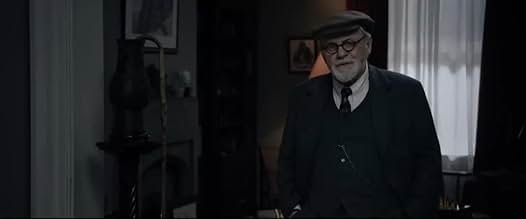
At least the movie is handsomely mounted; it's nice to see what Freud's office must have looked like. That aside, I can't see the point of the movie. Is it just to give Hopkins the chance to do another bad impersonation of a historical figure?
My faith was also shaken early in the movie when, for no discernible reason, the order of two famous events was reversed. On September 3, 1939, Prime Minister Chamberlain announced over the radio that the nation was at war with Germany. A few minutes later, air raid sirens went off, terrifying London's populace. (It proved to be a false alarm.) For some reason, the movie has the false air raid preceding the declaration of war.
It also features, in connection with Chamberlain's broadcast, an old bête noire of mine: A large group of psychologists is listening to his historic speech on the radio, and when it's over, the BBC announcer says something like "That ends the Prime Minister's message" -- at which point someone (is it Anna Freud?) snaps off the radio. No one would do that in real life, with war just declared and with urgent government announcements yet to follow (and there were plenty of them).
One further complaint: the clumsy way flashbacks are shoehorned into the narrative, giving us the backstories of Freud, Lewis, and Anna, with a heavy emphasis on Anna's lesbianism.
Incidentally, considering that C. S. Lewis was one of the most brilliant speakers in Britain -- eloquent, persuasive, never at a loss for words -- he is uncharacteristically tight-lipped, timid, and hesitant in this movie, even for someone being courteous to a revered, dying old man. Armand Nicholi's fanciful book "The Question of God," one of the inspirations for this movie, lets the two iconic figures battle it out, with Lewis (and God) ultimately gaining the upper hand. But in this movie's version of that imaginary encounter, Lewis has little to say. It is all Freud's show.
At least the movie is handsomely mounted; it's nice to see what Freud's office must have looked like. That aside, I can't see the point of the movie. Is it just to give Hopkins the chance to do another bad impersonation of a historical figure?


Lo sapevi?
- QuizAnthony Hopkins had previously portrayed C.S. Lewis in Viaggio in Inghilterra (1993) 30 years prior to this film.
- BlooperLewis is shown researching the Gospels while a woman who appears to be his wife calls him to bed. This film takes place in 1939, but Lewis did not marry Joy Davidman Gresham until 1956. The woman was actually Janie Moore, who Lewis lived with until 1949.
- Citazioni
J.R.R. Tolkien: Jack, when you read myths about gods that come to Earth and sacrifice themselves, their stories move you, so long as you read it anywhere but the Bible.
- ConnessioniFeatured in The 7PM Project: Episodio datato 19 aprile 2024 (2024)
- Colonne sonoreVariations on an Original Theme, Op. 36, 'Enigma' Variation 9: Nimrod
Composed by Edward Elgar
Performed by Symfonický orchester Slovenského rozhlasu (as Slovak Radio Symphony Orchestra) & Adrian Leaper (Conductor)
Licensed courtesy of Naxos Music UK Ltd
I più visti
Accedi per valutare e creare un elenco di titoli salvati per ottenere consigli personalizzati
- How long is Freud's Last Session?Powered by Alexa
Dettagli
- Data di uscita
- Paesi di origine
- Lingue
- Celebre anche come
- La Última Sesión de Freud
- Luoghi delle riprese
- Aziende produttrici
- Vedi altri crediti dell’azienda su IMDbPro
Botteghino
- Lordo Stati Uniti e Canada
- 906.283 USD
- Fine settimana di apertura Stati Uniti e Canada
- 45.590 USD
- 24 dic 2023
- Lordo in tutto il mondo
- 4.190.596 USD
- Tempo di esecuzione
- 1h 50min(110 min)
- Colore
- Proporzioni
- 2.35 : 1
Contribuisci a questa pagina
Suggerisci una modifica o aggiungi i contenuti mancanti