VALUTAZIONE IMDb
6,2/10
27.098
LA TUA VALUTAZIONE


Le vite di quattro studenti di colore in un college della Ivy League.Le vite di quattro studenti di colore in un college della Ivy League.Le vite di quattro studenti di colore in un college della Ivy League.
- Premi
- 13 vittorie e 28 candidature totali


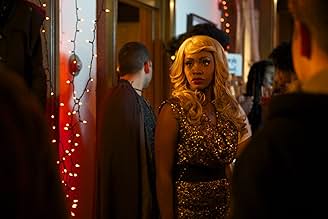
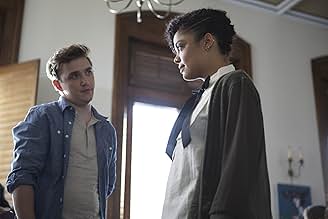
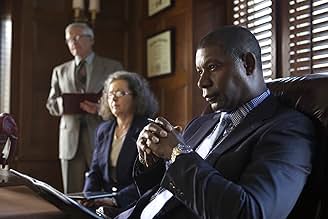
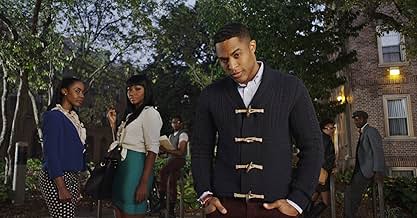


Brandon P Bell
- Troy Fairbanks
- (as Brandon Bell)


Kate Gaulke
- Annie
- (as Katie Gaulke)


Bryan Daniel Porter
- Gordon
- (as Bryan Porter)
6,227K
1
2
3
4
5
6
7
8
9
10
Recensioni in evidenza
Quite good, but pales in comparison with the TV series
I saw this movie after watching the first, brilliant season of the TV series it spawned, and that makes it difficult to review. Because the TV series is so brilliant, so funny, so nuanced, and so well structured, I can't help but see the movie as a dress rehearsal for what was to come. Would I have enjoyed this movie more had I seen it first? Very possibly.
The movie follows a whole bunch of characters as they deal with issues around race, with black characters ranging from revolutionaries to blend-inners and white characters ranging from supportive to racist to really, really racist.
The movie is hugely ambitious, and director Justin Simien wants to squeeze in every idea he's ever had about race into this movie. Unfortunately, the result often feels overstuffed, with too many characters and too many ideas packed into too little space.
Clearly, Simien needed a TV series. In that, he takes the same ideas and is able to fully explore each one and each character, in wonderful detail.
The movie is certainly well worth seeing, but unlike the TV series, I wouldn't call this essential viewing.
The movie follows a whole bunch of characters as they deal with issues around race, with black characters ranging from revolutionaries to blend-inners and white characters ranging from supportive to racist to really, really racist.
The movie is hugely ambitious, and director Justin Simien wants to squeeze in every idea he's ever had about race into this movie. Unfortunately, the result often feels overstuffed, with too many characters and too many ideas packed into too little space.
Clearly, Simien needed a TV series. In that, he takes the same ideas and is able to fully explore each one and each character, in wonderful detail.
The movie is certainly well worth seeing, but unlike the TV series, I wouldn't call this essential viewing.
Is it about the student politics or racism?
Actually, I don't understand this film, I mean the story, what it intended to tell us. Maybe it's for Americans only. I thought it could be some underrated cool comedy, but what I just saw was definitely not expected. I kind of felt it was a student politics and if it stayed like that way I would have had no problem. But they said it is a comedy and I did not get any, in between it became a racism thing. I never understood this American racism, why they're making it so complicated. Especially the condition of the US is not looking good right now and this film pours a more oil to it. I'm neither white nor black or an American, and sorry I did not find it a good film. Even more, I don't get, how a television series is getting ready to follow-up it. So no offense for those who liked it, seems I'm in a wrong place. I just rated and reviewed what I felt it deserves, other than that I'm not against the film. I'm out of here!
3/10
3/10
I wanted to love this but....
The film is essentially one big soapbox and dropped the ball many times and in many different ways.
I want to talk about the positives first and the reason(s) the film is definitely worth watching: I was really impressed with the production value, the acting (most of it) and the humour. I think Teyonah Parris deserves special mention because she was the character I most empathised with simply because she was the only one looking at things from both angles. Tyler James Williams also stood out due to his humour and commitment to his role.
Keeping in mind that a person (or persons) wrote this script with the intention of instigating discussion about the issues raised, I think it's only fair to discuss those issues in reviews especially as some of the commentary affected my enjoyment of the film.
Obviously the film deals with more substantial issues but those applied (mainly) to the USA so to address a few lesser issues: Hair. This subject grates a little (/a lot) for me because I've never heard white people make comments about black hair. Again, this might be a bigger, more well-known topic in the US but here in the UK, I don't think anyone has ever looked twice at a black person's hair. The obsession appears to lie with black (USA) people, not with white people. What is the problem with someone touching your hair? I had a fringe cut in a few months back and people touched it and made comments. When I have my hair curly, people touch it and make nice comments. It might be annoying for you but hair isn't a race issue, it's a hair issue and anyone who focuses on this 'issue' needs to get over it. When Teyonah's character expressed annoyance with being asked if she 'weaved' her hair, I couldn't help but wonder why that was a problem. First of all, how many people say 'Google it'? We make verbs out of nouns all the time and the fact that her white friend asked if it was her own hair, instead of assuming that it wasn't, actually says a lot. Women discuss hair. White women ask each other if they have extensions, if they've had plastic surgery etc. and so for anyone to be annoyed at being asked if they are wearing a weave actually highlights how insecure they are. Not every question or action by a white person is about race. Sometimes it's genuinely about curiosity and taking interest in another person. If you are so touchy about every subject, white people will not want to talk to you for fear of offending you, not because they are racist.
There were other bits of commentary that I took issue with but I don't want my review to turn into a soapbox, so I'll move on to the main gripes I had with the film: When Tessa's character stated that it wasn't possible for black people to be racist, the film lost all credibility. The definition of 'racist' is not up for debate. We have dictionaries to clarify and after consulting one, there is absolutely no mention that in addition to holding the belief that one race is superior to another "the race believed to be inferior must also be negatively affected in some way". It is indeed possible for a black person to hold the belief that one race is better than another which would in fact, make them a racist. How their racist beliefs affect the race they believe to be inferior is irrelevant to the fact that they would be considered racist.
Finally, I disagree that white people dressing up as black people (make-up and all) is (always) the same thing as 'blackface' and I think the more that people focus on these scenarios as opposed to the real blackface which goes on in the industry, the more that film makers will get away with continuing the real tradition of blackface right under everyone's noses.
It's all about intention. Going to a party and dressing as your idol, make-up and all, is flattering and should be encouraged. There is nothing wrong with wanting to look like someone you idolise and when white people are accused of being racist for donning an afro wig and make-up, all that happens is that white people try to isolate themselves from 'ethnic' people to avoid being accused of racism.
The party in the film however, was 100% racist and offensive because the invitation was decidedly unflattering and had nothing to do with celebrating black people.
True blackface is about 'presenting an acceptable image of black people to the world'. Which is interesting when you consider that the main protagonist of this film is mixed-race. It appears that the lead role was written in such a way that allowed the casting of a light skinned woman when it could just as easily have been written in a way that would allow for a dark skinned woman to make all the same points. Casting a light skinned actress to play a dark skinned black woman, is blackface. Especially considering that they will likely apply dark make-up to her skin. Casting a white woman to play a dark skinned Latin-American woman is in the spirit of blackface. Every time a white or light skinned person is given the role of someone who 'should' be darker, that is blackface.
It's not about the make-up. It's about why you're wearing the make-up and any film which tries to hammer home a point about racism using the controversial theme of blackface, while casting a light skinned woman in the leading role, loses a few stars on IMDb for the sheer hypocrisy.
6/10 (it's good entertainment but the message is a bit off)
I want to talk about the positives first and the reason(s) the film is definitely worth watching: I was really impressed with the production value, the acting (most of it) and the humour. I think Teyonah Parris deserves special mention because she was the character I most empathised with simply because she was the only one looking at things from both angles. Tyler James Williams also stood out due to his humour and commitment to his role.
Keeping in mind that a person (or persons) wrote this script with the intention of instigating discussion about the issues raised, I think it's only fair to discuss those issues in reviews especially as some of the commentary affected my enjoyment of the film.
Obviously the film deals with more substantial issues but those applied (mainly) to the USA so to address a few lesser issues: Hair. This subject grates a little (/a lot) for me because I've never heard white people make comments about black hair. Again, this might be a bigger, more well-known topic in the US but here in the UK, I don't think anyone has ever looked twice at a black person's hair. The obsession appears to lie with black (USA) people, not with white people. What is the problem with someone touching your hair? I had a fringe cut in a few months back and people touched it and made comments. When I have my hair curly, people touch it and make nice comments. It might be annoying for you but hair isn't a race issue, it's a hair issue and anyone who focuses on this 'issue' needs to get over it. When Teyonah's character expressed annoyance with being asked if she 'weaved' her hair, I couldn't help but wonder why that was a problem. First of all, how many people say 'Google it'? We make verbs out of nouns all the time and the fact that her white friend asked if it was her own hair, instead of assuming that it wasn't, actually says a lot. Women discuss hair. White women ask each other if they have extensions, if they've had plastic surgery etc. and so for anyone to be annoyed at being asked if they are wearing a weave actually highlights how insecure they are. Not every question or action by a white person is about race. Sometimes it's genuinely about curiosity and taking interest in another person. If you are so touchy about every subject, white people will not want to talk to you for fear of offending you, not because they are racist.
There were other bits of commentary that I took issue with but I don't want my review to turn into a soapbox, so I'll move on to the main gripes I had with the film: When Tessa's character stated that it wasn't possible for black people to be racist, the film lost all credibility. The definition of 'racist' is not up for debate. We have dictionaries to clarify and after consulting one, there is absolutely no mention that in addition to holding the belief that one race is superior to another "the race believed to be inferior must also be negatively affected in some way". It is indeed possible for a black person to hold the belief that one race is better than another which would in fact, make them a racist. How their racist beliefs affect the race they believe to be inferior is irrelevant to the fact that they would be considered racist.
Finally, I disagree that white people dressing up as black people (make-up and all) is (always) the same thing as 'blackface' and I think the more that people focus on these scenarios as opposed to the real blackface which goes on in the industry, the more that film makers will get away with continuing the real tradition of blackface right under everyone's noses.
It's all about intention. Going to a party and dressing as your idol, make-up and all, is flattering and should be encouraged. There is nothing wrong with wanting to look like someone you idolise and when white people are accused of being racist for donning an afro wig and make-up, all that happens is that white people try to isolate themselves from 'ethnic' people to avoid being accused of racism.
The party in the film however, was 100% racist and offensive because the invitation was decidedly unflattering and had nothing to do with celebrating black people.
True blackface is about 'presenting an acceptable image of black people to the world'. Which is interesting when you consider that the main protagonist of this film is mixed-race. It appears that the lead role was written in such a way that allowed the casting of a light skinned woman when it could just as easily have been written in a way that would allow for a dark skinned woman to make all the same points. Casting a light skinned actress to play a dark skinned black woman, is blackface. Especially considering that they will likely apply dark make-up to her skin. Casting a white woman to play a dark skinned Latin-American woman is in the spirit of blackface. Every time a white or light skinned person is given the role of someone who 'should' be darker, that is blackface.
It's not about the make-up. It's about why you're wearing the make-up and any film which tries to hammer home a point about racism using the controversial theme of blackface, while casting a light skinned woman in the leading role, loses a few stars on IMDb for the sheer hypocrisy.
6/10 (it's good entertainment but the message is a bit off)
Well made satire but riddled with hateful undertones
Menippian and Juvenalian satire are at the forefront here. There's no comedy, there's just a message. Unfortunately, today, people have allowed this satirical work to become reality. Set at a prestigious Ivy League school outside of Chicago proper, "Dear White People" takes so much time on the inherent differences between black and white people, that it takes no real time or consideration to realize that it's the American culture that binds everyone together. It's not a bad film, and my opinion of it has grown for the better over time because it must be taken as a satire instead of a message. Obviously the filmmakers have it in mind that one particular group is the enemy, when the reality is that the far left politics are used to brainwash extremely smart and talented minds.
Doesn't Deliver on Promising Trailer
I am glad that this film addresses the important issue of racism on college campuses, and I have no disagreement with its political or social justice messages. Any sincere attempt by a filmmaker to make these experiences visible to the broader public is a good thing.
As a white educator who actually attended and later taught at top- tier colleges, I had been looking forward to experiencing a new sharp creative critique of American racism on college campuses as promised by the film's trailer.
This film utterly failed in its attempts to entertain or provoke. It did not provide me even with the typical pleasures of cinema, let alone fresh insight into its subject. It was little more than a leaden slow-moving soap opera with a contrived plot, oddly dressed characters and unconvincing dialogue. In my experience of elite campuses, it is the rare Ivy student (of any race) who routinely dresses like a junior business executive and uses this sort of pretentious speech pattern. Watching this film was like watching a Western in which all the characters had British accents and wore kimonos.
For readers who seek moving and insightful films on racism, I highly recommend Spike Lee "joints" which provide viewers with superior entertainment, dialogue, characters, plot, provocation and insight.
As a white educator who actually attended and later taught at top- tier colleges, I had been looking forward to experiencing a new sharp creative critique of American racism on college campuses as promised by the film's trailer.
This film utterly failed in its attempts to entertain or provoke. It did not provide me even with the typical pleasures of cinema, let alone fresh insight into its subject. It was little more than a leaden slow-moving soap opera with a contrived plot, oddly dressed characters and unconvincing dialogue. In my experience of elite campuses, it is the rare Ivy student (of any race) who routinely dresses like a junior business executive and uses this sort of pretentious speech pattern. Watching this film was like watching a Western in which all the characters had British accents and wore kimonos.
For readers who seek moving and insightful films on racism, I highly recommend Spike Lee "joints" which provide viewers with superior entertainment, dialogue, characters, plot, provocation and insight.


Lo sapevi?
- QuizThe invitation for the party as shown in the trailer is almost verbatim the invitation for a real life party that occurred at the University of California, San Diego, on February 15th, 2010. The synopsis and film take many cues from the UCSD "Compton Cookout," an event run by one African American but attended by UCSD's predominately white and Asian student body. The event itself went fine, but news about it prompted a massive uproar on campus.
- BlooperWhen Sam is in the dining hall and chastises Kurt for eating in their dining hall - just before she stands up; she closes her Macbook twice.
- Citazioni
Professor Bodkin: ...Might I also remind you that I read your entire fifteen-page unsolicited treatise on why the Gremlins is actually about suburban white fear of black culture.
Sam White: The Gremlins are loud, talk in slang, are addicted to fried chicken and freak out when you get their hair wet.
- Curiosità sui creditiThe end credits include photographs of the real-life blackface (and brownface) college parties that inspired the film's climax.
- ConnessioniFeatured in Number One on the Call Sheet: Black Leading Women in Hollywood (2025)
- Colonne sonore45 Drum Break
Performed by The Co-Stars
Written by Neely Dinkins Jr. (as Neely Dinkins)
Vito Colapietro Courtesy of Atom Factory Music Licensing
I più visti
Accedi per valutare e creare un elenco di titoli salvati per ottenere consigli personalizzati
- How long is Dear White People?Powered by Alexa
Dettagli
- Data di uscita
- Paese di origine
- Sito ufficiale
- Lingua
- Celebre anche come
- Sevgili Beyaz Irk
- Luoghi delle riprese
- Aziende produttrici
- Vedi altri crediti dell’azienda su IMDbPro
Botteghino
- Lordo Stati Uniti e Canada
- 4.404.154 USD
- Fine settimana di apertura Stati Uniti e Canada
- 347.959 USD
- 19 ott 2014
- Lordo in tutto il mondo
- 4.633.961 USD
Contribuisci a questa pagina
Suggerisci una modifica o aggiungi i contenuti mancanti