

- Premi
- 5 vittorie e 15 candidature totali
7,76.2K
1
2
3
4
5
6
7
8
9
10
Recensioni in evidenza
I lived it every second...
A Simple Accident by Jafar Panahi is a beautiful and powerful film. With a very simple style, Panahi shows daily life and turns it into something deep and emotional. The story is quiet but strong, and it makes you think about people, society, and how fragile life can be.
This film is not just a movie; it is an experience. Every scene feels real and meaningful. Panahi proves again that he is a master of honest and human storytelling.
This film is not just a movie; it is an experience. Every scene feels real and meaningful. Panahi proves again that he is a master of honest and human storytelling.
Accident or Reckoning? Panahi's Gripping Look at Trauma and Retribution
Watched on Sydney Film Festival 2025
Jafar Panahi's Palme d'Or winner, It Was Just an Accident, isn't just a film; it's a gripping, morally fraught journey that grabs you and refuses to let go long after the credits roll. Forget a simple fender bender - this story ignites when a minor traffic scrape leads former political prisoner Vahid to believe he's cornered "Peg Leg," the man who brutally tortured him years before. Talk about wrong place, wrong time... or is it?
Panahi plunges us straight into the suffocating tension. Vahid gathers fellow survivors, each etched with their own raw pain and simmering rage, turning a car ride into a claustrophobic tribunal. Their desperate mission? To confirm the terrified captive Ebrahim Azizi's identity and decide his fate. It's here the film truly digs its claws in, forcing you to grapple alongside them: Where does the desperate need for justice end and the cycle of vengeance begin? Can victims ever be justified in mirroring their oppressor's cruelty? Panahi masterfully blurs these lines, offering zero easy outs.
The brilliance lies in the raw humanity. While exploring the primal pull of revenge - that fierce, almost instinctive reclaiming of power - the film never loses sight of the complex, painful possibility of forgiveness. It's not presented as some saintly virtue, but as a messy, agonising internal battle played out on the faces of a stunningly authentic, mostly non-professional cast. Their barely contained fury sits right alongside profound vulnerability. Can empathy survive such deep scars?
Don't mistake this for unrelenting gloom, though. Panahi weaves in moments of sharp, absurdist gallows humour that land perfectly, highlighting the surreal contradictions of life under the boot. Visually restrained but emotionally potent, the film relies on evocative camerawork and powerhouse subtle performances. The deliberate pacing makes you sit with every gut-wrenching dilemma and fleeting connection.
Ultimately, It Was Just an Accident transcends revenge thriller territory. A pivotal, unexpected third-act twist delivers a stunning gut-punch: a stark reminder that even amidst profound trauma, a flicker of human compassion can endure. The devastating climax and its haunting final moments linger, leaving you with a fragile sense of hope wrestled from the jaws of despair. Panahi crafts a defiant, unforgettable cinematic challenge - a film that doesn't just tell a story, but forces you to confront the darkest corners of justice, power, and whether healing is even possible. It demands your attention and refuses to offer simple answers. Fair crack of the whip, this one sticks with you.
Jafar Panahi's Palme d'Or winner, It Was Just an Accident, isn't just a film; it's a gripping, morally fraught journey that grabs you and refuses to let go long after the credits roll. Forget a simple fender bender - this story ignites when a minor traffic scrape leads former political prisoner Vahid to believe he's cornered "Peg Leg," the man who brutally tortured him years before. Talk about wrong place, wrong time... or is it?
Panahi plunges us straight into the suffocating tension. Vahid gathers fellow survivors, each etched with their own raw pain and simmering rage, turning a car ride into a claustrophobic tribunal. Their desperate mission? To confirm the terrified captive Ebrahim Azizi's identity and decide his fate. It's here the film truly digs its claws in, forcing you to grapple alongside them: Where does the desperate need for justice end and the cycle of vengeance begin? Can victims ever be justified in mirroring their oppressor's cruelty? Panahi masterfully blurs these lines, offering zero easy outs.
The brilliance lies in the raw humanity. While exploring the primal pull of revenge - that fierce, almost instinctive reclaiming of power - the film never loses sight of the complex, painful possibility of forgiveness. It's not presented as some saintly virtue, but as a messy, agonising internal battle played out on the faces of a stunningly authentic, mostly non-professional cast. Their barely contained fury sits right alongside profound vulnerability. Can empathy survive such deep scars?
Don't mistake this for unrelenting gloom, though. Panahi weaves in moments of sharp, absurdist gallows humour that land perfectly, highlighting the surreal contradictions of life under the boot. Visually restrained but emotionally potent, the film relies on evocative camerawork and powerhouse subtle performances. The deliberate pacing makes you sit with every gut-wrenching dilemma and fleeting connection.
Ultimately, It Was Just an Accident transcends revenge thriller territory. A pivotal, unexpected third-act twist delivers a stunning gut-punch: a stark reminder that even amidst profound trauma, a flicker of human compassion can endure. The devastating climax and its haunting final moments linger, leaving you with a fragile sense of hope wrestled from the jaws of despair. Panahi crafts a defiant, unforgettable cinematic challenge - a film that doesn't just tell a story, but forces you to confront the darkest corners of justice, power, and whether healing is even possible. It demands your attention and refuses to offer simple answers. Fair crack of the whip, this one sticks with you.
Emotional Political Revenge Thriller Cuts Deep
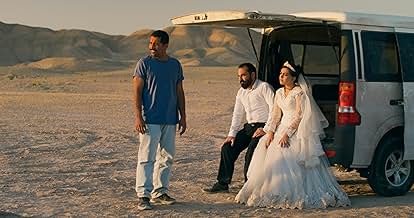
A pervasive, persistent wave of dread courses through this propulsive 2025 revenge thriller, but what impressed me even more was the courage director/screenwriter Jafar Panahi displays throughout this engrossing film. Imprisoned several times over for his ongoing criticism of the corrupt Iranian government, Panahi has crafted a character-driven plot that follows a motley group of former Iranian political prisoners, each one reacting viscerally when faced with a moral dilemma as they believe their tormentor Eghbal ("Peg Leg") has reentered their lives. First, there's Vahid, an auto mechanic who upon this discovery, starts to bury him alive, but then his conscience leads him to seek out other victims who could validate Eghbal's identity. That includes Shiva, a wedding photographer Vahid has never met before; Goli and Ali, a betrothed couple; and Shiva's hotheaded former business partner Hamid. The non-professional cast is uniformly strong with standout turns from Vahid Mobasseri with the fullest character arc as Vahid and Mohamad Ali Elyasmehr as Hamid whose out-of-control outbursts instill genuine fear. The film climaxes dramatically with a single shot held for 12 minutes uninterrupted. A most uniquely compelling story told with surprising compassion.
Jafar Panahi's latest grapples with the morality of vengeance
Iran is producing some of the best modern filmmakers working today, yet sadly, it is not reaping its artistic rewards. Many of these directors are choosing to leave the theocracy and make films elsewhere-or film in secret, risking imprisonment from censors. Last year brought the brilliant Oscar-nominated The Seed of the Sacred Fig (2024), smuggled out of Iran by its now-exiled director Mohammad Rasoulof into Germany. This year, we have a similar case: Jafar Panahi, jailed for his filmmaking for years, delivers with It Was Just an Accident (2025), this year's Palme d'Or winner at Cannes, produced in France instead.
It Was Just an Accident takes place in Iran, where Vahid (Vahid Mobasseri), a car mechanic, suspects that a limping client (Ebrahim Azizi) who appears one night is his former torturer from when he was jailed for protesting unpaid wages. In an impulsive act, Vahid kidnaps the man, but just before he's ready to exact his revenge, doubt creeps in. Is he sure this is the right man? The film then follows Vahid as he seeks out former inmates who might identify his hostage, while also risking their own thirst for vengeance spinning out of control.
Panahi has long specialized in moral and societal dilemmas condensed into intimate settings. His previous film, No Bears (2022), followed an Iranian filmmaker harassed by censors and threatened with jail time, while his surrounding community watched passively. In It Was Just an Accident, Panahi explores the lives of the formerly incarcerated, honoring the permanent scars they carry even after walking free. Yet the film also poses the question of vengeance; its value, its futility, and its moral cost.
Panahi himself has much to resent, especially toward the jailers who suppressed his voice, art, and physical liberty for years. Yet It Was Just an Accident approaches injustice and cruelty not with wrath or righteous fury, but with empathy and moral ambiguity. The doubt that consumes Vahid-and infects viewers as they watch-is central to Panahi's humane perspective. Even as the film oscillates between convincing us of the suspect's guilt and innocence, we're left wondering whether even the death of a guilty man would bring peace or justice.
The film's moral debate unfolds through a chorus of former prisoners, each embodying a different response to trauma: from the wrathful to the despairing to the willfully ignorant. This ensemble finds coherence through Vahid, brilliantly embodied by Mobasseri, whose shifting expressions mirror our own uncertainty. At moments, Panahi even flirts with dark comedy, highlighting the absurdity of vengeance taken too far.
Panahi once again demonstrates his mastery of cinematic craft. He edits most scenes within a take or two, with the film's climax running nearly ten minutes uncut; a stunning showcase of confident blocking, lighting, and performance. The balance between darkness and absurdity, tragedy and irony, is handled with such precision that each tonal shift feels organic rather than jarring.
In the end, It Was Just an Accident stands as another example of the great cinema that Iran's repression is paradoxically inspiring and tragically missing out on. Panahi delivers an entertaining yet deeply thought-provoking moral drama, keeping viewers on edge with his fluid command of tone, performance, and storytelling. One can only hope his meditation on vengeance and empathy resonates far beyond the screen, especially among the world's leaders today.
It Was Just an Accident takes place in Iran, where Vahid (Vahid Mobasseri), a car mechanic, suspects that a limping client (Ebrahim Azizi) who appears one night is his former torturer from when he was jailed for protesting unpaid wages. In an impulsive act, Vahid kidnaps the man, but just before he's ready to exact his revenge, doubt creeps in. Is he sure this is the right man? The film then follows Vahid as he seeks out former inmates who might identify his hostage, while also risking their own thirst for vengeance spinning out of control.
Panahi has long specialized in moral and societal dilemmas condensed into intimate settings. His previous film, No Bears (2022), followed an Iranian filmmaker harassed by censors and threatened with jail time, while his surrounding community watched passively. In It Was Just an Accident, Panahi explores the lives of the formerly incarcerated, honoring the permanent scars they carry even after walking free. Yet the film also poses the question of vengeance; its value, its futility, and its moral cost.
Panahi himself has much to resent, especially toward the jailers who suppressed his voice, art, and physical liberty for years. Yet It Was Just an Accident approaches injustice and cruelty not with wrath or righteous fury, but with empathy and moral ambiguity. The doubt that consumes Vahid-and infects viewers as they watch-is central to Panahi's humane perspective. Even as the film oscillates between convincing us of the suspect's guilt and innocence, we're left wondering whether even the death of a guilty man would bring peace or justice.
The film's moral debate unfolds through a chorus of former prisoners, each embodying a different response to trauma: from the wrathful to the despairing to the willfully ignorant. This ensemble finds coherence through Vahid, brilliantly embodied by Mobasseri, whose shifting expressions mirror our own uncertainty. At moments, Panahi even flirts with dark comedy, highlighting the absurdity of vengeance taken too far.
Panahi once again demonstrates his mastery of cinematic craft. He edits most scenes within a take or two, with the film's climax running nearly ten minutes uncut; a stunning showcase of confident blocking, lighting, and performance. The balance between darkness and absurdity, tragedy and irony, is handled with such precision that each tonal shift feels organic rather than jarring.
In the end, It Was Just an Accident stands as another example of the great cinema that Iran's repression is paradoxically inspiring and tragically missing out on. Panahi delivers an entertaining yet deeply thought-provoking moral drama, keeping viewers on edge with his fluid command of tone, performance, and storytelling. One can only hope his meditation on vengeance and empathy resonates far beyond the screen, especially among the world's leaders today.
Jafar Panahi and the Incomplete Narrative of a Collective Anger
It Was Just an Accident, directed by Jafar Panahi, has garnered global acclaim and was awarded the Palme d'Or at the 2025 Cannes Film Festival. With a minimalist and seemingly simple form, the film begins with a quiet roadside incident, but what unfolds is far more than a tale of revenge-it is a layered exploration of truth, illusion, repressed fury, and the echoes of collective trauma.
Panahi, as always, avoids overt exposition and invites the viewer into an internal journey, led by characters who are deeply wounded yet still burning with unrest-characters who, to his credit, are masterfully developed and each embody a fractured dimension of contemporary Iranian society. However, the viewing experience, especially in the first fifteen minutes, is far from easy. The film opens ambiguously, with minimal context and a slow rhythm that leaves the viewer disoriented. Even seasoned international audiences may find themselves unsure of why they should stay engaged-unless they rely on the prestige of the director's name or the film's award credentials.
Formally, the film carries a somewhat fresh structure, occasionally weaving in moments of dark humor. But the acting-particularly in emotionally intense scenes-lacks consistency and depth in places, sometimes undercutting the emotional weight the story strives to deliver. These execution flaws lead to missed emotional connections where the film clearly intends to strike.
While the film seemingly critiques violence and seeks justice and moral clarity, its focus on a singular "culprit"-rather than addressing the systemic, institutional apparatus of repression-renders its outlook surprisingly aligned with a refined version of reformist rhetoric. This softened, left-leaning moralism bypasses major political upheavals in Iran's recent history-most notably the 2022 "Woman, Life, Freedom" movement-and replaces structural critique with a narrowly personalized narrative. In doing so, it risks creating an unintended sense of appeasement with the status quo for international viewers.
What heightens this sense of ambiguity in a parallel world beyond cinema is the fact that the cast and crew of this "underground, unauthorized film" have returned to Iran without consequences-something that remains a distant dream for many independent artists, journalists, and political dissidents in exile. This contrast raises an unsettling question: is the film, knowingly or not, offering a palatable narrative of pain-tailored more for international festivals than for confronting the deeper truths of repression?
It Was Just an Accident is bold in form yet cautious in substance. It reveals fragments of truth with cinematic skill, yet avoids engaging with the roots of the trauma it depicts. For international audiences, it may feel emotionally powerful and thought-provoking. But for Iranian viewers, the film is less of a mirror than a carefully trimmed reflection-diluted, fragmented, and ultimately incomplete in its portrayal of wounds that are still very much alive.
Nousha Saidi France - May 2025.
Panahi, as always, avoids overt exposition and invites the viewer into an internal journey, led by characters who are deeply wounded yet still burning with unrest-characters who, to his credit, are masterfully developed and each embody a fractured dimension of contemporary Iranian society. However, the viewing experience, especially in the first fifteen minutes, is far from easy. The film opens ambiguously, with minimal context and a slow rhythm that leaves the viewer disoriented. Even seasoned international audiences may find themselves unsure of why they should stay engaged-unless they rely on the prestige of the director's name or the film's award credentials.
Formally, the film carries a somewhat fresh structure, occasionally weaving in moments of dark humor. But the acting-particularly in emotionally intense scenes-lacks consistency and depth in places, sometimes undercutting the emotional weight the story strives to deliver. These execution flaws lead to missed emotional connections where the film clearly intends to strike.
While the film seemingly critiques violence and seeks justice and moral clarity, its focus on a singular "culprit"-rather than addressing the systemic, institutional apparatus of repression-renders its outlook surprisingly aligned with a refined version of reformist rhetoric. This softened, left-leaning moralism bypasses major political upheavals in Iran's recent history-most notably the 2022 "Woman, Life, Freedom" movement-and replaces structural critique with a narrowly personalized narrative. In doing so, it risks creating an unintended sense of appeasement with the status quo for international viewers.
What heightens this sense of ambiguity in a parallel world beyond cinema is the fact that the cast and crew of this "underground, unauthorized film" have returned to Iran without consequences-something that remains a distant dream for many independent artists, journalists, and political dissidents in exile. This contrast raises an unsettling question: is the film, knowingly or not, offering a palatable narrative of pain-tailored more for international festivals than for confronting the deeper truths of repression?
It Was Just an Accident is bold in form yet cautious in substance. It reveals fragments of truth with cinematic skill, yet avoids engaging with the roots of the trauma it depicts. For international audiences, it may feel emotionally powerful and thought-provoking. But for Iranian viewers, the film is less of a mirror than a carefully trimmed reflection-diluted, fragmented, and ultimately incomplete in its portrayal of wounds that are still very much alive.
Nousha Saidi France - May 2025.
The Big List of Fall Movies 2025
The Big List of Fall Movies 2025
See a full list of all the movies coming to theaters this fall.


Lo sapevi?
- QuizWith Un semplice incidente (2025) winning the Palme d'Or at the 78th Cannes Film Festival, Jafar Panahi became the only filmmaker in history to win the highest honors at all four of the world's major international film festivals. He previously won the Caméra d'Or at Cannes for his debut film Il palloncino bianco (1995), the Golden Leopard at the Locarno Film Festival for Lo specchio (1997), the Golden Lion at the Venice Film Festival for Il cerchio (2000) and the Golden Bear at the Berlin International Film Festival for Taxi Teheran (2015). This remarkable achievement places Panahi among the most awarded and respected auteurs in the history of world cinema.
I più visti
Accedi per valutare e creare un elenco di titoli salvati per ottenere consigli personalizzati
2025 TIFF Festival Guide
2025 TIFF Festival Guide
See the current lineup for the 50th Toronto International Film Festival this September.

Dettagli
Botteghino
- Lordo Stati Uniti e Canada
- 1.396.556 USD
- Fine settimana di apertura Stati Uniti e Canada
- 68.294 USD
- 19 ott 2025
- Lordo in tutto il mondo
- 8.362.474 USD
- Tempo di esecuzione
- 1h 43min(103 min)
- Colore
- Mix di suoni
- Proporzioni
- 1.85 : 1
Contribuisci a questa pagina
Suggerisci una modifica o aggiungi i contenuti mancanti